Ohn No Khao Swè, Coconut Comfort
အုန်းနို့ခေါက်ဆွဲ
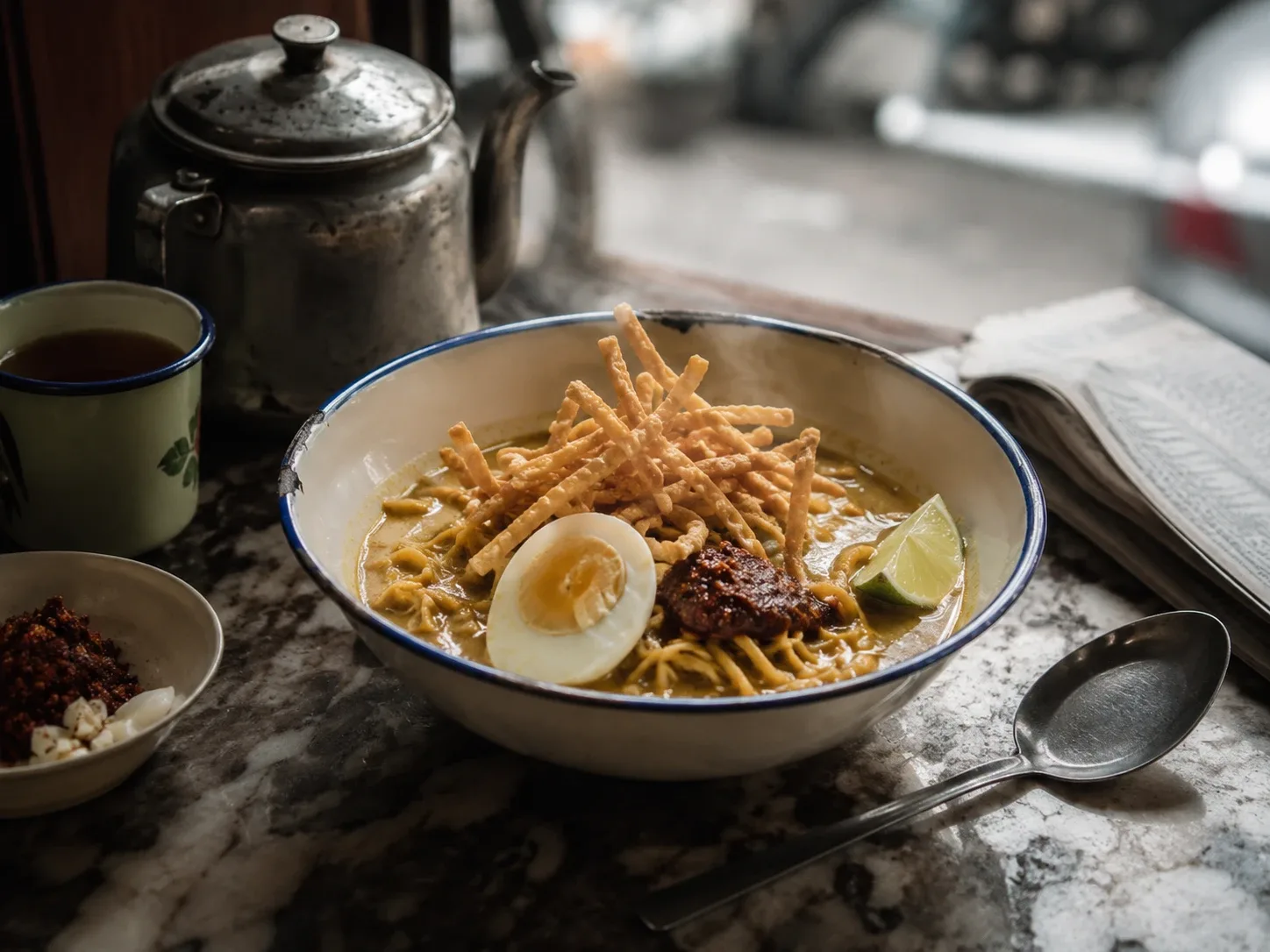
Burma's golden coconut chicken noodle soup — a besan-thickened broth that must never split, ladled over noodles with crisp shards, egg, chili oil, and lime.
By Burmese Cookbook Kitchen · June 7, 2026
ရန်ကုန် Yangon & Lower BurmaBritish Burma, 1826–1948
 ၂
၂- Prep
- 30 min
- Cook
- 50 min
- Serves
- 6
- Level
- Intermediate
Ohn no khao swè means, with disarming literalness, "coconut milk noodles," and it is the dish Burmese cooks reach for when mohinga feels like too much ceremony. Where mohinga belongs to the delta and the dawn, ohn no khao swè belongs to colonial Rangoon — a port city where Indian besan, Chinese wheat noodles, and the coconut of the coasts met in one bowl and decided to stay. Teashops served it to clerks and dockworkers; today it is the soup of birthday mornings and office farewells, ladled from a pot that someone's aunt watched like a hawk.
She watched it for one reason. The broth is an alliance of chickpea flour and coconut milk, and the alliance is fragile. Toasted besan gives the soup its rounded, nutty body — raw flour tastes of chalk, so the toasting is not optional. The coconut milk goes in last, over low heat, and the pot must never again reach a boil; let it roll and the milk splits into oil and sadness. Respect those two moments and the rest is generosity: chicken stained gold with turmeric, a nest of springy noodles, and the full quarrel of toppings — crisp fried noodles against soft egg, raw onion against rich broth, lime against everything.
Its resemblance to Thai khao soi is real and cheerfully contested; the roads between Rangoon and Chiang Mai carried recipes in both directions. The Burmese answer is simply to fill the bowl again.
Once the coconut milk goes in, the pot never boils again — a hard boil splits the milk into grease and curds, and no amount of stirring brings it back.
မီးဖိုချောင်စကား · A word from the kitchen
Ingredientsပါဝင်ပစ္စည်း
Serves 6
Tap to check off as you gather
For the chicken
- chicken thighs — boneless, skinless, cut into bite-size pieces
- onions — one for the paste, one sliced into thin rings for the topping fry
- garlic
- fresh ginger
- turmeric
- paprika — for color and warmth, not fire — the fire arrives at the table
- fish sauce
- peanut oil
For the coconut body
- chickpea flour (besan) — toasted — see step one; it holds the broth and the coconut together
- coconut milk — full-fat, and not the drinking kind
- chicken stock — light, unsalted — or water in a pinch
To serve
- egg noodles — fresh wheat khao swè if you can get them, or 350 g dried
- eggs — hard-boiled, halved
- crispy fried noodles — fry a fistful of the raw noodles in hot oil until golden — the crunch is half the dish
- red onion — sliced paper-thin and soaked in cold water
- dried chili flakes — fried briefly in a spoon of oil
- limes — in wedges
- cilantro
Methodချက်နည်း
Tap a numeral as you finish each step
Step 1: Toast the chickpea flour
In a dry pan over medium-low heat, toast the besan, stirring without pause, until it deepens a shade and smells like warm peanuts — 4 to 5 minutes. This is what lets the broth carry coconut milk without turning thin or greasy. Cool it completely so it will not lump.
Step 2: Fry the paste
Pound one onion, the garlic, and ginger to a rough paste. Heat the peanut oil in a heavy pot and fry the paste with the turmeric and paprika over medium heat until the raw smell is gone and the oil turns amber at the edges, 6 to 8 minutes. A pale paste makes a flat soup — wait for the color.
Step 3: Cook the chicken
Add the chicken and fish sauce and turn the pieces until every surface is stained gold. Pour in the stock, bring to a simmer, and cook gently for 15 minutes, skimming once. The chicken should be just tender; it will finish in the thickened broth.
Step 4: Thicken with the besan
Whisk the cooled toasted besan into a cup of cool stock or water until utterly smooth, then whisk it into the pot. Simmer for 10 to 15 minutes, stirring along the bottom, until the broth coats a spoon like thin cream. It will tighten a little more when the coconut milk arrives, so stop a shade early.
Step 5: Add the coconut milk
Lower the heat and stir in the coconut milk. From this moment the pot may steam but never boil — a rolling boil splits the milk and the broth goes from silk to grease. Warm it through for 5 minutes, then taste and adjust with fish sauce. It should be rich, gently sweet, and quietly savory.
Step 6: Assemble the bowls
Blanch the egg noodles, drain well, and divide among deep bowls. Ladle the broth generously over and top with egg halves, fried onion rings, crispy noodles, drained raw onion, cilantro, and chili in its oil, with lime on the rim. Everyone tunes their own bowl — that is the ritual.
ခွက်ယောက် · The tools
Equipment
Heavy pot / Dutch oven
အိုးကြီးDeep and heat-retentive — for mohinga broth, long-simmered hin, and deep-frying without temperature crashes.
Shop on Amazon →Noodle basket / colander
ဆန်ခါBlanch and lift rice noodles in seconds — mohinga service moves fast, and soggy noodles wait for no one.
Shop on Amazon →Stone mortar & pestle
ဆုံFor garlic-ginger paste, pounded dried shrimp fluff, and crushed peanuts — the blender lies about texture; the stone doesn’t.
Shop on Amazon →Mandoline slicer
အလွှာစက်Paper-thin shallots for even frying and cabbage fine enough for thoke — seconds, not knife-years.
Shop on Amazon →Heavy kettle
ရေနွေးအိုးTeahouse tea starts with water at a hard rolling boil — and lots of it, all morning.
Shop on Amazon →
Equipment links are Amazon affiliate links. As an Amazon Associate we earn from qualifying purchases, at no cost to you. Disclosure.
ဟင်းစုံ · Set the table
A Burmese meal is a spread
A bowl is complete, but the table is not without its condiments:
- Si chet, chili oilဆီချက်The fragrant red oil every household keeps by the stove.
- Crispy fried shallotsကြက်သွန်ကြော်A spoonful of crunch and sweet shallot oil over anything.
- Balachaungဘလချောင်းThe crispy shrimp relish that lives on every Burmese table.
- Teahouse milk teaလက်ဖက်ရည်How a Burmese meal ends — sweet, strong, and slow.
Questions from the kitchen
My broth split. Can I save it?
Mostly, no — once coconut milk breaks into oil and curds it will not re-emulsify, which is why the rule is absolute. You can rescue the flavor by whisking in a fresh besan slurry and a splash of cold stock off the heat, which disguises the texture. Better to never let it boil.
Is this the same dish as Thai khao soi?
They are clearly cousins — coconut broth, wheat noodles, crispy noodle topping — and food historians argue in both directions about who fed whom. The Burmese bowl is less sweet, leans on besan rather than curry paste for body, and skips the coconut cream flourish. Make both and enjoy the argument.
Can I use chicken breast?
You can, but cut the simmer to 8 minutes and accept a leaner soup — thighs give up gelatin that the broth genuinely uses. Bone-in thighs, simmered whole and shredded, make the richest version of all.
What if I can't find fresh khao swè noodles?
Dried Chinese-style egg noodles are the honest stand-in and what most diaspora kitchens use. Fresh ramen or lo mein noodles also work. Rice noodles change the dish into something else — pleasant, but not ohn no khao swè.
နောက်တစ်ခု · Cook next
Keep the wok hot
 ၂
၂Noodles & Mohinga · 50 min · Beginner
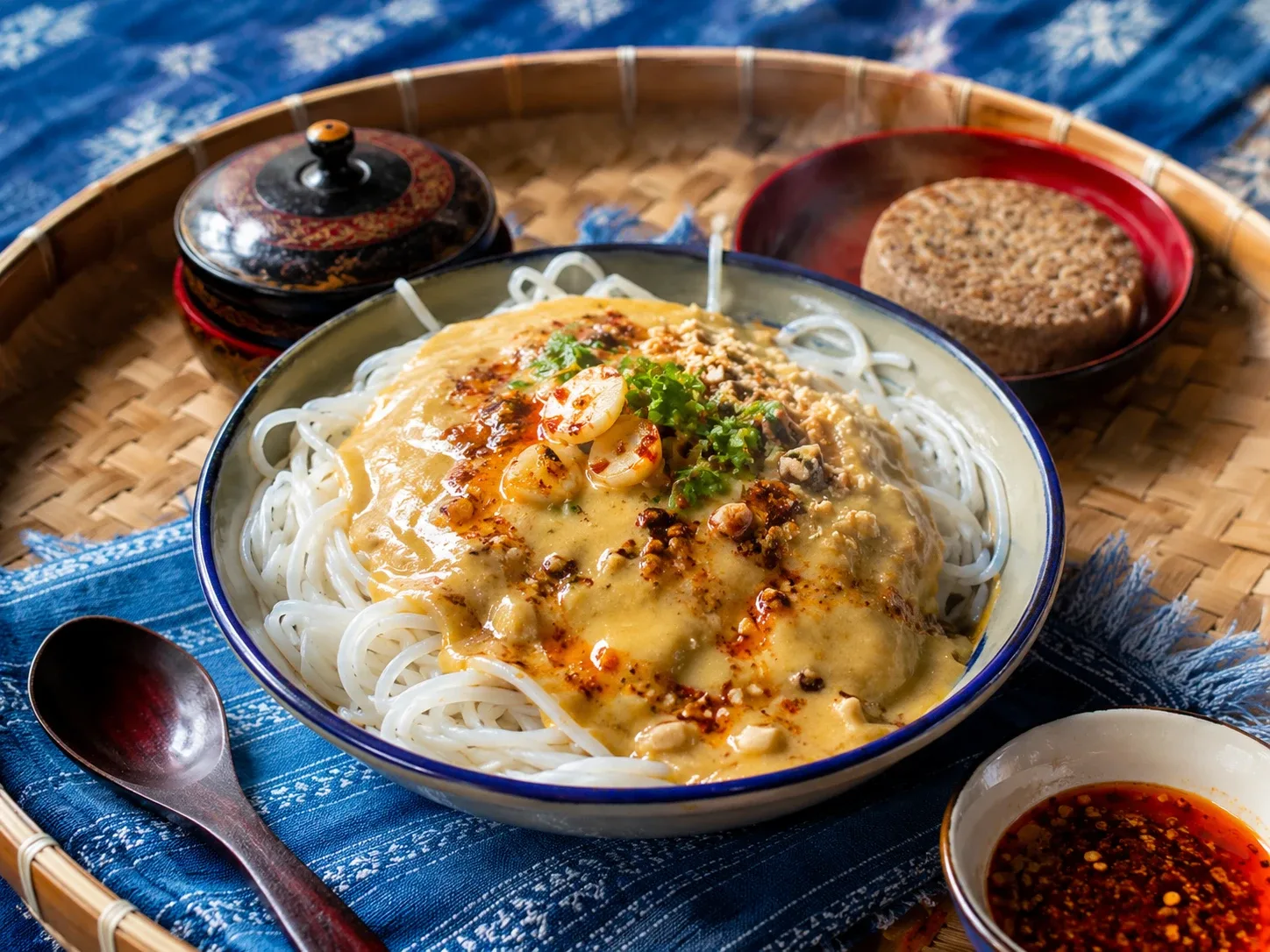
Tofu Nway, Warm Shan Tofu Noodlesတိုဟူးနွေး
Warm chickpea tofu that never sets, ladled like golden custard over rice noodles with garlic oil, chili, and peanuts — Shan State's great breakfast.
 ၂
၂Noodles & Mohinga · 40 min · Intermediate
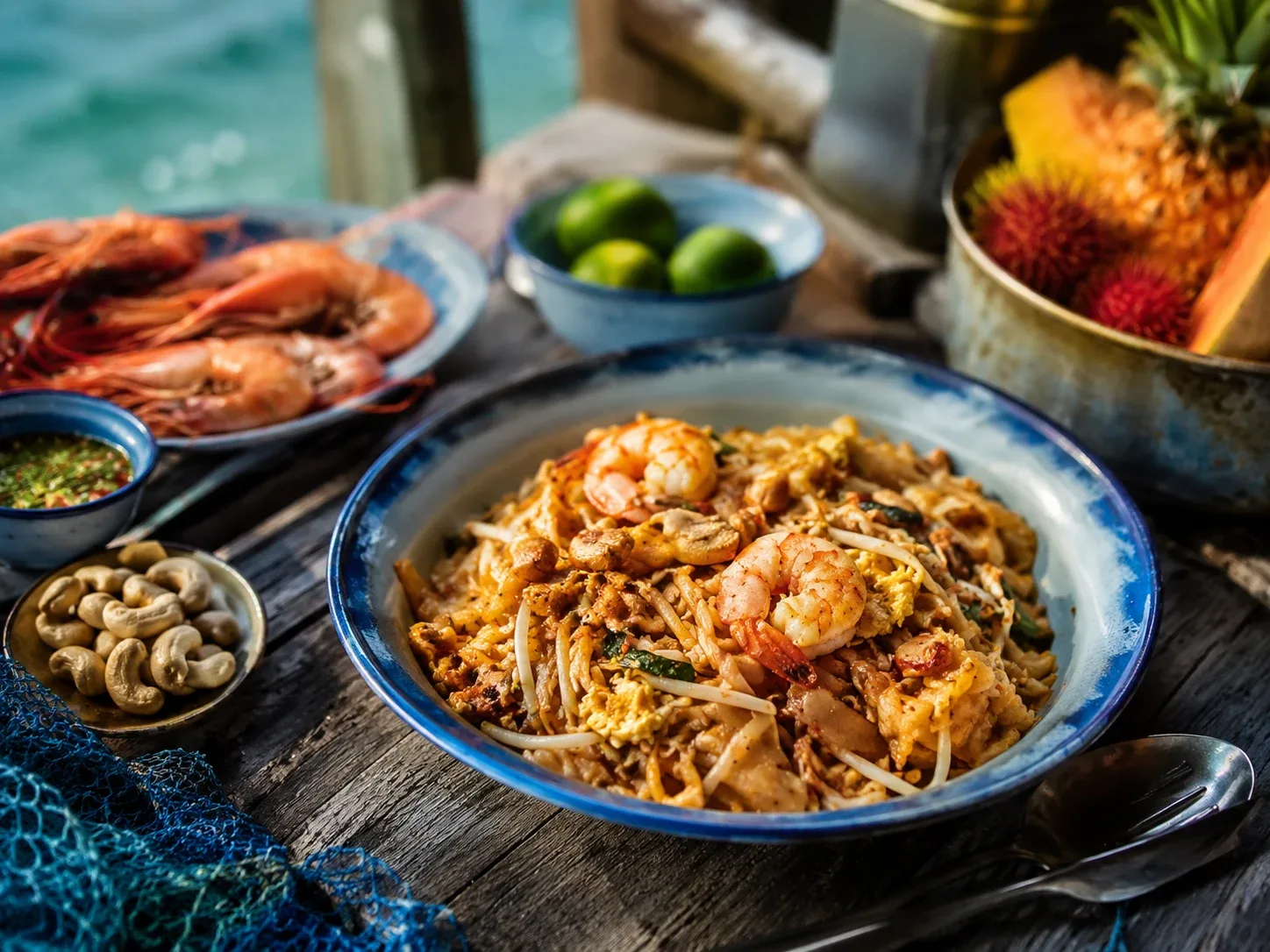
Kat Kyi Kaik, Dawei's Scissor-Cut Noodlesကတ်ကြေးကိုက်
Dawei's famous stir-fried rice noodles, snipped with scissors at the table — sweet-savory, smoky from the wok, piled with prawns, egg, and peanuts.
 ၅
၅Soups & Broths · 165 min · Beginner
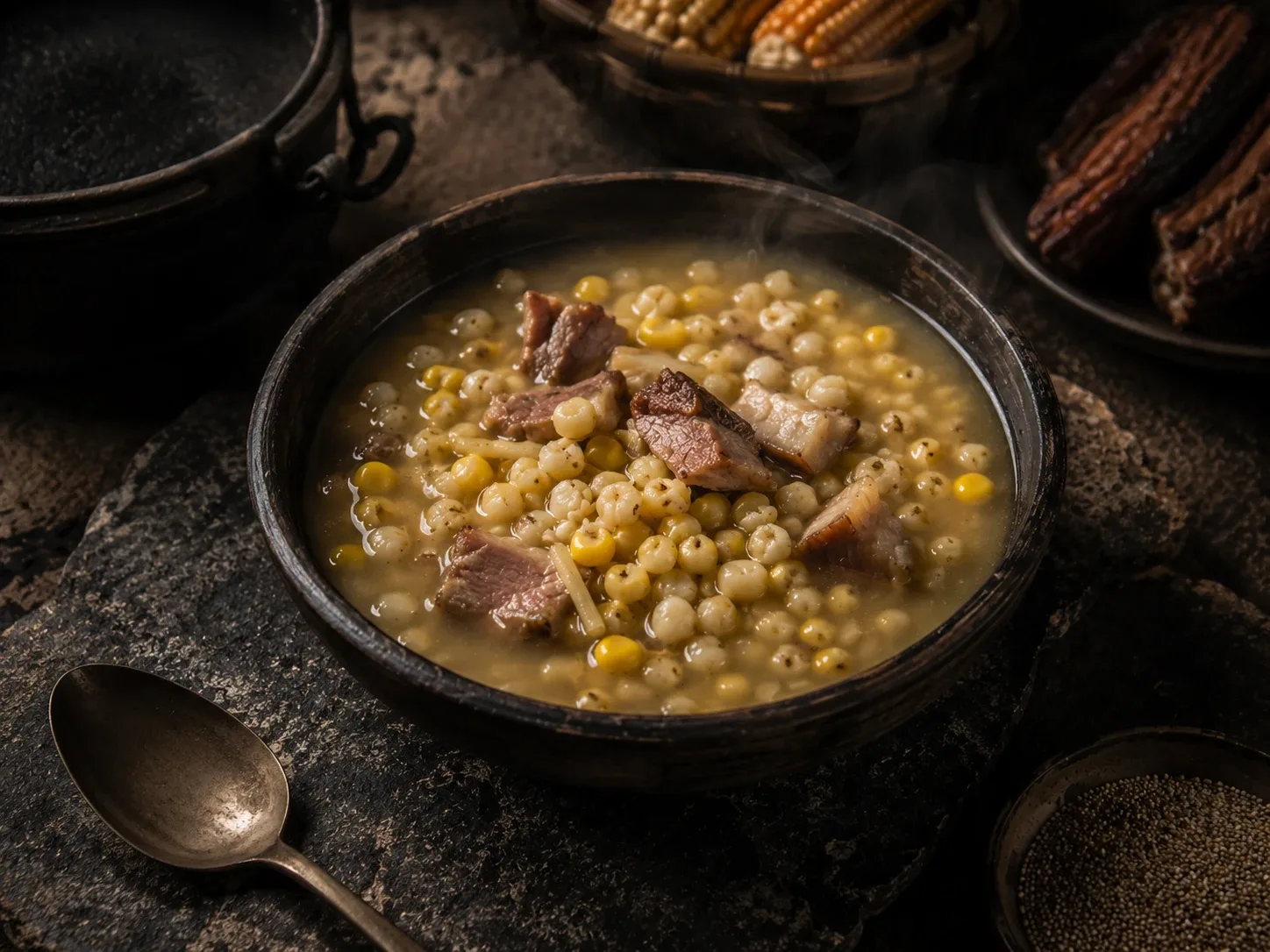
Sabuti, the Chin Corn Soup
The Chin hills' great corn soup — hominy maize simmered slowly with smoked pork and ginger, frugal mountain cooking that somehow eats like plenty.