Pè Byouk, Teahouse Boiled Beans
ပဲပြုတ်
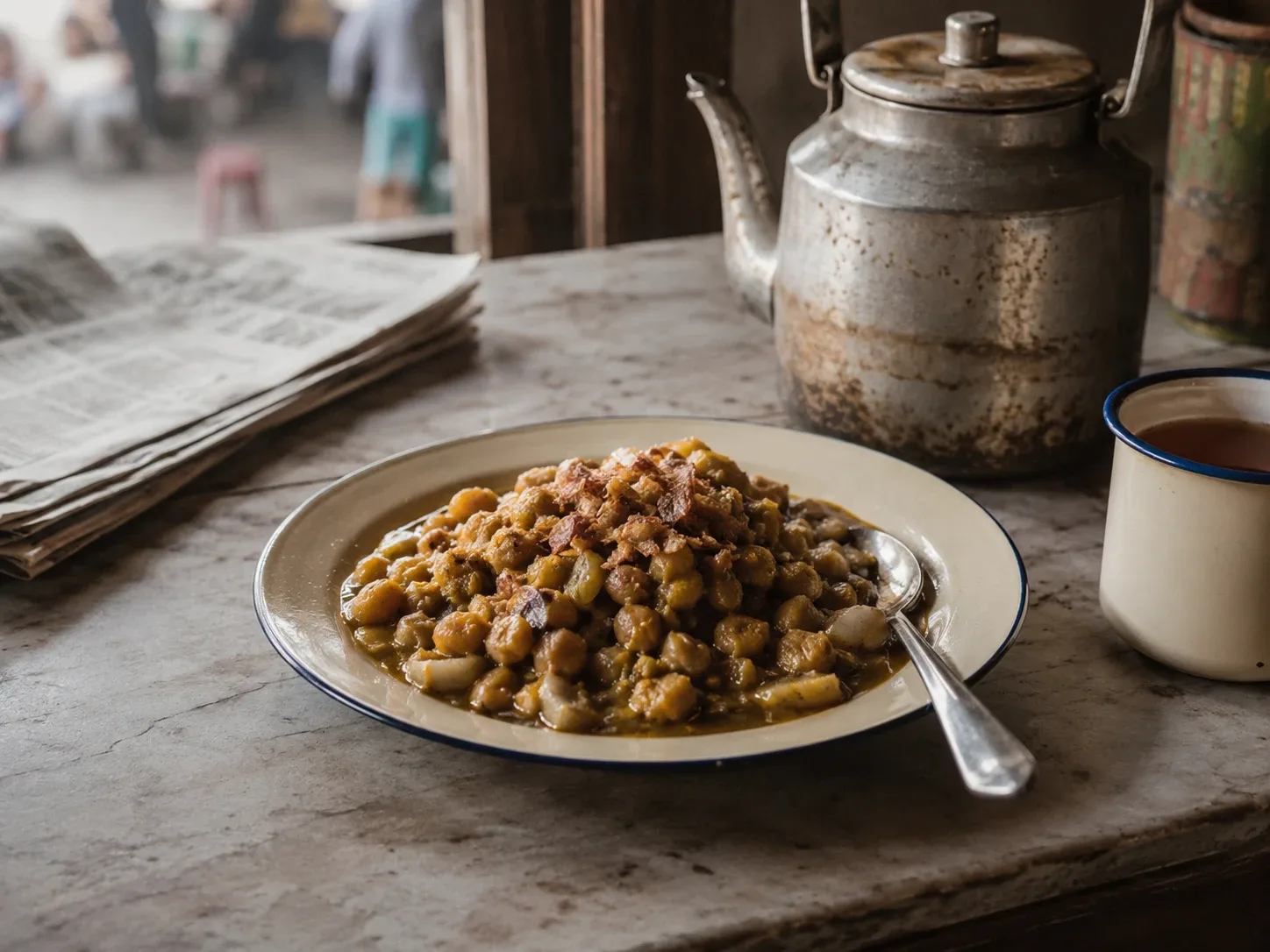
Yangon's teahouse boiled beans — matpe simmered with turmeric until creamy in their skins, finished with shallot oil. The quiet partner to naan and fried rice.
By Burmese Cookbook Kitchen · July 9, 2026
ရန်ကုန် Yangon & Lower BurmaBritish Burma, 1826–1948
 ၁
၁- Prep
- 10 min
- Cook
- 60 min
- Serves
- 6
- Level
- Beginner
Walk into any Yangon teahouse at seven in the morning and someone at nearly every table is eating pè byouk — whole matpe beans boiled with turmeric until they are creamy inside their intact skins, glossed with shallot oil, and spooned over warm naan bya or a plate of fried rice. It is the least glamorous dish in this book and one of the most eaten. Myanmar grows pulses on a scale few countries match — matpe is a national export crop — and pè byouk is what happens when that abundance meets the teahouse.
The pairing tells Yangon's story honestly. The beans are Burmese; the naan they ride on came with Indian cooks and tandoor ovens in the colonial port city, and the teahouse itself is that era's great institution. Boiled beans are surely older than any record, but this breakfast — beans on naan, beside e kya kway, over htamin gyaw — belongs to colonial Rangoon and never left.
There are only two techniques, and both are restraint. Soak overnight so the bean cooks through before its skin surrenders, then simmer gently — a hard boil turns the pot to mud. And salt late, as the teahouse cooks insist; whatever the science, it forces you to taste the liquor when it matters. The shallot-oil finish is the small act of generosity that promotes the whole thing from staple to breakfast. Cook a pot on Sunday and it will improve three weekday mornings without complaint.
The beans should hold their shape right up until they meet your tongue — a pot rolling at a hard boil turns them to mud before their time.
မီးဖိုချောင်စကား · A word from the kitchen
Ingredientsပါဝင်ပစ္စည်း
Serves 6
Tap to check off as you gather
For the beans
- urad beans — whole matpe with skins on, soaked overnight in plenty of cold water; whole dried yellow peas make the other classic version
- water
- turmeric
- salt — added near the end, not the start
For the shallot oil finish
- peanut oil
- shallots — sliced into thin rings
To serve
- flatbreads — naan bya from a teahouse or any tandoor naan, warmed — or fried dough sticks, or a plate of fried rice
- green chilies — optional, thinly sliced
Methodချက်နည်း
Tap a numeral as you finish each step
Step 1: Soak overnight
Cover the beans with at least three times their volume of cold water and leave them overnight, 8 to 12 hours. The soak is not optional with whole matpe — it lets the beans cook evenly all the way to the center before their skins give out, which is the entire texture of pè byouk.
Step 2: Simmer gently with turmeric
Drain the beans and put them in a pot with the 1.2 L fresh water and the turmeric. Bring to a boil, skim the foam, then drop the heat to a gentle simmer, lid ajar, for 45 to 60 minutes. You want a bean that sits intact in the spoon but collapses into creaminess when pressed — stir rarely and never boil hard, or the skins split and the pot turns to porridge.
Step 3: Salt late
Stir in the salt for the final 10 minutes of cooking. Teahouse cooks swear late salting keeps the skins tender; whether or not the science backs the whole claim, salting late also lets you judge the reduced cooking liquor honestly. The beans should sit loose in a little of their golden broth — add hot water if the pot has gone dry.
Step 4: Make the shallot oil
While the beans finish, fry the shallot rings in the peanut oil over medium-low heat, stirring, until they turn deep gold and stop whispering — 6 to 8 minutes. Lift the crisp shallots onto a plate and keep the amber oil. This finish is what promotes boiled beans into breakfast.
Step 5: Serve warm and loose
Ladle the beans, with a little liquor, into a shallow bowl. Spoon the shallot oil over, scatter the crisp shallots and green chili, and set the warm naan alongside for scooping — or pile the beans straight onto fried rice, the classic htamin gyaw pairing. Pè byouk is a supporting actor; serve it next to something and it will quietly steal the scene.
ခွက်ယောက် · The tools
Equipment
Rice cooker
ထမင်းအိုးConsistent long-grain rice with zero attention — and in a Burmese kitchen the rice is never optional.
Shop on Amazon →Mandoline slicer
အလွှာစက်Paper-thin shallots for even frying and cabbage fine enough for thoke — seconds, not knife-years.
Shop on Amazon →
Equipment links are Amazon affiliate links. As an Amazon Associate we earn from qualifying purchases, at no cost to you. Disclosure.
ဟင်းစုံ · Set the table
A Burmese meal is a spread
The quiet base of the meal — build the rest of the spread around it:
- A curryဟင်းSlow-cooked until the oil returns — the richness the sides cut against.
- A light soupဟင်းချိုThe clear, sour broth sipped between mouthfuls of rice.
- Toh sa yar & ngapi dipတို့စရာRaw and blanched vegetables with a pungent fish-paste dip — the fresh, bitter counterpoint.
- A hand-tossed thokeအသုပ်A bright, sour salad to lift the whole spread.
- Si chet, chili oilဆီချက်The fragrant red oil every household keeps by the stove.
Questions from the kitchen
What bean exactly is matpe?
Whole black gram — urad with its skin on, the same bean that becomes dal makhani in India. Look for "whole urad" or "black matpe" at Indian groceries. Skinned white urad works but loses the earthy depth; whole dried yellow peas give you the other teahouse version, softer and sweeter.
Can I use a pressure cooker?
Yes — about 12 minutes at high pressure with a natural release, after the overnight soak. Mind that pressure cooking blurs the line between intact and collapsed quickly; err short and finish with a gentle simmer, salting at the end as usual.
How do teahouses serve it?
Spooned over warm naan bya as a breakfast set, tucked alongside e kya kway for dunking, or crowning a plate of fried rice. It also keeps beautifully — three or four days in the fridge — and reheats with a splash of water, which is exactly why teahouses love it.
နောက်တစ်ခု · Cook next
Keep the wok hot
 ၁
၁Rice & Foundations · 30 min · Beginner
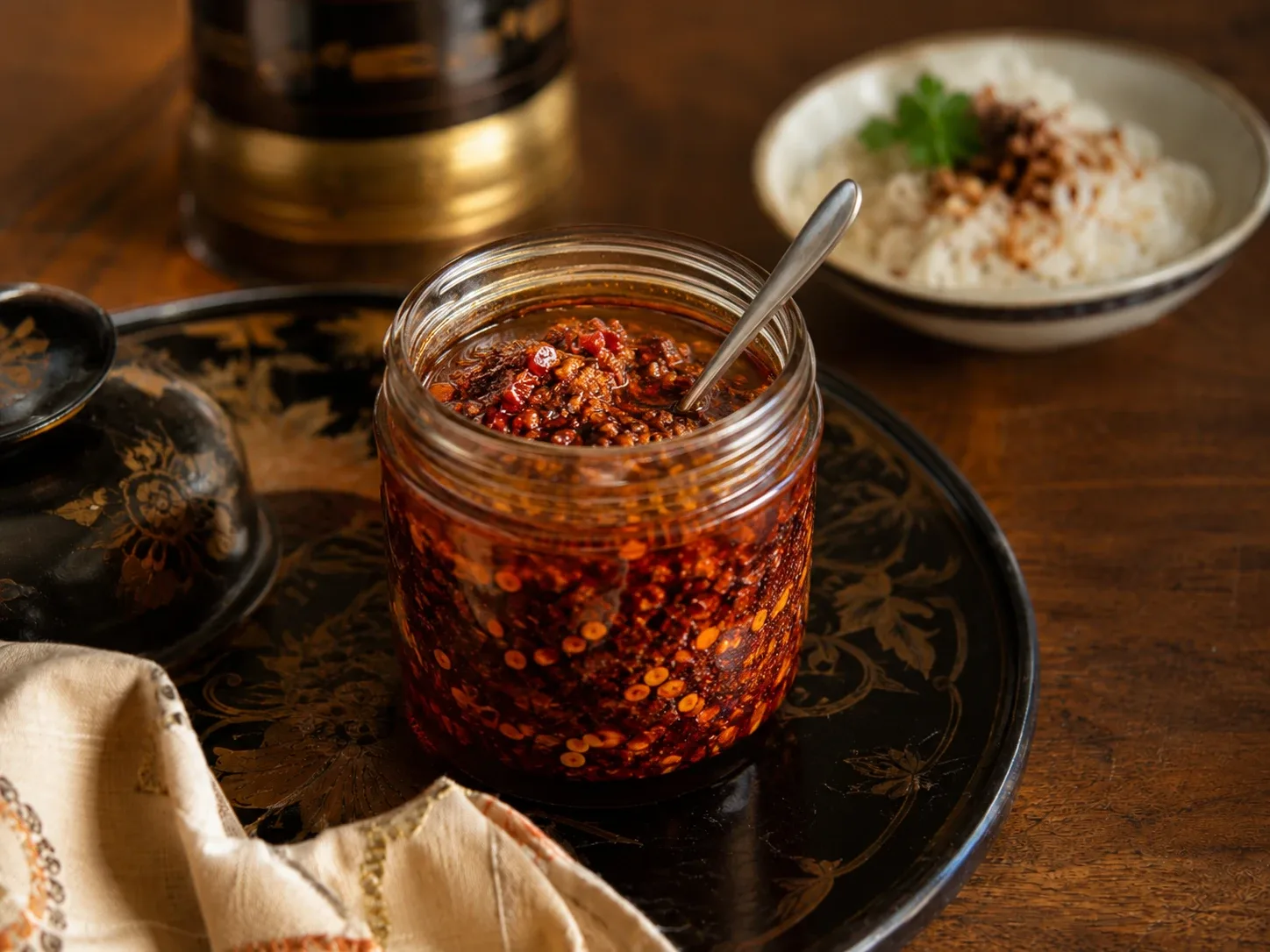
Si Chet, Burmese Chili Oilဆီချက်
The essential Burmese table oil — peanut oil gently fried with chili flakes, garlic, shallot, and a little ngapi, then spooned red over rice, noodles, and salads.
 ၁
၁Rice & Foundations · 40 min · Beginner
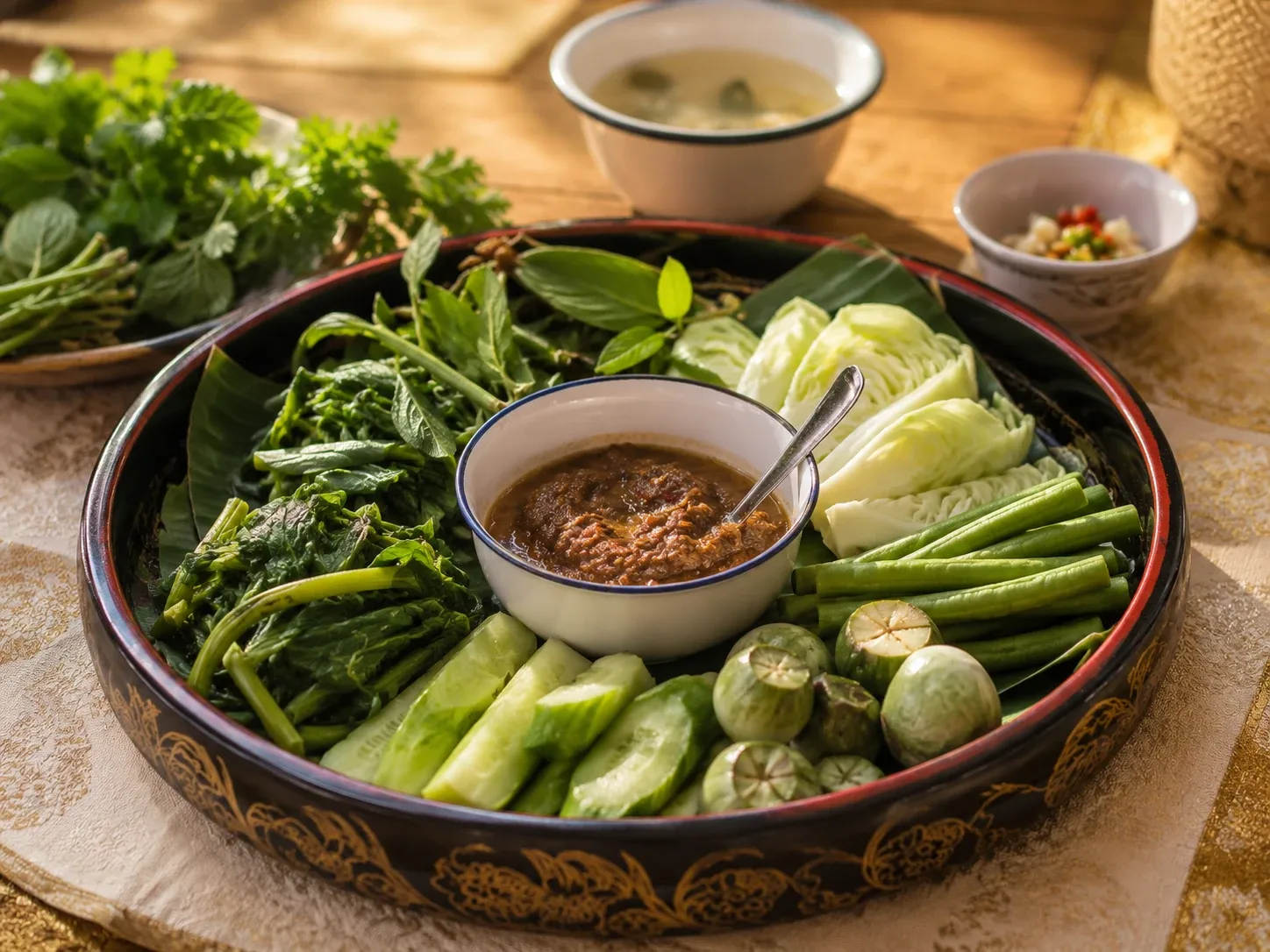
Toh Sa Yar, the Vegetable & Ngapi Platterတို့စရာ
The platter of raw and blanched vegetables around a pungent ngapi dip that no Burmese meal is complete without — the fresh, bitter counterpoint to curry.
 ၇
၇Sweets & Mont · 25 min · Beginner
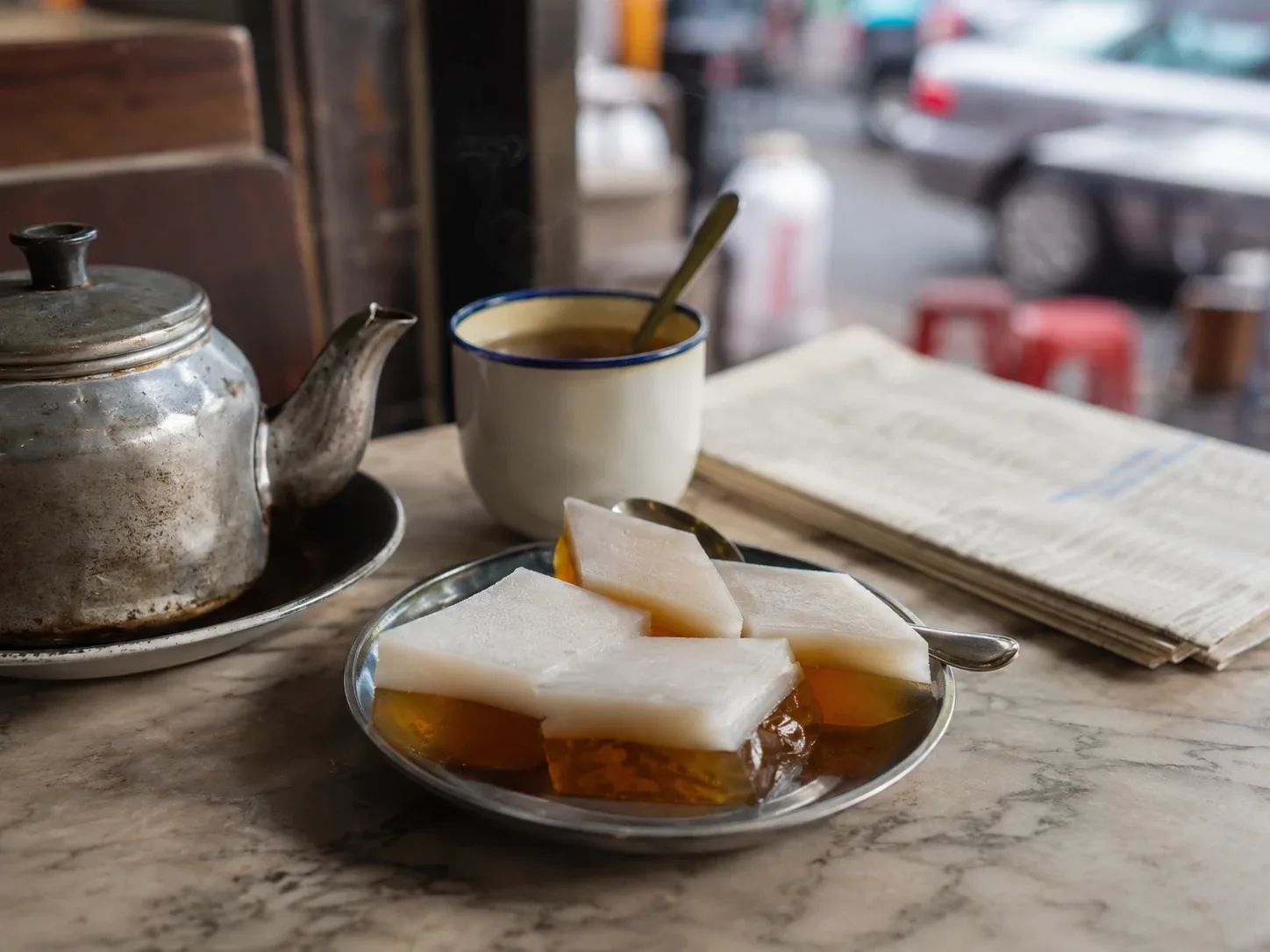
Kyauk Kyaw, Two-Layer Coconut Jellyကျောက်ကျော
Myanmar's two-layer agar jelly, done the Yangon way — coconut cream rises as it sets over a clear amber base, then the slab is cut into cool diamonds.