Pork Curry with Pickled Mango
ဝက်သားချဉ်
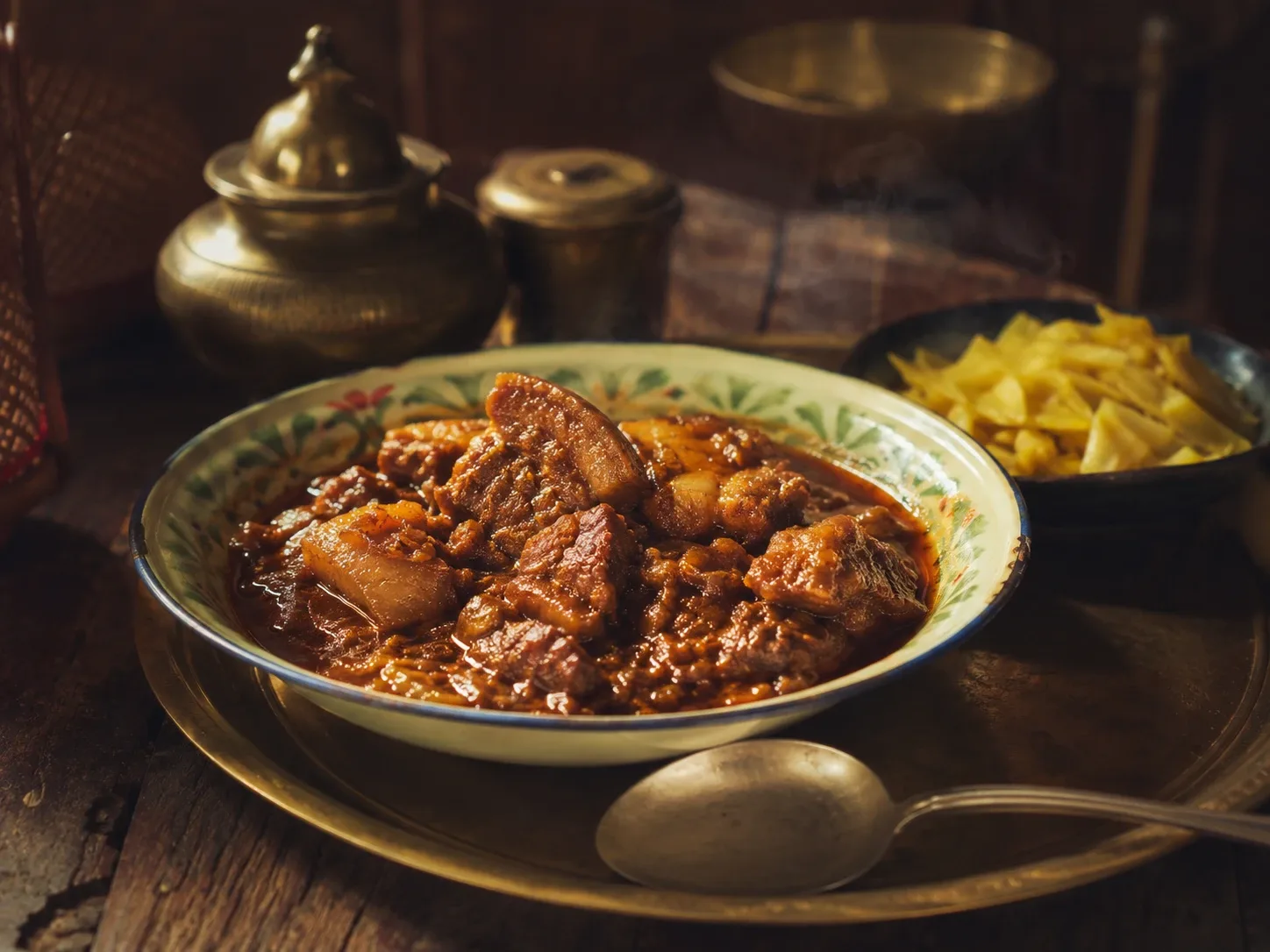
Slow-simmered pork belly curry from Upper Burma, its richness cut by tart pickled mango — the old pairing of fat and sour, simmered until the oil returns.
By Burmese Cookbook Kitchen · June 13, 2026
အညာ Upper Burma & MandalayKonbaung, 1752–1885
 ၃
၃- Prep
- 25 min
- Cook
- 100 min
- Serves
- 6
- Level
- Intermediate
The full name of this dish tells you its logic before you taste it. Wet thar chin — sour pork — is Upper Burma's answer to the oldest problem in rich cooking: pork belly is glorious and pork belly is relentless. The Mandalay solution is not restraint but opposition. Thayet chin, mango pickled in brine through the blazing weeks of the hot season, goes into the pot late and cuts through the rendered fat like a window thrown open.
The pairing carries a Konbaung-era pedigree in spirit if not in paperwork. The last royal court at Mandalay ate famously well and famously rich, and the pickle jars of the dry zone — mango, plum, tea — were how Upper Burmese kitchens kept sharpness on hand a hundred miles from the sea. Whether any palace cook wrote this recipe down, nobody can show you; that it descends from that table's appetites, no one in Mandalay doubts.
Technically it is a patience dish twice over. The onion base must reach its first small oil-return before the pork goes in, and the belly must simmer until the fat turns silky — an hour, honestly — before the true si pyan arrives, the oil rising back red-gold through the tightened gravy. The mango joins only at the end, so it keeps its shape and its nerve. Eaten over rice, each spoonful runs rich, then sour, then rich again — a seesaw the Konbaung court would have recognized, and one your table will not tire of either.
Pork belly forgives almost everything except hurry — if the fat has not turned silky by the time the oil returns, give the pot twenty minutes more and ask again.
မီးဖိုချောင်စကား · A word from the kitchen
Ingredientsပါဝင်ပစ္စည်း
Serves 6
Tap to check off as you gather
For the pork
- pork belly — skin on if you like it properly Burmese; cut into 3 cm pieces
- fish sauce
- turmeric
For the curry base
- onions — medium, roughly chopped
- garlic
- fresh ginger
- turmeric
- paprika
- dried chili flakes
- ngapi (shrimp paste) — optional but persuasive — it deepens the gravy without announcing itself
- peanut oil — less than for chicken curry — the belly brings its own
The sour finish
- pickled mango — Burmese thayet chin, drained and thickly sliced — or 1 firm green mango plus an extra pinch of salt
- palm sugar (jaggery) — optional, to round the sourness at the end
- water — hot
Methodချက်နည်း
Tap a numeral as you finish each step
Step 1: Season the pork
Toss the pork belly with the fish sauce and turmeric and let it sit while you make the paste. Do not trim the fat — the fat is the argument, and the mango exists to answer it.
Step 2: Pound the base
Work the onions, garlic, and ginger to a coarse wet paste in a mortar or food processor. Mash the ngapi into the paste if using; hidden in the base it reads as depth, not fish.
Step 3: Fry the paste to its first oil-return
Heat the peanut oil in a heavy pot over medium heat and fry the paste with the turmeric, paprika, and chili flakes, stirring often, for 15 to 20 minutes, until it slumps into a soft amber jam and oil seeps back out at the edges. This small si pyan is the down payment on the big one later — a pale base makes a pale, flabby curry.
Step 4: Brown the pork in the paste
Add the pork and turn it through the base over medium heat for eight to ten minutes, until every piece is gilded and the belly fat starts to render into the pot. The pork should sizzle, not stew — pour off nothing.
Step 5: Simmer long and low
Add the hot water, bring to the gentlest simmer, and cook with the lid askew for 60 to 70 minutes, stirring occasionally along the bottom. The belly is ready when a chopstick slides through the fat layer without protest. If the gravy still looks thin, uncover and let it reduce.
Step 6: Add the mango and wait for the oil
Stir in the pickled mango for the last 20 minutes — added earlier it cooks to rags and turns the whole pot sharp. As the gravy tightens, the oil rises back through it, glossed red-gold with paprika and rendered belly fat. Taste at the end and balance with palm sugar and fish sauce until the sourness bites once, cleanly, and lets go. Rest ten minutes and serve over jasmine rice.
ခွက်ယောက် · The tools
Equipment
Carbon-steel wok
ဒယ်အိုးThe dai-oh — for si pyan curries, fritters, and every fried-noodle dish here. Carbon steel, seasoned dark, nothing fancy.
Shop on Amazon →Heavy pot / Dutch oven
အိုးကြီးDeep and heat-retentive — for mohinga broth, long-simmered hin, and deep-frying without temperature crashes.
Shop on Amazon →Stone mortar & pestle
ဆုံFor garlic-ginger paste, pounded dried shrimp fluff, and crushed peanuts — the blender lies about texture; the stone doesn’t.
Shop on Amazon →
Equipment links are Amazon affiliate links. As an Amazon Associate we earn from qualifying purchases, at no cost to you. Disclosure.
ဟင်းစုံ · Set the table
A Burmese meal is a spread
A curry is the anchor, not the whole meal. Round out the table:
- Steamed riceထမင်းThe centre of the table — everything else is built around it.
- A light soupဟင်းချိုThe clear, sour broth sipped between mouthfuls of rice.
- Toh sa yar & ngapi dipတို့စရာRaw and blanched vegetables with a pungent fish-paste dip — the fresh, bitter counterpoint.
- Balachaungဘလချောင်းThe crispy shrimp relish that lives on every Burmese table.
- Crispy fried shallotsကြက်သွန်ကြော်A spoonful of crunch and sweet shallot oil over anything.
- A hand-tossed thokeအသုပ်A bright, sour salad to lift the whole spread.
Questions from the kitchen
I cannot find pickled mango. What works?
A firm, truly unripe green mango with a good pinch of salt is the closest honest stand-in — add it a little earlier so it softens. Tamarind pulp gives you the sourness but not the flesh, and makes a different, darker curry. Pickled lime exists in some Burmese homes but will shout over the pork.
This looks very rich. Should I skim the fat?
Skimming defeats the dish — the returned oil carries the paprika and the mango's sourness onto the rice, and the sour is calibrated against the fat. If richness worries you, serve smaller portions with more rice and a sharp vegetable side, which is exactly how Upper Burma eats it.
Can I use a leaner cut?
Pork shoulder works and still makes a fine curry — keep the simmer the same and add a spoon more oil at the start. But belly is the point here. The fat-and-sour exchange is the whole architecture; with lean meat the mango has nothing to push against.
နောက်တစ်ခု · Cook next
Keep the wok hot
 ၃
၃Curries · 125 min · Intermediate
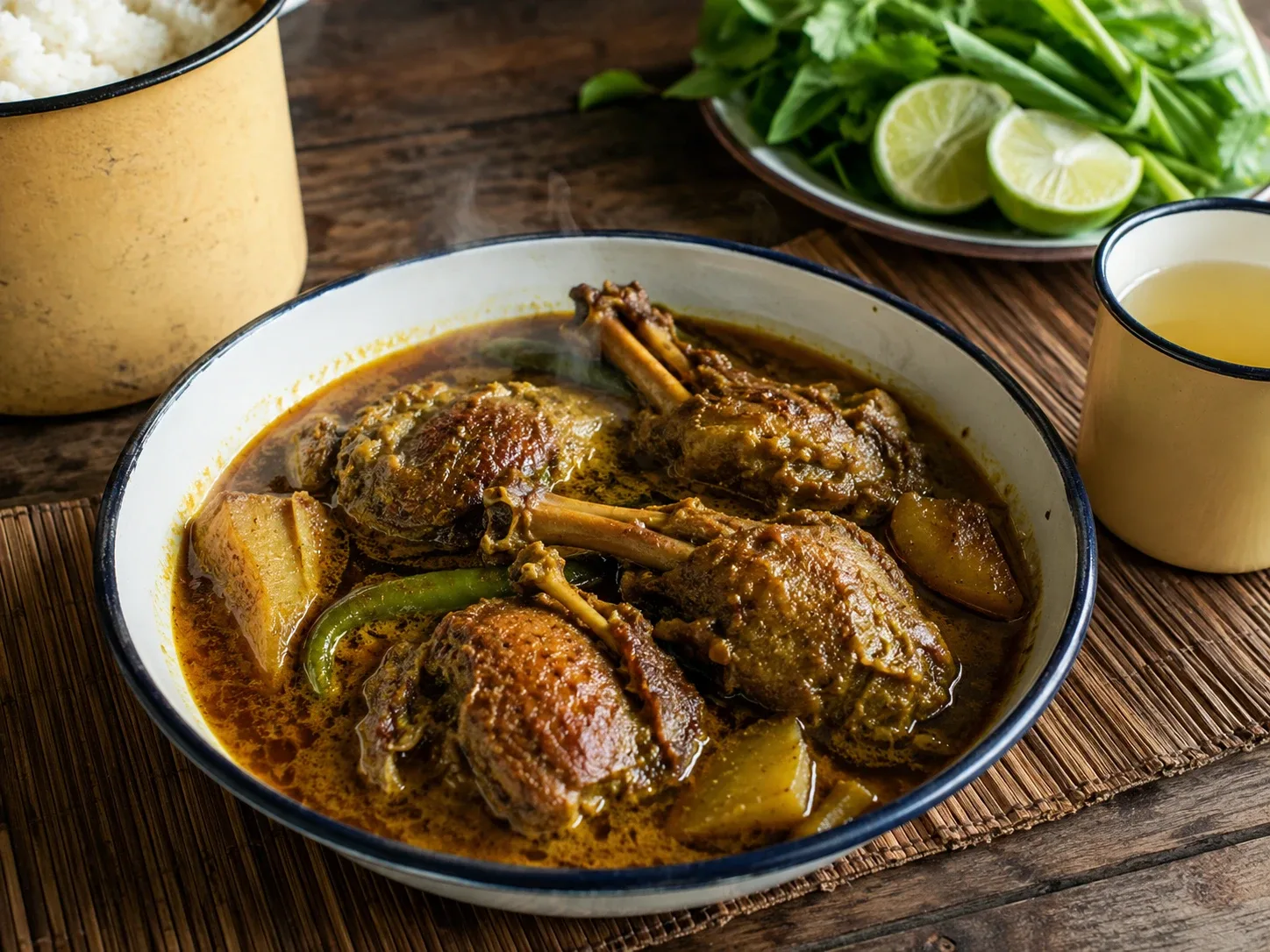
Be Thar Hin, Delta Duck Curryဘဲသားဟင်း
Duck curry from the Ayeyarwady, where ducks glean the rice paddies — browned in its own fat, then braised si pyan style until the amber oil returns.
 ၃
၃Curries · 45 min · Beginner
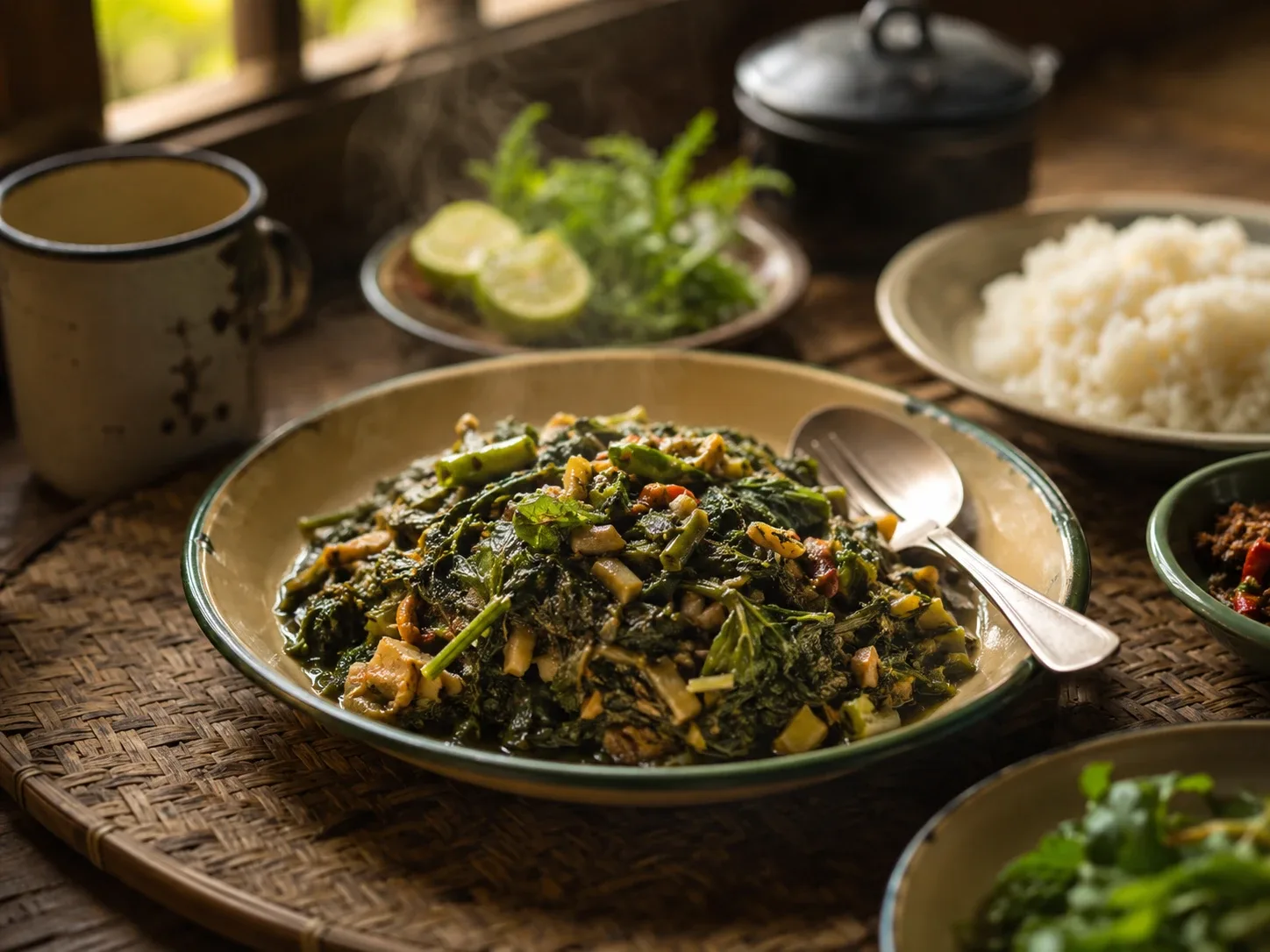
Chin Baung Kyaw, Sour Roselle Leavesချဉ်ပေါင်ကြော်
Lower Burma's beloved sour greens — roselle leaves fried down with bamboo shoots, dried shrimp, and green chili until they collapse into a dark tangy relish.
 ၁
၁Rice & Foundations · 210 min · Intermediate
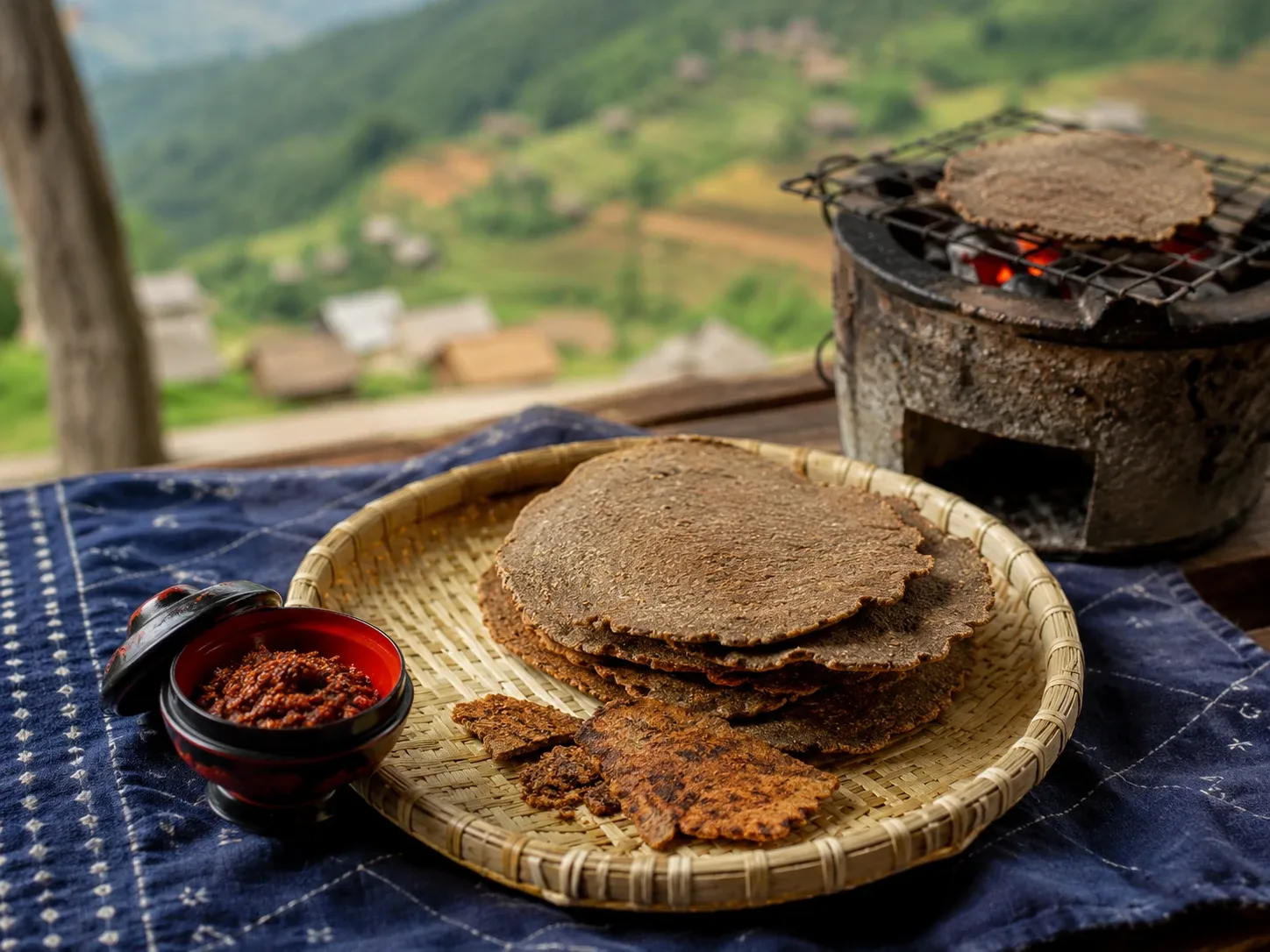
Tua Nao, Shan Fermented Soybean Discsပဲပုပ်
Shan State's seasoning backbone — soybeans boiled, fermented, pounded, and sun-dried into discs you toast over flame and crumble into everything.