Zu, the Chin Millet Beer
ခေါင်ရည်
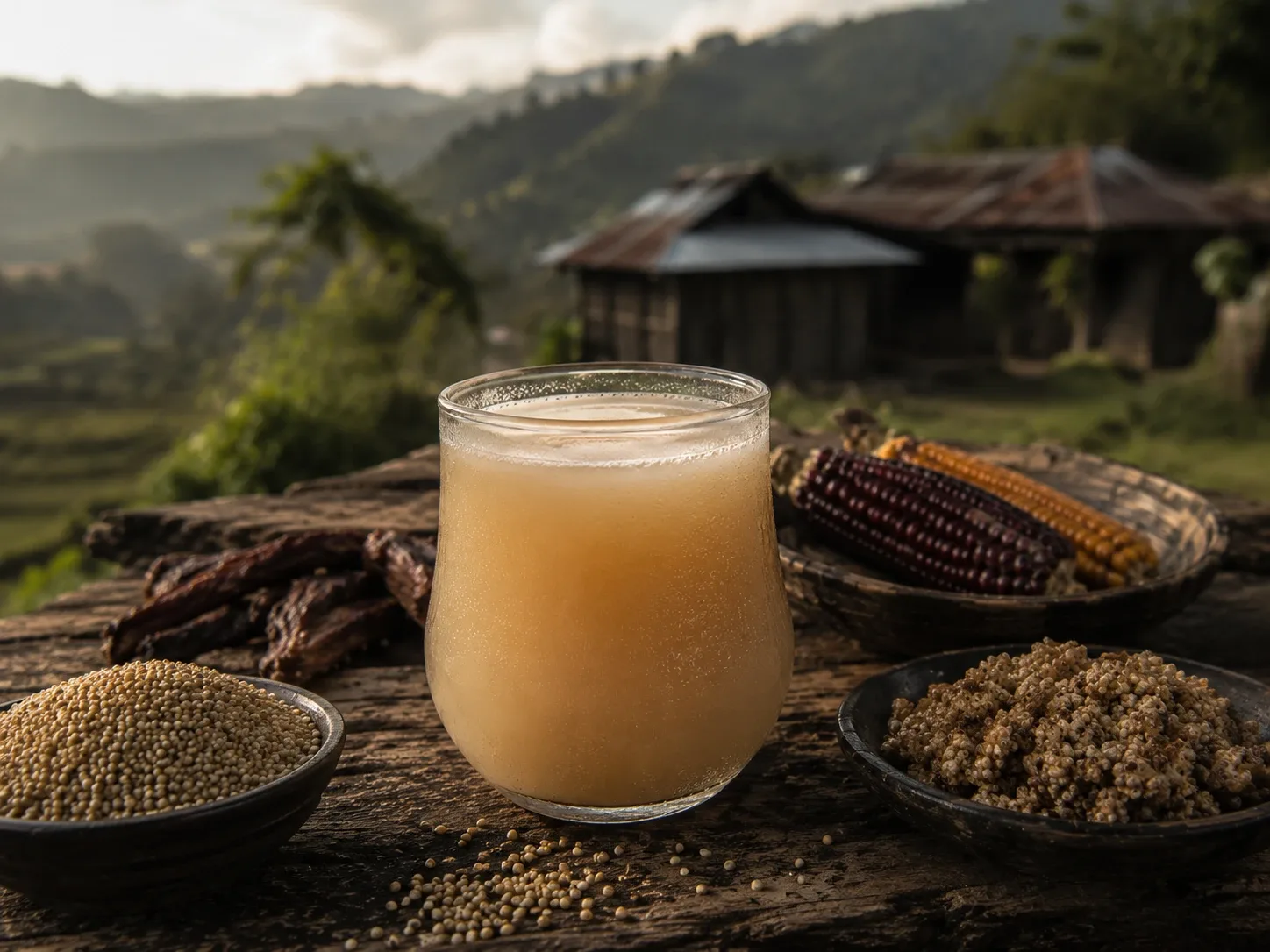
Chin State's ceremonial millet beer, brewed at home from steamed millet and a yeast cake — cloudy, gently sour, and older than any written record of the hills.
By Burmese Cookbook Kitchen · July 9, 2026
ချင်း Chin HillsBritish Burma, 1826–1948
 ၈
၈- Prep
- 20 min
- Cook
- 40 min
- Serves
- 8
- Level
- Intermediate
When British officers wrote their gazetteer of the Chin Hills in the 1890s, they found no ceremony, contract, funeral, or reconciliation that did not run on zu — millet beer, brewed in every house, drunk from communal pots through long reed straws, offered to guests as the basic grammar of hospitality. The feasts of merit that structured Chin social life were measured partly in how much zu a household could brew; the colonial record is disapproving, detailed, and therefore invaluable, because it makes zu one of the best-documented foods of the western mountains. The tradition it recorded was already old beyond telling.
The brewing is domestic alchemy of the classic East Asian kind. Steamed grain — millet in the high villages, maize or rice where the harvest says so — is cooled to blood-warmth and inoculated with a starter cake carrying mold and yeast together: the mold saccharifies the starch, the yeast ferments the sugar, and within days the crock is sweet, fizzing, and alive. Traditional households keep their own starter cultures, pressed with wild herbs; this recipe borrows the Chinese rice-wine yeast ball, the same organism-pair in reliable form and the honest diaspora substitute.
Zu's character is a moving target — sweet and gentle at four days, dry and sour at seven — and stopping the ferment where you like it is the brewer's one real decision. Christianity reshaped Chin drinking culture profoundly in the twentieth century, and many households now brew nothing stronger than tea; but at festivals and funerals the crock and straws still appear, because some grammar is hard to retire.
Blood-warm is the whole game — millet hot enough to sting your wrist kills the yeast, and millet gone cold lets the wrong microbes move in first.
မီးဖိုချောင်စကား · A word from the kitchen
Ingredientsပါဝင်ပစ္စည်း
Serves 8
Tap to check off as you gather
- foxtail millet — hulled; proso millet or even broken glutinous rice will ferment honorably
- water — for cooking the millet
- rice wine yeast ball — about 10 g, from any Chinese grocer — the practical stand-in for the homemade herb-and-rice starter cake of the hills
- water — boiled and fully cooled, for loosening the ferment
- salt
Methodချက်နည်း
Tap a numeral as you finish each step
Step 1: Cook the millet dry-ish
Rinse the millet until the water runs nearly clear, then simmer it with the 1.2 L of water and the pinch of salt, covered, over low heat for about 25 minutes until tender and the water is absorbed. You want distinct, slightly firm grains rather than porridge — a wet mash ferments muddy and is hard to strain.
Step 2: Cool to blood-warm
Spread the cooked millet on a clean tray and let it cool until it feels neither warm nor cool against the inside of your wrist — around 30 to 35°C. This is the step brewers of every tradition guard jealously: too hot kills the starter outright, too cold gives wild bacteria a head start on the yeast.
Step 3: Pitch the starter
Crush the yeast ball to a fine powder and toss it evenly through the cooled millet with scrupulously clean hands. The ball carries both mold and yeast — the mold converts the grain's starch to sugar, then the yeast turns sugar to alcohol — the same two-stage magic behind sake and rice wine, running here on millet.
Step 4: Pack and wait
Pack the millet loosely into a very clean glass jar or ceramic crock, cover the mouth with cloth secured by a band, and keep it somewhere dark at room temperature. Within 2 days you should smell sweetness and see liquid pooling; on day 3, stir in the cooled boiled water, cover again, and let it ferment 2 to 4 days more, tasting daily.
Step 5: Judge, strain, and serve
Young zu — day 4 or 5 — is sweet, faintly fizzy, and mild; by day 7 it is drier, sourer, and stronger. Stop where you like it: strain through cloth, pressing the grains well, chill, and drink within 3 or 4 days. Traditionally it is not strained at all but sipped through straws from the crock, topped up with water as it lowers — hospitality measured in refills.
ခွက်ယောက် · The tools
Equipment
Stone mortar & pestle
ဆုံFor garlic-ginger paste, pounded dried shrimp fluff, and crushed peanuts — the blender lies about texture; the stone doesn’t.
Shop on Amazon →Fine sieve / muslin
စစ်ခွက်For straining tamarind, pressing broth clear, and sifting flours — line it with muslin for the cleanest pour.
Shop on Amazon →
Equipment links are Amazon affiliate links. As an Amazon Associate we earn from qualifying purchases, at no cost to you. Disclosure.
ဟင်းစုံ · Set the table
A Burmese meal is a spread
A cooler or a tea earns a bite alongside:
How a Burmese meal is built →Questions from the kitchen
How alcoholic is this?
Modest — homebrew zu of this style generally lands in beer territory, a few percent, stronger the longer it runs. It is a session drink for long evenings of talk, not a spirit; the hills distill a fiercer cousin, but that is another apparatus and another article.
Is this safe to ferment at home?
With clean equipment, a proper starter, and your senses engaged, grain ferments of this kind are among the oldest and most forgiving of home projects. Scrupulously clean jar and hands, cloth cover, and the smell test — anything moldy-looking on top or genuinely foul (not sour, foul) means discard and start again.
Can I use a different grain?
Yes — zu itself varies by valley and harvest, brewed from millet, maize, or rice depending on what the year gave. Glutinous rice makes the sweetest, quickest version; maize grits make a rougher, earthier one. The starter and the blood-warm rule stay the same.
What does khaung yay mean?
It is the Burmese term — roughly "fermented brew water" — that lowlanders apply to all the hill beers, Chin zu included. Zu is the drink's own name in the Chin-Mizo languages, and in Chin State the word covers the whole family from sweet young brews to aged crock ferments.
နောက်တစ်ခု · Cook next
Keep the wok hot
 ၈
၈Drinks & Teahouse · 15 min · Beginner
Htan Yay, Toddy of the Lowlandsထန်းရည်
Palm toddy the delta way — fresh-tapped sap drunk sweet at dawn or left to ferment itself milky and gently fizzy by afternoon, plus an honest home method.
 ၈
၈Drinks & Teahouse · 70 min · Beginner
Khaung Yay, the Kachin Rice Beerခေါင်ရည်
The cloudy, gently sweet rice beer of the Kachin hills, brewed at home from steamed sticky rice and a yeast cake — a week of patience, no equipment.
 ၄
၄Salads & Thoke · 25 min · Beginner
Rakhine Ngapi Thoke, the Pounded Fireငါးပိသုပ်
Rakhine's roasted fish-paste salad — marine ngapi pounded with green chili, garlic, and lime, served the western-coast way with crisp vegetables and rice.