Mont Let Kauk, the Burmese Bracelet Doughnut
မုန့်လက်ကောက်
Chewy glutinous rice rings fried until blistered and gold, then drowned in warm toddy-palm jaggery syrup — the teahouse doughnut Burma names after a bracelet.
Also spelled: Mote Let Kauk · Mont Lat Kauk · Mont Lak Kauk · Burmese doughnut
By Burmese Cookbook Kitchen · July 13, 2026
 ၇
၇- Prep
- 25 min
- Cook
- 25 min
- Serves
- 4
- Level
- Beginner
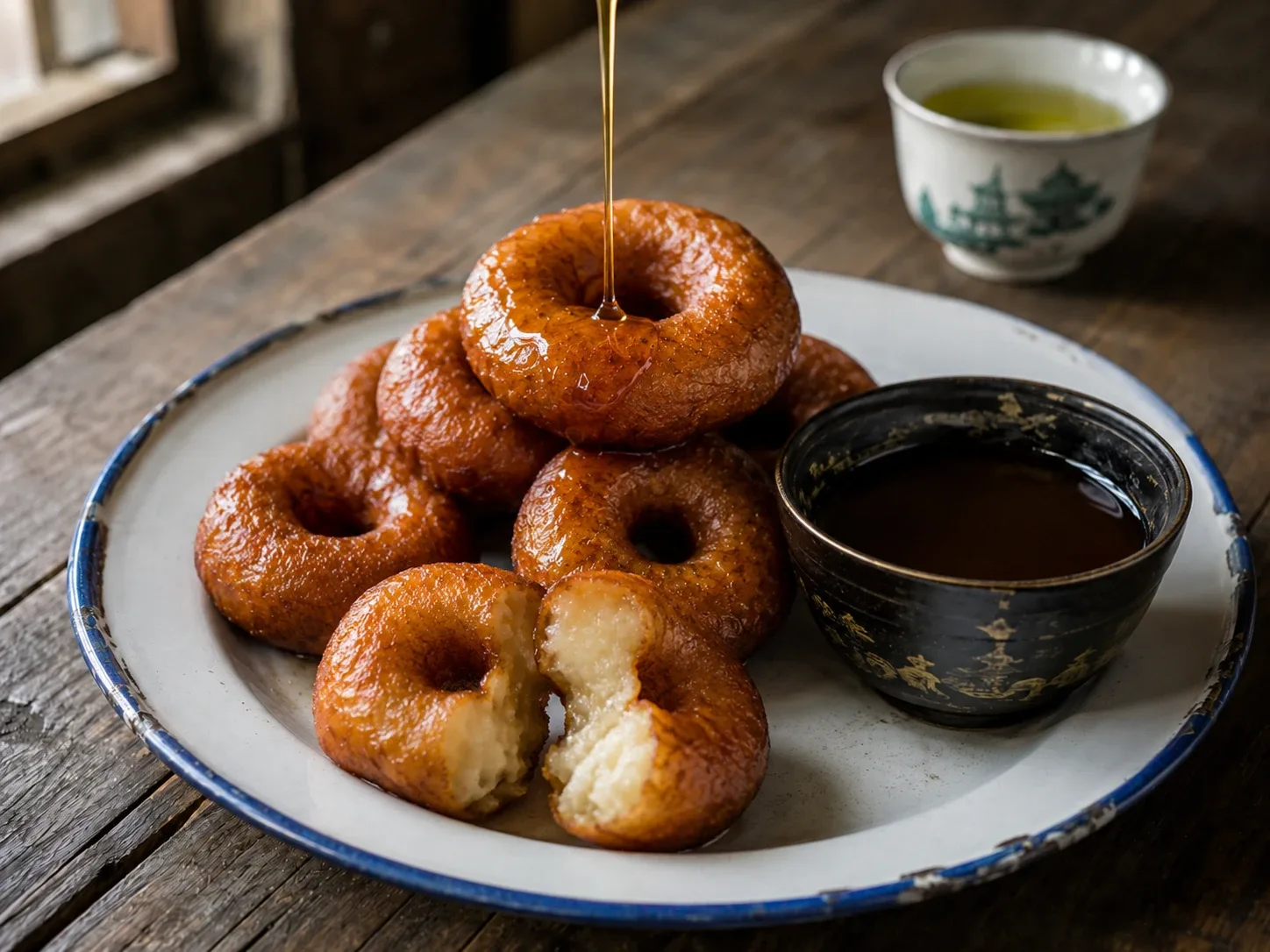
Burmese has a plain way of naming food: it tells you what the thing looks like and lets you work out the rest. Let kauk means bracelet, and that is exactly what these are — ropes of glutinous rice dough brought end to end into rings, fried until they blister gold, and heaped in a bowl. English-language writing usually reaches for "Burmese doughnut," which gets the shape and the frying right and the texture completely wrong. A doughnut is soft and open. This is dense and elastic, and it pulls when you bite it.
The dough is two flours, roughly four parts glutinous to one part ordinary rice, and that ratio is the entire technique. All glutinous and the ring goes gluey, collapsing into a single chew. Push the plain rice flour much higher and it turns short and brittle, closer to a cracker than a bracelet. The small minority of ordinary flour exists only to give the glutinous majority enough backbone to hold its shape — a piece of quiet engineering that most recipes list without explaining.
What nobody should leave out is the syrup. Fried alone, mont let kauk is almost aggressively neutral: warm, chewy, faintly of rice, and not sweet at all. It becomes a sweet at the last moment, when warm toddy-palm jaggery goes over the top and soaks into the blistered surface. That is why the syrup is made before the frying rather than after — the rings want to meet it hot, and they are best eaten standing near the pan, in the two or three minutes before the crust gives up its crackle.
The syrup is not a garnish. Fried on its own the ring tastes of almost nothing — pleasantly chewy and completely blank. Jaggery is what turns it into a sweet, so make it first and keep it warm.
မီးဖိုချောင်စကား · A word from the kitchen
Ingredientsပါဝင်ပစ္စည်း
Serves 4
Tap to check off as you gather
For the rings
- glutinous rice flour — about 4 parts; this is what makes the chew — do not substitute
- rice flour — about 1 part; keeps the ring from turning gummy
- salt
- warm water — added a little at a time — the dough should hold a rope without cracking
- peanut oil — or any neutral oil, for deep frying
For the jaggery syrup
- toddy palm jaggery — htanyet; broken into small pieces so it melts evenly
- water
- salt — it sharpens the jaggery and keeps the syrup from tasting flat
Methodချက်နည်း
Tap a numeral as you finish each step
Step 1: Make the syrup first
Melt the jaggery with the water and salt over low heat, stirring, for 4 to 5 minutes until it thickens to a pourable syrup. Test it the way Burmese cooks do — drop a little into cold water; it should gather into soft taffy rather than dissolving or setting hard. Keep it warm off the heat while you fry.
Step 2: Bring the dough together
Whisk the two flours and the salt, then add the warm water in stages, kneading as you go. Stop when the dough is smooth and no longer sticks to the bowl. It should feel like soft modelling clay — firm enough to roll into a rope that does not crack when you bend it, soft enough to press without effort.
Step 3: Roll and join the bracelets
Take a walnut-sized piece, roll it under your palms into a rope about a finger thick and the length of your hand, then bring the ends together and press them firmly into a ring. Press the join properly — a lazy seam opens in the oil. This shape is the whole name: let kauk means bracelet.
Step 4: Fry until blistered and gold
Heat the oil to 170–175°C. Lower in a few rings at a time, never crowding, and fry 3 to 4 minutes, turning once, until deep gold and blistered across the surface. They puff slightly and firm as they go. Lift onto a rack — not paper, which steams the underside soft.
Step 5: Drown them while hot
Pile the hot rings into a bowl and spoon the warm jaggery syrup over them, turning so every surface is coated. Eat immediately, while the outside is still crisp and the inside is pulling. They stiffen as they cool and are never quite the same reheated.
ခွက်ယောက် · The tools
Equipment
Frying thermometer
အပူချိန်တိုင်းThe difference between shattering buthi kyaw and greasy buthi kyaw is oil held at temperature — stop guessing.
Shop on Amazon →
Equipment links are Amazon affiliate links. As an Amazon Associate we earn from qualifying purchases, at no cost to you. Disclosure.
ဟင်းစုံ · Set the table
A Burmese meal is a spread
A mont wants a cup of something beside it:
How a Burmese meal is built →Questions from the kitchen
Can I use only glutinous rice flour?
You can, and plenty of home cooks do, but the ring turns denser and gummier and tends to collapse into a chewy lump in the mouth. The small proportion of ordinary rice flour is what gives it enough structure to stay a ring you can bite cleanly through.
Mine came out hard instead of chewy.
Almost always the oil was too cool. Below about 160°C the ring sits and absorbs oil instead of puffing, and it sets tough. Get the oil properly up to temperature and fry in small batches so it does not crash when the dough goes in.
What if I cannot find toddy palm jaggery?
Ordinary palm sugar or dark muscovado will make a syrup that works, though it will be sweeter and less smoky than htanyet, which carries a faint caramel bitterness the Burmese version depends on. Add the pinch of salt regardless — it does most of the work of standing in.
Is this the same as the coconut rice balls sold at Thingyan?
No — those are mont lone yay baw, boiled glutinous balls with a molten palm-sugar centre, showered with grated coconut. Mont let kauk is fried, ring-shaped, and dipped rather than filled. The two are often confused in English writing because both are glutinous rice sweets.
နောက်တစ်ခု · Cook next
Keep the wok hot
 ၇
၇Sweets & Mont · 40 min · Beginner
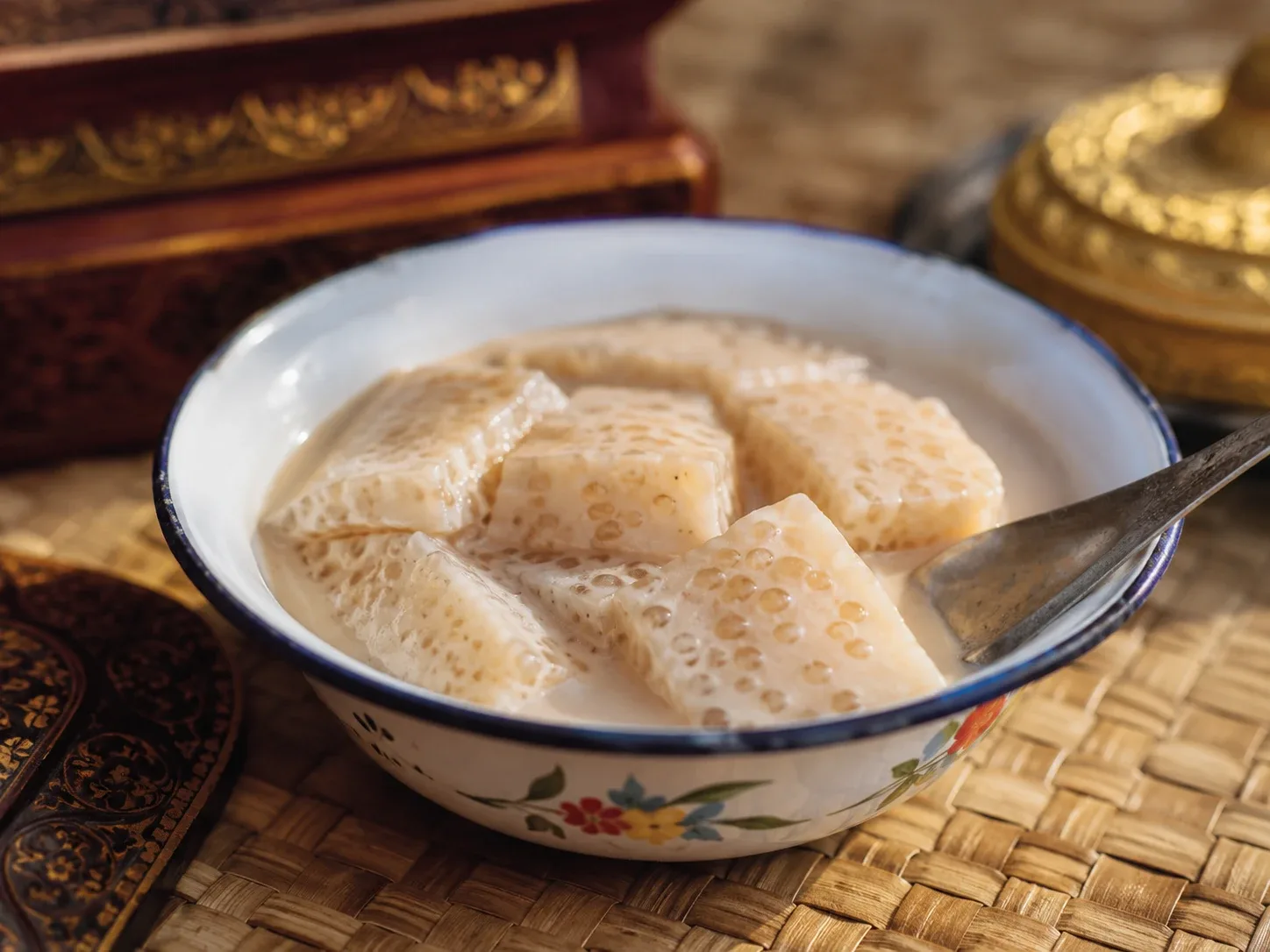
Thagu Byin, Sago & Coconut Milk Puddingသကူမုန့်
A cooling hot-season pudding of translucent sago pearls set in coconut milk and palm sugar, sliced into wobbling squares — sold from glass cabinets on the hottest afternoons.
 ၇
၇Sweets & Mont · 70 min · Intermediate
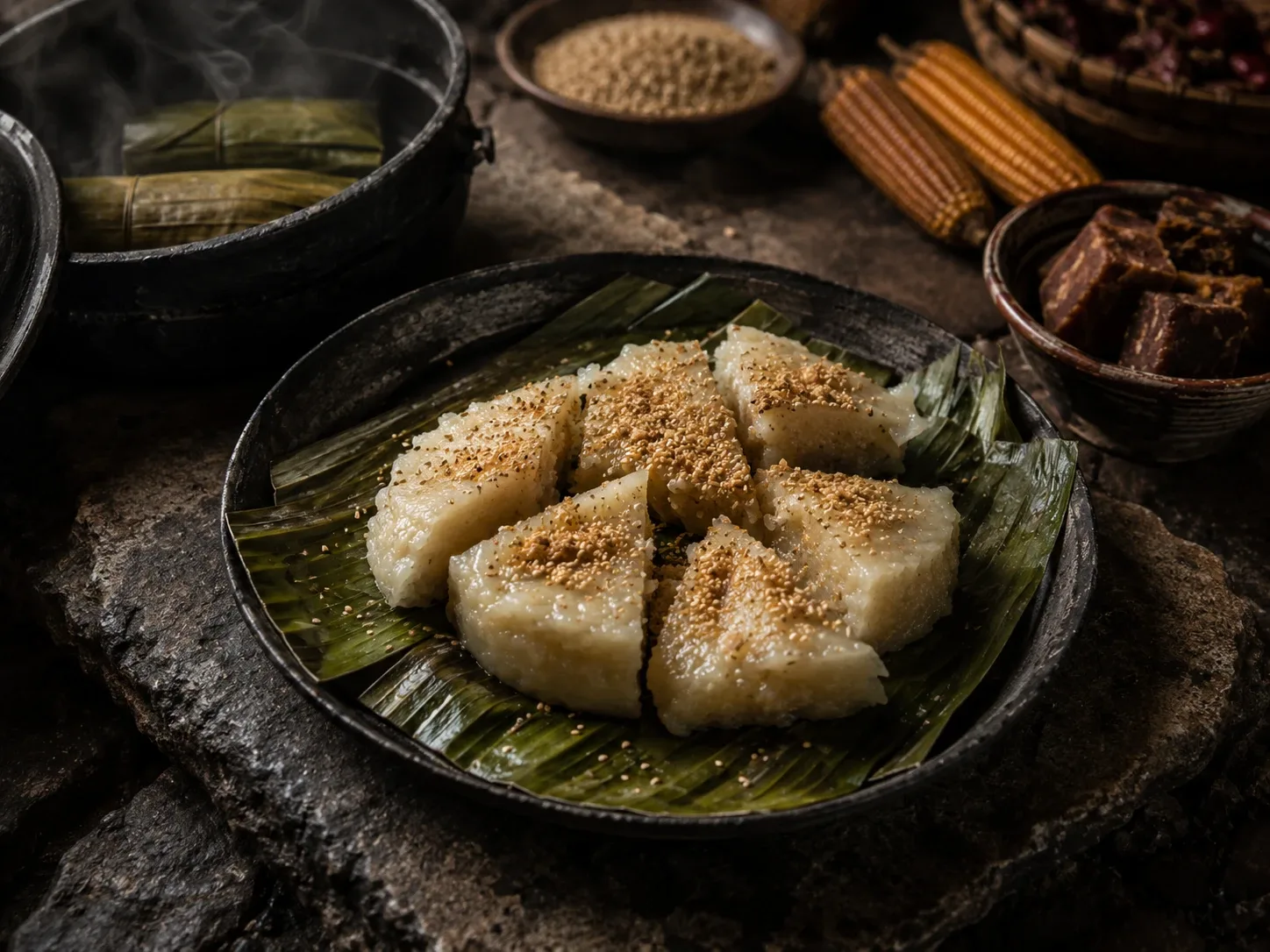
Chhangban, Steamed Sticky-Rice Cakes
Soaked glutinous rice ground to a paste, wrapped in banana leaf, and steamed into soft cakes — the Chin-Mizo celebration sweet, eaten with sesame and jaggery.
 ၇
၇Sweets & Mont · 25 min · Beginner
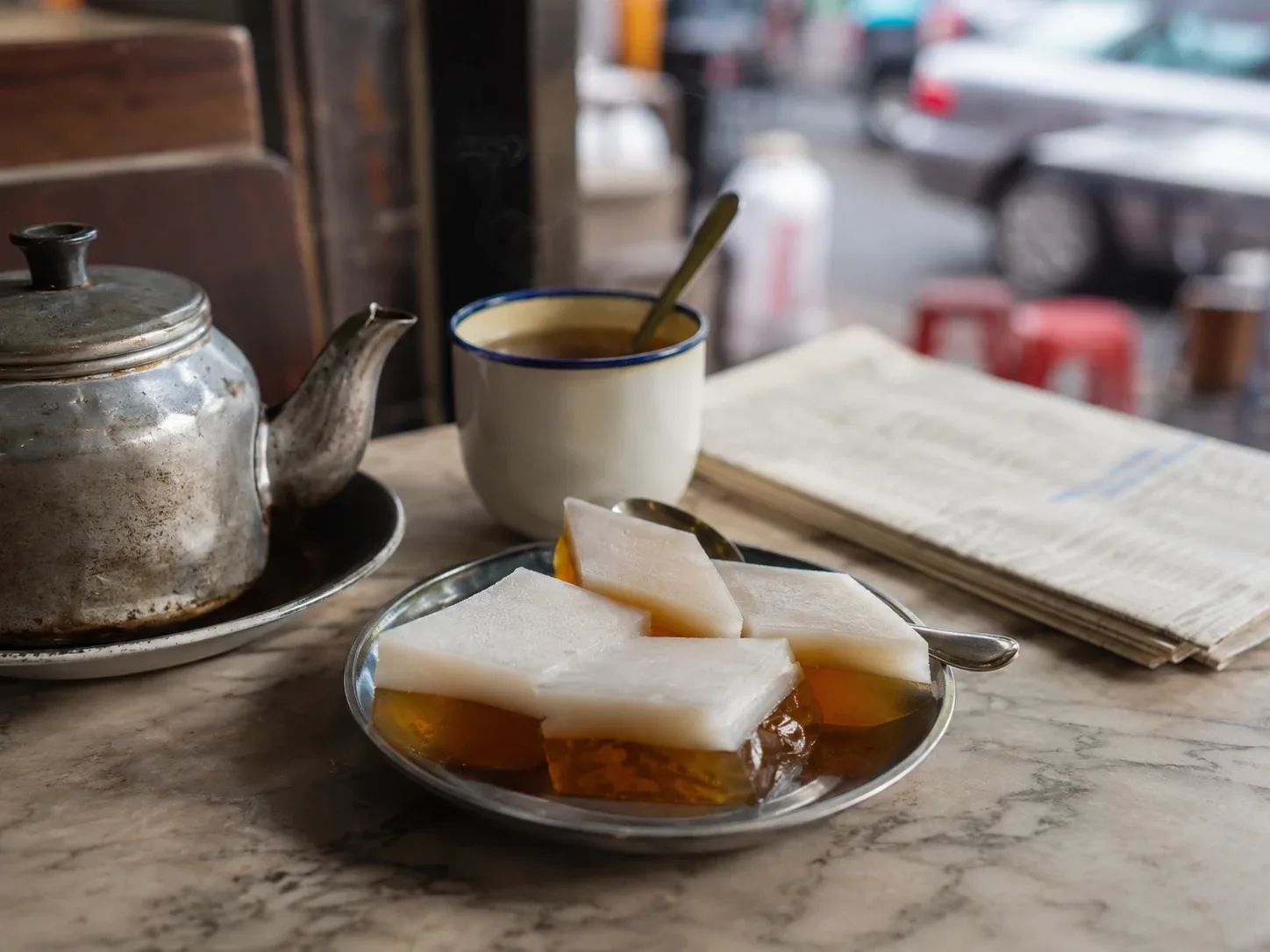
Kyauk Kyaw, Two-Layer Coconut Jellyကျောက်ကျော
Myanmar's two-layer agar jelly, done the Yangon way — coconut cream rises as it sets over a clear amber base, then the slab is cut into cool diamonds.