Nan Gyi Thoke, the Breakfast Salad
နန်းကြီးသုပ်
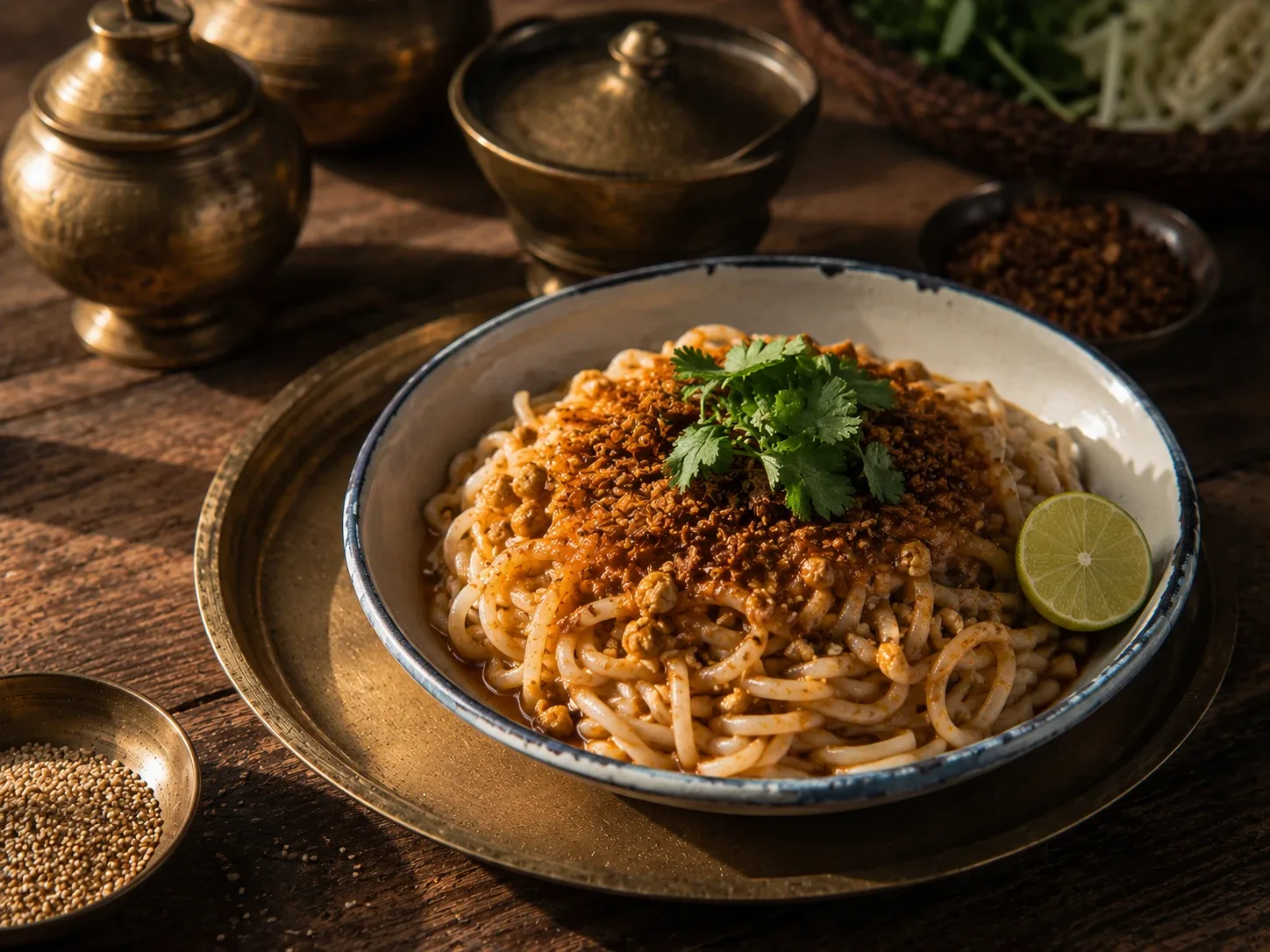
Mandalay's great noodle salad — thick rice noodles hand-tossed with a chicken curry reduced to its amber oil, toasted chickpea flour, fried shallots, and lime.
By Burmese Cookbook Kitchen · June 8, 2026
အညာ Upper Burma & MandalayIndependence, 1948–1962
 ၂
၂- Prep
- 30 min
- Cook
- 45 min
- Serves
- 4
- Level
- Intermediate
Nan gyi thoke is what happens when a curry decides to become a dressing. The name is usually read as "big noodle salad" — nan gyi for the fat, round rice noodles, as thick as udon and twice as chewy — though Mandalay storytellers will happily derive it from the royal palace, the nan, with no documentation whatsoever. What is documented is where it lives: the teashops of Upper Burma, where it became the confident, dry-land answer to the delta's mohinga in the newspaper-and-teashop decades after independence, eaten at plastic tables by people arguing about football and politics.
The construction is pure thoke logic. A chicken curry is built the classic way — shallot paste fried in generous oil with turmeric and paprika until the oil returns, the si pyan moment — and then pushed further, reduced until the sauce clings and the amber oil stands free. That oil, not any broth, dresses the noodles. Toasted chickpea flour thickens it onto every strand, fried shallots and fish sauce sharpen it, lime cuts it, and the whole thing is massaged together by hand, because a spoon merely stirs while fingers persuade.
It arrives with a small cup of hot, light broth on the side — the soup kept respectfully outside the salad. Get the reduction right and nan gyi thoke eats like the best kind of contradiction: a noodle dish with no soup, a curry with no rice, and a breakfast that holds you until dinner.
Reduce the curry until the oil stands free of the sauce — a watery curry turns the noodles to porridge, but its amber oil is the whole dressing.
မီးဖိုချောင်စကား · A word from the kitchen
Ingredientsပါဝင်ပစ္စည်း
Serves 4
Tap to check off as you gather
For the chicken curry
- chicken thighs — boneless, cut into small bite-size pieces
- shallots
- garlic
- fresh ginger
- turmeric
- paprika — it dyes the oil the correct sunset color
- fish sauce
- peanut oil — generous on purpose — the oil becomes the dressing
For the salad
- thick rice noodles — round and spaghetti-thick — dried bún bò huế noodles are the diaspora standby
- chickpea flour (besan) — toasted until nutty
- fried shallots — plus their oil if you fried your own
- fish sauce
- limes
To serve
- eggs — hard-boiled, quartered
- dried chili flakes — fried briefly in a spoon of oil
- cilantro
- chicken stock — light and hot, served alongside in small cups — the traditional chaser
Methodချက်နည်း
Tap a numeral as you finish each step
Step 1: Build the curry base
Pound the shallots, garlic, and ginger to a rough paste. Heat the peanut oil in a wide pan and fry the paste with the turmeric and paprika over medium heat until the raw edge is gone and the oil begins to glow, 6 to 8 minutes. This is the small si pyan — the returned oil — that every Burmese curry is judged by.
Step 2: Cook the chicken
Add the chicken and fish sauce, turn to coat, and add a small splash of water. Simmer gently, partly covered, for 15 minutes until the chicken is tender and the sauce has body.
Step 3: Reduce to the oil
Uncover and keep cooking, stirring now and then, until the water has gone and the amber oil stands free of a thick, clinging sauce — 8 to 10 minutes more. Stop too early and the salad will be wet; this reduction is the make-or-break of nan gyi thoke. Set it aside, oil and all.
Step 4: Toast the besan
In a dry pan over medium-low heat, toast the chickpea flour, stirring constantly, until it darkens a shade and smells like warm peanuts, 4 to 5 minutes. It will thicken the dressing onto the noodles and add a quiet nuttiness — raw besan just tastes of dust.
Step 5: Cook the noodles
Boil the noodles until tender but still springy — thick rice noodles forgive nothing, so taste early. Drain, rinse very briefly to stop the cooking, and shake them truly dry. Wet noodles dilute the dressing; this salad has nowhere to hide water.
Step 6: Toss by hand
In a wide bowl, combine the warm noodles with the curry and its oil, the toasted besan, fried shallots, fish sauce, and a hard squeeze of lime. Now do as Mandalay does — massage it with your hand, lifting and turning until every noodle is glossed and stained gold. Plate with egg quarters, cilantro, and chili oil, and pour the hot broth into cups alongside.
ခွက်ယောက် · The tools
Equipment
Noodle basket / colander
ဆန်ခါBlanch and lift rice noodles in seconds — mohinga service moves fast, and soggy noodles wait for no one.
Shop on Amazon →Stone mortar & pestle
ဆုံFor garlic-ginger paste, pounded dried shrimp fluff, and crushed peanuts — the blender lies about texture; the stone doesn’t.
Shop on Amazon →
Equipment links are Amazon affiliate links. As an Amazon Associate we earn from qualifying purchases, at no cost to you. Disclosure.
ဟင်းစုံ · Set the table
A Burmese meal is a spread
A bowl is complete, but the table is not without its condiments:
- Si chet, chili oilဆီချက်The fragrant red oil every household keeps by the stove.
- Crispy fried shallotsကြက်သွန်ကြော်A spoonful of crunch and sweet shallot oil over anything.
- Balachaungဘလချောင်းThe crispy shrimp relish that lives on every Burmese table.
- Teahouse milk teaလက်ဖက်ရည်How a Burmese meal ends — sweet, strong, and slow.
Questions from the kitchen
Why is it a salad and not a soup?
Because thoke means "mixed by hand," and that is the entire idea — the curry is reduced until it becomes a dressing rather than a broth. The small cup of hot stock served beside the plate is the soup, kept politely separate.
My salad came out claggy. What went wrong?
Usually too much besan or noodles that went in wet. The toasted flour should gloss the noodles, not paste them — add it in two stages and stop when the dressing clings. A splash of the side broth loosens a claggy batch honestly.
Can I use thin rice noodles instead?
Then you have made a different thoke — a pleasant one, but nan gyi means "big noodle" and the fat, chewy strand is the point. Udon is closer in spirit than vermicelli, though its wheat flavor argues a little with the curry.
Can I make the components ahead?
The curry improves overnight and the besan keeps for weeks in a jar. Cook the noodles and toss only at the last moment — dressed noodles soak up the oil and go leaden within the hour.
နောက်တစ်ခု · Cook next
Keep the wok hot
 ၂
၂Noodles & Mohinga · 50 min · Beginner
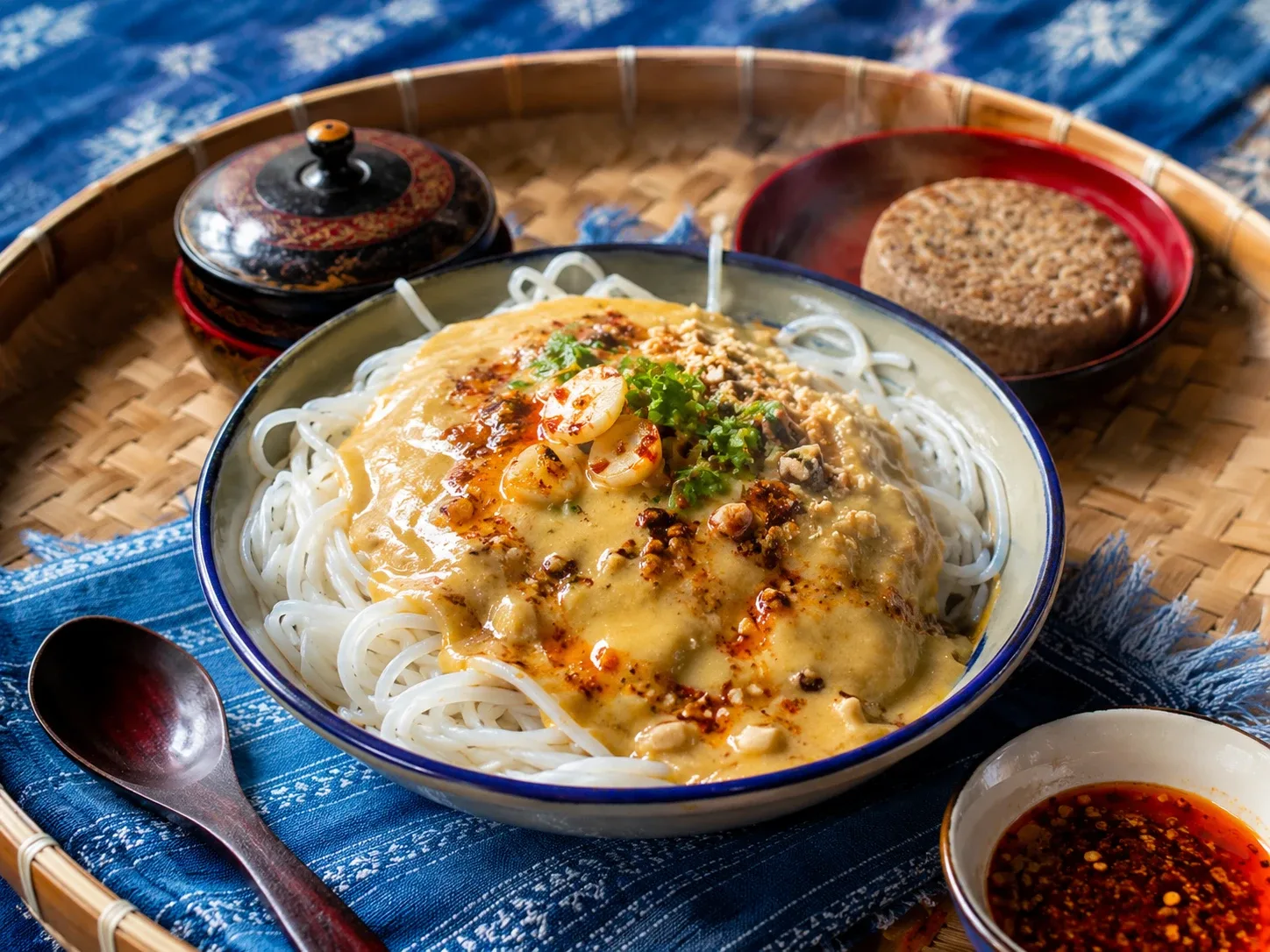
Tofu Nway, Warm Shan Tofu Noodlesတိုဟူးနွေး
Warm chickpea tofu that never sets, ladled like golden custard over rice noodles with garlic oil, chili, and peanuts — Shan State's great breakfast.
 ၂
၂Noodles & Mohinga · 40 min · Intermediate
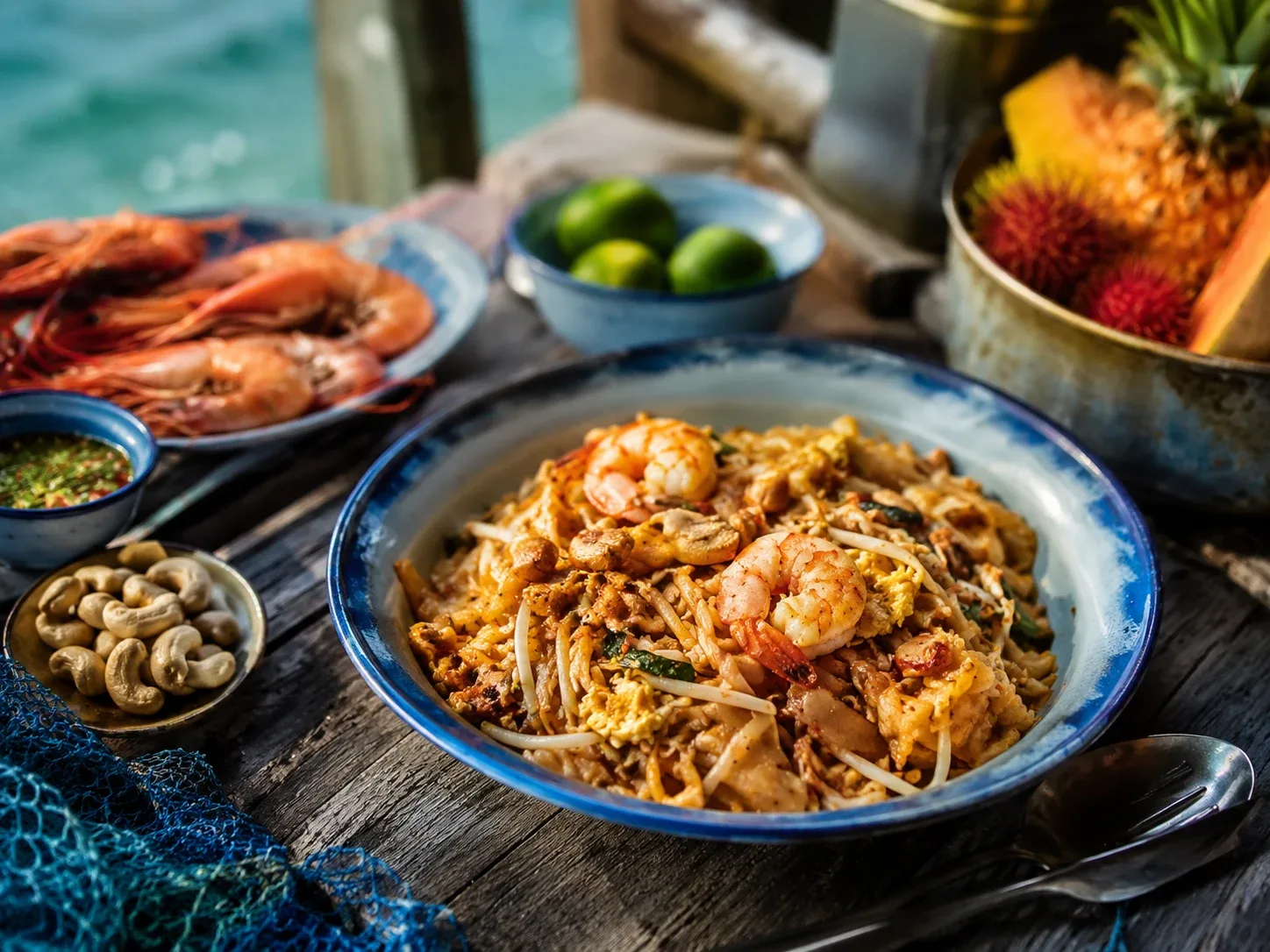
Kat Kyi Kaik, Dawei's Scissor-Cut Noodlesကတ်ကြေးကိုက်
Dawei's famous stir-fried rice noodles, snipped with scissors at the table — sweet-savory, smoky from the wok, piled with prawns, egg, and peanuts.
 ၅
၅Soups & Broths · 165 min · Beginner
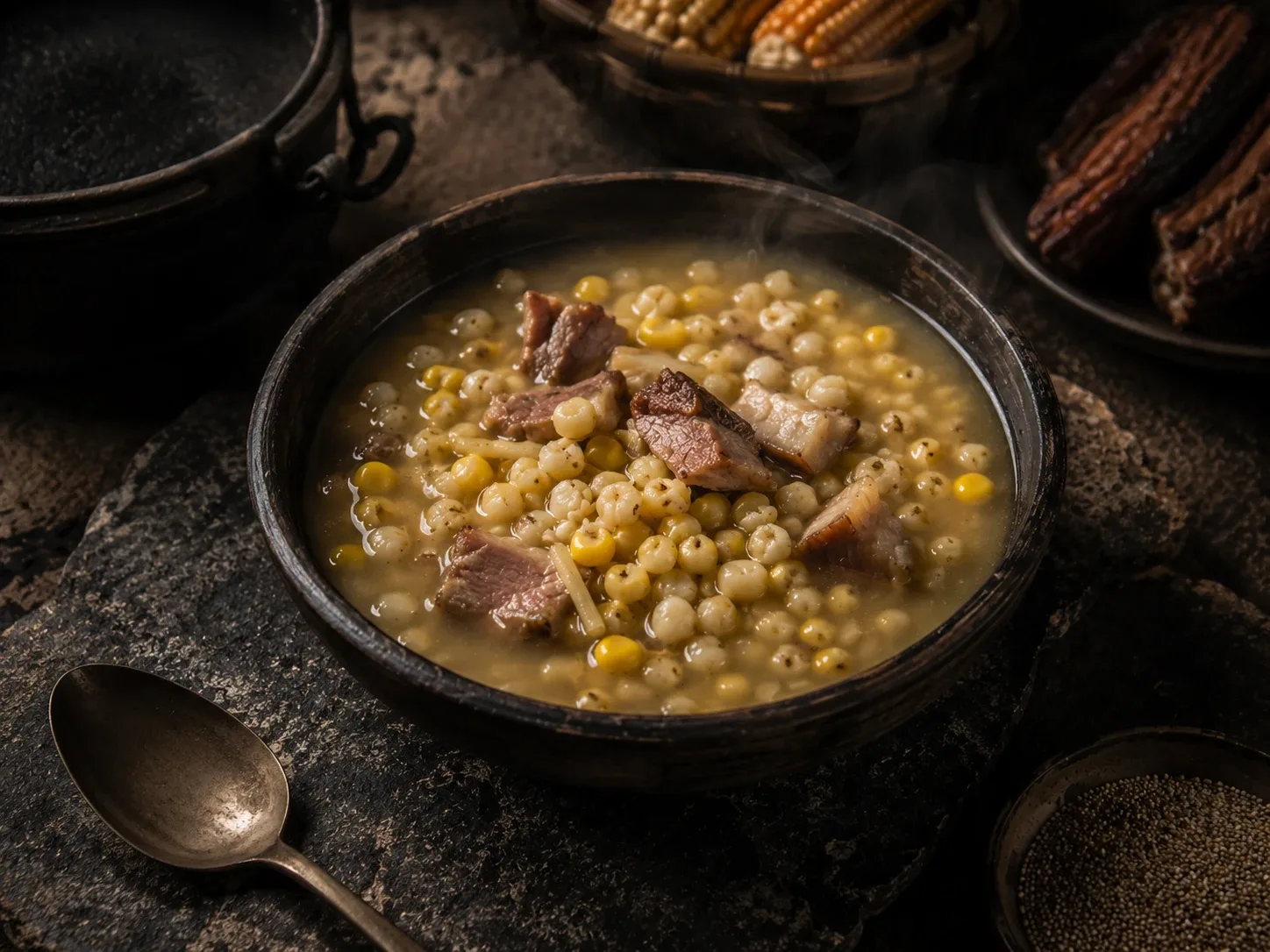
Sabuti, the Chin Corn Soup
The Chin hills' great corn soup — hominy maize simmered slowly with smoked pork and ginger, frugal mountain cooking that somehow eats like plenty.