Bamboo-Tube Sticky Rice
ဝါးခေါင်းထမင်း
Glutinous rice packed into green bamboo and roasted over embers until it steams in its own perfumed skin — the Kachin hills' portable rice, oven route included.
By Burmese Cookbook Kitchen · July 9, 2026
ကချင် Kachin StateKonbaung, 1752–1885
 ၁
၁- Prep
- 20 min
- Cook
- 75 min
- Serves
- 4
- Level
- Intermediate
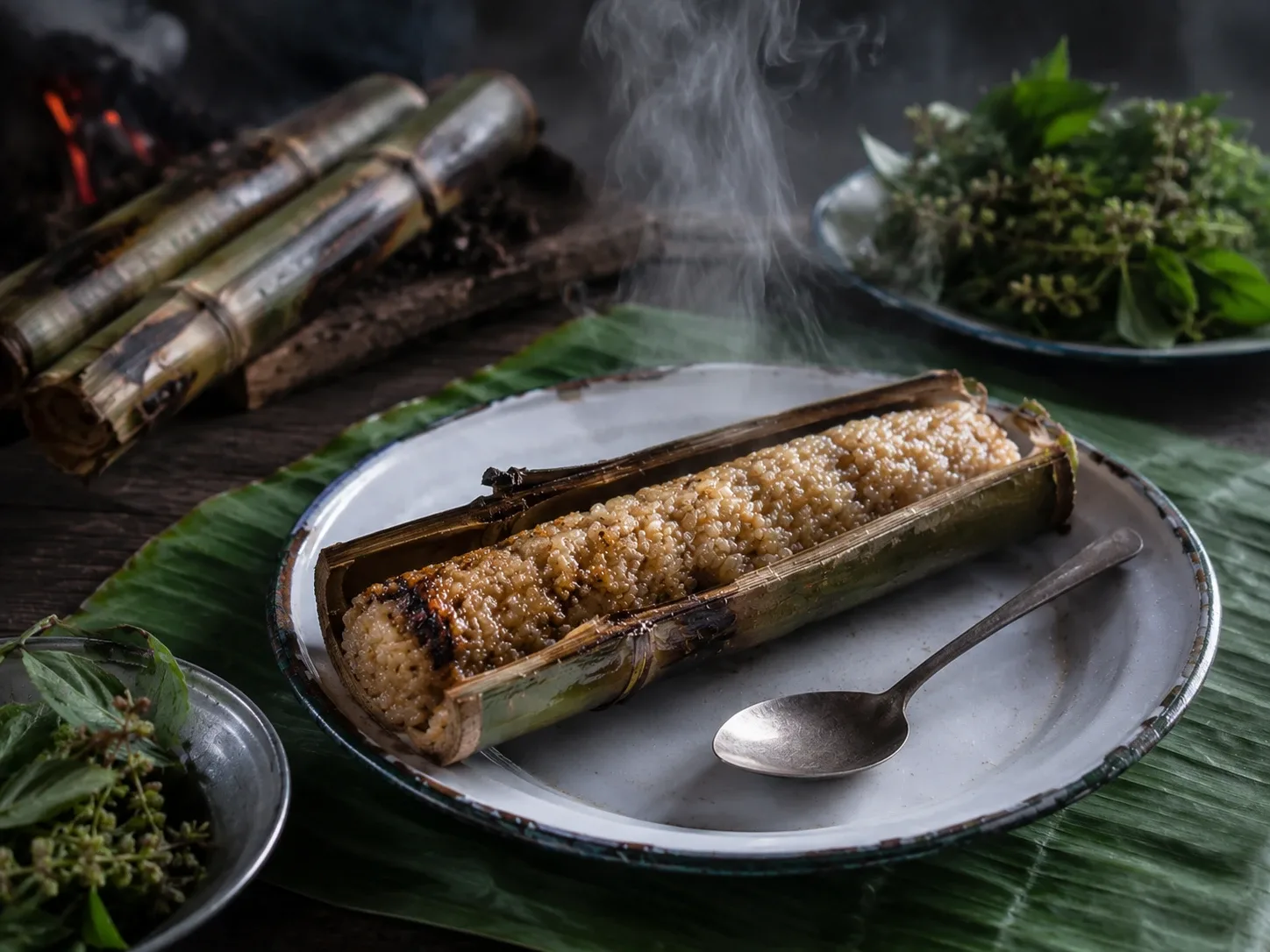
Before the lunchbox, the hills had bamboo. Cut a green section with one node left closed, fill it with soaked sticky rice and water, plug it with a twist of banana leaf, and stand it over embers: the tube becomes pot, steamer, and carrying case in one, and the rice comes out perfumed with bamboo sap, wrapped in the culm's papery inner skin. Wah khaung htamin — bamboo-tube rice — is eaten across upland Southeast Asia, but in Kachin State it remains working food: sold warm at Myitkyina's roadsides, packed for jade-country journeys, and stacked by the armload at manau festival grounds.
Dating it honestly is a lesson in humility. The technique is almost certainly ancient — cooking in green bamboo needs no metal and predates any pot the archaeologists can argue over — but the hills kept no menus. We file it under the Konbaung era as a conservative marker of the world it belongs to, and say plainly that the practice is older than any dynasty that ever tried to tax it.
The craft is all in restraint. Fill the tube two-thirds, no more, because the rice swells with real force. Roast over embers, never flame, turning patiently until the hissing stops — the sound of the water being drunk is your only timer. And rest the tube before you crack it, so the cylinder comes out whole, sliceable, and dressed in its bamboo membrane. Sesame salt on top if you like, though beside a mortar's worth of pounded beef it needs nothing at all.
The rice is done when the tube stops hissing and the kitchen smells faintly of toasted tea — that is the bamboo sap turning to steam, and it is the whole point.
မီးဖိုချောင်စကား · A word from the kitchen
Ingredientsပါဝင်ပစ္စည်း
Serves 4
Tap to check off as you gather
For the rice
- glutinous rice — soaked 4 hours or overnight — non-negotiable for even cooking
- salt
- water — approximate — you fill each tube to cover the rice by 2 cm
For the vessel
- fresh green bamboo — about 30 cm long and 7 cm wide, one node left closed as the base — some Asian markets stock them; the steamed parcel route below is the honest fallback
- banana leaf — for plugging the tubes, plus extra if you take the parcel route
To serve
- sesame seeds — toasted until golden
- coarse salt
Methodချက်နည်း
Tap a numeral as you finish each step
Step 1: Soak the rice
Rinse the glutinous rice until the water runs clear, then soak it for at least 4 hours or overnight. Ember-roasting is gentle, indirect heat — unsoaked rice will outlast the bamboo, and you will burn through the tube before the center cooks.
Step 2: Pack the tubes
Rinse the bamboo sections and drain the rice. Stir the salt through the rice, then fill each tube no more than two-thirds full — the rice swells hard, and an overfilled tube will split or blow its plug. Pour in water to cover the rice by 2 cm, then stopper the mouth loosely with a tight roll of folded banana leaf so steam can escape but rice cannot.
Step 3: Roast over embers
Prop the tubes at a steep angle over a bed of glowing embers — not flames — and roast for 60 to 75 minutes, rotating a quarter-turn every 10 minutes so the char builds evenly. The outside will blacken; that is correct. The tube is done when it has gone quiet: no more hissing means the free water has been drunk and the rice inside is steaming in the bamboo's own sap.
Step 4: Or take the parcel route
No bamboo, no fire: divide the soaked, salted rice among softened banana-leaf squares, add 2 tablespoons of water to each, fold into snug parcels, and steam for 45 minutes. You lose the bamboo-sap perfume — be honest with yourself about that — but you keep the shape, the leaf fragrance, and the festival spirit.
Step 5: Rest, crack, and peel
Rest the tubes upright for 15 minutes; the rice firms as it cools and will come out clean instead of tearing. Split the bamboo lengthwise with a cleaver and heavy tap, and peel it away — the rice emerges as a cylinder wearing the bamboo's papery inner membrane, which is edible and prized. Slice into thick rounds.
Step 6: Serve
Grind the toasted sesame with the coarse salt and scatter it over the rounds, or skip it and serve the rice beside pounded beef or a sour bamboo soup, where it does its best work — torn off in pieces, by hand.
ခွက်ယောက် · The tools
Equipment
Rice cooker
ထမင်းအိုးConsistent long-grain rice with zero attention — and in a Burmese kitchen the rice is never optional.
Shop on Amazon →Stone mortar & pestle
ဆုံFor garlic-ginger paste, pounded dried shrimp fluff, and crushed peanuts — the blender lies about texture; the stone doesn’t.
Shop on Amazon →
Equipment links are Amazon affiliate links. As an Amazon Associate we earn from qualifying purchases, at no cost to you. Disclosure.
ဟင်းစုံ · Set the table
A Burmese meal is a spread
The quiet base of the meal — build the rest of the spread around it:
- A curryဟင်းSlow-cooked until the oil returns — the richness the sides cut against.
- A light soupဟင်းချိုThe clear, sour broth sipped between mouthfuls of rice.
- Toh sa yar & ngapi dipတို့စရာRaw and blanched vegetables with a pungent fish-paste dip — the fresh, bitter counterpoint.
- A hand-tossed thokeအသုပ်A bright, sour salad to lift the whole spread.
- Si chet, chili oilဆီချက်The fragrant red oil every household keeps by the stove.
Questions from the kitchen
Where do I find green bamboo?
Some Vietnamese and Thai markets sell fresh bamboo sections around the new-year holidays, and garden bamboo of the thick-walled kind works if it has never been treated. It must be green and fresh-cut — dried or varnished bamboo splits, scorches, and gives nothing back.
Is this the same as Thai khao lam?
Close cousins from the same upland family. Khao lam usually carries coconut milk, sugar, and sometimes black beans — a sweet snack. The Kachin tube is savory and plain, salted only, because it is a staple meant to sit beside pounded meat and broth, not a dessert.
How long does it keep?
Sealed in its tube, a full day at cool room temperature — which is precisely why it was journey food. Once opened, treat it like any sticky rice: refrigerate up to two days and re-steam to revive it. The membrane skin keeps slices from drying out.
Can I use a loaf pan in the oven?
You can bake a banana-leaf-lined, foil-covered pan of soaked rice and water at 180°C for about 50 minutes and get good sticky rice with a whisper of leaf. It is a fine staple. It is not wah khaung htamin — without live fire and green bamboo you are making a memory of the dish, and memories are still worth eating.
နောက်တစ်ခု · Cook next
Keep the wok hot
 ၁
၁Rice & Foundations · 30 min · Beginner
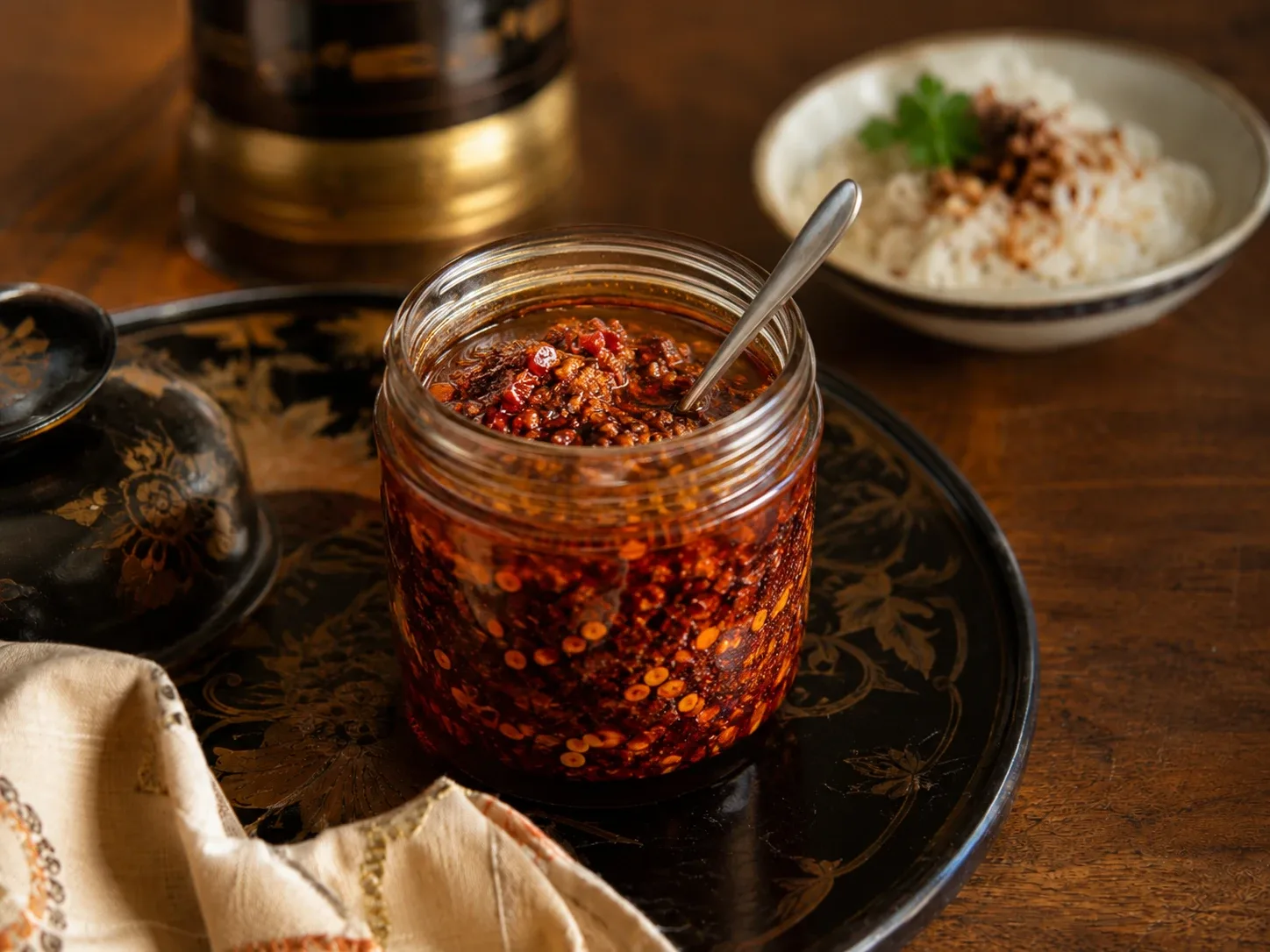
Si Chet, Burmese Chili Oilဆီချက်
The essential Burmese table oil — peanut oil gently fried with chili flakes, garlic, shallot, and a little ngapi, then spooned red over rice, noodles, and salads.
 ၁
၁Rice & Foundations · 40 min · Beginner
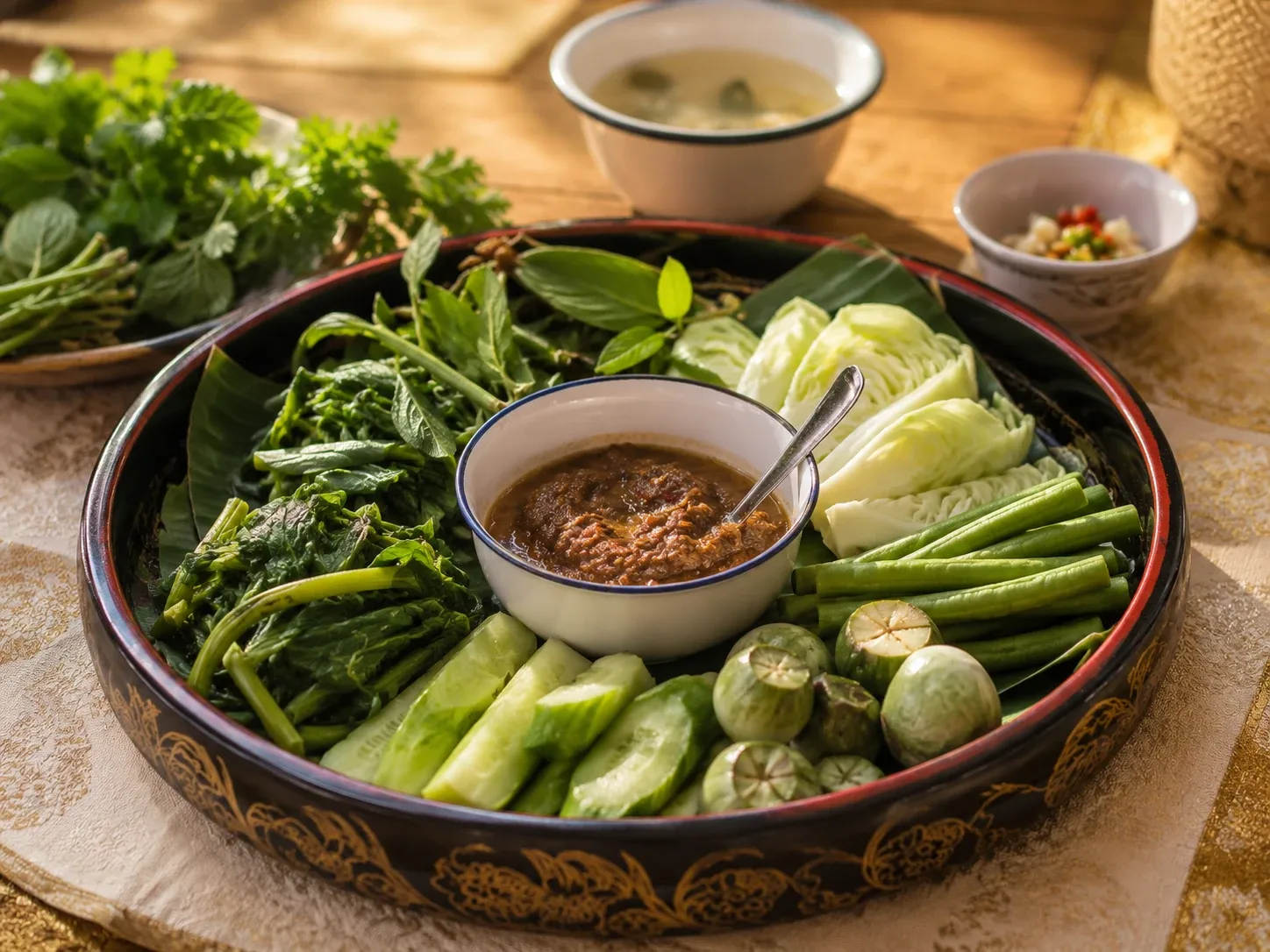
Toh Sa Yar, the Vegetable & Ngapi Platterတို့စရာ
The platter of raw and blanched vegetables around a pungent ngapi dip that no Burmese meal is complete without — the fresh, bitter counterpoint to curry.
 ၅
၅Soups & Broths · 165 min · Beginner
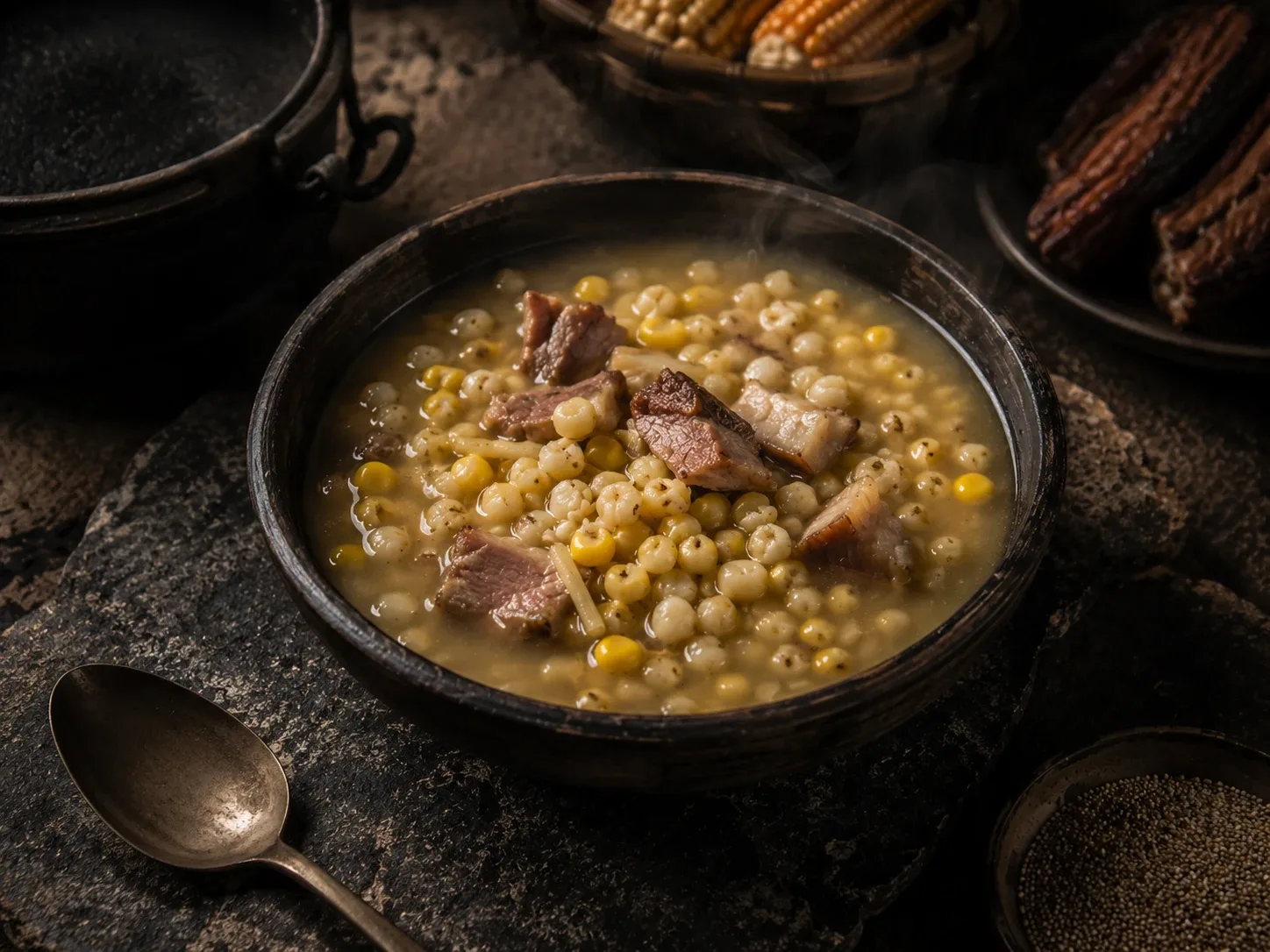
Sabuti, the Chin Corn Soup
The Chin hills' great corn soup — hominy maize simmered slowly with smoked pork and ginger, frugal mountain cooking that somehow eats like plenty.