Koat Pitha, Banana & Rice Fritters
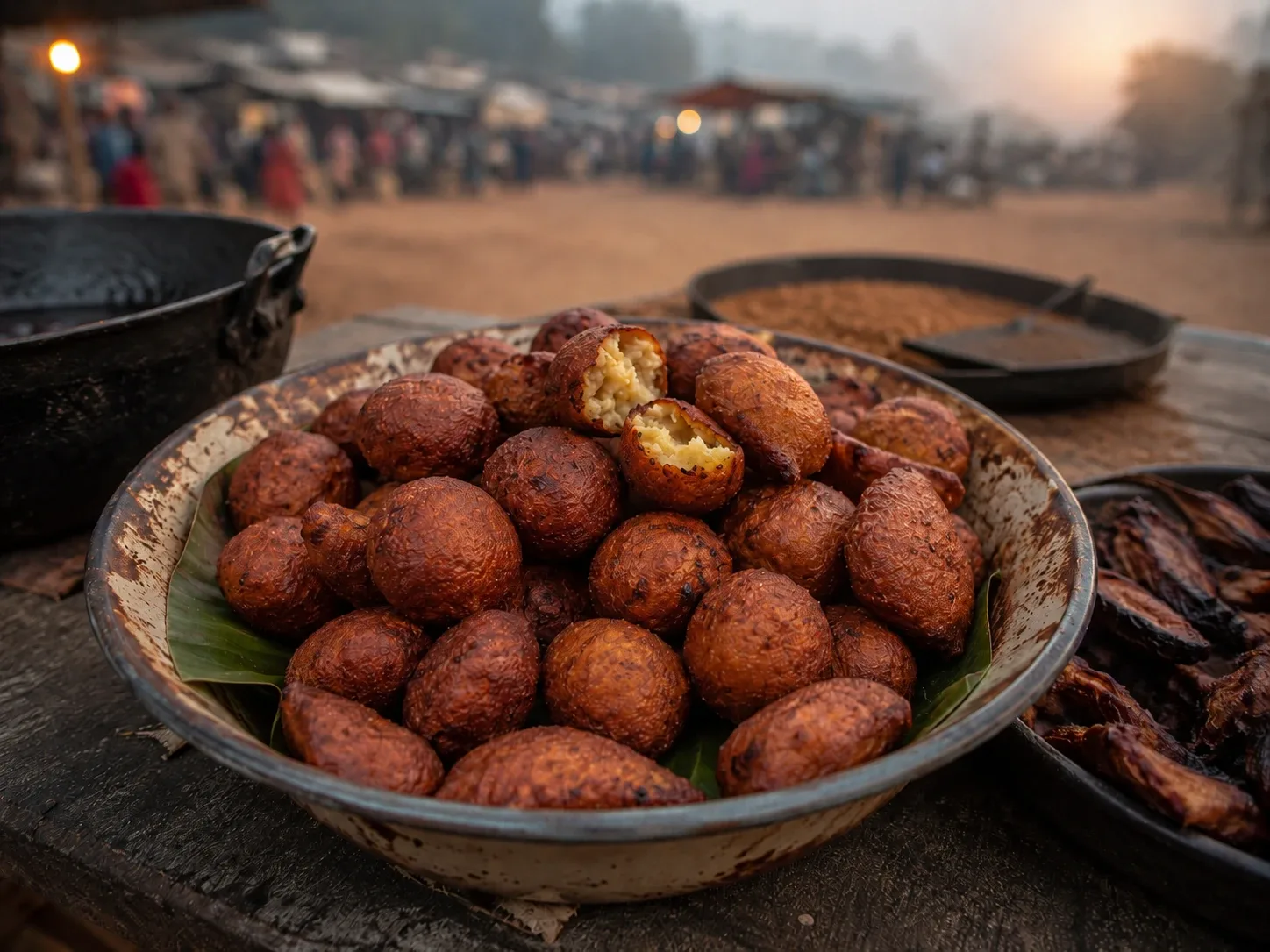
The Chin-Mizo festival fritter — ripe banana kneaded into rice flour with jaggery and fried into dark, crisp-edged cakes with molten, custardy hearts.
By Burmese Cookbook Kitchen · July 9, 2026
ချင်း Chin HillsOpening & Diaspora, 1988–present
 ၇
၇- Prep
- 15 min
- Cook
- 25 min
- Serves
- 6
- Level
- Beginner
Cross the Zo hills during any festival — Chapchar Kut in the spring, Christmas in the deep cool season, a wedding whenever love and logistics align — and somewhere a wide pan of oil is turning out koat pitha: dark, crisp-shelled fritters of ripe banana, rice flour, and jaggery, stacked on trays and disappearing as fast as decency allows. The name is Mizo, and the sweet belongs to the whole Chin-Mizo world, one kitchen strung across the India-Myanmar border. In Mizoram it has been called the king of festival snacks; in Chin villages the same cakes come off the same fires with less publicity.
The record deserves its usual honesty. Koat pitha enters print recently, through food writing about Mizo tables, and its history before that is oral — though bananas, rice, and jaggery have kept company in these hills for as long as anyone can say. We date the paper trail, not the practice.
What separates koat pitha from the banana fritters of the lowlands is that the banana is not dipped in batter — it is the batter. Truly ripe fruit is mashed into rice flour and dark jaggery, and everything follows from those three choices: the fruit brings moisture and perfume, the rice flour fries to a glassy-chewy shell no wheat flour can imitate, and the jaggery caramelizes the whole cake to mahogany. Your only jobs are ripeness, a batter that drops rather than pours, and the nerve to fry darker than instinct suggests. The hills will forgive anything but pale.
Fry darker than fear tells you to — jaggery browns fast, and the true koat pitha color is deep mahogany, not doughnut gold. Pale ones taste of raw flour.
မီးဖိုချောင်စကား · A word from the kitchen
Ingredientsပါဝင်ပစ္စည်း
Serves 6
Tap to check off as you gather
For the batter
- ripe bananas — truly ripe — freckled to nearly black; about 400 g peeled. Underripe bananas make a dull, starchy fritter
- rice flour — plain, not glutinous — the crisp shell depends on it
- palm sugar (jaggery) — grated or shaved; dark cane jaggery is the hill standard
- salt
- sesame seeds — optional but common — half in the batter, half saved for scattering
For frying
- peanut oil — or another neutral high-heat oil, for deep-frying
Methodချက်နည်း
Tap a numeral as you finish each step
Step 1: Mash the bananas smooth
Peel and mash the bananas in a wide bowl to a nearly smooth pulp — a few small lumps are welcome, becoming jammy pockets in the fried cake. Ripeness is doing the heavy lifting here: sweetness, moisture, and perfume all come from the fruit, which is why the recipe refuses an underripe banana.
Step 2: Dissolve in the jaggery
Add the grated jaggery and salt to the warm-smelling mash and stir until the sugar has fully dissolved into it. Undissolved jaggery pockets scorch in the oil before the batter around them cooks, so give this step the extra minute it asks for.
Step 3: Fold in the rice flour
Add the rice flour and half the sesame seeds and fold to a thick, drop-able batter — it should fall heavily off a spoon in one reluctant blob, not pour. Bananas vary; if the batter pours, add flour a spoonful at a time, and if it stands stiff as dough, loosen it with a splash of water. Rest it 10 minutes so the flour drinks.
Step 4: Fry in modest batches
Heat the oil in a wok or deep pot to 170°C — a drop of batter should rise steadily, not erupt. Slide in heaped tablespoons of batter, five or six at a time, and fry, turning once, for 3 to 4 minutes per side until deep mahogany. Jaggery browns faster than sugar, so trust the dark color; it is caramel, not carbon, until it smells bitter.
Step 5: Drain and serve warm
Lift the fritters onto a rack or paper, scatter with the remaining sesame, and give them five minutes — straight from the oil the centers are lava. Properly rested, each cake is crisp at the edge, chewy in the shell, and molten-custardy at the heart. Best warm with tea, and honestly still good cold from the tin the next morning.
ခွက်ယောက် · The tools
Equipment
Carbon-steel wok
ဒယ်အိုးThe dai-oh — for si pyan curries, fritters, and every fried-noodle dish here. Carbon steel, seasoned dark, nothing fancy.
Shop on Amazon →Heavy pot / Dutch oven
အိုးကြီးDeep and heat-retentive — for mohinga broth, long-simmered hin, and deep-frying without temperature crashes.
Shop on Amazon →Frying thermometer
အပူချိန်တိုင်းThe difference between shattering buthi kyaw and greasy buthi kyaw is oil held at temperature — stop guessing.
Shop on Amazon →Box grater / microplane
ခြစ်စက်Fine ginger, green papaya shreds, and toddy-palm jaggery shavings.
Shop on Amazon →
Equipment links are Amazon affiliate links. As an Amazon Associate we earn from qualifying purchases, at no cost to you. Disclosure.
ဟင်းစုံ · Set the table
A Burmese meal is a spread
A mont wants a cup of something beside it:
How a Burmese meal is built →Questions from the kitchen
Can I use wheat flour instead of rice flour?
You can, but you will have made a different, cakier fritter — the crisp-chewy shell that defines koat pitha comes from rice flour, which fries glassy where wheat fries bready. If you must blend, keep rice flour as at least half. Glutinous rice flour is the wrong direction entirely; it turns the cakes to mochi.
My fritters browned before the middle cooked. What happened?
Oil too hot, or fritters too large — jaggery batter darkens fast, and a heaped tablespoon is genuinely the ceiling. Drop the heat to keep the oil near 170°C and hold each side under 4 minutes. A tester split open should show a moist but set crumb, not wet batter.
Are these the same as Burmese banana fritters?
Cousins, not twins. Lowland nga pyaw kyaw is a battered whole banana — fruit dipped and fried. Koat pitha kneads the banana into the batter itself with jaggery, so the fruit is the cake rather than its filling, and the jaggery fries it darker and deeper-flavored. It is the standard festival sweet of the Zo hills on both sides of the border.
နောက်တစ်ခု · Cook next
Keep the wok hot
 ၇
၇Sweets & Mont · 50 min · Beginner
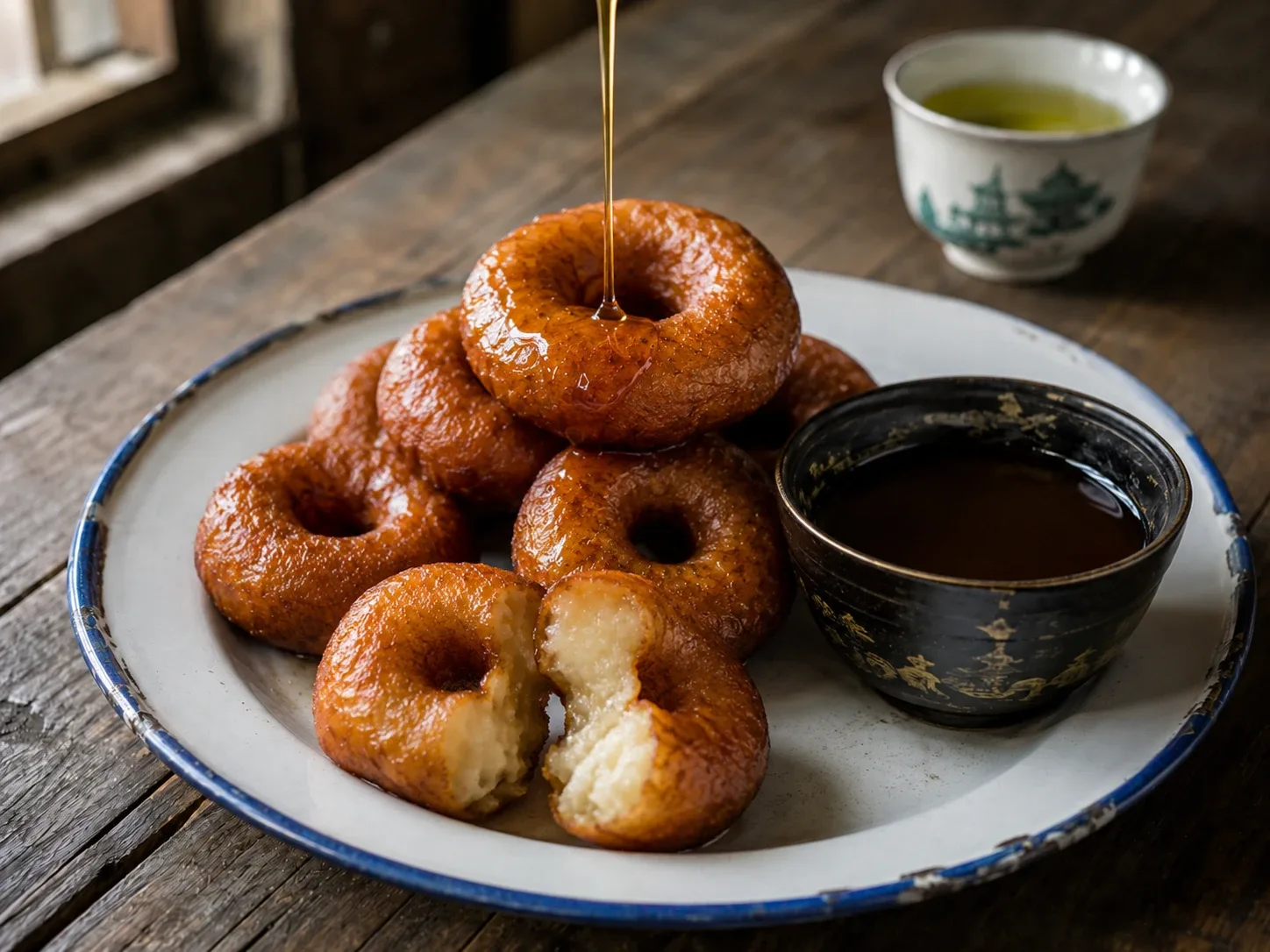
Mont Let Kauk, the Burmese Bracelet Doughnutမုန့်လက်ကောက်
Chewy glutinous rice rings fried until blistered and gold, then drowned in warm toddy-palm jaggery syrup — the teahouse doughnut Burma names after a bracelet.
 ၇
၇Sweets & Mont · 40 min · Beginner
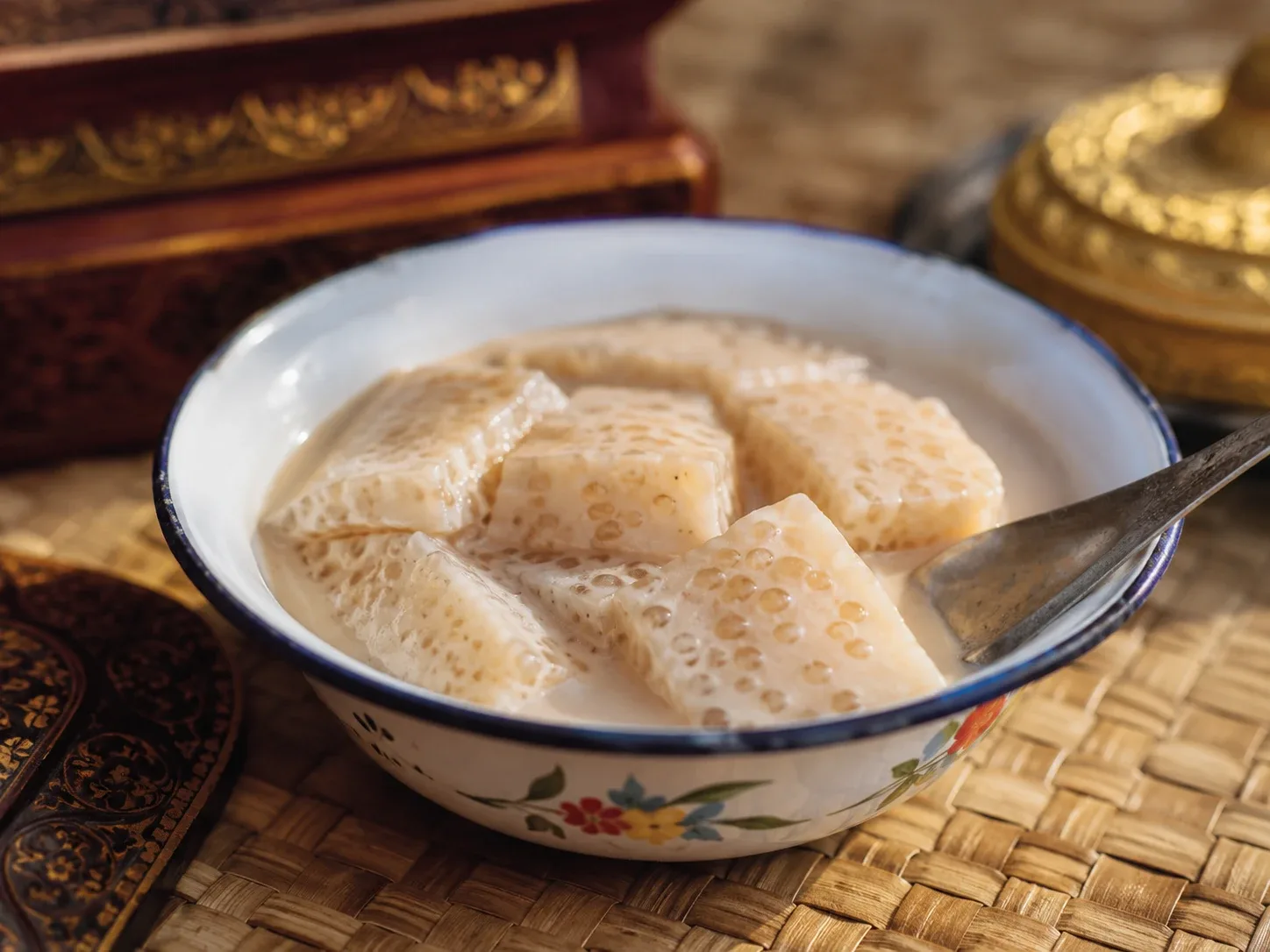
Thagu Byin, Sago & Coconut Milk Puddingသကူမုန့်
A cooling hot-season pudding of translucent sago pearls set in coconut milk and palm sugar, sliced into wobbling squares — sold from glass cabinets on the hottest afternoons.
 ၁
၁Rice & Foundations · 210 min · Intermediate
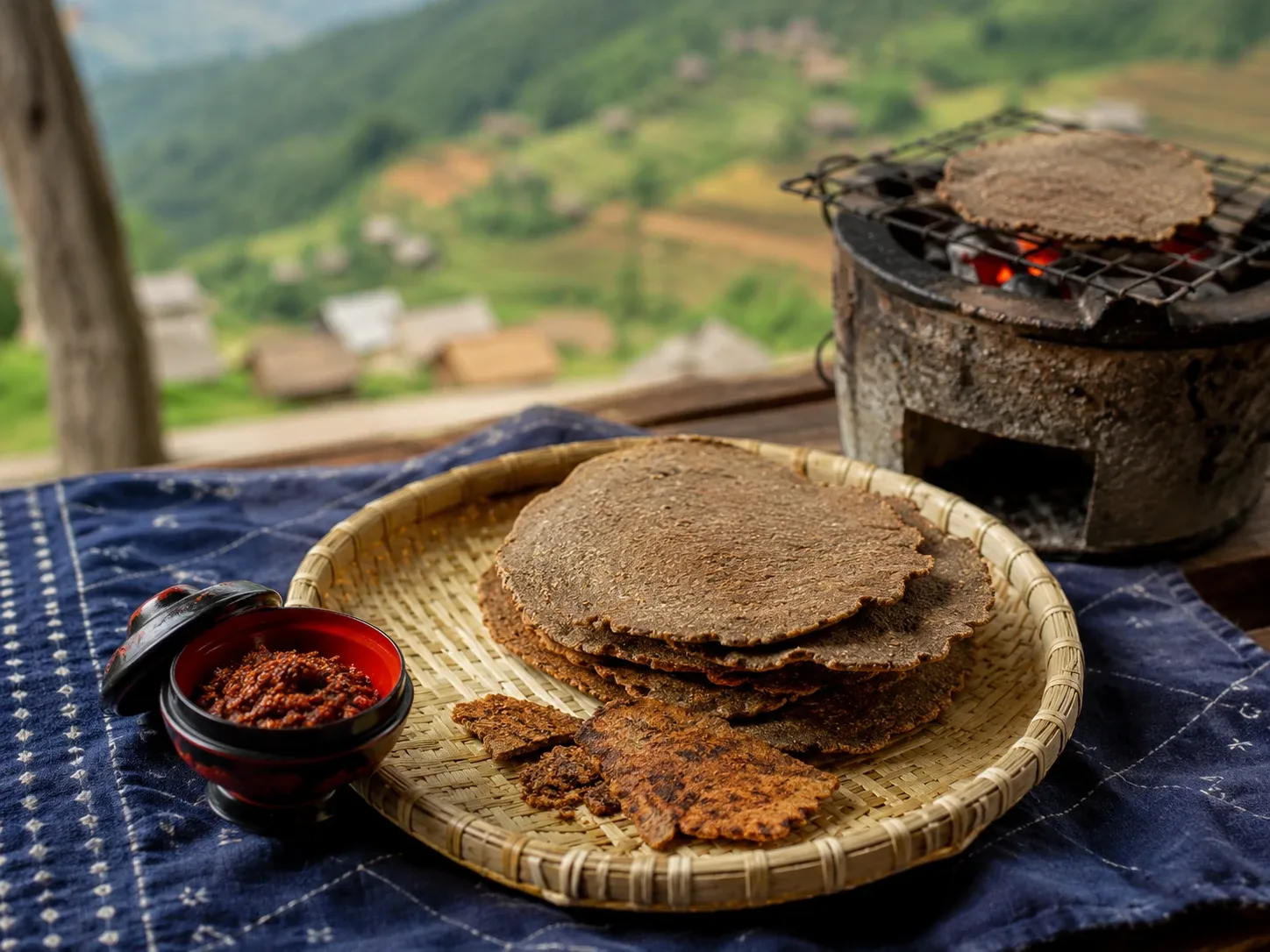
Tua Nao, Shan Fermented Soybean Discsပဲပုပ်
Shan State's seasoning backbone — soybeans boiled, fermented, pounded, and sun-dried into discs you toast over flame and crumble into everything.