Nan Bya, the Mandalay Teahouse Flatbread
နံပြား
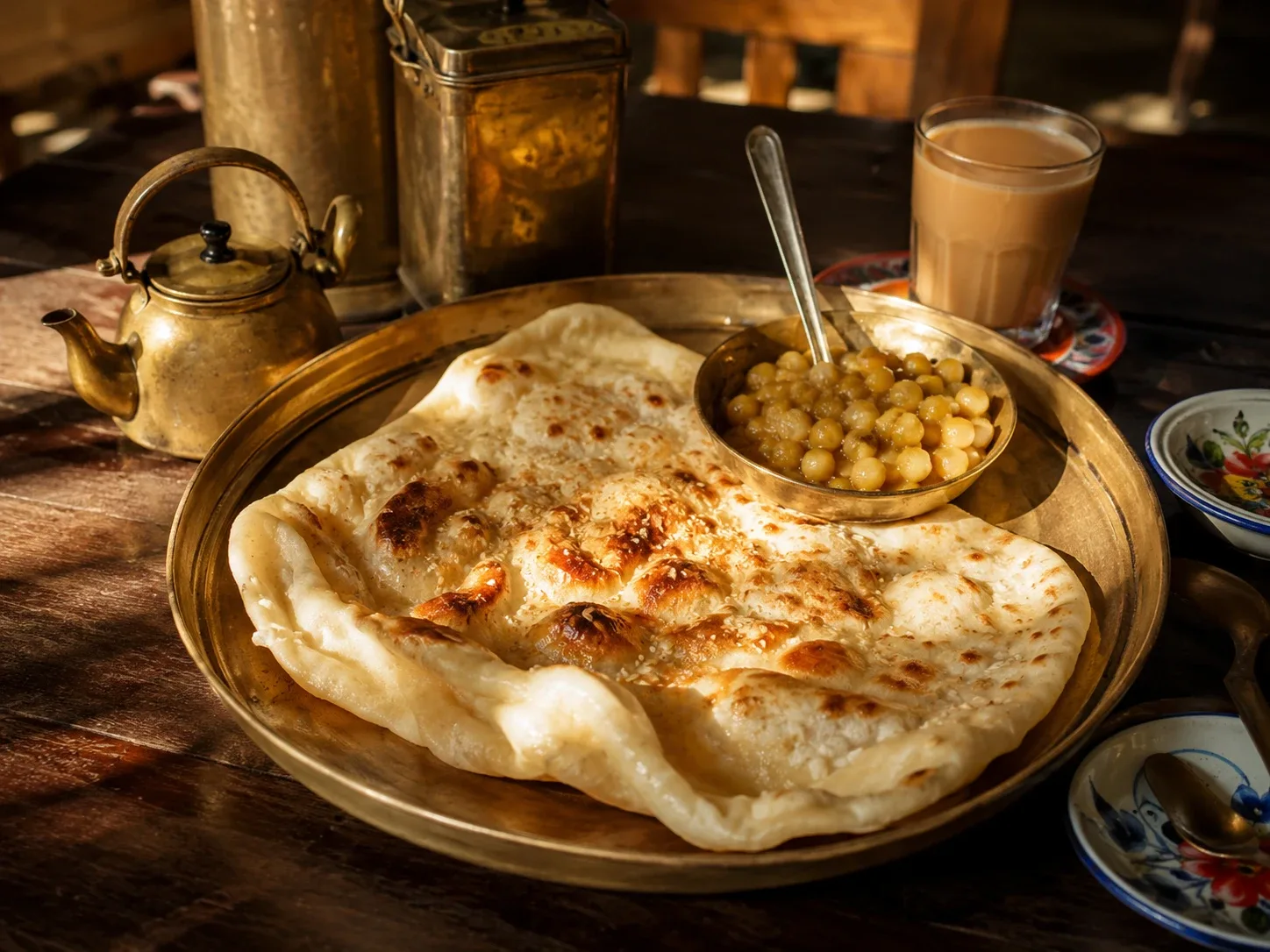
Mandalay's teahouse flatbread — soft, blistered naan baked hot on a skillet and served the classic way, with buttery boiled yellow peas and sweet milky tea.
Also spelled: Nan Pya · Nanbya · Nan-piar
By Burmese Cookbook Kitchen · July 9, 2026
အညာ Upper Burma & MandalayBritish Burma, 1826–1948
 ၆
၆- Prep
- 110 min
- Cook
- 25 min
- Serves
- 4
- Level
- Intermediate
Every Mandalay morning runs on the same three-part harmony: hot flatbread, buttery boiled peas, and tea sweet enough to stand a spoon in. The bread is nan pya — Myanmar's naan — and the pairing with pè byouk, soft yellow peas glossed with oil and turmeric, is so fixed that ordering one without the other feels like a typing error.
The bread's road to Mandalay is honest colonial history, not legend. Indian bakers, soldiers, and railway workers arrived in Upper Burma in great numbers after 1885, and their tandoor breads settled into the Burmese teahouse — an institution that is itself a colonial-era hybrid of Indian, Chinese, and Burmese habits. A century on, the teahouse is thoroughly Burmese, and so is its bread: softer and slightly sweeter than a Punjabi naan, always torn by hand, always dragged through peas.
Two things separate a real nan pya from a supermarket flatbread. The dough must be soft to the point of tackiness — yogurt and a slow rise do the work — and the pan must be genuinely, alarmingly hot, so the surface blisters and chars in leopard spots while the crumb stays cloud-tender. Dimpling the dough before it hits the pan keeps it from puffing into a balloon and gives you those craggy patches that catch the melted butter. Make the peas first, brew the tea strong, and serve the breads faster than you can bake them; nan pya waits for no one, which is why teahouse tables sit so close to the oven.
A nan pya is done when the top blisters and the bottom is leopard-spotted — if yours comes out pale and stiff, your pan was not hot enough. Courage with the heat.
မီးဖိုချောင်စကား · A word from the kitchen
Ingredientsပါဝင်ပစ္စည်း
Serves 4
Tap to check off as you gather
For the dough
- all-purpose flour — plus more for dusting
- instant yeast
- salt
- sugar
- plain yogurt — the teahouse secret for a tender crumb
- warm water
- peanut oil — plus more for the bowl and for brushing
To serve
- cooked yellow split peas (pè byouk) — warm, seasoned with a little salt, turmeric, and peanut oil — see our pè byouk recipe
- peanut oil — or melted butter, for brushing the hot breads
- sweet milky black tea — strong black tea with condensed milk — the non-negotiable companion
Methodချက်နည်း
Tap a numeral as you finish each step
Step 1: Make a soft dough
Whisk the flour, yeast, salt, and sugar in a large bowl. Add the yogurt, oil, and most of the warm water, then mix and knead — in the bowl at first, then on the counter — for 8 to 10 minutes, adding the last water only if the dough feels tight. You want it soft and slightly tacky; a firm dough bakes into cardboard, and teahouse nan pya is pillowy.
Step 2: Let it rise slowly
Oil the bowl, turn the dough in it, cover, and let it rise until doubled — about 90 minutes at room temperature. Teahouse bakers mix before dawn and let time do the flavor work; do not rush this with a hot oven trick, because an underproofed dough will not blister.
Step 3: Divide and rest
Punch the dough down gently and divide it into 8 pieces. Roll each into a ball, cover, and rest 15 minutes. The rest relaxes the gluten so the breads roll out thin without springing back — skip it and you will fight every disc.
Step 4: Shape the breads
On a lightly floured counter, roll each ball into an oval roughly 20 cm long and just under 1 cm thick, slightly thicker at one end — the teardrop shape that fits a tandoor wall. Dimple the surface firmly with your fingertips; the dimples hold the bread down so it blisters in patches instead of ballooning like a puri.
Step 5: Bake on a screaming-hot pan
Heat a heavy cast-iron pan or griddle over high heat until a drop of water skitters and vanishes. Lay a bread in dry — no oil — and cook until the top bubbles and the base is spotted deep brown, about 90 seconds. Flip and give the second side a minute. A lid over the pan for the last 30 seconds mimics the closed heat of the clay oven.
Step 6: Brush and serve immediately
Brush each hot bread with peanut oil or butter and stack them under a cloth while you finish the batch. Serve torn at the table, dragged through warm pè byouk, with hot sweet tea. This is the whole Mandalay teahouse breakfast — bread, peas, tea, conversation.
ခွက်ယောက် · The tools
Equipment
Frying spider
ဇကာLift fritters clean out of the oil and drain them fast, before the crust turns soft. The street cook’s third hand.
Shop on Amazon →Flat griddle
သံပြားFor mont lin ma yar’s dimpled pan cousin jobs, flatbreads, and toasting — cast iron holds the heat steady.
Shop on Amazon →
Equipment links are Amazon affiliate links. As an Amazon Associate we earn from qualifying purchases, at no cost to you. Disclosure.
ဟင်းစုံ · Set the table
A Burmese meal is a spread
Snack-shop fare, eaten with the usual scatter of condiments:
- Si chet, chili oilဆီချက်The fragrant red oil every household keeps by the stove.
- Crispy fried shallotsကြက်သွန်ကြော်A spoonful of crunch and sweet shallot oil over anything.
- Teahouse milk teaလက်ဖက်ရည်How a Burmese meal ends — sweet, strong, and slow.
Questions from the kitchen
Can I bake these in the oven instead?
Yes — a pizza stone or upturned baking sheet under the hottest broiler gets close to a tandoor. Slide the breads on and watch them; they take 2 to 3 minutes and burn in four. The skillet method is more forgiving and what most Burmese home cooks actually do.
What if I do not have yogurt?
Use 3 tablespoons of milk with a small squeeze of lime and let it sit five minutes. The acidity tenderizes the crumb and helps browning; plain water works but gives a chewier, flatter bread — closer to a roti than a nan pya.
What exactly is pè byouk?
Yellow split peas or field peas boiled until tender but not collapsed, dressed with salt, a pinch of turmeric, and a spoon of oil. It is the standard teahouse partner for nan pya and e kya kway alike — we have a full recipe on the site, and leftovers are the honest reason to make extra.
နောက်တစ်ခု · Cook next
Keep the wok hot
 ၆
၆Street & Fritters · 40 min · Intermediate
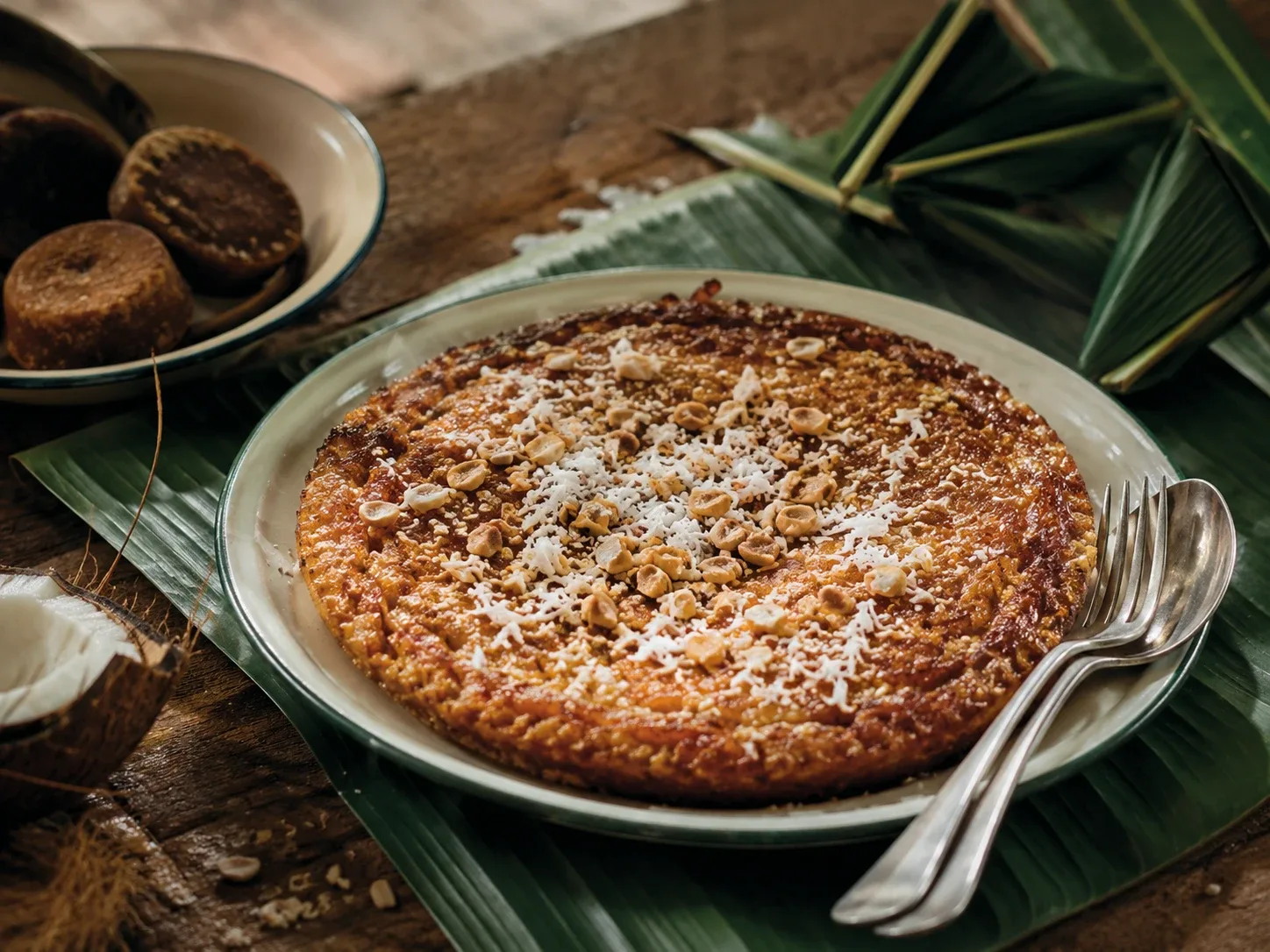
Bein Mont, the Jaggery Griddle Pancakeဘိန်းမုန့်
A thick rice-flour pancake raised on jaggery and crisped in a covered pan, showered with peanuts, coconut, and sesame — Lower Burma's teashop griddle mont.
 ၆
၆Street & Fritters · 25 min · Beginner
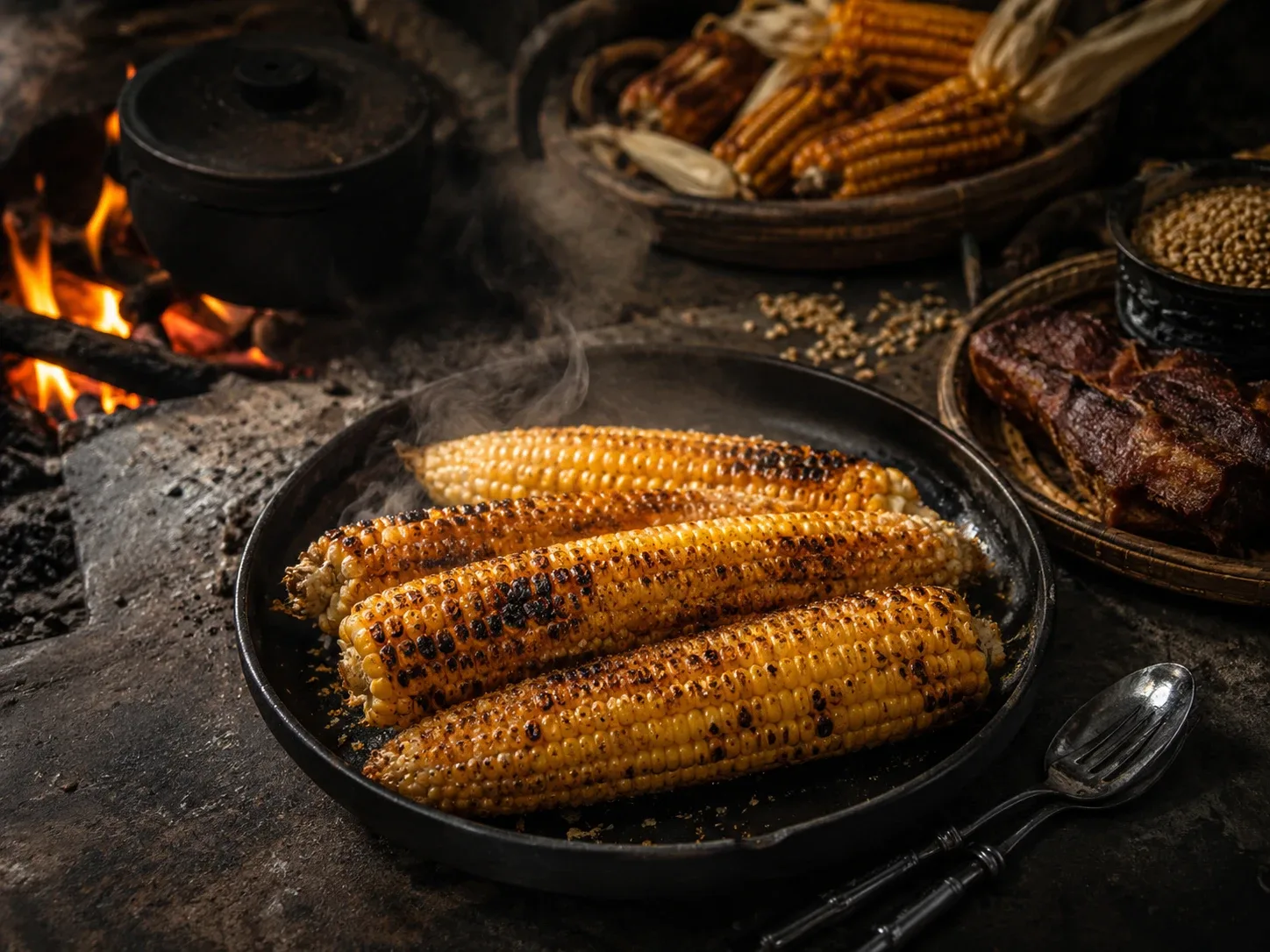
Fire-Roasted Corn with Chili Salt
Ears of corn roasted dark over open coals and rubbed with pounded chili salt — the taste of a Chin market morning, where maize is the mountain staple.
 ၇
၇Sweets & Mont · 105 min · Intermediate
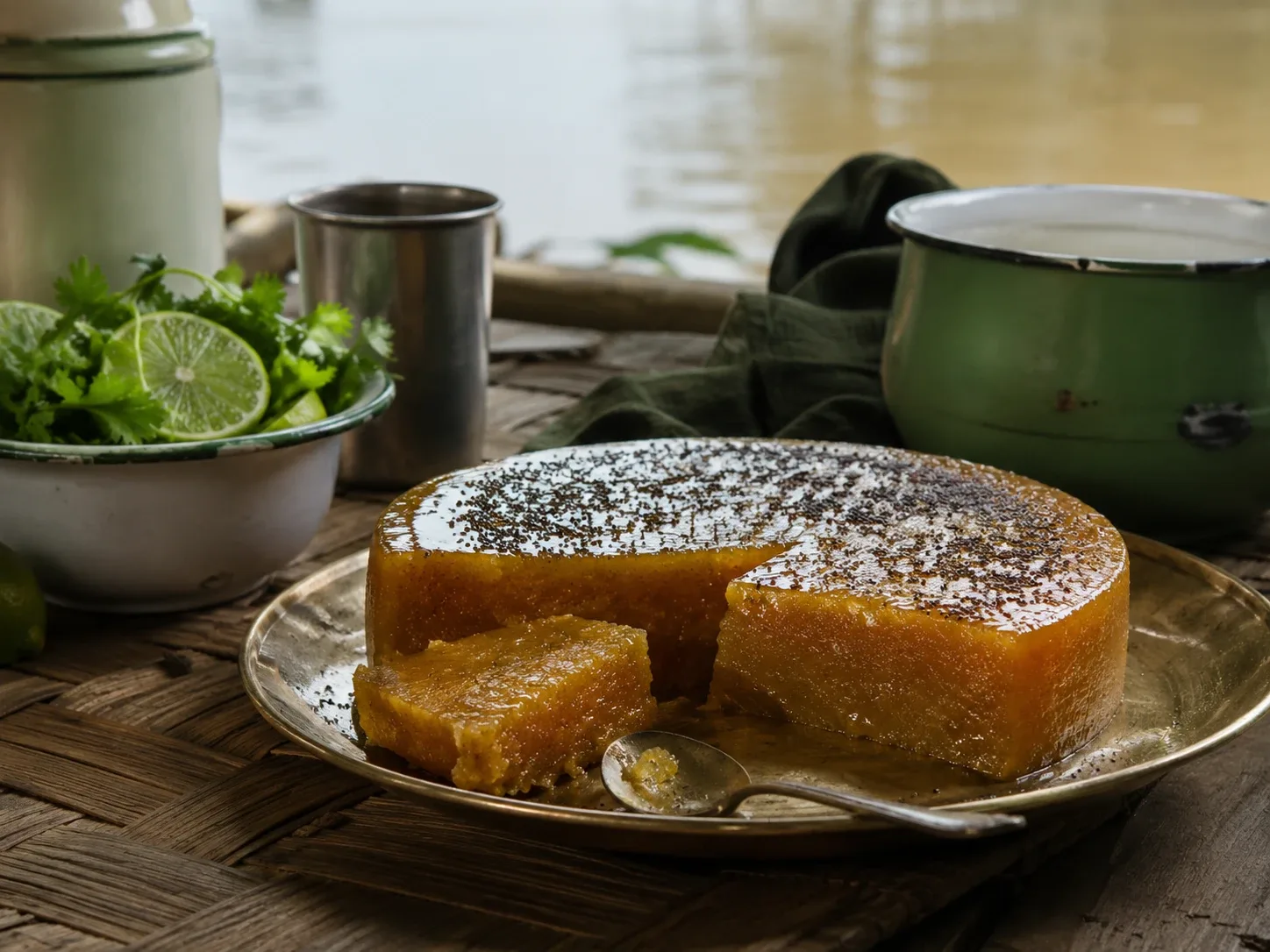
Pathein Halawa, the Delta's Gilded Sweetပုသိမ်ဟလဝါ
Pathein's famous glutinous-rice halawa — coconut milk, sugar, and ghee stirred patiently down to a dense, gleaming amber slab crowned with toasted poppy seeds.