Ngapi Daung, Pounded Fish-Paste Relish
ငါးပိထောင်း
Roasted fish paste pounded with charred chilies, garlic, and dried shrimp — the fierce relish at the center of the Mon table, eaten with rice and raw greens.
By Burmese Cookbook Kitchen · July 9, 2026
မွန် Mon & Kayin CountryTaungoo, 1510–1752
 ၁
၁- Prep
- 15 min
- Cook
- 10 min
- Serves
- 6
- Level
- Beginner
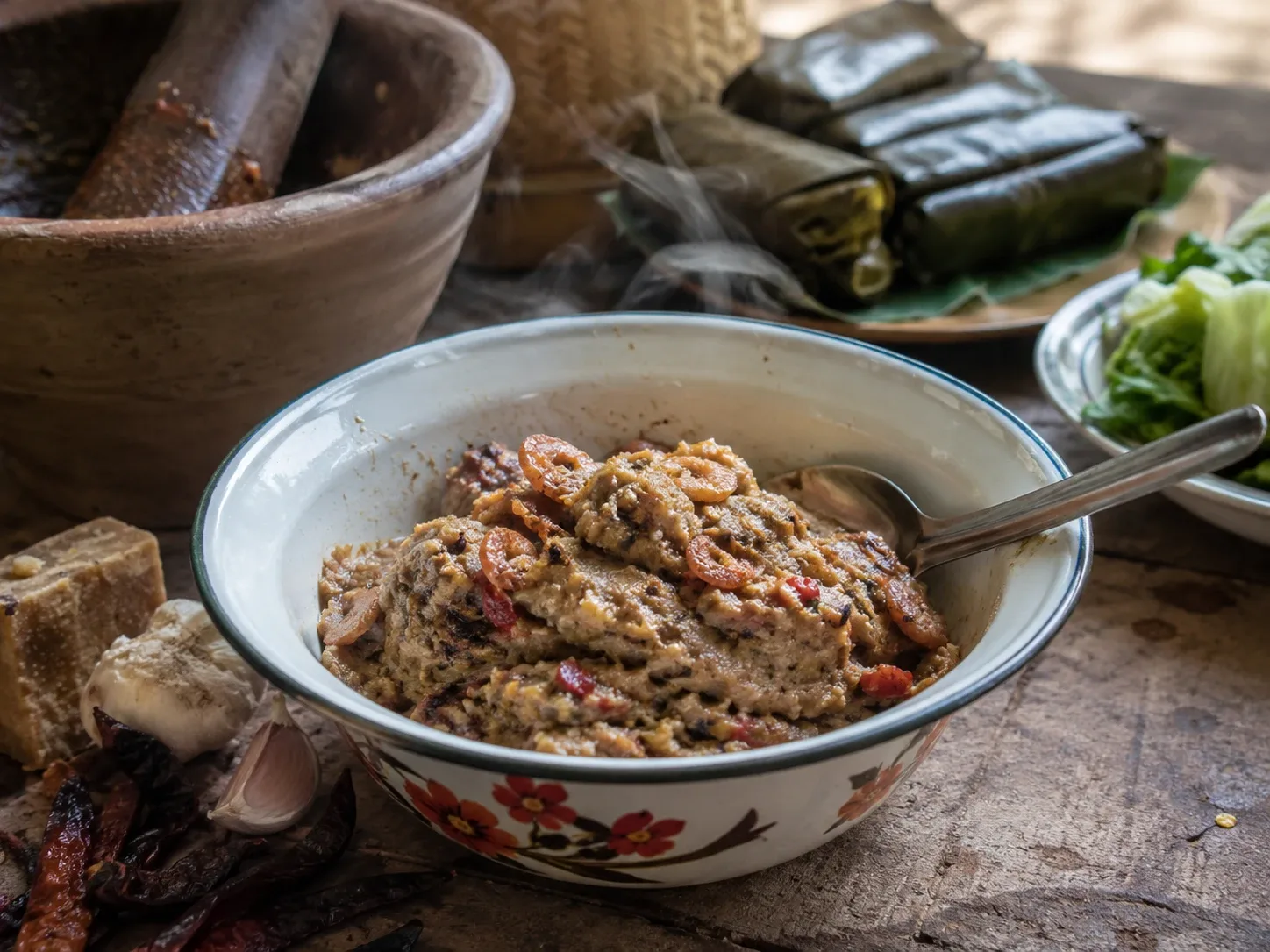
Set a Mon table honestly and the ngapi goes in the middle — not as a condiment at the edge of the meal but as its gravitational center, with rice, vegetables, and everything else in orbit. Ngapi daung is that center at its most concentrated: fish paste roasted until it blooms, pounded with charred shallots, garlic, and chilies, and sharpened with lime. Daung means pounded, and the mortar is the whole apparatus — no frying, no simmering, just fire, stone, and salt.
The Gulf of Mottama has salted and fermented its catch for as long as anyone can say, and here the paper trail is unusually old and unusually good: European traders who reached the Hanthawaddy coast in the sixteenth century wrote home — with feeling — about the fish-paste trade of Pegu and its ports. That puts documented ngapi commerce squarely in the Taungoo era, which is where we file the dish, noting honestly that the pounded relish itself is the kind of thing nobody dates because nobody remembers a time before it. Mawlamyine ngapi remains a boast the rest of the country concedes, the way it concedes the town's cooking generally.
Two techniques carry the recipe. Roast the ngapi wrapped and patient, until it stops shouting and starts resonating; and char the aromatics in their skins, because that smoke is the relish's backbone. Then taste it the only fair way — on a slice of cucumber with rice standing by. Judged bare, it is an assault. Judged as the center of a table, it is the oldest flavor in this book.
Roast the ngapi until the kitchen smells like a fishing village at low tide. That is not the smell of ruin — it is the smell of nearly done.
မီးဖိုချောင်စကား · A word from the kitchen
Ingredientsပါဝင်ပစ္စည်း
Serves 6
Tap to check off as you gather
For the relish
- ngapi (shrimp paste) — or, better, the darker fish ngapi if your Burmese grocer stocks it — that is the Mon standard
- dried shrimp
- garlic — unpeeled
- shallots — unpeeled
- green chilies
- dried red chilies
- lime juice
- palm sugar (jaggery) — optional, and quietly common — it rounds the salt without announcing itself
For the vegetable tray
- cucumber — thickly sliced
- okra — blanched one minute
- cabbage — cut into stiff petals for scooping
- green beans — raw or briefly blanched
Methodချက်နည်း
Tap a numeral as you finish each step
Step 1: Roast the ngapi
Wrap the ngapi flat in foil or a doubled piece of banana leaf and set the packet in a dry pan over medium heat, 3 to 4 minutes a side, until it smells enormous and toasty. Roasting blooms the paste and mellows its raw edge — the difference between ngapi that shouts and ngapi that resonates. Open a window; this is normal.
Step 2: Char the aromatics
In the same dry pan, char the unpeeled garlic, shallots, and green chilies, turning, until softened and blackened in patches — 6 to 8 minutes. Toast the dried red chilies alongside for the last minute only. The char is a real flavor here, standing in for the coals the relish grew up over. Peel the garlic and shallots when cool.
Step 3: Pound the dried shrimp
Pound the dried shrimp alone first, until they break into a rough fluffy floss. They are the relish's body and its mercy — the more shrimp, the gentler the whole becomes without losing its point.
Step 4: Pound everything together
Add the toasted dried chilies and pound coarse, then the charred garlic, shallots, and green chilies, then the roasted ngapi. Work it to a rough, thick paste — rustic, not smooth. A relish pounded to velvet has been robbed of its texture and half its character.
Step 5: Balance and rest
Work in the lime juice and jaggery and taste with a piece of cucumber, not a spoon — the relish is calibrated for vegetables and rice, and tasted bare it will read as an assault. It should land salty, smoky, hot, and sour in close order. Rest it 15 minutes; it settles noticeably.
Step 6: Set the table around it
Mound the relish in a small bowl at the center of the vegetable tray and serve with plenty of plain rice. The manner of eating is the dish: a petal of cabbage or a slice of cucumber dragged through the relish, a mouthful of rice after, and repeat until the bowl needs refilling.
ခွက်ယောက် · The tools
Equipment
Rice cooker
ထမင်းအိုးConsistent long-grain rice with zero attention — and in a Burmese kitchen the rice is never optional.
Shop on Amazon →Stone mortar & pestle
ဆုံFor garlic-ginger paste, pounded dried shrimp fluff, and crushed peanuts — the blender lies about texture; the stone doesn’t.
Shop on Amazon →
Equipment links are Amazon affiliate links. As an Amazon Associate we earn from qualifying purchases, at no cost to you. Disclosure.
ဟင်းစုံ · Set the table
A Burmese meal is a spread
The quiet base of the meal — build the rest of the spread around it:
- A curryဟင်းSlow-cooked until the oil returns — the richness the sides cut against.
- A light soupဟင်းချိုThe clear, sour broth sipped between mouthfuls of rice.
- Toh sa yar & ngapi dipတို့စရာRaw and blanched vegetables with a pungent fish-paste dip — the fresh, bitter counterpoint.
- A hand-tossed thokeအသုပ်A bright, sour salad to lift the whole spread.
- Si chet, chili oilဆီချက်The fragrant red oil every household keeps by the stove.
Questions from the kitchen
What is the difference between this, ngapi yay, and ngapi kyaw?
Three preparations of one ancestor. Ngapi yay is simmered loose into a pourable dip; ngapi kyaw is fried with shallots into a dryish, almost crumbly side; ngapi daung — daung means pounded — is the mortar version: dense, smoky from charred aromatics, and the fiercest of the three. Every lower-Burma household keeps at least one in rotation.
Fish ngapi or shrimp ngapi?
The Mon standard is fish ngapi — darker, deeper, and prouder than the shrimp paste most groceries carry. Use it if you find it, starting with a little less. Shrimp paste is the honest, available substitute and makes an excellent relish; it is simply a shade politer.
How long does it keep?
A week, covered, in the refrigerator — the flavors settle and marry by day two, and many cooks think it peaks there. Bring it back to room temperature and refresh with a squeeze of lime before serving; cold dulls it unfairly.
It is too fierce for my table. Can it be tamed?
Honorably, yes — pound in more dried shrimp floss, more jaggery, or a spoonful of the charred shallot set aside for the purpose. Or serve it the traditional way and let the tamer live on the tray: more cucumber, more cabbage, more rice. The relish is meant to be a punctuation mark, not a paragraph.
နောက်တစ်ခု · Cook next
Keep the wok hot
 ၁
၁Rice & Foundations · 30 min · Beginner
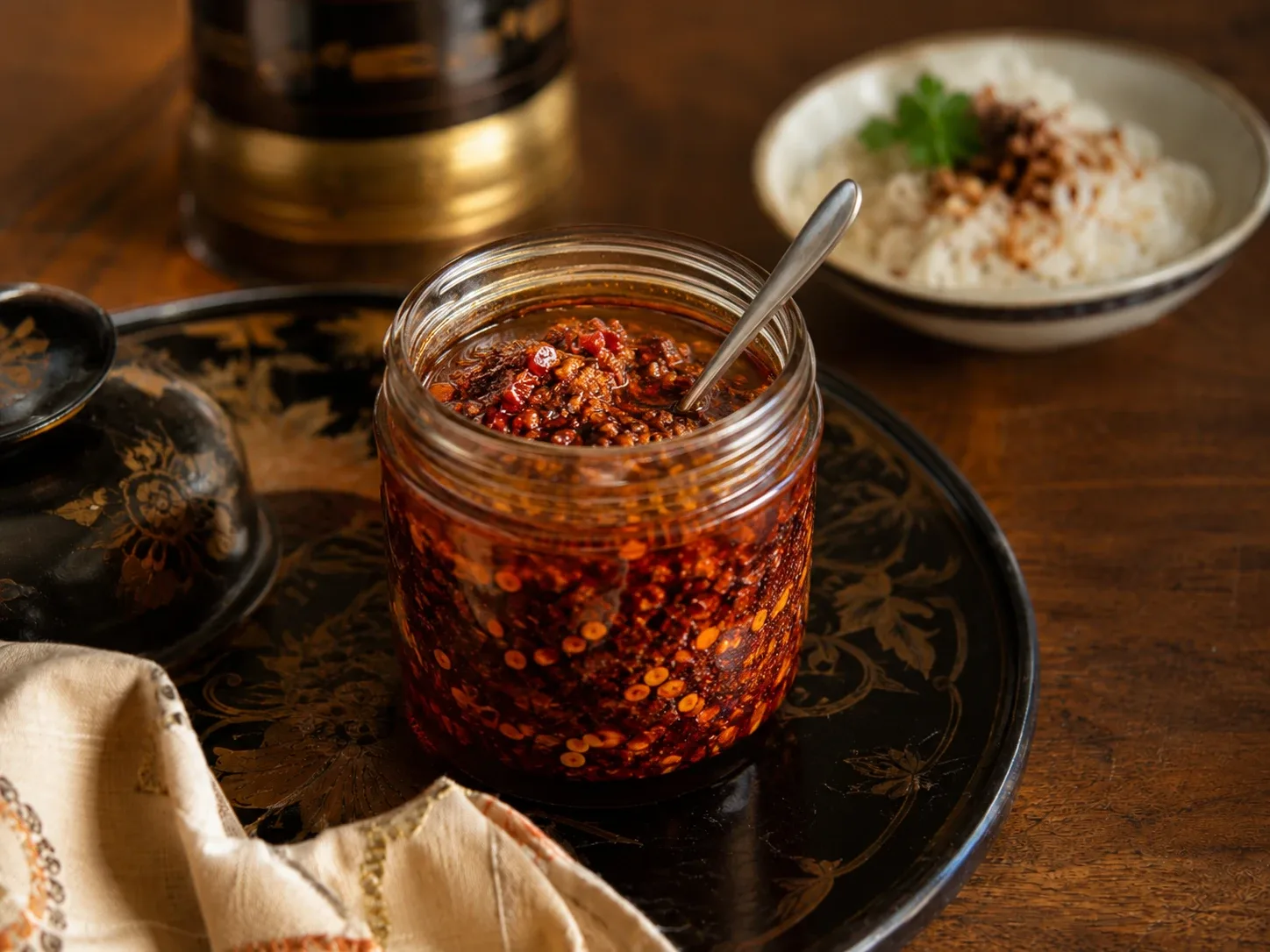
Si Chet, Burmese Chili Oilဆီချက်
The essential Burmese table oil — peanut oil gently fried with chili flakes, garlic, shallot, and a little ngapi, then spooned red over rice, noodles, and salads.
 ၁
၁Rice & Foundations · 40 min · Beginner
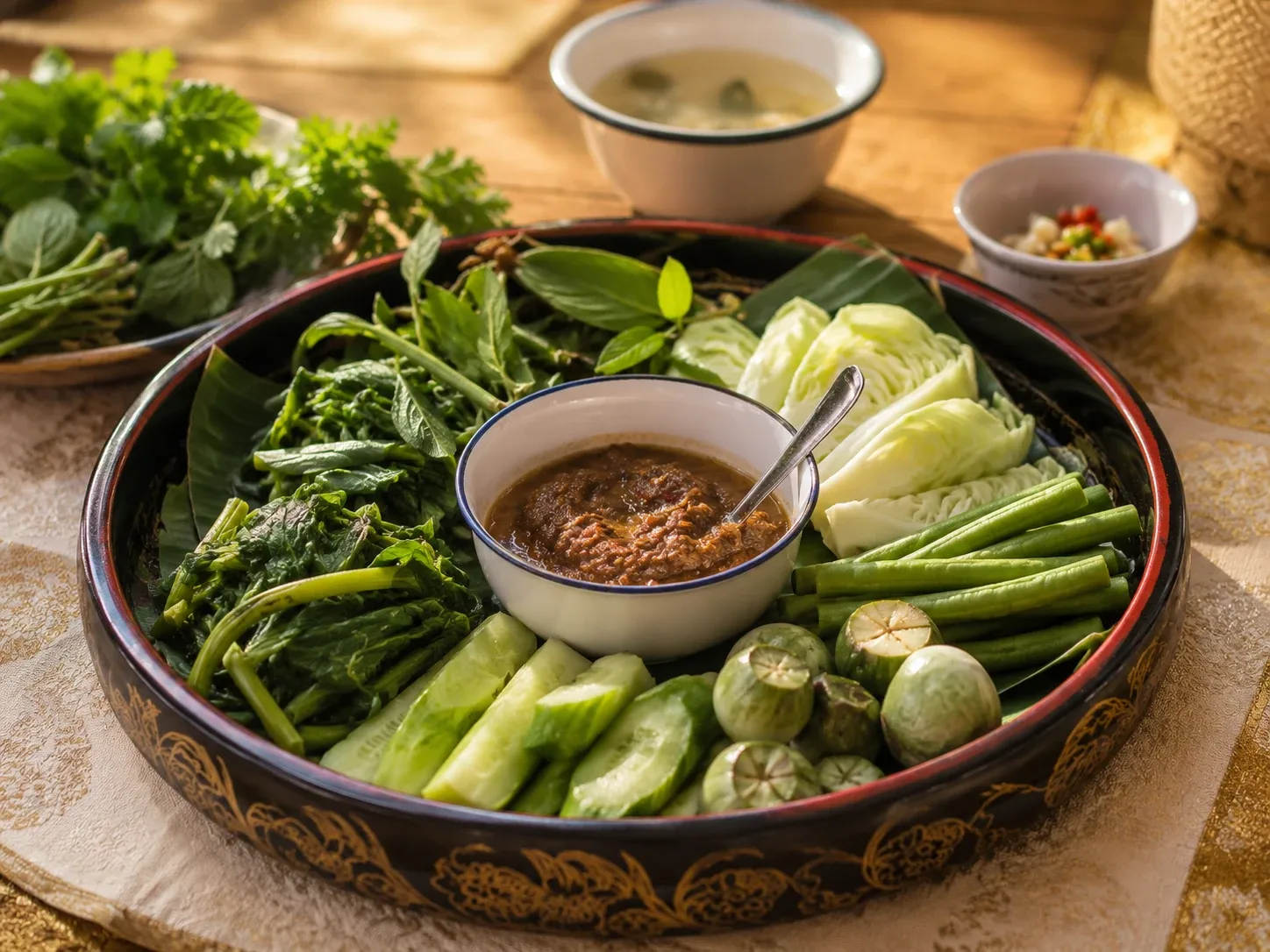
Toh Sa Yar, the Vegetable & Ngapi Platterတို့စရာ
The platter of raw and blanched vegetables around a pungent ngapi dip that no Burmese meal is complete without — the fresh, bitter counterpoint to curry.
 ၁
၁Rice & Foundations · 210 min · Intermediate
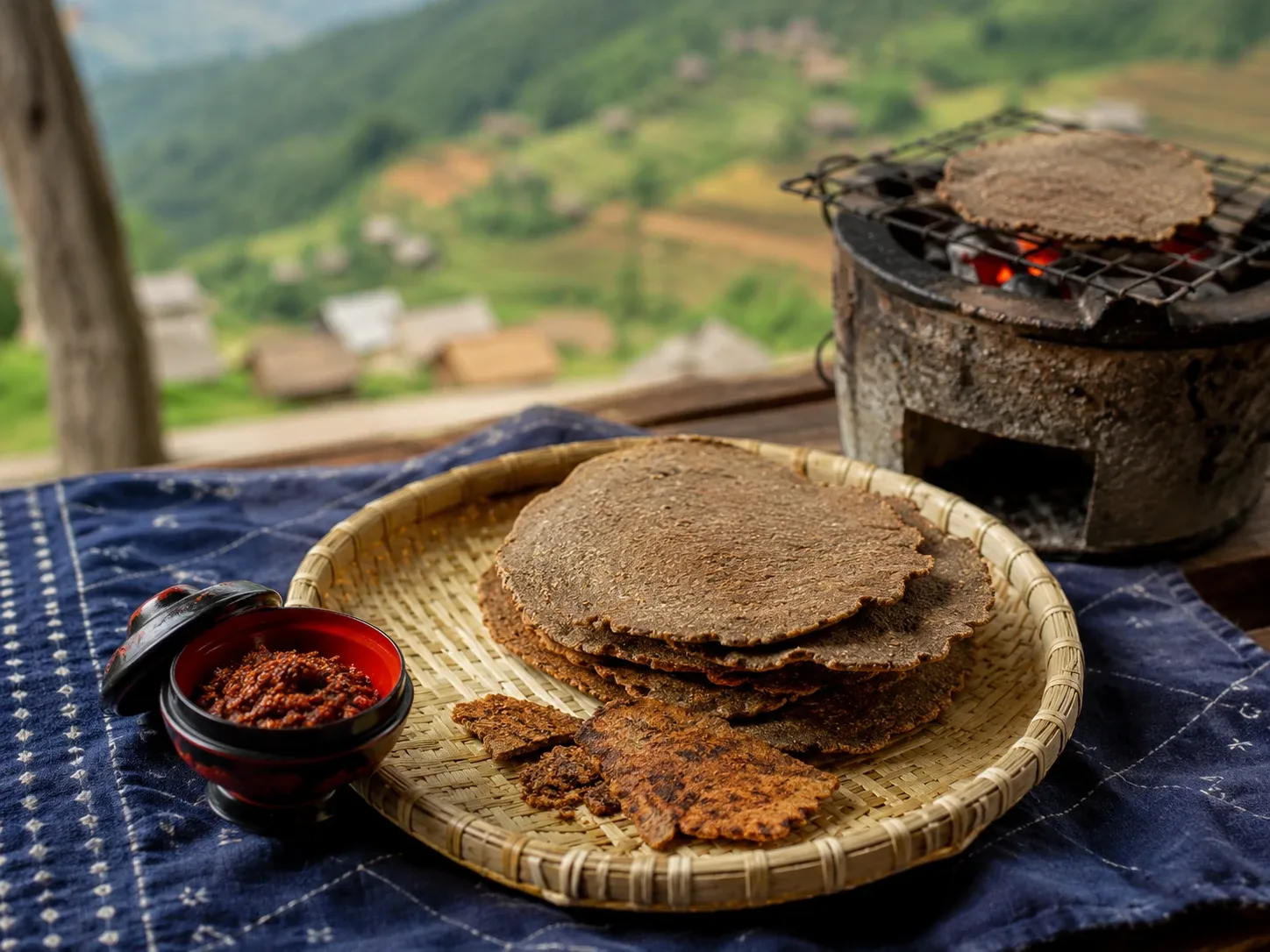
Tua Nao, Shan Fermented Soybean Discsပဲပုပ်
Shan State's seasoning backbone — soybeans boiled, fermented, pounded, and sun-dried into discs you toast over flame and crumble into everything.