Ohn Htamin, Coconut Rice
အုန်းထမင်း
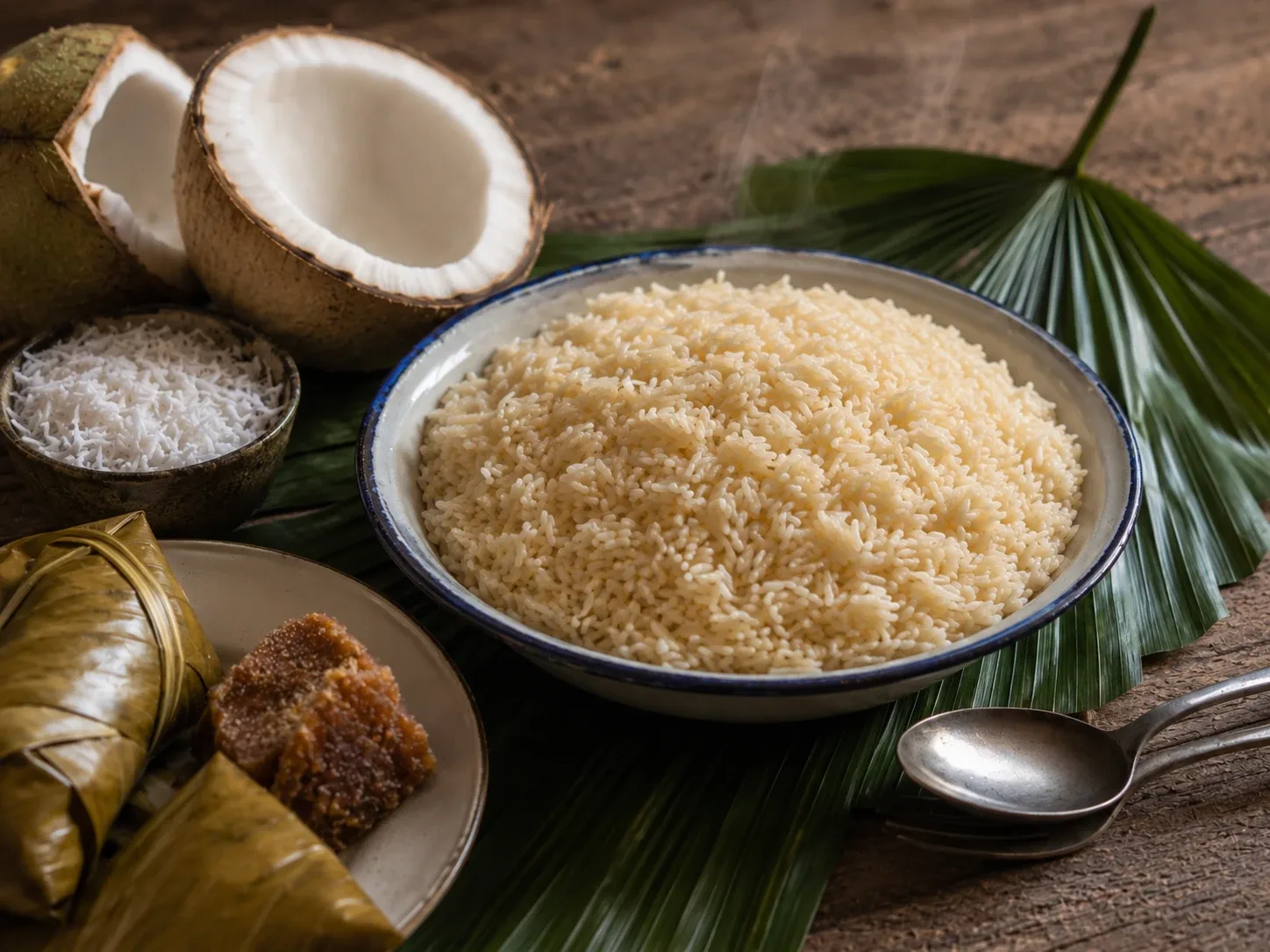
Jasmine rice cooked in coconut milk until rich and faintly sweet — the festive rice of Myanmar's coconut coast, born for chicken curry and balachaung.
By Burmese Cookbook Kitchen · July 9, 2026
မွန် Mon & Kayin CountryKonbaung, 1752–1885
 ၁
၁- Prep
- 10 min
- Cook
- 35 min
- Serves
- 6
- Level
- Beginner
Every cuisine with a coconut coast eventually pours coconut milk into the rice pot, and lower Burma's version is ohn htamin — jasmine rice simmered in coconut milk with a whisper of salt and palm sugar until it comes out rich, faintly sweet, and perfumed. Upcountry, it is occasion food: the rice of weddings, novitiation feasts, and monastery donation days, almost always paired with chicken curry and balachaung, a trio so fixed that naming one summons the other two. Down on the Mon coast, where the coconut groves of Mudon and Chaungzon run to the horizon and coconut milk is an everyday liquid rather than a luxury, it needs no occasion at all.
That geography is the honest heart of the attribution. Nobody owns coconut rice — Thailand, Malaysia, and every shore of the Indian Ocean cook their own — but in Myanmar the dish's home ground is the southeastern coconut belt, the old Hanthawaddy shoreline, and it was festive fare by Konbaung times by any reasonable reckoning. No chronicler dated anything so ordinary, so the era on this page marks the table it verifiably graced, not a birthday.
The cooking is simple and the failures are famous, and both come down to fat. Rinse the rice properly, because coconut fat glues loose starch; keep the heat lower than instinct suggests, because coconut milk scorches with enthusiasm; and never stir once the lid is on. Do it right and the pot pays you twice — clouds of separate, fragrant grains above, and below, a thin gold crust that never seems to make it as far as the table.
The golden crust at the bottom of the pot is not a mistake — in coconut-rice houses it is the cook's tip. Scrape it up and eat it standing, before anyone else notices.
မီးဖိုချောင်စကား · A word from the kitchen
Ingredientsပါဝင်ပစ္စည်း
Serves 6
Tap to check off as you gather
For the rice
- jasmine rice
- coconut milk — full-fat
- water
- salt
- palm sugar (jaggery) — many southern cooks add it; leave it out for a purely savory table
- shallots — thinly sliced
- peanut oil
To serve
- crispy fried shallots — shop-bought is fine; better still, make our foundations recipe
Methodချက်နည်း
Tap a numeral as you finish each step
Step 1: Rinse the rice
Wash the rice in three or four changes of water until it runs nearly clear. Plain rice forgives lazy rinsing; coconut rice does not — surface starch plus coconut fat equals gluey rice, and no fluffing will save it.
Step 2: Sweat the shallots
In a heavy lidded pot, warm the oil over medium heat and sweat the sliced shallots until translucent and just turning gold at the edges, 3 to 4 minutes. They will half-melt into the finished rice, seasoning it from below the way an onion seasons a biryani.
Step 3: Toast the rice in the fat
Add the drained rice and stir for a minute until every grain is slicked and faintly glossy. This coat of fat helps the grains stay separate through the rich simmer to come.
Step 4: Simmer and lid
Add the coconut milk, water, salt, and jaggery, stir once — once — and bring to a lively boil. Let it boil uncovered until the surface drops to the level of the rice and craters appear, about 4 minutes, then clap on the lid and turn the heat to its lowest setting for 14 minutes. Coconut milk scorches more eagerly than water, which is exactly why the heat must be lower and the pot heavier than for plain htamin.
Step 5: Rest without peeking
Off the heat, leave the lid on for a full 10 minutes. The steam finishes the top layer and the bottom sets into the pale-gold crust that is this dish's private reward. Lift the lid early and you trade both for a cloud of wasted steam.
Step 6: Fluff and serve
Fluff gently with a fork or paddle, loosening from the sides in, and serve mounded, scattered with crispy fried shallots. The classic table sets it beside a chicken curry and a spoonful of balachaung — rich, richer, and sharp, in that order.
ခွက်ယောက် · The tools
Equipment
Rice cooker
ထမင်းအိုးConsistent long-grain rice with zero attention — and in a Burmese kitchen the rice is never optional.
Shop on Amazon →Mandoline slicer
အလွှာစက်Paper-thin shallots for even frying and cabbage fine enough for thoke — seconds, not knife-years.
Shop on Amazon →
Equipment links are Amazon affiliate links. As an Amazon Associate we earn from qualifying purchases, at no cost to you. Disclosure.
ဟင်းစုံ · Set the table
A Burmese meal is a spread
The quiet base of the meal — build the rest of the spread around it:
- A curryဟင်းSlow-cooked until the oil returns — the richness the sides cut against.
- A light soupဟင်းချိုThe clear, sour broth sipped between mouthfuls of rice.
- Toh sa yar & ngapi dipတို့စရာRaw and blanched vegetables with a pungent fish-paste dip — the fresh, bitter counterpoint.
- A hand-tossed thokeအသုပ်A bright, sour salad to lift the whole spread.
- Si chet, chili oilဆီချက်The fragrant red oil every household keeps by the stove.
Questions from the kitchen
Can I make it in a rice cooker?
Yes — sweat the shallots in a pan first, then everything into the cooker on the plain white-rice setting. Two honest warnings: coconut milk caramelizes hard on the keep-warm cycle, so serve within the hour, and the crust will be thicker and darker than the stovetop's. Some households consider that an argument for the rice cooker.
Full-fat or light coconut milk?
Full-fat, cut with water as written — that is what the recipe's ratios assume. Light coconut milk used alone gives thin flavor and, perversely, no crust. If light is all you have, use 650 ml of it and skip the added water.
Why did my coconut rice come out gluey?
Almost always one of three sins: unrinsed rice, stirring after the lid went on, or too much liquid. The written ratio looks stingier than plain rice ratios because coconut milk is part fat, and fat does not steam away. Trust it, rinse well, and keep your spoon out of the pot.
What do I serve it with?
The canonical plate is chicken curry, a sharp spoonful of balachaung, and something cooling — sliced cucumber does honest work. Its gentle sweetness also sits beautifully under any si pyan curry with gravy to spare. Plain grilled fish and a squeeze of lime make the weeknight version.
နောက်တစ်ခု · Cook next
Keep the wok hot
 ၁
၁Rice & Foundations · 30 min · Beginner
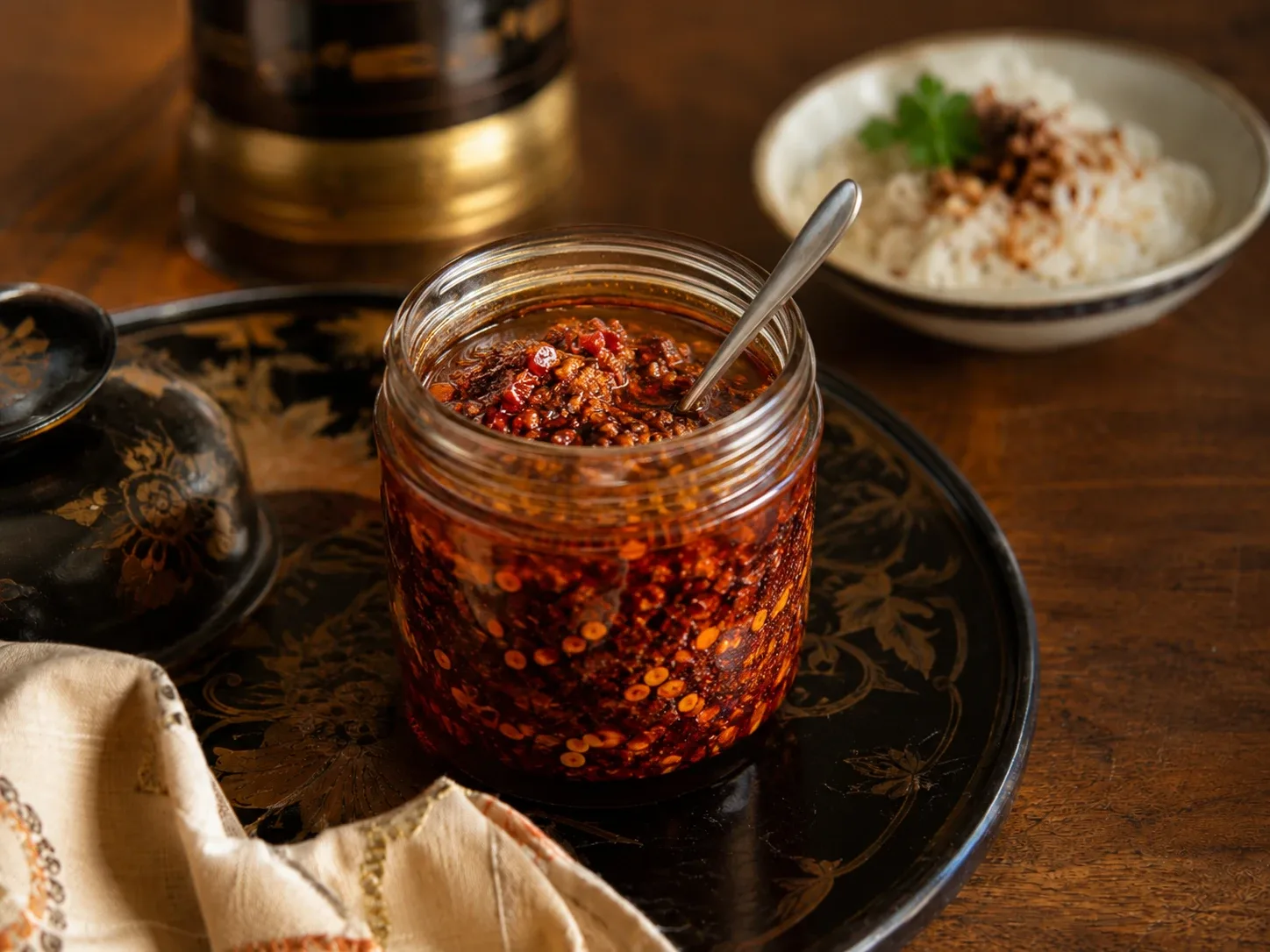
Si Chet, Burmese Chili Oilဆီချက်
The essential Burmese table oil — peanut oil gently fried with chili flakes, garlic, shallot, and a little ngapi, then spooned red over rice, noodles, and salads.
 ၁
၁Rice & Foundations · 40 min · Beginner
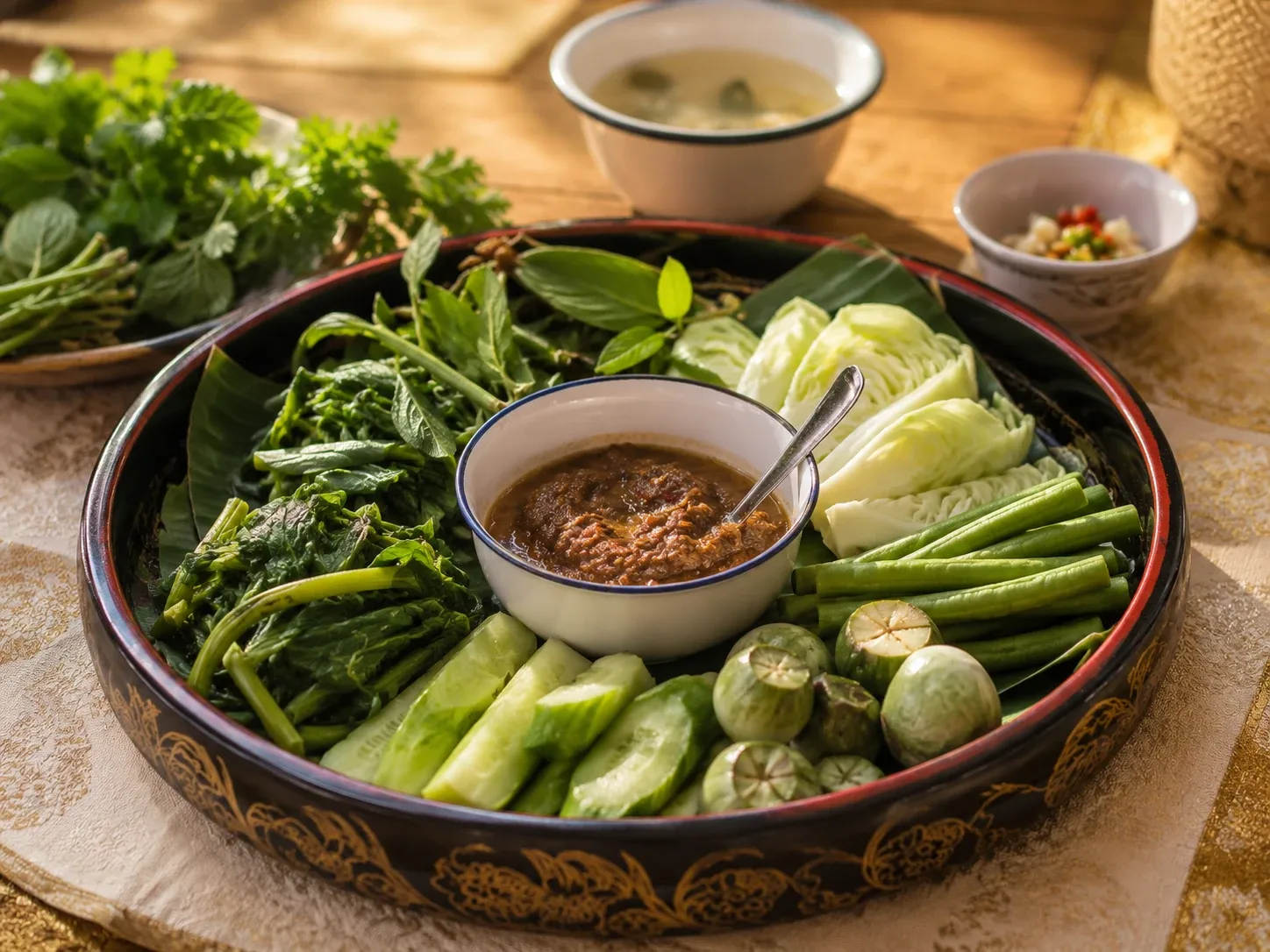
Toh Sa Yar, the Vegetable & Ngapi Platterတို့စရာ
The platter of raw and blanched vegetables around a pungent ngapi dip that no Burmese meal is complete without — the fresh, bitter counterpoint to curry.
 ၃
၃Curries · 100 min · Intermediate
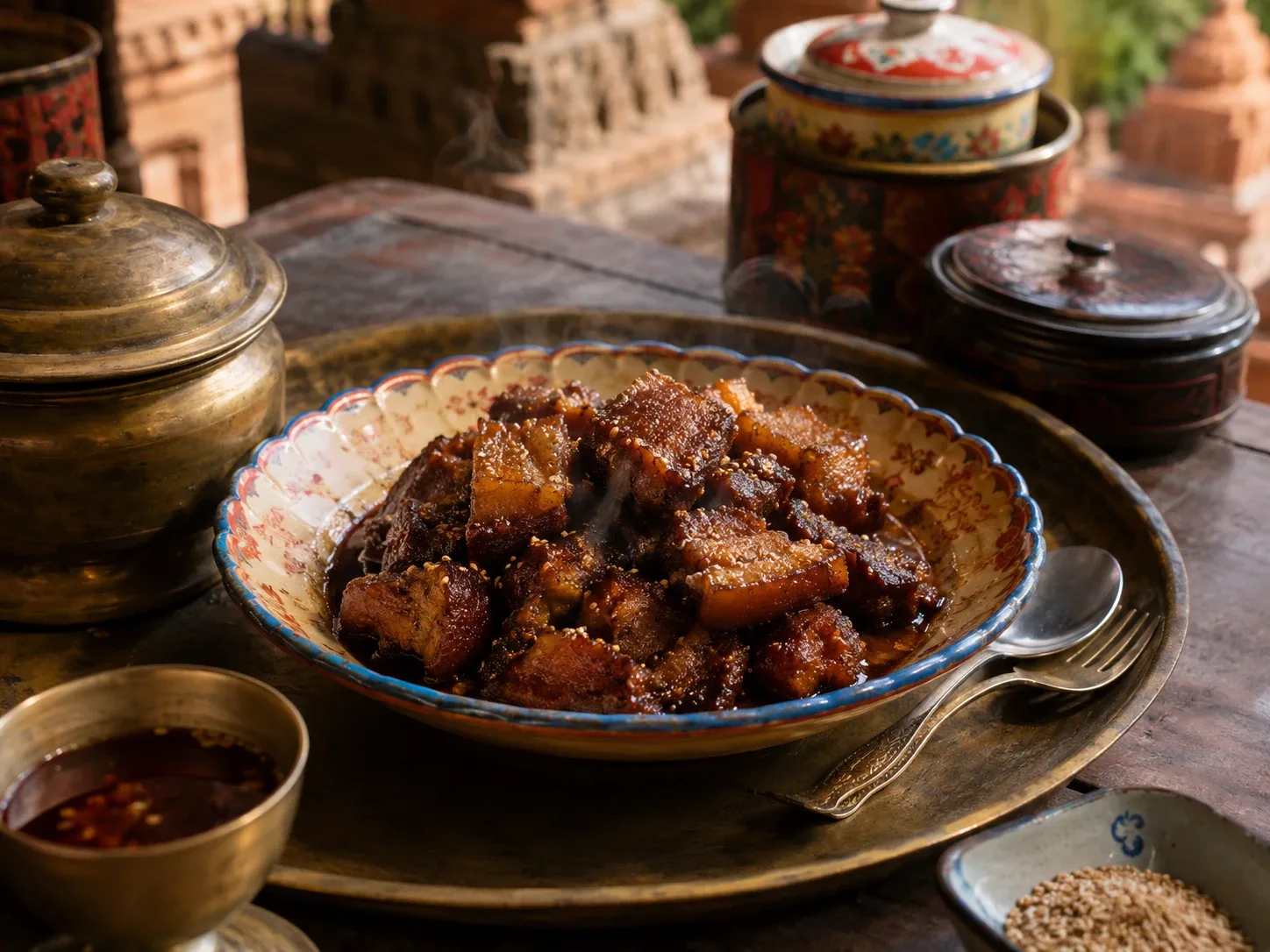
Wet Thar Pone Yay Gyi, Bagan Pork Curryပုန်းရည်ကြီးဝက်သား
Bagan's signature pork curry — pone yay gyi braised si pyan style until the oil returns, the sauce dark and sour with fermented horse-gram bean paste.