Wet Thar Pone Yay Gyi, Bagan Pork Curry
ပုန်းရည်ကြီးဝက်သား
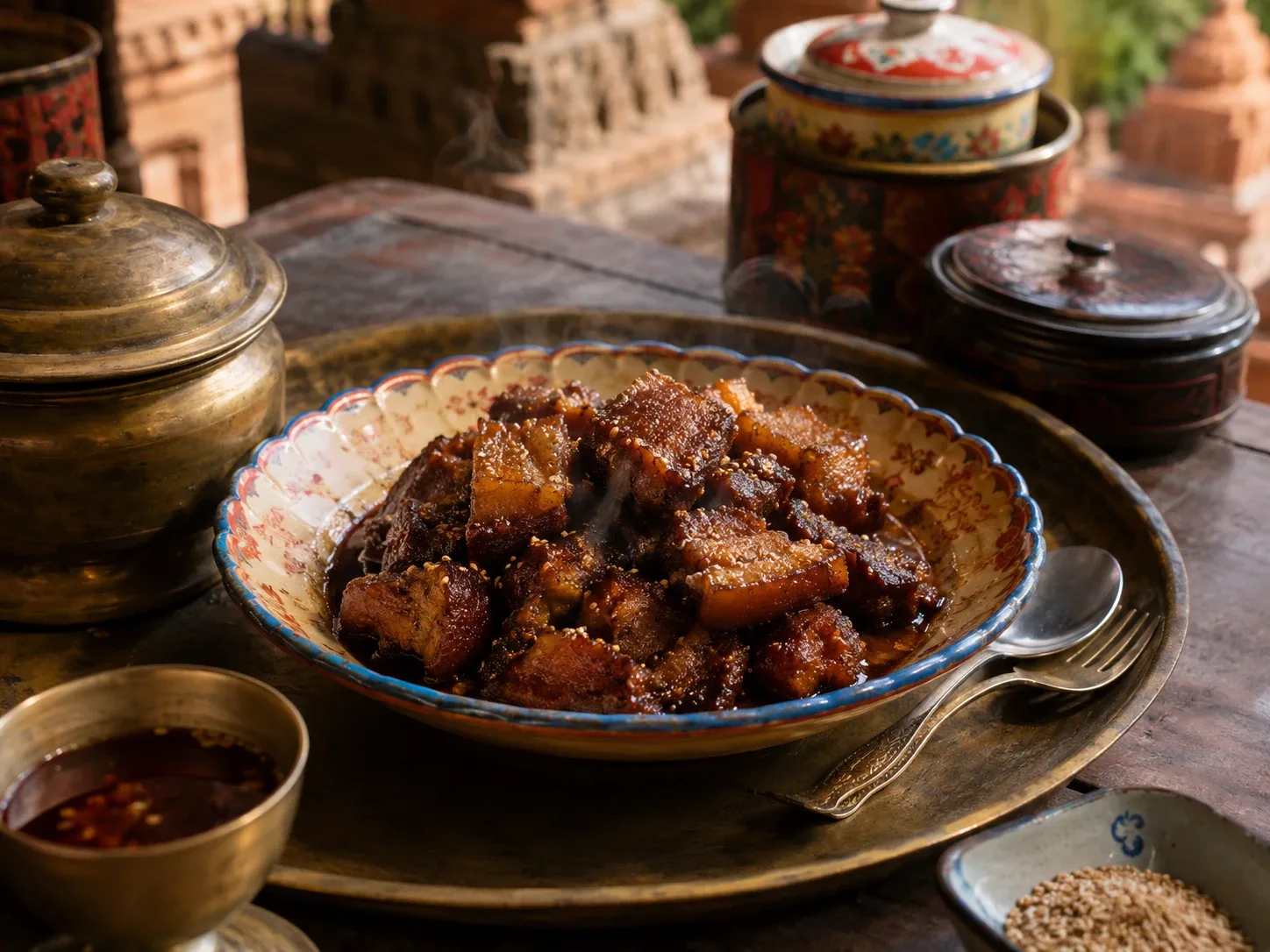
Bagan's signature pork curry — pone yay gyi braised si pyan style until the oil returns, the sauce dark and sour with fermented horse-gram bean paste.
Also spelled: Pone Yay Gyi Wet Thar · Wet Pone · Pon Ye Gyi Wet Thar
By Burmese Cookbook Kitchen · July 9, 2026
အညာ Upper Burma & MandalayOpening & Diaspora, 1988–present
 ၃
၃- Prep
- 20 min
- Cook
- 80 min
- Serves
- 4
- Level
- Intermediate
Every region of Myanmar cooks pork curry; only Bagan cooks it black. Pone yay gyi wet thar is what happens when the dry zone's great preserve — the sour, midnight-dark paste boiled down from fermented horse-gram liquor — meets the national si pyan technique, and it is the dish every eatery in Nyaung-U puts at the front of the counter. Travelers who bring home a jar of pone yay gyi are usually chasing this curry, whether they know it or not.
The pairing is surely older than its paper trail — pigs and bean paste have shared the region a long time — but it is in the modern era, with Bagan's rise as a destination and its paste sold nationwide, that the dish became the town's named signature, so that is the honest label. What is certain is the logic: pork's sweetness wants acid, and the dry zone, poor in coconut and fish but rich in beans, answers with fermentation instead of tamarind alone.
Technique-wise this is a standard low braise with two traps. The first is salt — the paste carries plenty, so season only at the end. The second is impatience with the si pyan, "the return of the oil": the curry is not done when the pork is tender but when the amber oil climbs back out of the near-black sauce and pools at the rim. That shining ring is Bagan's version of a bell — dinner, it says, is ready.
The paste is salty and sour already — season at the end, never the start. Most first-timers over-salt this curry by treating pone yay gyi like a vegetable instead of a seasoning.
မီးဖိုချောင်စကား · A word from the kitchen
Ingredientsပါဝင်ပစ္စည်း
Serves 4
Tap to check off as you gather
For the curry
- pork shoulder — with its fat, cut into 4 cm chunks — belly works if you like it richer
- pone yay gyi (fermented bean paste) — homemade or from a jar — see our foundations recipe
- shallots
- garlic
- fresh ginger
- turmeric
- paprika — for color more than fire, in the Burmese way
- peanut oil
- water — warm, for loosening the paste
- fish sauce — to adjust at the end — taste first
To finish
- green chilies — slit lengthwise
- cilantro — optional; Bagan often serves it plain
Methodချက်နည်း
Tap a numeral as you finish each step
Step 1: Pound the aromatic paste
Pound the shallots, garlic, and ginger to a rough paste in a mortar. A rough pound, not a blender puree — you want texture that will fry and catch, because those caught edges are where the curry's color comes from.
Step 2: Loosen the pone yay gyi
Whisk the pone yay gyi into the warm water until it dissolves into a dark, thin slurry. Straight from the jar it sits in stubborn lumps that never quite melt into the sauce; dissolved first, it coats every piece of pork evenly.
Step 3: Fry the base — si pyan begins here
Heat the peanut oil in a heavy pot over medium heat and fry the pounded paste with the turmeric and paprika, stirring, for 6 to 8 minutes, until it smells sweet and the oil turns amber at the edges. Pale base, pale curry — do not rush this.
Step 4: Seal the pork
Add the pork and turn it through the base for 4 to 5 minutes until every surface has lost its rawness and taken on color. The meat should be eating the paste, not boiling in it — keep the heat confident.
Step 5: Braise low and slow
Pour in the pone yay gyi slurry, bring to a bare simmer, and cook partly covered over low heat for 60 to 70 minutes, stirring now and then. The sauce will darken from brown to near-black as it reduces and the pork turns tender.
Step 6: Wait for the oil to return
Uncover for the last 10 minutes and let the sauce reduce until the amber oil rises and pools at the edges — the si pyan that tells you a Burmese curry is done. Taste, adjust with fish sauce only if it needs it, drop in the green chilies, and rest 10 minutes before serving with rice.
ခွက်ယောက် · The tools
Equipment
Carbon-steel wok
ဒယ်အိုးThe dai-oh — for si pyan curries, fritters, and every fried-noodle dish here. Carbon steel, seasoned dark, nothing fancy.
Shop on Amazon →Heavy pot / Dutch oven
အိုးကြီးDeep and heat-retentive — for mohinga broth, long-simmered hin, and deep-frying without temperature crashes.
Shop on Amazon →Stone mortar & pestle
ဆုံFor garlic-ginger paste, pounded dried shrimp fluff, and crushed peanuts — the blender lies about texture; the stone doesn’t.
Shop on Amazon →
Equipment links are Amazon affiliate links. As an Amazon Associate we earn from qualifying purchases, at no cost to you. Disclosure.
ဟင်းစုံ · Set the table
A Burmese meal is a spread
A curry is the anchor, not the whole meal. Round out the table:
- Steamed riceထမင်းThe centre of the table — everything else is built around it.
- A light soupဟင်းချိုThe clear, sour broth sipped between mouthfuls of rice.
- Toh sa yar & ngapi dipတို့စရာRaw and blanched vegetables with a pungent fish-paste dip — the fresh, bitter counterpoint.
- Balachaungဘလချောင်းThe crispy shrimp relish that lives on every Burmese table.
- Crispy fried shallotsကြက်သွန်ကြော်A spoonful of crunch and sweet shallot oil over anything.
- A hand-tossed thokeအသုပ်A bright, sour salad to lift the whole spread.
Questions from the kitchen
How is this different from ordinary Burmese pork curry?
Wet thar hin gets its depth from the fried shallot base alone and stays red-brown and savory. This Bagan variant adds fermented horse-gram paste, which turns the sauce nearly black and brings a sourness no amount of tamarind quite imitates. They are cousins, not the same dish.
I can't get pone yay gyi. Is there a substitute?
Nothing honest is identical. The closest working stand-in is a tablespoon of dark miso plus a tablespoon of tamarind paste — you get the dark, salty-sour idea, and it makes a good curry, but say "inspired by" if you serve it to anyone from Bagan.
Can I use a leaner cut of pork?
You can, but the dish suffers. The braise depends on fat rendering into the sauce for body and for the oil that must return at the end. With loin you will get tight meat and a thin sauce — shoulder is the honest minimum, belly the luxurious maximum.
နောက်တစ်ခု · Cook next
Keep the wok hot
 ၃
၃Curries · 125 min · Intermediate
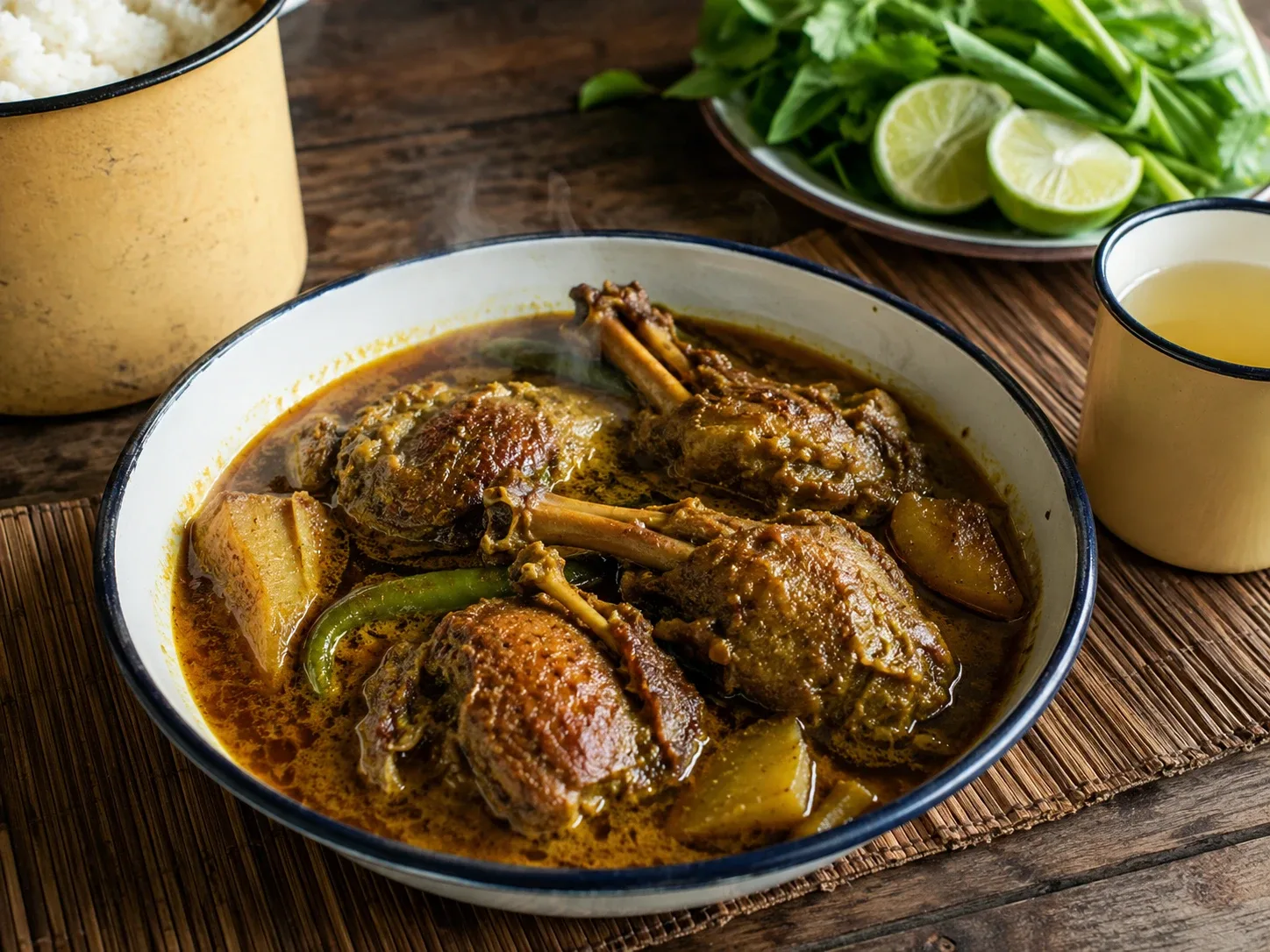
Be Thar Hin, Delta Duck Curryဘဲသားဟင်း
Duck curry from the Ayeyarwady, where ducks glean the rice paddies — browned in its own fat, then braised si pyan style until the amber oil returns.
 ၃
၃Curries · 45 min · Beginner
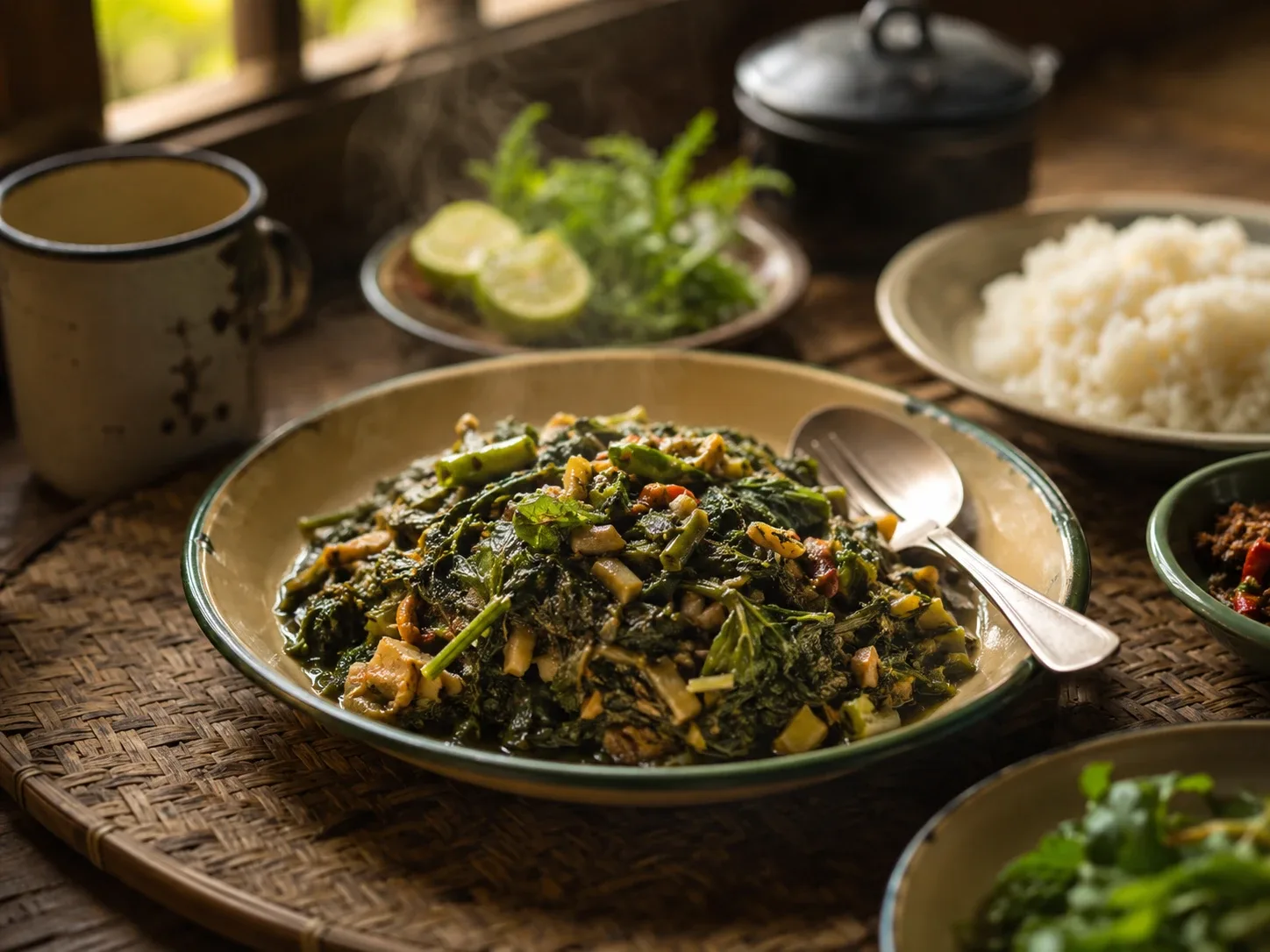
Chin Baung Kyaw, Sour Roselle Leavesချဉ်ပေါင်ကြော်
Lower Burma's beloved sour greens — roselle leaves fried down with bamboo shoots, dried shrimp, and green chili until they collapse into a dark tangy relish.
 ၄
၄Salads & Thoke · 25 min · Beginner
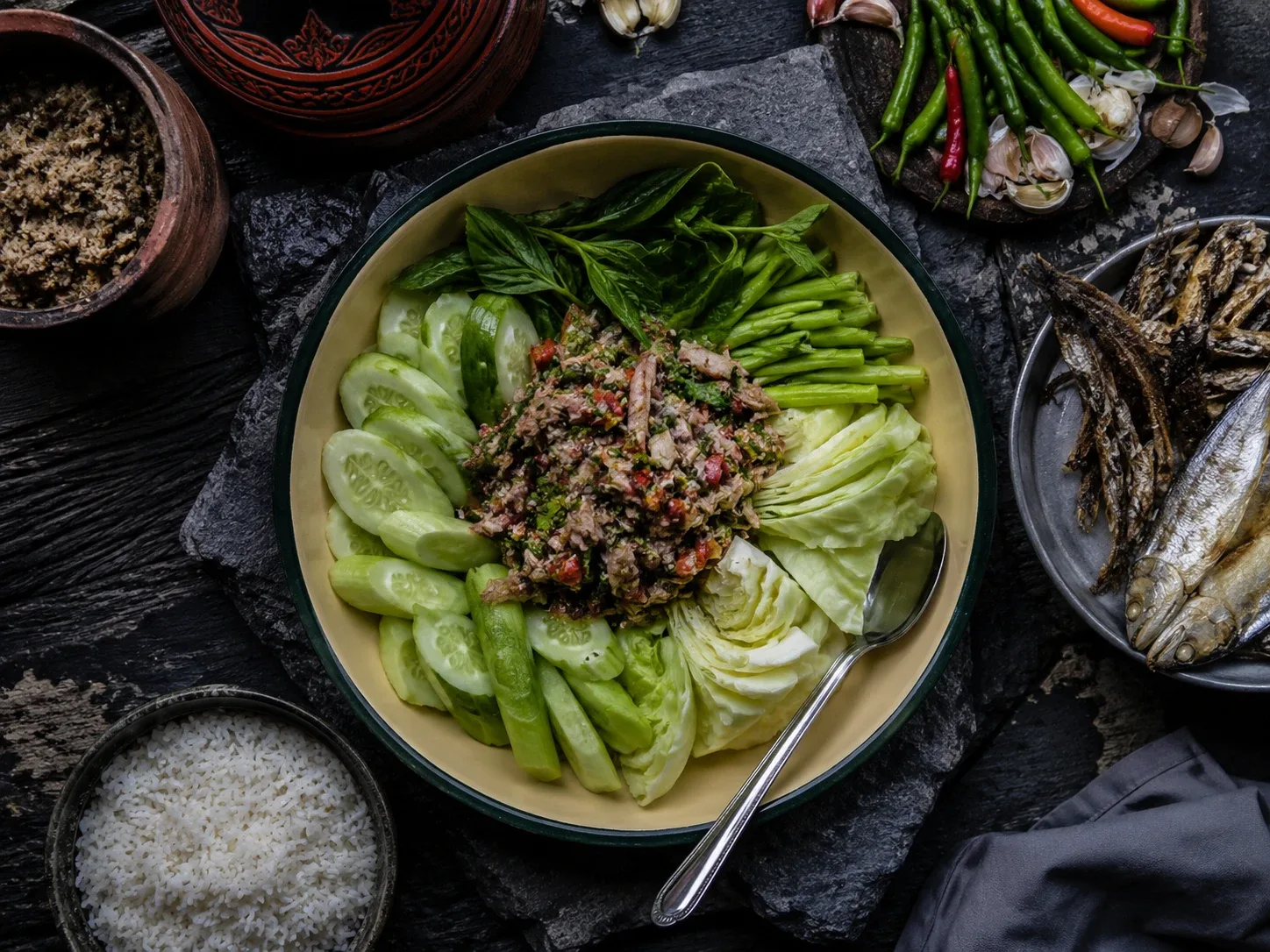
Rakhine Ngapi Thoke, the Pounded Fireငါးပိသုပ်
Rakhine's roasted fish-paste salad — marine ngapi pounded with green chili, garlic, and lime, served the western-coast way with crisp vegetables and rice.