Pazun Chauk, Dried Shrimp Floss
ပုစွန်ခြောက်
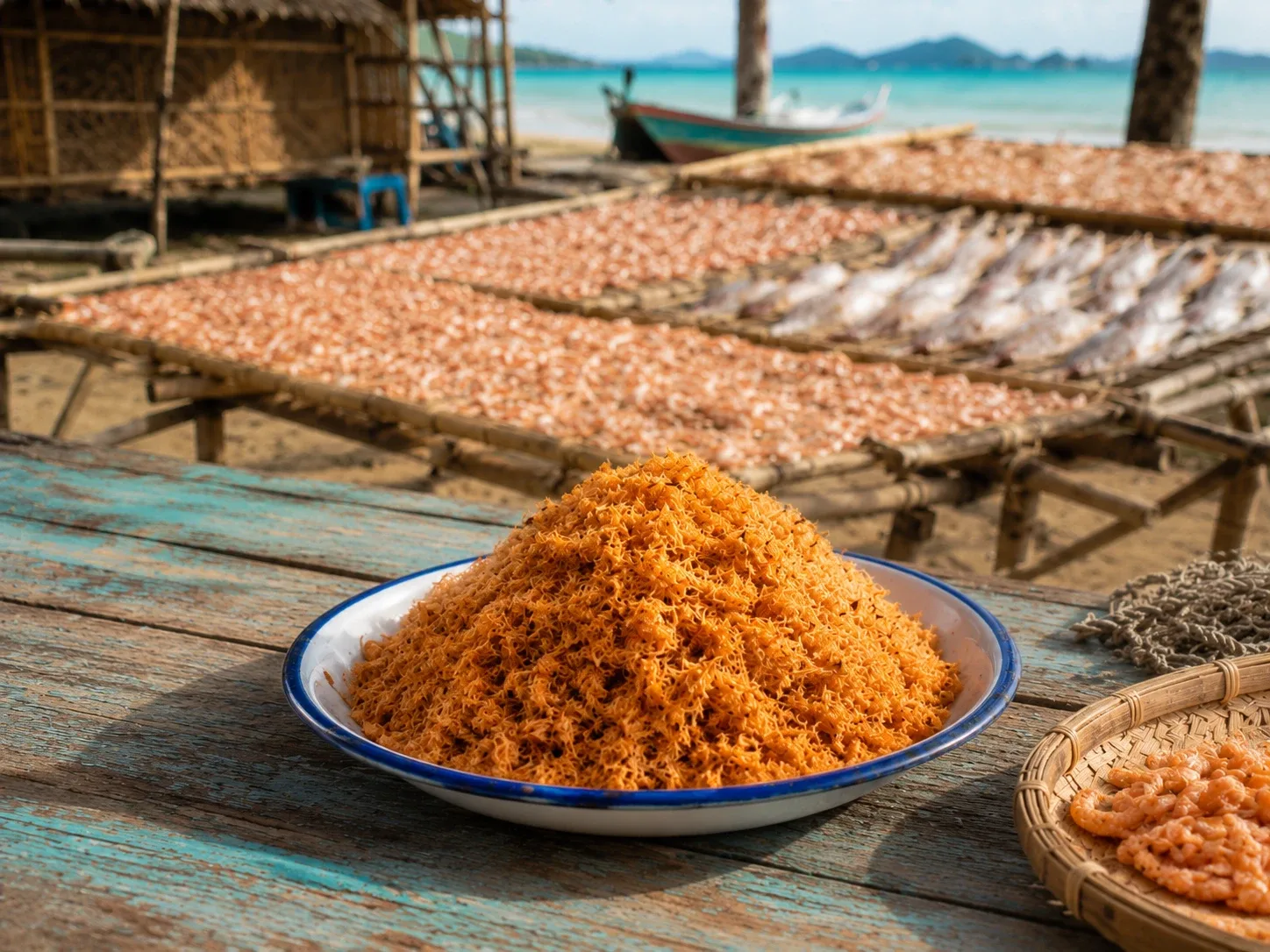
The dried prawns of the Myeik archipelago, toasted and pounded into the fluffy golden floss that quietly seasons half the Burmese table.
By Burmese Cookbook Kitchen · July 9, 2026
တနင်္သာရီ TanintharyiKonbaung, 1752–1885
 ၁
၁- Prep
- 10 min
- Cook
- 10 min
- Serves
- 8
- Level
- Beginner
Stand in any market in Myanmar, upcountry or delta, and somewhere near the ngapi sellers you will find pyramids of orange dried shrimp — pazun chauk, "dried prawn." A great share of them begin life in the Myeik archipelago, where prawns have been boiled in seawater and dried in the sun on bamboo mats for as long as anyone has kept accounts. Mergui was a working port centuries before the British renamed the map, and dried seafood was exactly the kind of cargo that could survive the journey inland — which is how a southern coast came to season the whole country's kitchen. We date the habit to Konbaung times because that is where the trade is solidly visible; the practice itself is surely older than the paperwork.
The home cook's job is the last step of that long chain: turning the hard, salty commas from the market into floss — a-phon, the light, fluffy pile that goes onto rice, into salads, over steamed vegetables, and into the mortar for a dozen thoke. The method matters more than it looks. A brief rinse, never a soak; a patient dry-toast to wake the aroma; a full cooling, because warm shrimp smear where cool ones shatter; then the pounding, stopped at fiber and well short of dust. Keep a jar of it and a jar of good dried shrimp beside your fried shallots, and half of Burmese cooking is suddenly ten minutes away.
Buy dried shrimp you can smell the sea in — sweet and briny, never ammonia-sharp. The floss can only be as good as the shrimp it started as.
မီးဖိုချောင်စကား · A word from the kitchen
Ingredientsပါဝင်ပစ္စည်း
Serves 8
Tap to check off as you gather
For the floss
- dried shrimp — whole, a warm orange-pink — medium size pounds fluffiest
- warm water — for a brief rinse only, not a soak
For the table, optional
- peanut oil — or shallot oil from your last batch of fried shallots
- dried chili flakes
Methodချက်နည်း
Tap a numeral as you finish each step
Step 1: Sort the shrimp
Tip the shrimp onto a tray and pick out any stray shell, whiskers, or the odd dark specimen. A minute of sorting now saves the floss from the bitter, gritty notes that hide in a neglected bag.
Step 2: Rinse, briefly
Swish the shrimp in the warm water for thirty seconds and drain at once, then pat thoroughly dry. This rinse washes off surface salt and dust without waterlogging the flesh — a proper soak would soften them past pounding into fluff, so resist the urge.
Step 3: Toast until fragrant
Dry-toast the shrimp in a wide pan over medium-low heat, tossing often, for 6 to 8 minutes, until completely dry to the touch, hot all the way through, and smelling sweetly of the sea. The toasting does two jobs — it drives off the rinse water and it wakes the aroma the way toasting does for any spice. Do not let them brown; scorched shrimp floss tastes of regret.
Step 4: Cool completely
Spread the shrimp on a plate and cool to room temperature. Warm shrimp pound into a paste; cool shrimp shatter into fibers, and fibers are what floss is made of.
Step 5: Pound to floss
Pound in a mortar in small batches — or pulse in a food processor — until the shrimp break into a light, fluffy, fibrous floss, like coarse thread. In the mortar this takes a few patient minutes per batch; in the machine, short pulses, because thirty seconds too long gives you powder, and powder disappears into dishes instead of landing on them.
Step 6: Store, and use everywhere
Pack into a dry jar and keep in the fridge, where it holds for a month, or freeze for three. To meet it at its plainest and best, warm the peanut oil with the chili flakes, pour over a handful of floss, and spoon it over hot rice with a wedge of lime — the fisherman's supper that needs nothing else.
ခွက်ယောက် · The tools
Equipment
Rice cooker
ထမင်းအိုးConsistent long-grain rice with zero attention — and in a Burmese kitchen the rice is never optional.
Shop on Amazon →Stone mortar & pestle
ဆုံFor garlic-ginger paste, pounded dried shrimp fluff, and crushed peanuts — the blender lies about texture; the stone doesn’t.
Shop on Amazon →
Equipment links are Amazon affiliate links. As an Amazon Associate we earn from qualifying purchases, at no cost to you. Disclosure.
ဟင်းစုံ · Set the table
A Burmese meal is a spread
The quiet base of the meal — build the rest of the spread around it:
- A curryဟင်းSlow-cooked until the oil returns — the richness the sides cut against.
- A light soupဟင်းချိုThe clear, sour broth sipped between mouthfuls of rice.
- Toh sa yar & ngapi dipတို့စရာRaw and blanched vegetables with a pungent fish-paste dip — the fresh, bitter counterpoint.
- A hand-tossed thokeအသုပ်A bright, sour salad to lift the whole spread.
- Si chet, chili oilဆီချက်The fragrant red oil every household keeps by the stove.
Questions from the kitchen
What should I look for when buying dried shrimp?
Color and smell. Good ones are a warm orange-pink, whole, and smell sweet and briny; walk away from grey, broken, or ammonia-smelling shrimp, and from any bag with a snowdrift of loose salt at the bottom. Refrigerated bags at a busy Asian grocer turn over fastest and are usually freshest.
Is this the same thing as balachaung?
It is balachaung's raw material, one step upstream. The floss stops before the frying pan; balachaung takes it onward, fried with garlic, shallots, ngapi, and chili into Burma's most famous relish. Make a double batch of floss and you are twenty minutes from both.
My floss came out as powder. What went wrong?
Over-processing, almost certainly in a machine. Pulse in one-second bursts and check often — the shrimp go from fiber to dust without much warning. Powder is not wasted, though; it seasons soup broths and fritter batters beautifully. Label the jar and pound the next batch more gently.
နောက်တစ်ခု · Cook next
Keep the wok hot
 ၁
၁Rice & Foundations · 30 min · Beginner
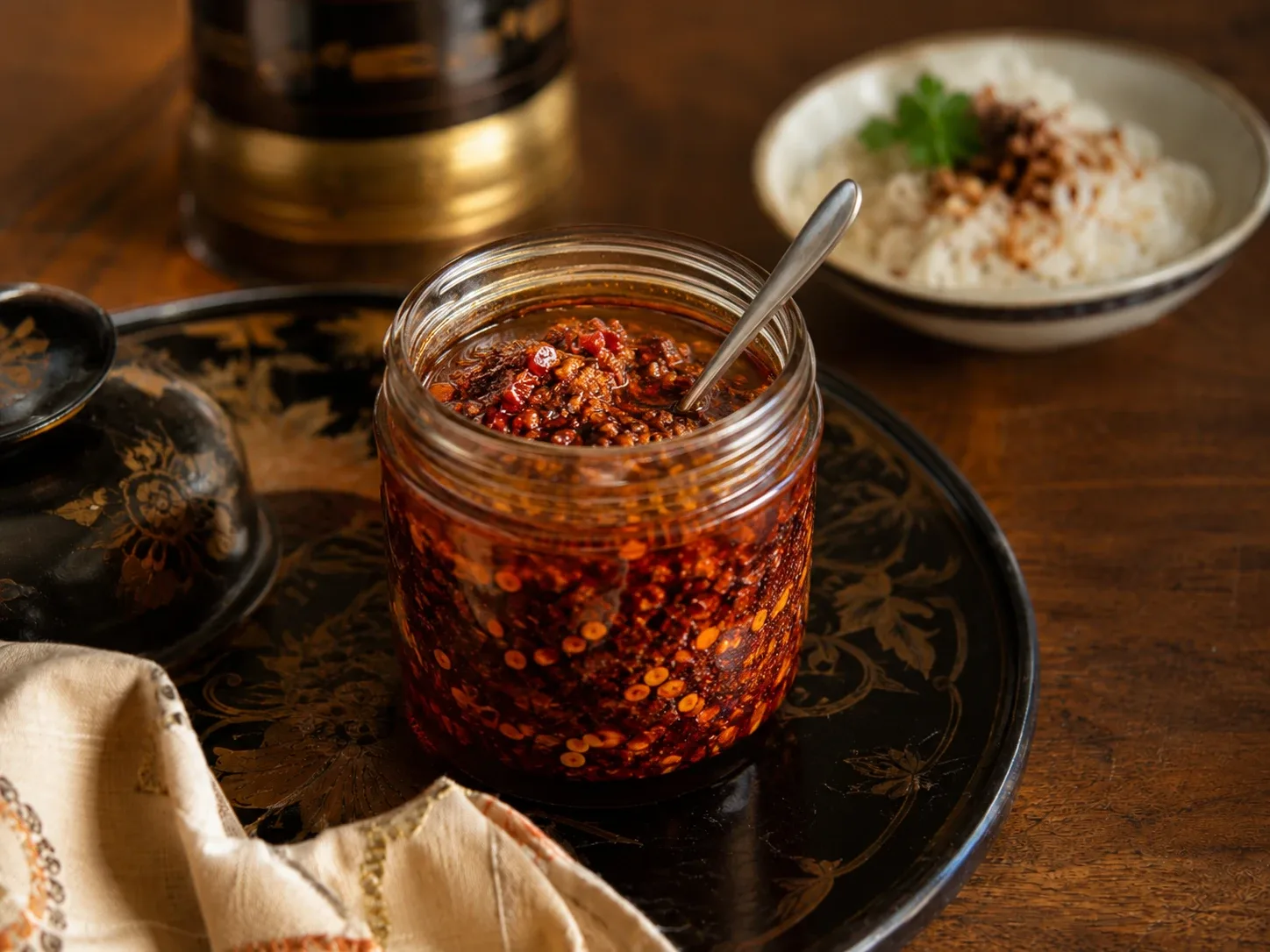
Si Chet, Burmese Chili Oilဆီချက်
The essential Burmese table oil — peanut oil gently fried with chili flakes, garlic, shallot, and a little ngapi, then spooned red over rice, noodles, and salads.
 ၁
၁Rice & Foundations · 40 min · Beginner
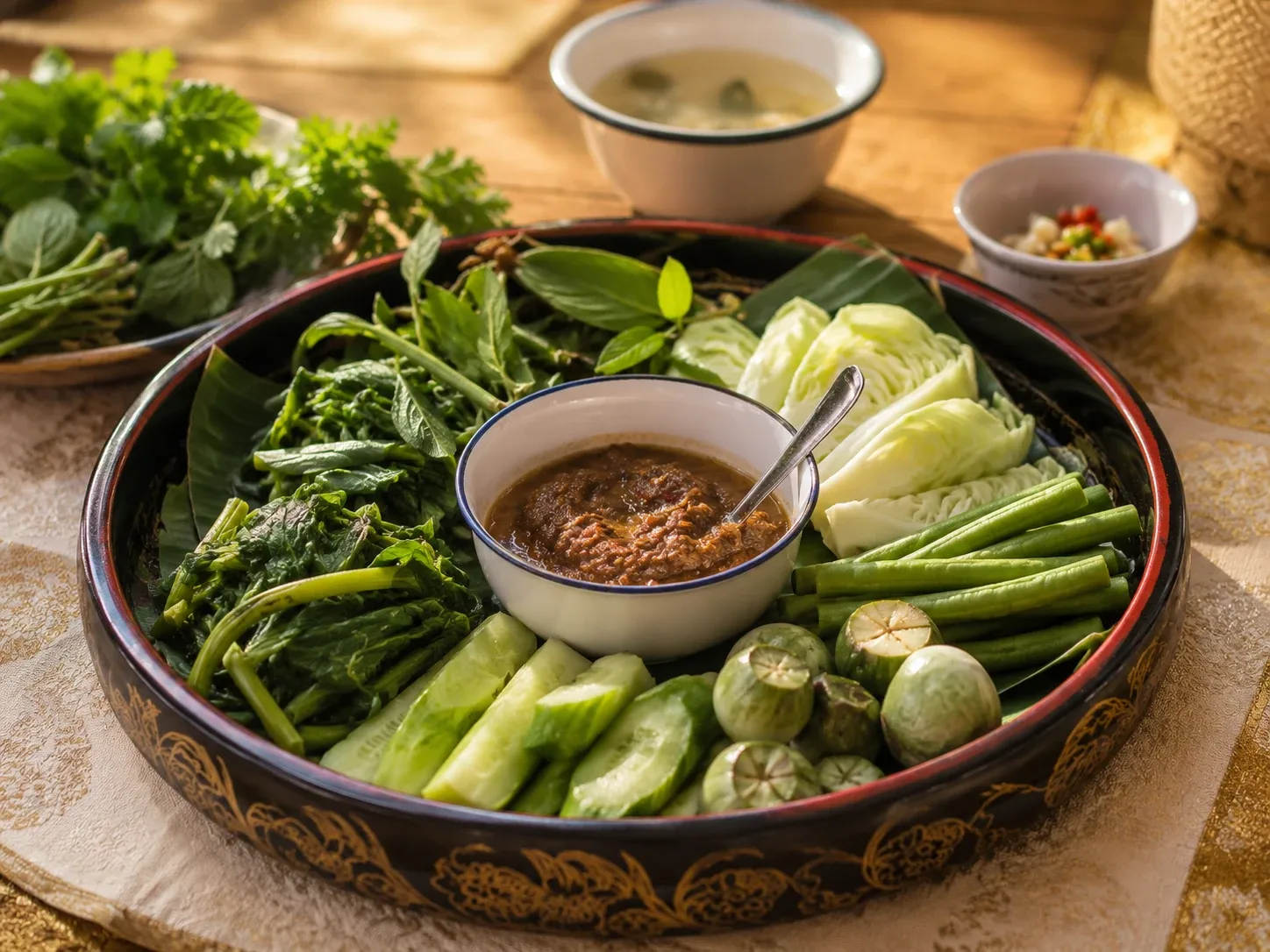
Toh Sa Yar, the Vegetable & Ngapi Platterတို့စရာ
The platter of raw and blanched vegetables around a pungent ngapi dip that no Burmese meal is complete without — the fresh, bitter counterpoint to curry.
 ၁
၁Rice & Foundations · 210 min · Intermediate
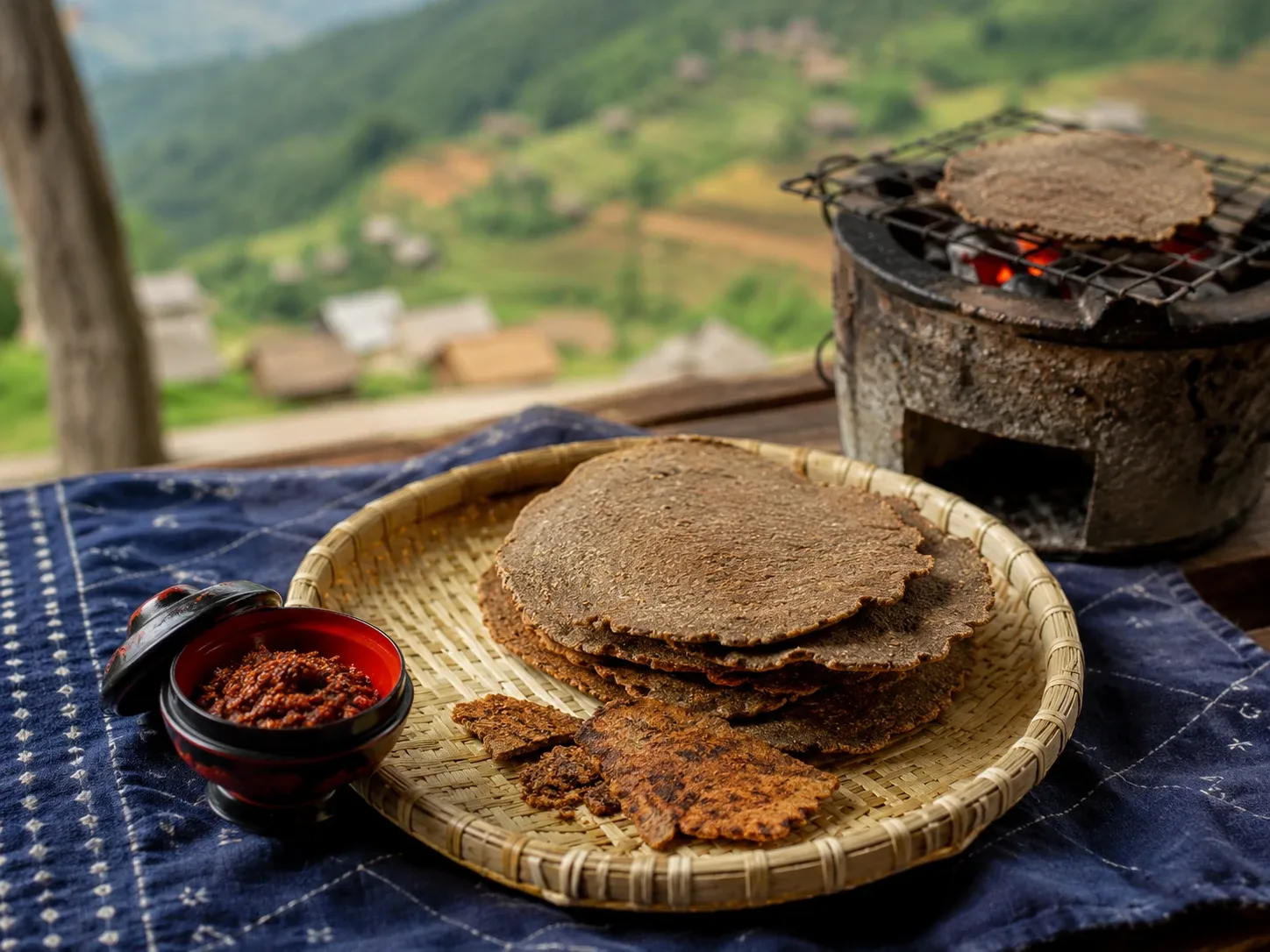
Tua Nao, Shan Fermented Soybean Discsပဲပုပ်
Shan State's seasoning backbone — soybeans boiled, fermented, pounded, and sun-dried into discs you toast over flame and crumble into everything.