Pone Yay Gyi, Bagan's Black Bean Paste
ပုန်းရည်ကြီး
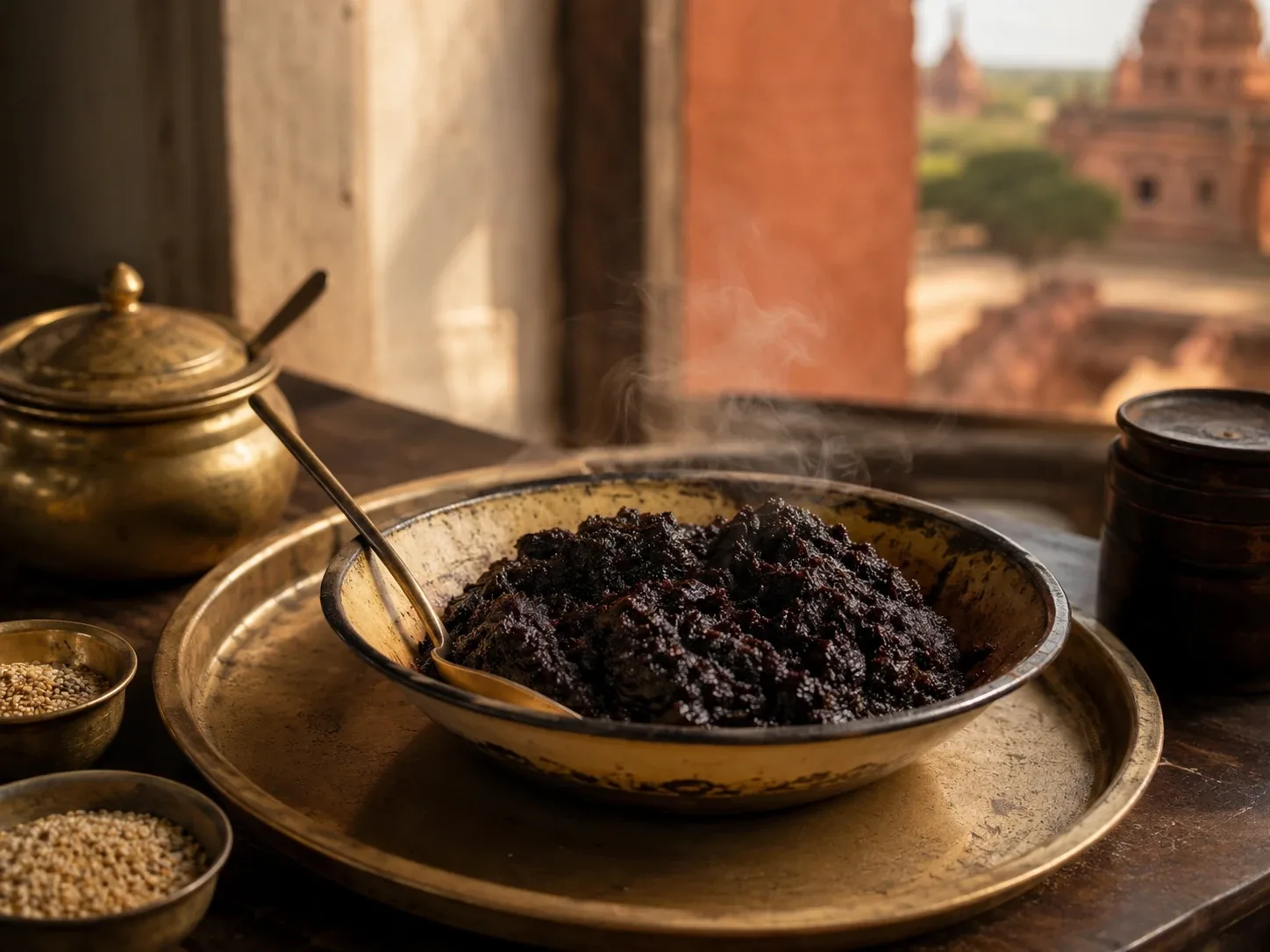
Bagan's fermented horse-gram bean paste, made the slow home way — boiled, soured, and reduced to a black umami jam that anchors Upper Burma's table.
By Burmese Cookbook Kitchen · July 9, 2026
အညာ Upper Burma & MandalayKonbaung, 1752–1885
 ၁
၁- Prep
- 20 min
- Cook
- 240 min
- Serves
- 12
- Level
- Intermediate
Pone yay gyi — literally "big pot liquor" — is the taste of Bagan. Not the temples, the town: the dusty, tamarind-shaded streets of Nyaung-U, where shops sell the black paste in jars and pilgrims carry it home the way visitors to other places carry postcards. It is made from horse gram, the toughest pulse of the dry zone, a bean so hardy it thrives where almost nothing else will — which is exactly why the country around Bagan, with its cracked earth and eleven dry months, adopted it.
The method is a lesson in wringing flavor from scarcity. The beans are boiled until they surrender everything to the water; the beans themselves go to the cattle, and the liquor — the part any other kitchen would discard — is soured for days and then reduced to a shining black jam. Local lore likes to place the paste on Bagan-era tables a thousand years ago, and perhaps it sat there; that is legend, honestly labeled. What is documented is its place in the Konbaung-era and colonial record as the region's defining preserve, sold along the Ayeyarwady wherever Upper Burma traded.
Two moments decide the batch. The fermentation must go genuinely sour — tamarind-sharp, not merely tangy — or the finished paste tastes like molasses with no argument in it. And the final reduction must stop at jam: glossy, mounding, still spreadable. Get it right and a spoonful carries a whole region — sour, dark, faintly smoky, unmistakably Bagan.
Judge the paste by the spoon test — it should mound like soft jam and shine like lacquer. Stop too early and it weeps; push too far and it turns to tar.
မီးဖိုချောင်စကား · A word from the kitchen
Ingredientsပါဝင်ပစ္စည်း
Serves 12
Tap to check off as you gather
For the paste
- horse gram — sold as kulthi or kollu at Indian grocers — small, hard, red-brown beans
- water
- salt
For a first taste (pone yay gyi thoke)
- pone yay gyi — from the batch above
- peanut oil
- shallots — sliced into fine rings and soaked briefly in cold water
- sesame seeds — toasted until fragrant
- green chilies — sliced thin
Methodချက်နည်း
Tap a numeral as you finish each step
Step 1: Soak the beans overnight
Rinse the horse gram and soak it in plenty of cold water for at least eight hours. This is the hardest-shelled pulse in common use — soaking is what lets the long boil pull its color and flavor out into the liquor, which is the part you are actually after.
Step 2: Boil down to a dark liquor
Drain the beans, cover with the 3 liters of fresh water, and simmer steadily, partly covered, for 2 1/2 to 3 hours, until the beans are completely soft and the liquid has reduced by about half to a deep red-brown. The beans are giving everything they have to the water — that is the point.
Step 3: Strain and press
Strain through a fine sieve, pressing firmly on the beans to wring out every dark drop. In Bagan the spent beans go to the cattle; at home, dress them with a little oil and salt for a cook's snack. You should have roughly 1.5 liters of liquor.
Step 4: Sour the liquor
Pour the liquor into a clean crock or glass jar, cover with a cloth, and leave it in a shaded corner at room temperature for two to three days, stirring once a day. Wild lactic fermentation does the work — it is ready when it smells sharply sour, somewhere between tamarind and strong tea. In cool kitchens give it an extra day.
Step 5: Reduce to a paste
Return the soured liquor to a wide pan and simmer it down, uncovered, over low heat for 45 minutes to an hour, stirring more and more often as it thickens. Add the salt near the end. It is done when it is a glossy black jam that mounds on a spoon — remember it firms further as it cools.
Step 6: Jar it, then make the thoke
Pack into a sterilized jar, film the top with peanut oil, and keep refrigerated for months. For the classic first taste, mash the paste with the peanut oil, pile on the shallot rings, sesame, and chilies, and eat it with hot rice — this simple thoke is how Bagan takes its measure of a batch.
ခွက်ယောက် · The tools
Equipment
Rice cooker
ထမင်းအိုးConsistent long-grain rice with zero attention — and in a Burmese kitchen the rice is never optional.
Shop on Amazon →Fine sieve / muslin
စစ်ခွက်For straining tamarind, pressing broth clear, and sifting flours — line it with muslin for the cleanest pour.
Shop on Amazon →
Equipment links are Amazon affiliate links. As an Amazon Associate we earn from qualifying purchases, at no cost to you. Disclosure.
ဟင်းစုံ · Set the table
A Burmese meal is a spread
The quiet base of the meal — build the rest of the spread around it:
- A curryဟင်းSlow-cooked until the oil returns — the richness the sides cut against.
- A light soupဟင်းချိုThe clear, sour broth sipped between mouthfuls of rice.
- Toh sa yar & ngapi dipတို့စရာRaw and blanched vegetables with a pungent fish-paste dip — the fresh, bitter counterpoint.
- A hand-tossed thokeအသုပ်A bright, sour salad to lift the whole spread.
- Si chet, chili oilဆီချက်The fragrant red oil every household keeps by the stove.
Questions from the kitchen
Where do I find horse gram?
Any Indian grocer, sold as kulthi, kulthi dal, or kollu — it is a staple of Tamil and Karnataka kitchens. It is cheap and keeps forever. No other bean gives the same inky liquor; black lentils or black beans make a paste that is related at best.
Can I skip the fermentation days?
You can reduce the fresh liquor straight away and get a pleasant dark bean syrup, but it will be flat — the sourness is the signature. If you are nervous about wild fermentation, add a spoonful of live yogurt whey or rice-wash water on day one to steer it.
Is store-bought pone yay gyi acceptable?
Entirely — most households in Myanmar buy it rather than make it, and jars from Bagan are a standard pilgrimage souvenir. Look for it in Burmese groceries or online. Making your own is worth doing once, though, to understand what the jar is supposed to taste like.
What else do I do with it?
The two great uses are the shallot-and-oil thoke and pork braised with the paste — pone yay gyi wet thar, Bagan's signature curry. Beyond that, whisk a spoonful into braises or bean soups anywhere you want dark, sour depth, roughly the way you would use tamarind plus miso.
နောက်တစ်ခု · Cook next
Keep the wok hot
 ၁
၁Rice & Foundations · 30 min · Beginner
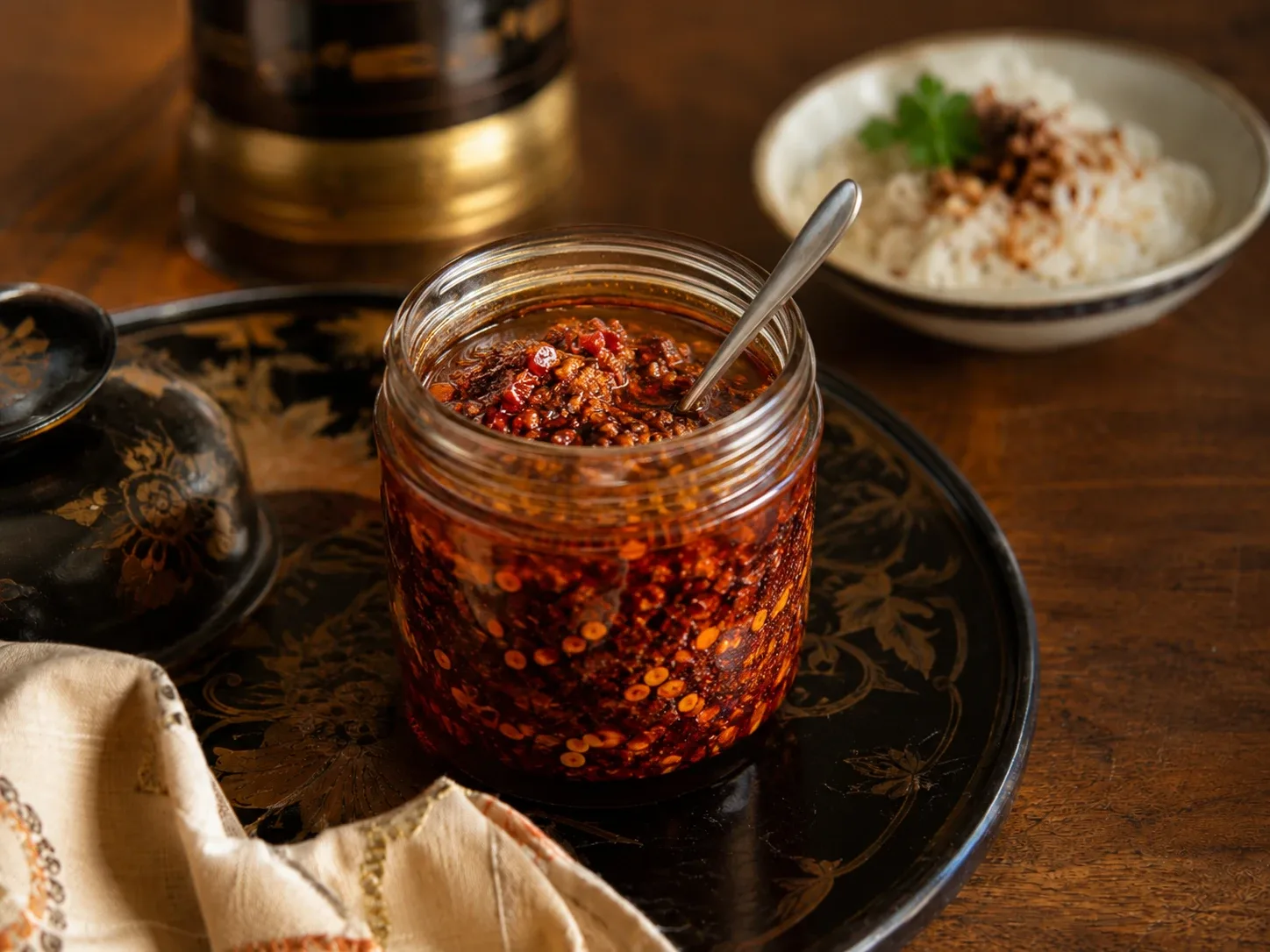
Si Chet, Burmese Chili Oilဆီချက်
The essential Burmese table oil — peanut oil gently fried with chili flakes, garlic, shallot, and a little ngapi, then spooned red over rice, noodles, and salads.
 ၁
၁Rice & Foundations · 40 min · Beginner
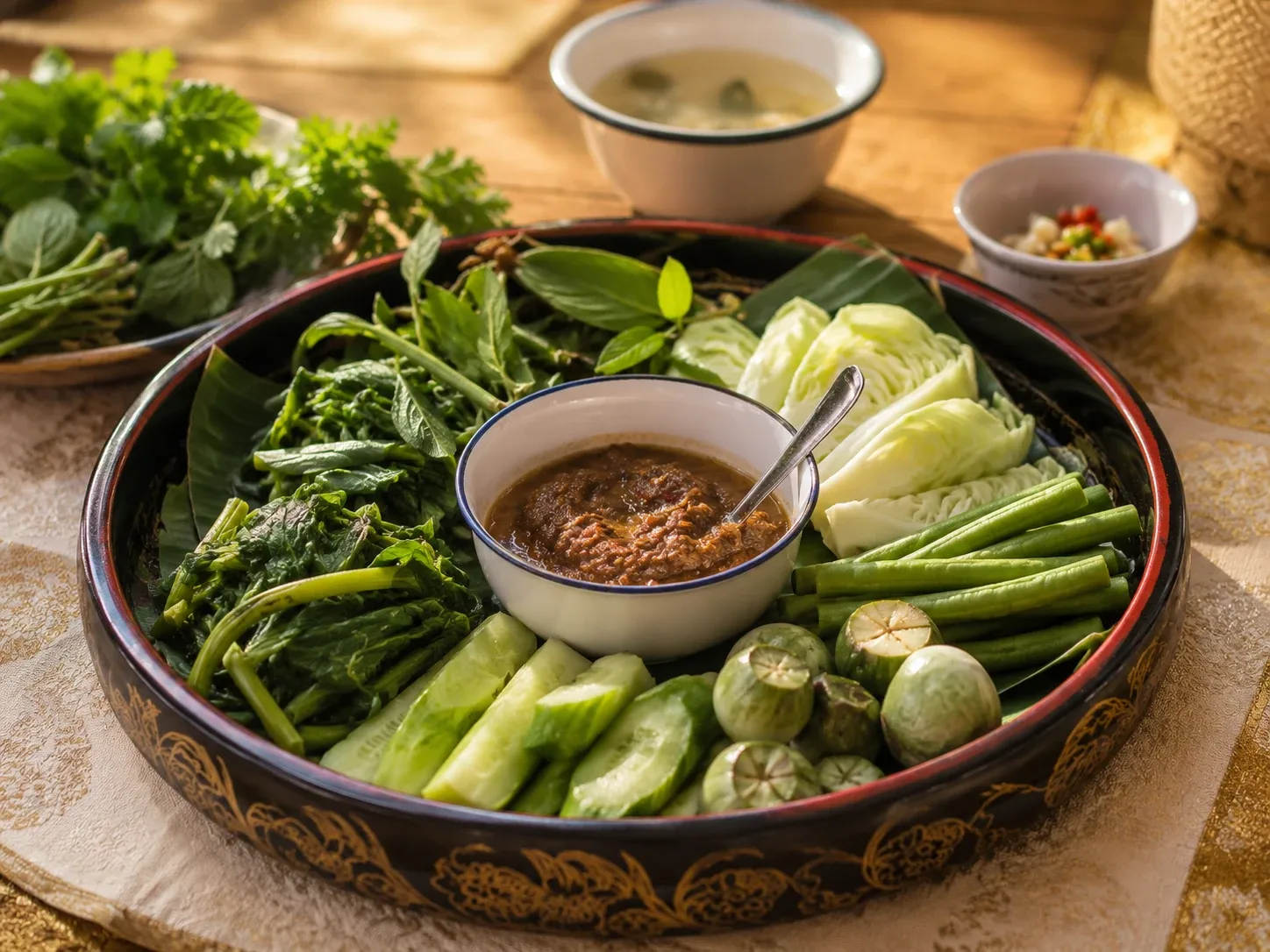
Toh Sa Yar, the Vegetable & Ngapi Platterတို့စရာ
The platter of raw and blanched vegetables around a pungent ngapi dip that no Burmese meal is complete without — the fresh, bitter counterpoint to curry.
 ၂
၂Noodles & Mohinga · 50 min · Beginner
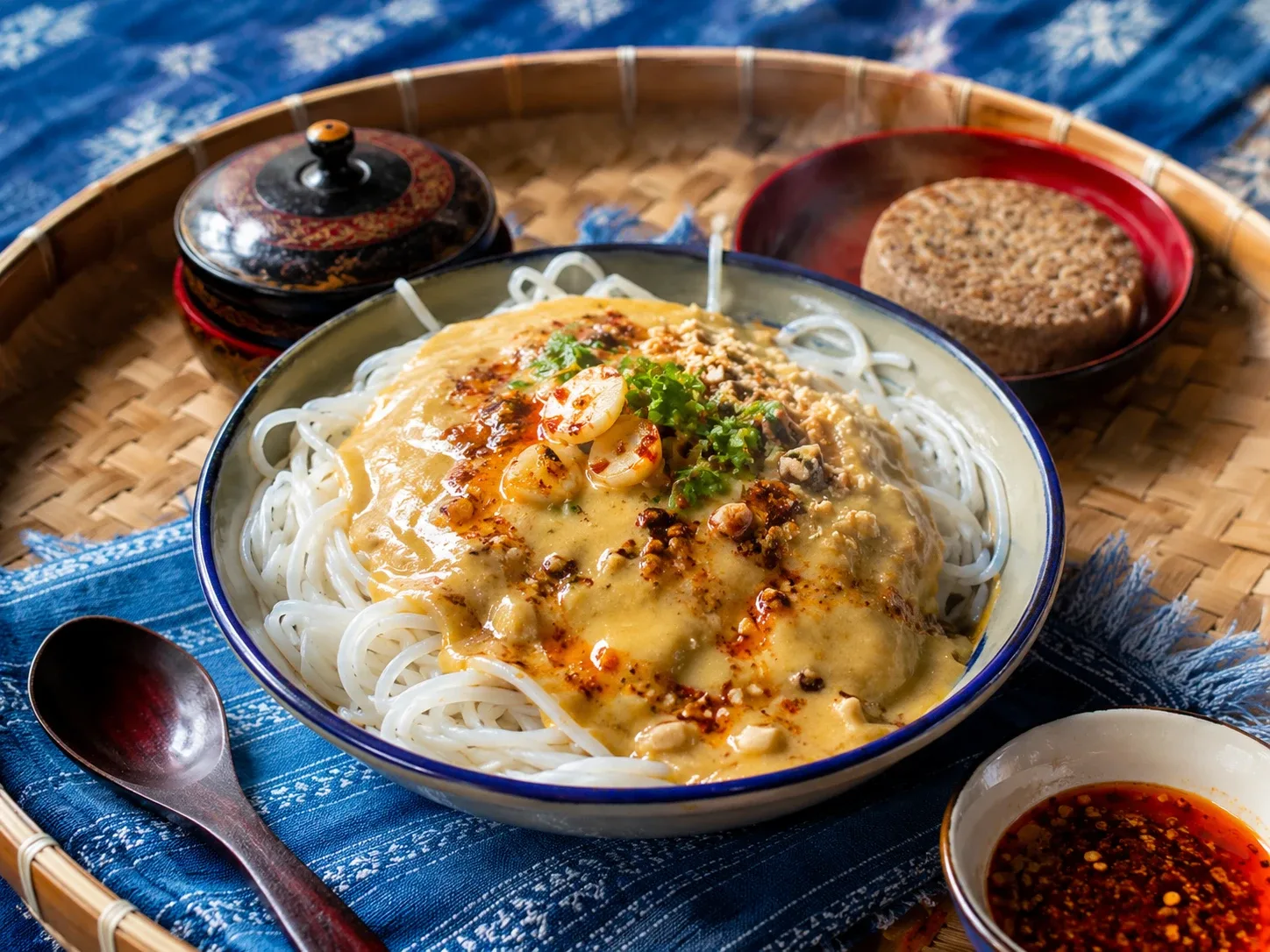
Tofu Nway, Warm Shan Tofu Noodlesတိုဟူးနွေး
Warm chickpea tofu that never sets, ladled like golden custard over rice noodles with garlic oil, chili, and peanuts — Shan State's great breakfast.