Shat Jam, the Kachin Mixed Rice
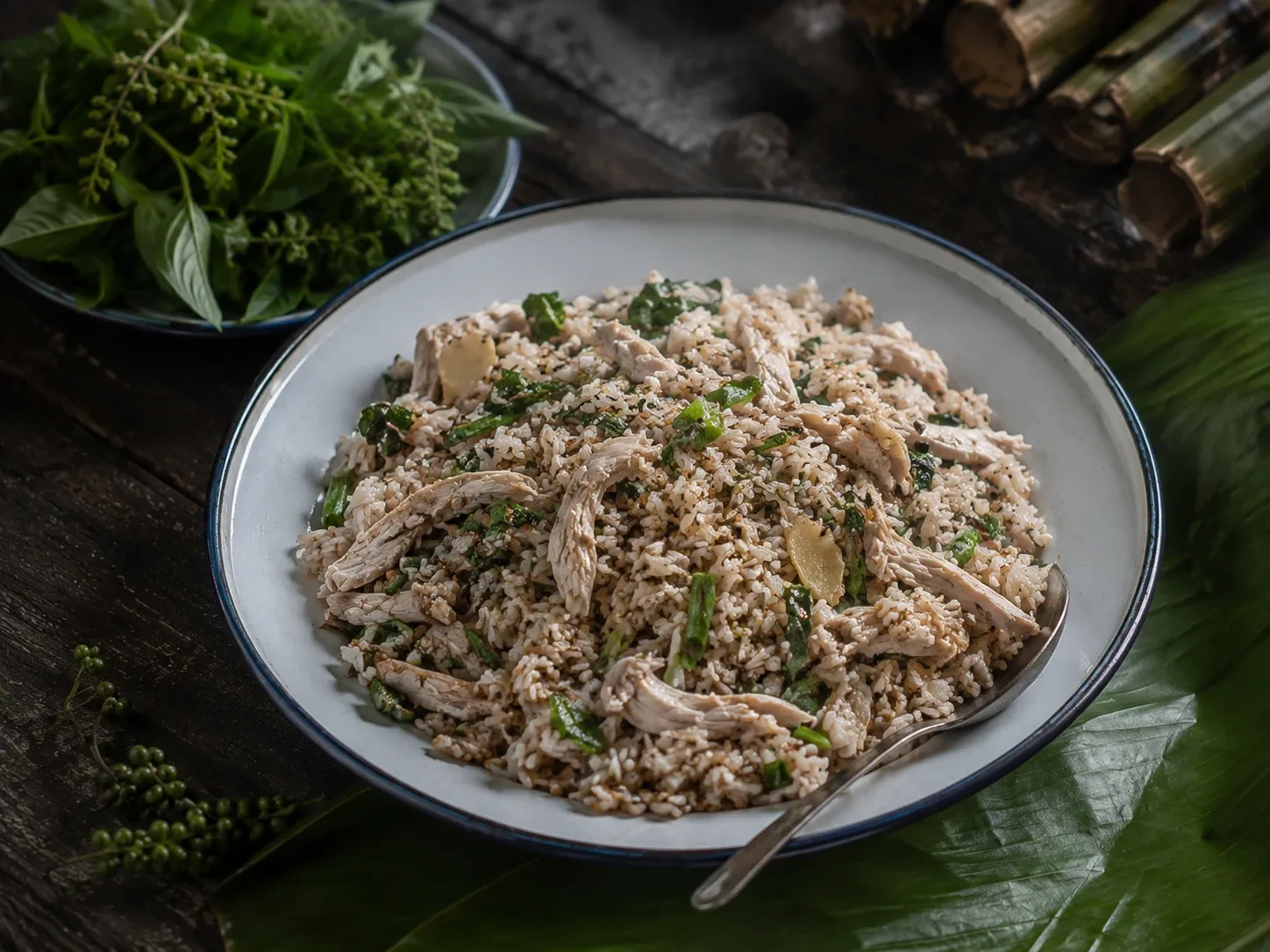
Kachin mixed rice — warm rice hand-massaged with poached chicken, ginger, fresh herbs, and toasted Sichuan pepper. The far north's signature one-plate meal.
By Burmese Cookbook Kitchen · July 9, 2026
ကချင် Kachin StateBritish Burma, 1826–1948
 ၁
၁- Prep
- 25 min
- Cook
- 40 min
- Serves
- 4
- Level
- Intermediate
Shat jam is the plate Kachin cooks reach for when they want to explain their whole kitchen at once. The name is Jinghpaw — roughly "mixed rice" — and the dish is exactly that: warm rice, poached chicken pulled into shreds, ginger, chilies, fresh herbs, and toasted Sichuan pepper, all worked together by hand until every grain has been spoken to. No wok, no frying, barely a gleam of fat. Where the lowland kitchen builds flavor in hot oil, the far north builds it in a mortar and finishes it with a massage.
The Kachin hills entered the written record late — colonial-era surveyors and missionaries reached Myitkyina's countryside in the decades around 1900, and their notes describe hearth cooking that already looked like this. The dish itself is plainly older than the archive; we date the record, not the rice. What is genuinely recent is its fame: Kachin restaurants in Yangon made shat jam a byword in the 2000s, and it now stands, alongside the region's pounded meats, for what Burmese eaters admiringly call the healthy cuisine.
Two moments decide it. Cook the rice in the chicken's own poaching broth, with a fistful of glutinous rice mixed in so the grains cling rather than scatter. And mix with your hands while the rice is still hot enough to argue with — the warmth blooms the ginger and Sichuan pepper and carries them everywhere a spoon would miss. Serve it with cups of the broth, and dinner is one plate, complete.
Mix shat jam while the rice is almost too warm for your hands — cool rice takes the seasoning politely; warm rice takes it personally.
မီးဖိုချောင်စကား · A word from the kitchen
Ingredientsပါဝင်ပစ္စည်း
Serves 4
Tap to check off as you gather
For the chicken & broth
- bone-in chicken thighs — boneless works, but the bones make a broth worth serving alongside
- fresh ginger — half sliced for the poach, half julienned for the mix
- garlic — bruised with the flat of a knife
- salt
- water
For the rice
- jasmine rice
- glutinous rice — the sticky fraction is what lets the seasoning cling — do not skip it
For the mix
- Sichuan peppercorns — toasted and ground, gritty husks sifted out
- green bird's eye chilies — thinly sliced — two if the table is timid
- shallots — sliced paper-thin
- cilantro — stems minced, leaves torn
- spring onions — sliced, white and green kept separate
- sawtooth coriander — optional but very Kachin — sliced into fine ribbons
Methodချက်နည်း
Tap a numeral as you finish each step
Step 1: Poach the chicken
Bring the water to a bare simmer with the sliced ginger, bruised garlic, and salt. Slide in the thighs and poach gently, never boiling, for 25 minutes. Turn off the heat and let the chicken rest in its broth for 10 minutes — carryover heat finishes the meat without tightening it. Lift it out, keep every drop of broth, and shred the meat by hand into ragged pieces; ragged edges hold seasoning the way clean knife-cuts never will.
Step 2: Cook the rice in the broth
Rinse both rices together until the water runs nearly clear, then cook them in 480 ml of the warm poaching broth — absorption method, lid on, 12 minutes at the lowest heat plus 10 minutes rest. Cooking the rice in broth instead of water is the quiet move that makes shat jam taste complete rather than assembled.
Step 3: Toast and grind the Sichuan pepper
While the rice cooks, toast the peppercorns in a dry pan over low heat for a minute or two until fragrant, then grind and sift. Raw, they taste like dust; toasted, they carry the citrus buzz that marks food from the Kachin hills.
Step 4: Ready the aromatics
Julienne the remaining ginger as finely as your knife allows, and give it, the shallots, and the chilies a brief bruising in a mortar — three or four presses, not a paste. You want them wounded enough to give up their juices into the rice, but still recognizable in the finished plate.
Step 5: Massage, do not stir
In your widest bowl, combine the warm rice, shredded chicken, bruised aromatics, ground pepper, cilantro, sawtooth coriander, and the white parts of the spring onions. Add three tablespoons of hot broth and mix with your hands, pressing and turning for a good two minutes, exactly as you would a thoke. A spoon folds; a hand persuades. Taste, and correct with salt and another splash of broth if the rice seems shy.
Step 6: Serve with cups of broth
Mound the rice onto plates and scatter with the spring onion greens. Reheat the remaining poaching broth and serve it alongside in small cups — in Kachin homes the broth is not a garnish but the other half of the meal, sipped between bites.
ခွက်ယောက် · The tools
Equipment
Rice cooker
ထမင်းအိုးConsistent long-grain rice with zero attention — and in a Burmese kitchen the rice is never optional.
Shop on Amazon →Stone mortar & pestle
ဆုံFor garlic-ginger paste, pounded dried shrimp fluff, and crushed peanuts — the blender lies about texture; the stone doesn’t.
Shop on Amazon →Mandoline slicer
အလွှာစက်Paper-thin shallots for even frying and cabbage fine enough for thoke — seconds, not knife-years.
Shop on Amazon →Fine sieve / muslin
စစ်ခွက်For straining tamarind, pressing broth clear, and sifting flours — line it with muslin for the cleanest pour.
Shop on Amazon →Box grater / microplane
ခြစ်စက်Fine ginger, green papaya shreds, and toddy-palm jaggery shavings.
Shop on Amazon →
Equipment links are Amazon affiliate links. As an Amazon Associate we earn from qualifying purchases, at no cost to you. Disclosure.
ဟင်းစုံ · Set the table
A Burmese meal is a spread
The quiet base of the meal — build the rest of the spread around it:
- A curryဟင်းSlow-cooked until the oil returns — the richness the sides cut against.
- A light soupဟင်းချိုThe clear, sour broth sipped between mouthfuls of rice.
- Toh sa yar & ngapi dipတို့စရာRaw and blanched vegetables with a pungent fish-paste dip — the fresh, bitter counterpoint.
- A hand-tossed thokeအသုပ်A bright, sour salad to lift the whole spread.
- Si chet, chili oilဆီချက်The fragrant red oil every household keeps by the stove.
Questions from the kitchen
Do I really need the glutinous rice?
You need some stickiness, however you get there. The ratio here — one part glutinous to three parts jasmine — gives the rice enough cling to carry the seasoning without turning to mochi. All jasmine works if you cook it slightly soft, but the mix will shed its ginger and herbs onto the plate.
Can I make it with fish or beef instead?
Yes, and Kachin cooks do — flaked grilled river fish and pounded dried beef are both documented variations. Keep the method identical: cook the protein gently, shred or flake it by hand, and massage it in while the rice is warm.
How is this different from Burmese fried rice?
No wok, and almost no oil. Htamin gyaw is yesterday's rice revived in hot fat; shat jam is today's rice, cooked in broth and seasoned by hand while warm. They solve different problems — one is thrift, the other is the centerpiece.
Can I make it ahead?
Shat jam is at its best twenty minutes after mixing, still warm. You can poach the chicken and make the broth a day ahead, but cook the rice and do the massage just before serving — reheated shat jam is fine; fresh shat jam is the argument for the dish.
နောက်တစ်ခု · Cook next
Keep the wok hot
 ၁
၁Rice & Foundations · 30 min · Beginner
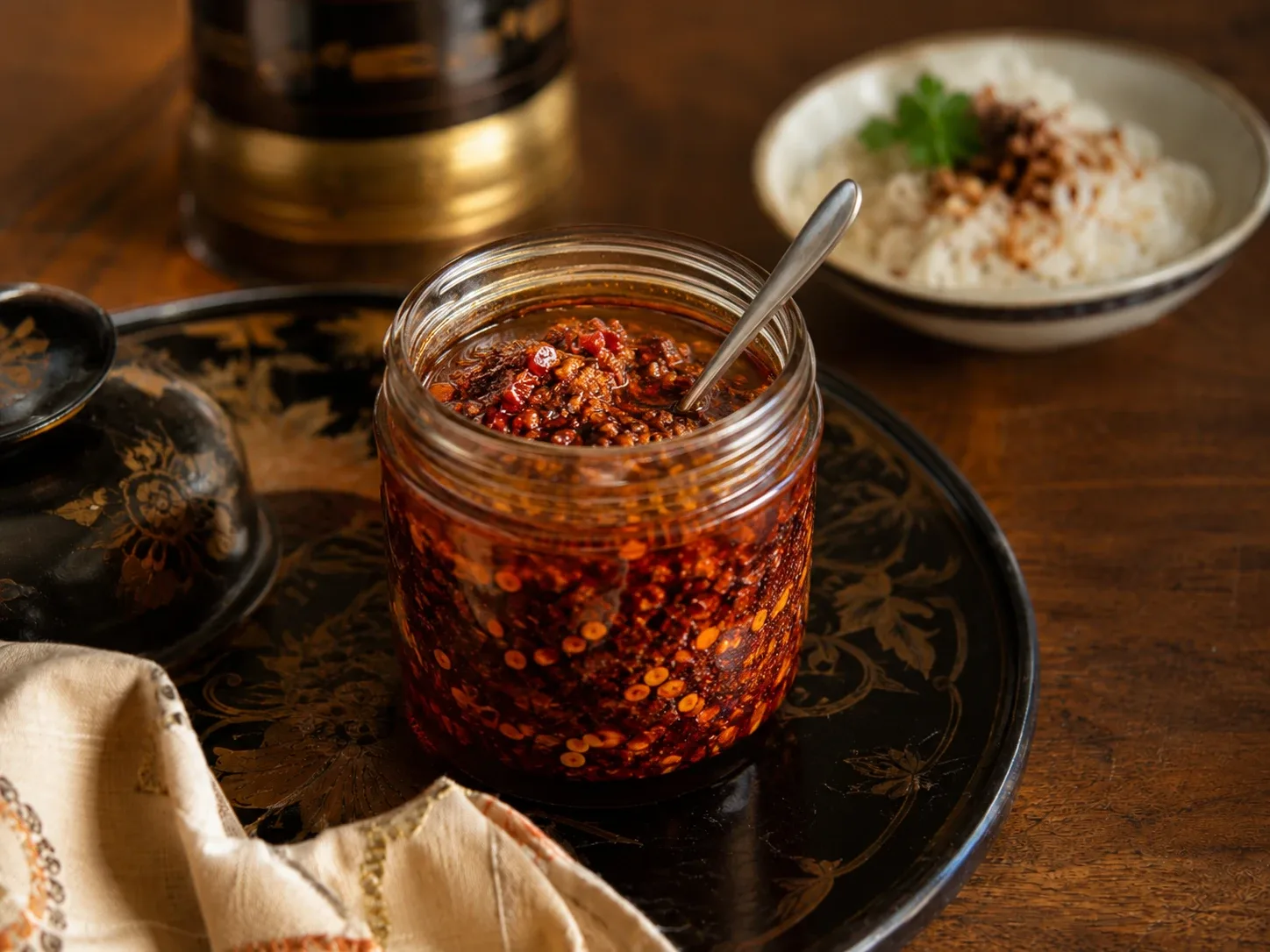
Si Chet, Burmese Chili Oilဆီချက်
The essential Burmese table oil — peanut oil gently fried with chili flakes, garlic, shallot, and a little ngapi, then spooned red over rice, noodles, and salads.
 ၁
၁Rice & Foundations · 40 min · Beginner
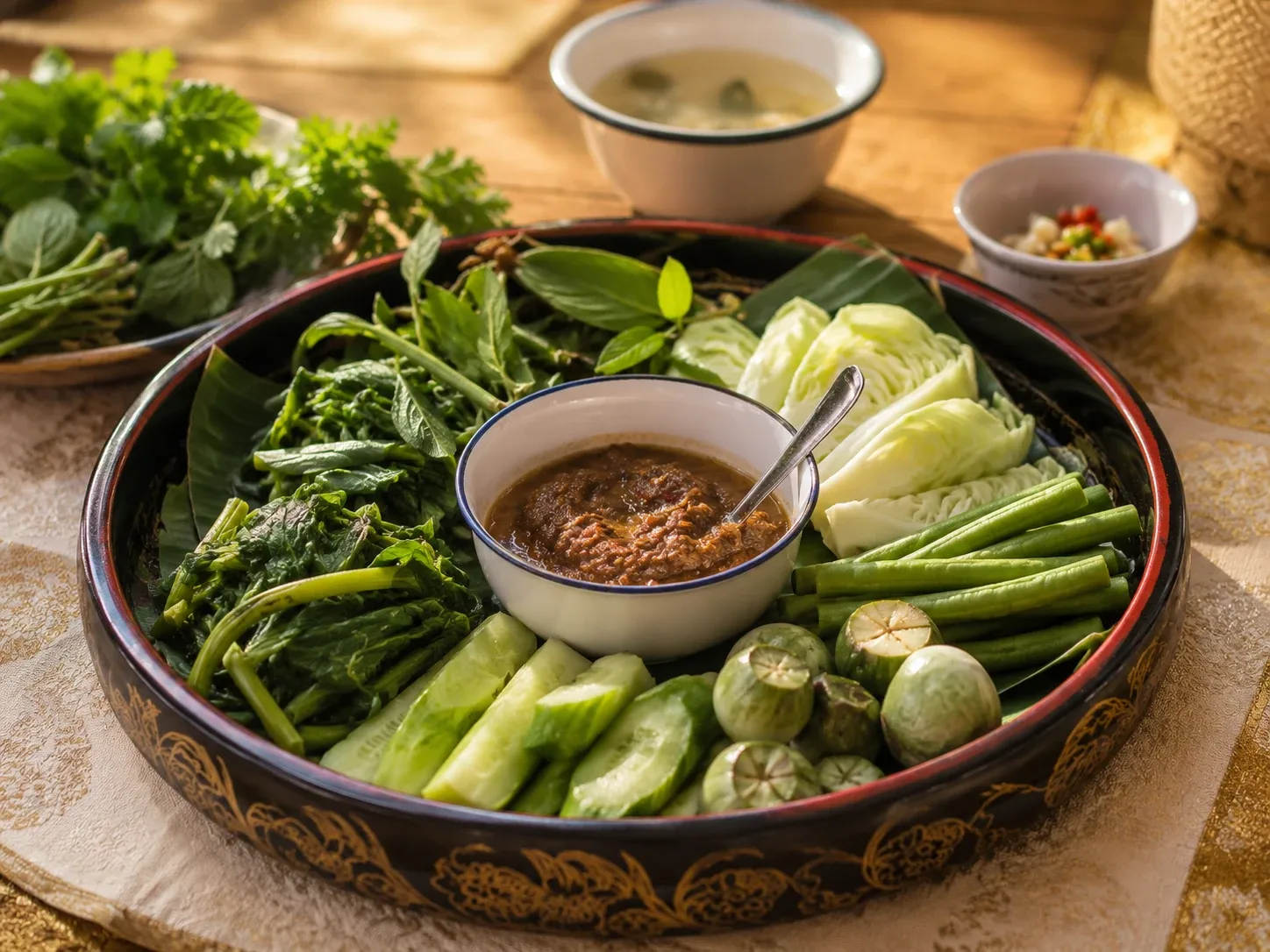
Toh Sa Yar, the Vegetable & Ngapi Platterတို့စရာ
The platter of raw and blanched vegetables around a pungent ngapi dip that no Burmese meal is complete without — the fresh, bitter counterpoint to curry.
 ၄
၄Salads & Thoke · 25 min · Beginner
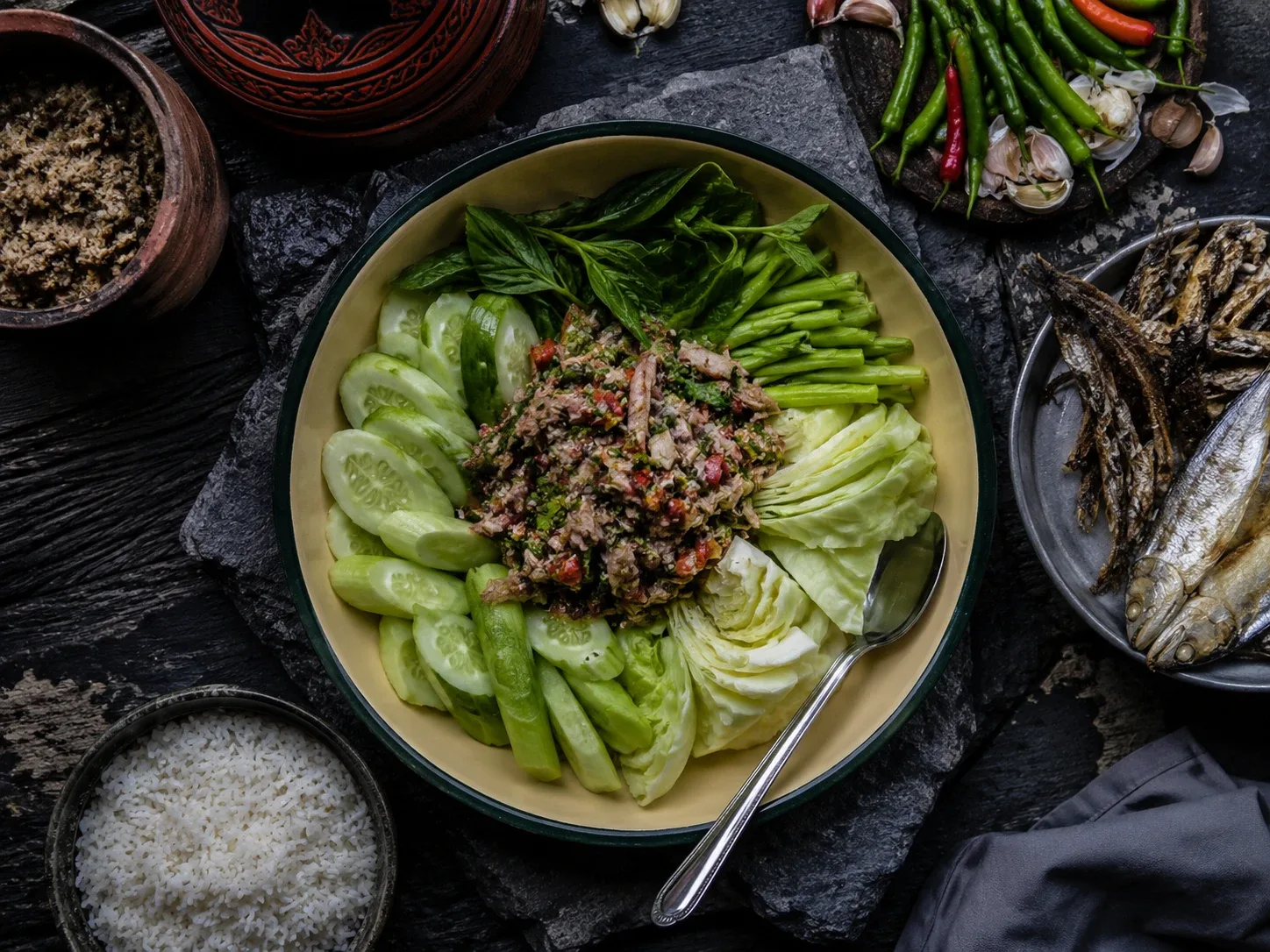
Rakhine Ngapi Thoke, the Pounded Fireငါးပိသုပ်
Rakhine's roasted fish-paste salad — marine ngapi pounded with green chili, garlic, and lime, served the western-coast way with crisp vegetables and rice.