Ngapi Kyaw, Fried Fish-Paste Relish
ငါးပိကြော်
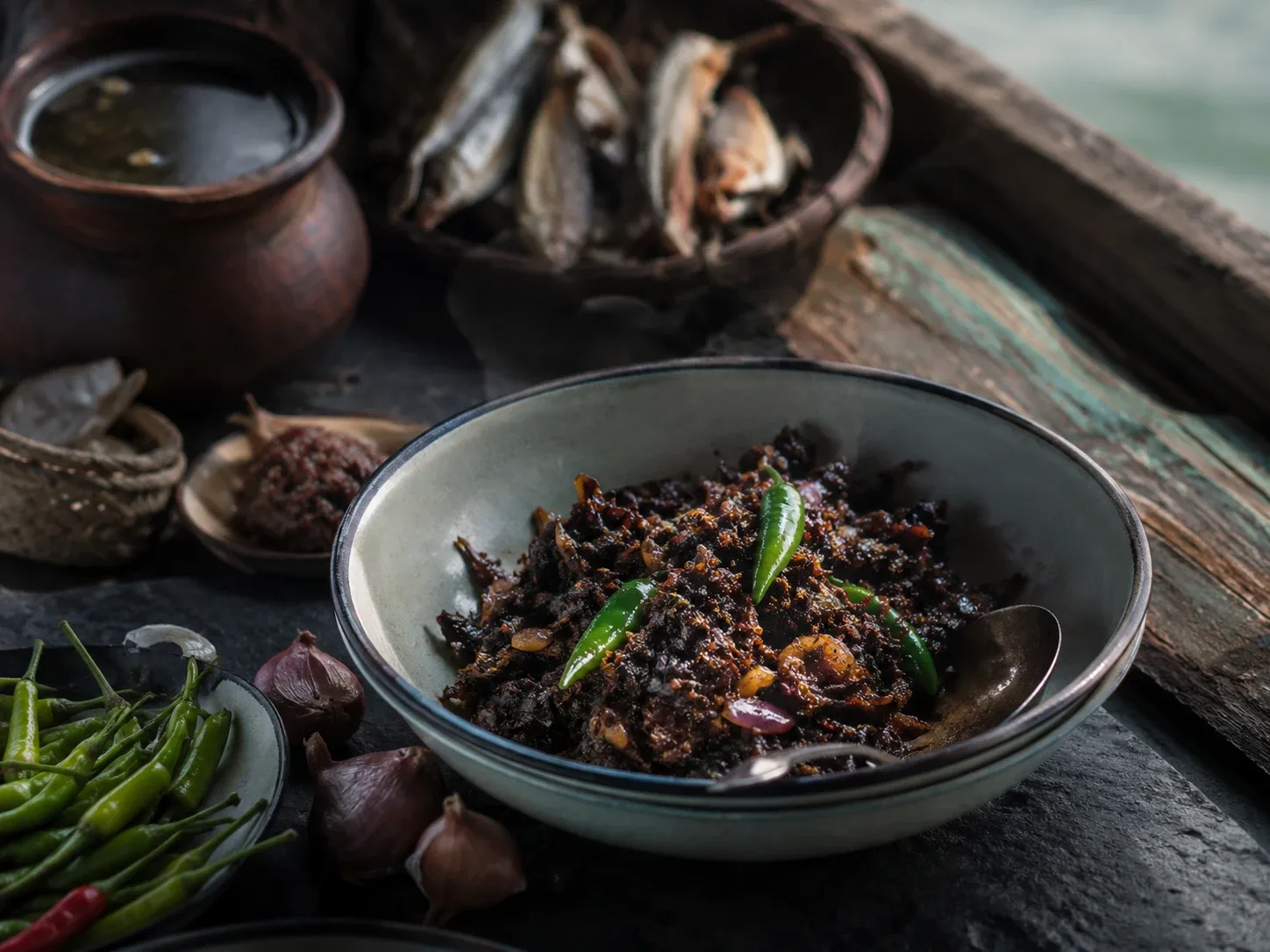
Rakhine's fried ngapi relish — fish paste sizzled with shallots, garlic, and green chili into a dark, fierce spoonful that seasons a whole table of rice.
Also spelled: Ngapi Gyaw
By Burmese Cookbook Kitchen · July 9, 2026
ရခိုင် Rakhine CoastMrauk-U, 1429–1785
 ၁
၁- Prep
- 10 min
- Cook
- 15 min
- Serves
- 6
- Level
- Beginner
If Rakhine cooking has a cornerstone, it is ngapi — and the Arakanese have the receipts. When European travelers reached Mrauk-U in its seventeenth-century prime, they described a kingdom fed on rice and fish in all its preserved forms, and the coast's fish paste — marine-caught, famously light on salt because fish was never scarce — was already an export and an identity. That is the honest lineage of this jar: the paste itself belongs to the old kingdom's documented economy; the tidy recipe for frying it is home cooking, written down only in living memory.
Ngapi kyaw is the paste's most concentrated form of employment. Where ngapi yay thins it into a dip and the great Rakhine thoke pounds it with charred chili, this preparation fries it — patiently, loudly — with shallots, garlic, and green chili until it darkens into something between a relish and a weapon. It is worth noting the small heresy involved: in a cuisine that measures oil by the teaspoon, this dish demands three whole tablespoons, because ngapi must genuinely fry to shed its rawness. Even the leanest kitchen in Myanmar knows where to spend.
The single technique that matters is patience at the pan. The paste must pass all the way through its loud, swampy stage into toasty darkness, with the oil re-emerging at the edges. Stop early and you bottle low tide. Push through and you have the taste of the whole coast in a jar, two weeks of dinners deep.
Open a window before you start. Frying ngapi announces itself to the whole house — and ten minutes later, the same people complaining about the smell will be at the table with rice.
မီးဖိုချောင်စကား · A word from the kitchen
Ingredientsပါဝင်ပစ္စည်း
Serves 6
Tap to check off as you gather
For the relish
- ngapi (shrimp paste) — Rakhine marine-fish ngapi if you can find it; it runs less salty, so taste before seasoning
- peanut oil — yes, three — this is the one dish where even Rakhine cooks spend real oil, because the relish must fry, not stew
- shallots — four sliced into thin rings, two pounded
- garlic — three sliced into coins, two pounded
- green bird's eye chilies — sliced into rounds
- dried chili flakes
- turmeric
- dried shrimp — optional, pounded to floss — it stretches the relish and softens its edges
- palm sugar (jaggery)
- lime — juiced, added off the heat
- water
Methodချက်နည်း
Tap a numeral as you finish each step
Step 1: Loosen the ngapi
Mash the ngapi with the water into a rough, spreadable slurry. Straight from the tub it is too dense to fry evenly — it would scorch outside before the inside ever woke up. Loosened, it can meet the oil as an equal.
Step 2: Fry the shallots and garlic
Heat the oil over medium heat and fry the shallot rings and garlic coins, stirring, until they turn the color of pale straw — 4 to 5 minutes. Lift half of them out onto a plate and set aside; they return at the end as texture, and frying them all the way through the ngapi stage would burn them bitter.
Step 3: Fry the paste — properly
Add the pounded shallots, pounded garlic, and turmeric to the pan, stir for a minute, then add the ngapi slurry and the chili flakes. Fry, stirring and scraping, for 6 to 8 minutes, until the paste darkens, thickens, smells toasty rather than raw, and the oil re-emerges at the edges. This is the whole dish: under-fried ngapi tastes like the tide going out, fried ngapi tastes like the sea concentrated.
Step 4: Balance the fire
Stir in the green chilies, the dried shrimp floss if using, and the palm sugar, and fry two minutes more — the chilies should stay bright and just barely cooked. The sugar is a corrective, not a flavor; it rounds the paste's edges without ever announcing itself.
Step 5: Finish and keep
Off the heat, fold in the lime juice and the reserved fried shallots and garlic. Taste with plain rice, which is how it will be eaten — salty first, hot second, sour at the finish. Cool completely and store in a jar in the fridge, where it keeps for two weeks and improves for the first three days.
ခွက်ယောက် · The tools
Equipment
Rice cooker
ထမင်းအိုးConsistent long-grain rice with zero attention — and in a Burmese kitchen the rice is never optional.
Shop on Amazon →Stone mortar & pestle
ဆုံFor garlic-ginger paste, pounded dried shrimp fluff, and crushed peanuts — the blender lies about texture; the stone doesn’t.
Shop on Amazon →
Equipment links are Amazon affiliate links. As an Amazon Associate we earn from qualifying purchases, at no cost to you. Disclosure.
ဟင်းစုံ · Set the table
A Burmese meal is a spread
The quiet base of the meal — build the rest of the spread around it:
- A curryဟင်းSlow-cooked until the oil returns — the richness the sides cut against.
- A light soupဟင်းချိုThe clear, sour broth sipped between mouthfuls of rice.
- Toh sa yar & ngapi dipတို့စရာRaw and blanched vegetables with a pungent fish-paste dip — the fresh, bitter counterpoint.
- A hand-tossed thokeအသုပ်A bright, sour salad to lift the whole spread.
- Si chet, chili oilဆီချက်The fragrant red oil every household keeps by the stove.
Questions from the kitchen
How is this different from balachaung?
Balachaung is a dried-shrimp fry — crisp, fluffy, almost a topping — in which ngapi plays a supporting role. Ngapi kyaw inverts the cast: the paste is the star, fried dark and dense, with shallots and chili in service. Balachaung garnishes; ngapi kyaw commands.
The smell while frying is intense. Is something wrong?
Nothing whatsoever — fried ngapi is famously loud in the kitchen and settles into deep savoriness on the plate, the same trick anchovies and fish sauce pull. Ventilate, hold your nerve, and judge the relish with rice, not with your nose over the pan.
How do I serve it?
A spoonful beside hot rice with raw cucumber, blanched okra, or boiled vegetables to drag through it — the same table logic as ngapi thoke. It also does quiet work stirred into fried rice or melted into a vegetable stir-fry when nobody is looking.
နောက်တစ်ခု · Cook next
Keep the wok hot
 ၁
၁Rice & Foundations · 30 min · Beginner
Si Chet, Burmese Chili Oilဆီချက်
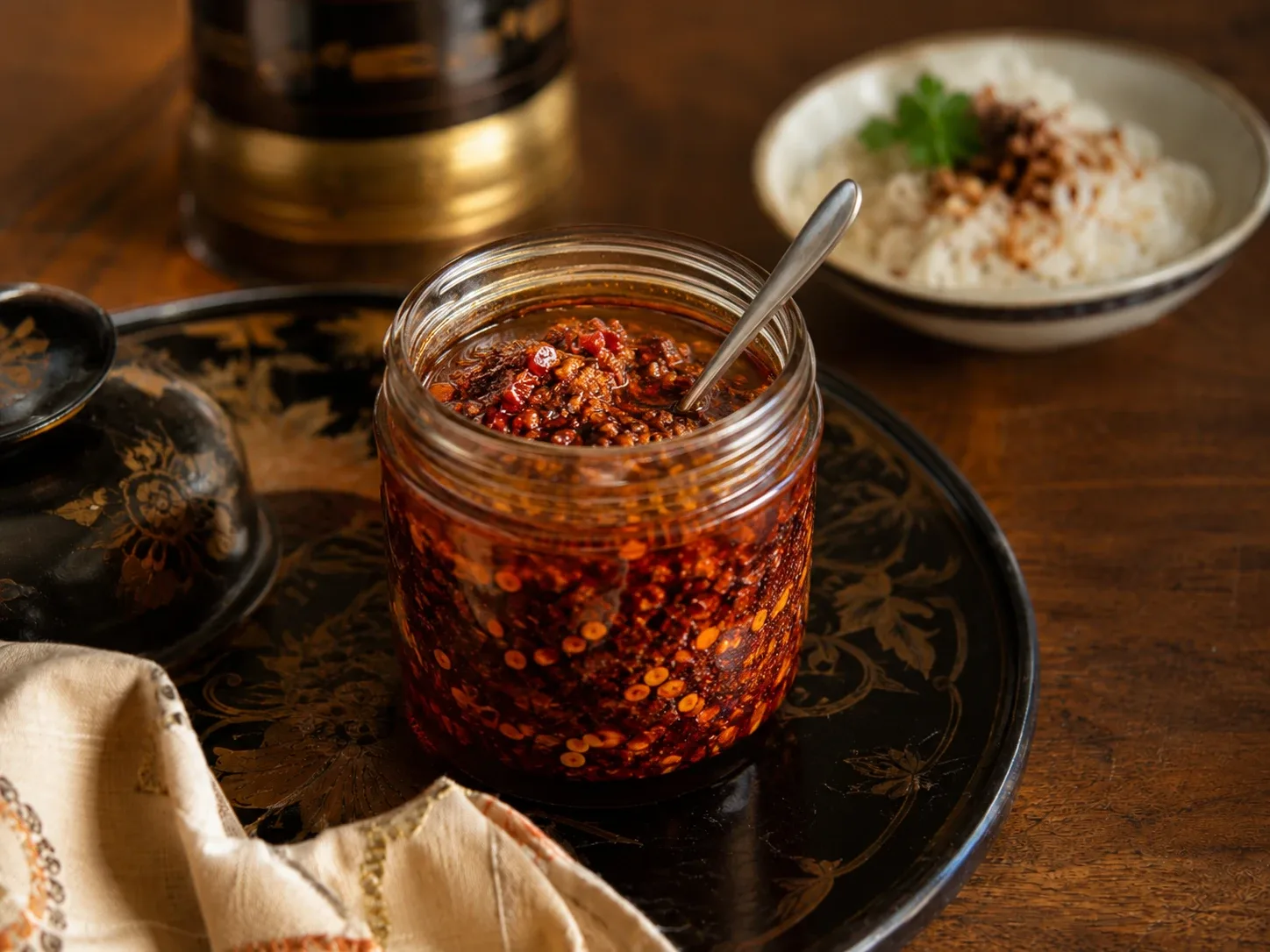
The essential Burmese table oil — peanut oil gently fried with chili flakes, garlic, shallot, and a little ngapi, then spooned red over rice, noodles, and salads.
 ၁
၁Rice & Foundations · 40 min · Beginner
Toh Sa Yar, the Vegetable & Ngapi Platterတို့စရာ
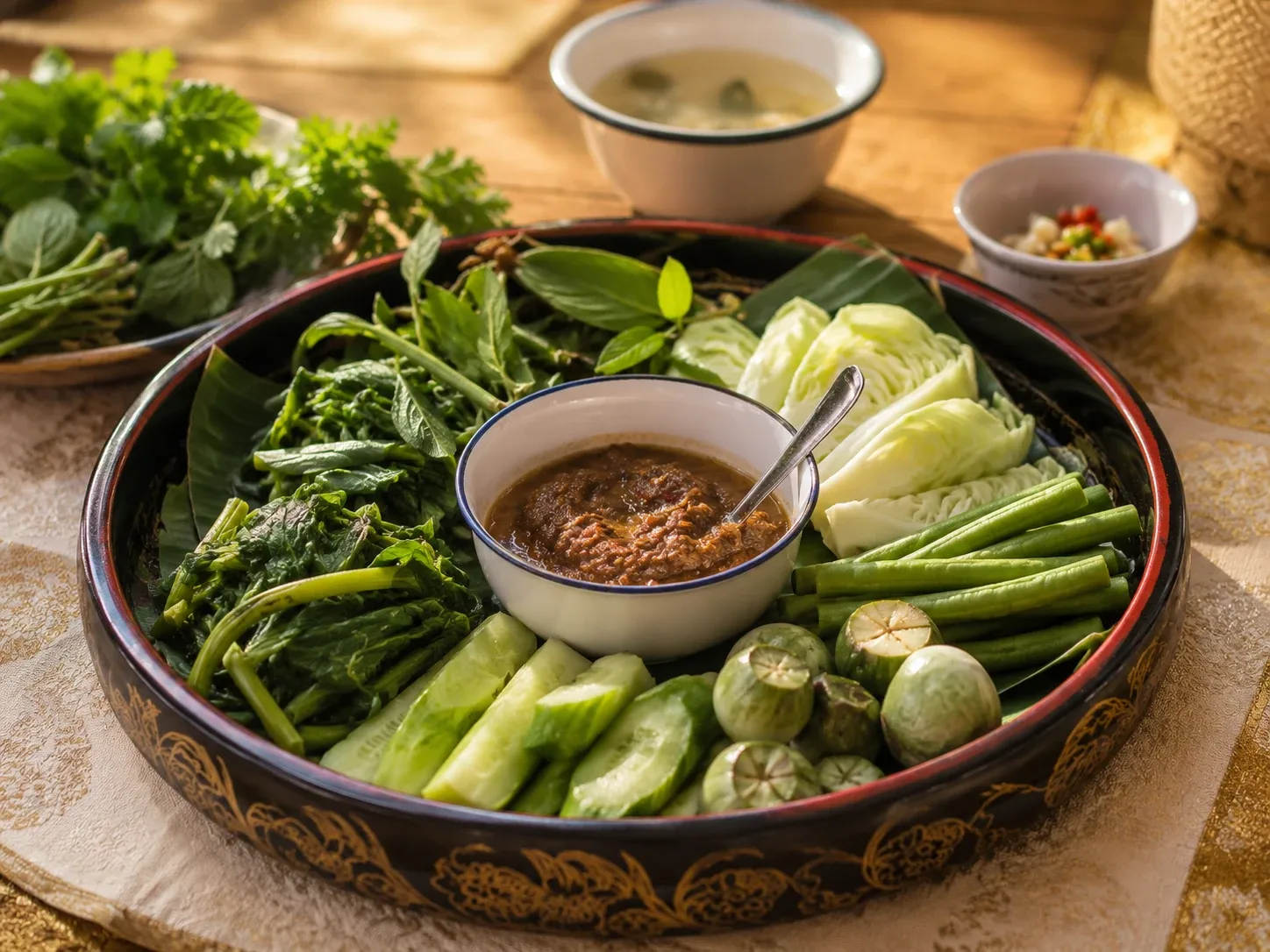
The platter of raw and blanched vegetables around a pungent ngapi dip that no Burmese meal is complete without — the fresh, bitter counterpoint to curry.
 ၁
၁Rice & Foundations · 210 min · Intermediate
Tua Nao, Shan Fermented Soybean Discsပဲပုပ်
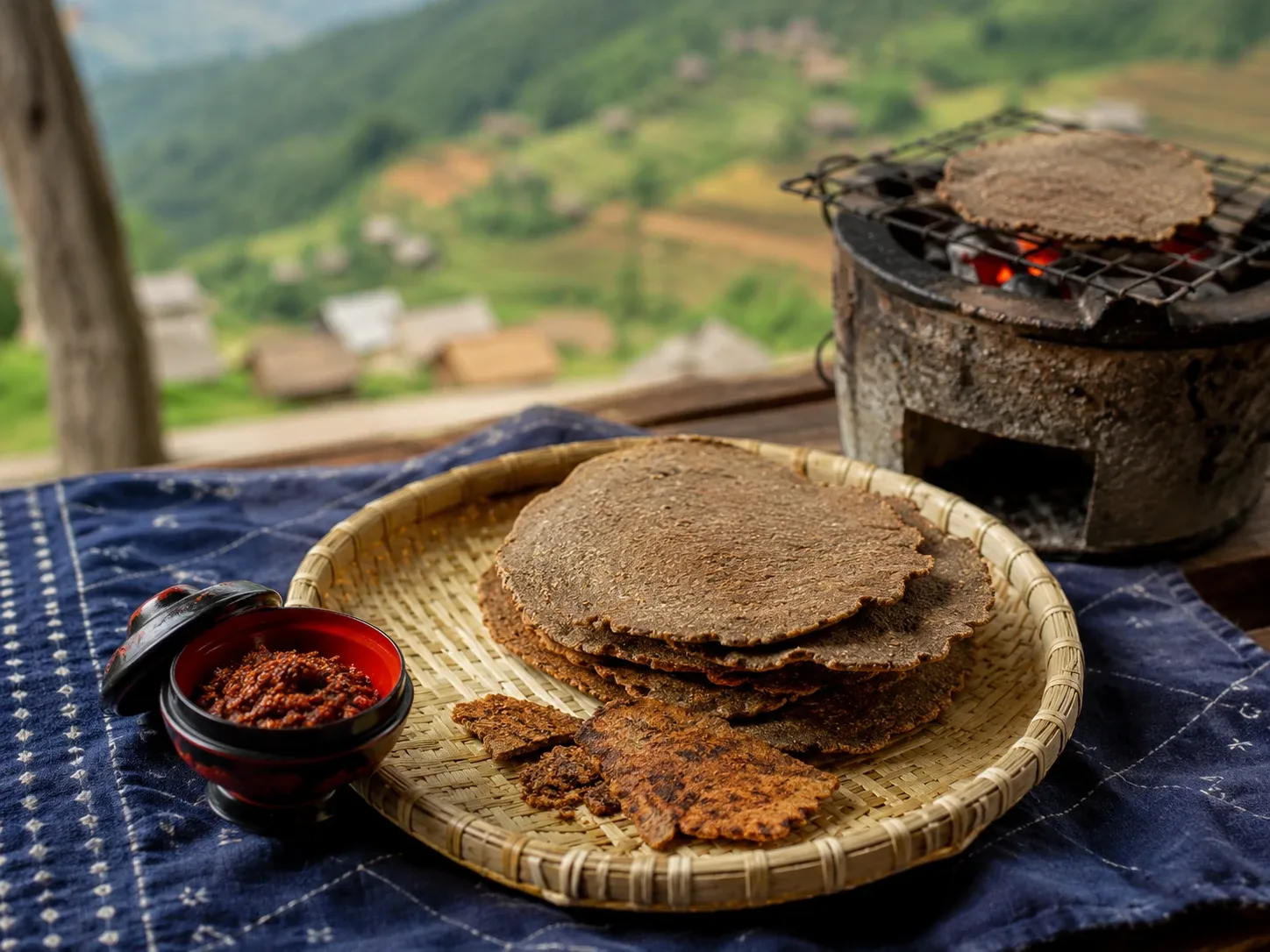
Shan State's seasoning backbone — soybeans boiled, fermented, pounded, and sun-dried into discs you toast over flame and crumble into everything.