Kachin Pounded Dried Beef
ကချင်အမဲသားထောင်း
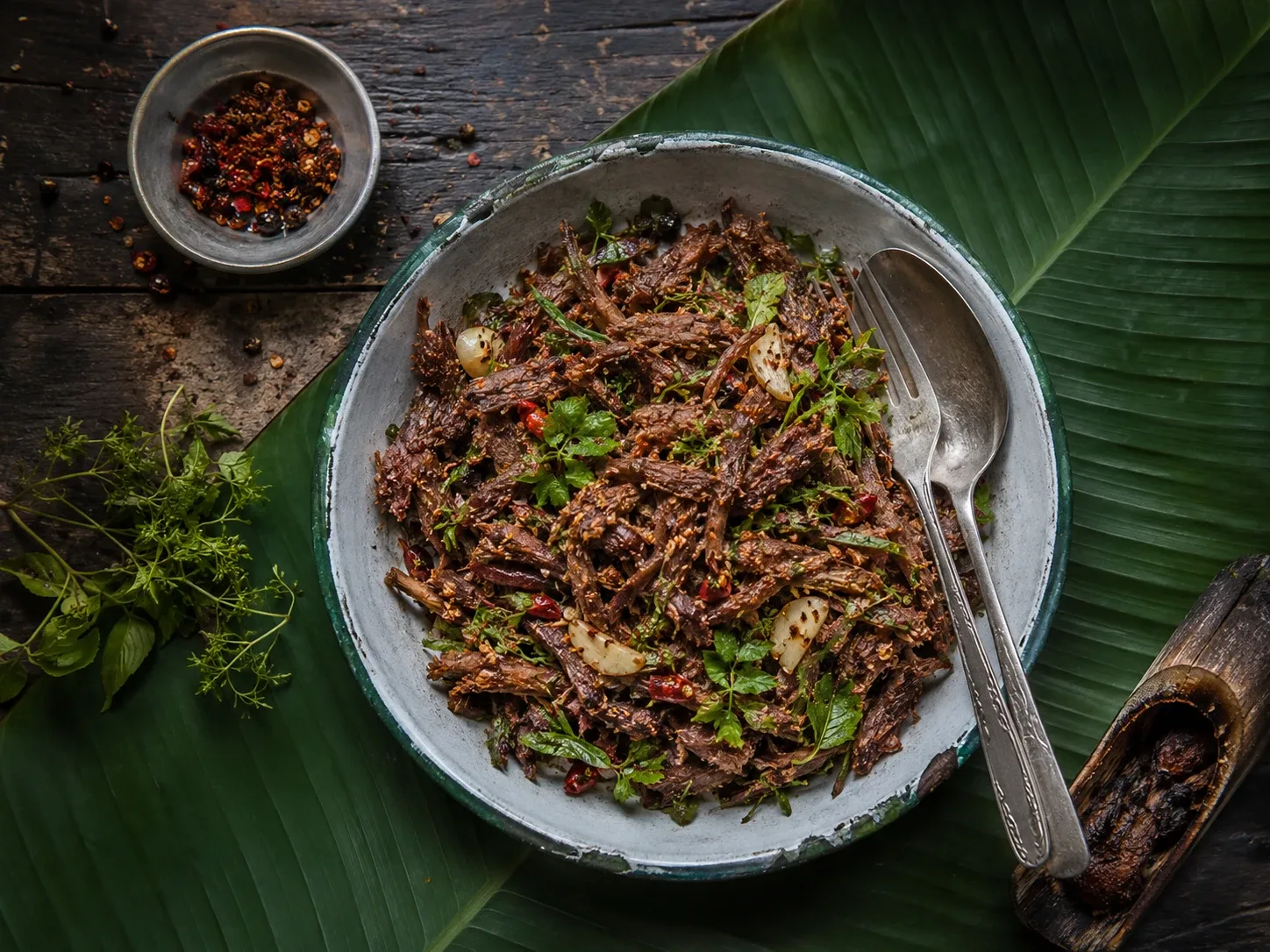
Kachin pounded dried beef — salt-dried beef toasted over flame and beaten to a smoky wool with roasted chili, Sichuan pepper, garlic, and herbs.
By Burmese Cookbook Kitchen · July 9, 2026
ကချင် Kachin StateBritish Burma, 1826–1948
 ၄
၄- Prep
- 20 min
- Cook
- 110 min
- Serves
- 4
- Level
- Intermediate
Before it is a salad, amè htaung is a larder. Kachin households have always dried beef — salted strips on racks above the hearth, cured by smoke and the cool mountain air — because the hills are far from any market and a cow is not eaten in a day. Colonial-era accounts of the Kachin Hills describe exactly these larders of dried meat, which is why we date the dish there: the drying is documented; the mortar work that turns it into dinner was never written down, just done.
And what mortar work it is. The dried beef is toasted over flame until the edges catch, then pounded — hard, in batches, with intent — until it splits into a rough floss the color of teak. Into that go roasted chilies, toasted Sichuan pepper, garlic, and ginger, and then the fresh rescue party of shallots, mint, and cilantro. No oil at all. The result sits somewhere between a salad and a seasoning: smoky, numbing, salty, and almost weightless, eaten in pinches over rice or alongside a cup of khaung yay, which is where it does its best work.
The texture is the whole test. Under-pounded, it is chewy strips with spice on them; over-processed, it is sawdust. You want teased wool — fibres split open but still long enough to remember the grill. A food processor cannot do this. Your arm can, and the arm is traditional.
Pound to fluff, not paste — stop when the beef looks like teased wool and still remembers the grill.
မီးဖိုချောင်စကား · A word from the kitchen
Ingredientsပါဝင်ပစ္စည်း
Serves 4
Tap to check off as you gather
For the dried beef
- beef flank — or sirloin; cut with the grain into strips 2 cm wide
- salt
For the mortar
- dried chilies — toasted whole until brittle
- sichuan pepper — toasted
- garlic
- fresh ginger — roughly chopped
- salt
To finish
- shallots — sliced into thin rings
- cilantro — roughly torn
- mint — leaves only
- spring onions — sliced fine
- lime — in wedges — optional; the hills often serve it without
Methodချက်နည်း
Tap a numeral as you finish each step
Step 1: Salt and dry the beef
Toss the beef strips with the salt and lay them on a rack over a tray. Dry in a 110°C fan oven for 90 minutes to 2 hours, turning once, until the strips are leathery and dark but still bend without snapping. This stands in for days on a rack above a Kachin hearth; you want jerky's chew, not jerky's snap. Fully brittle beef pounds to dust.
Step 2: Toast the beef over flame
Just before pounding, char the dried strips directly over a gas flame or under a hot broiler for two to three minutes, turning, until the edges toast and the fat smells nutty. This wakes the dried meat the way toasting wakes a spice — cold dried beef pounds into cardboard; toasted, it pounds into smoke.
Step 3: Pound the beef to fluff
Cut the toasted strips across the grain into short lengths and pound them in batches, hard, until each batch splits into a rough, airy floss — teased wool, not powder. This takes real effort and a few minutes per batch; it is the whole texture of the dish, so do not shortcut it in a food processor, which cuts instead of splitting and gives sawdust.
Step 4: Pound the aromatics
Set the beef aside and pound the toasted chilies, Sichuan pepper, and salt to a coarse rubble, then add the garlic and ginger and work to a rough paste. The paste should be juicy enough to season the dry floss — the beef carries no dressing but this.
Step 5: Combine and finish
Return the beef floss to the mortar and turn it through the paste with a few light strokes, then tip into a bowl and fold in the shallots, spring onions, cilantro, and mint with your hands. Taste — it should be smoky, numbing, and assertively salty, built to be eaten in pinches with rice or khaung yay, the Kachin rice beer. Lime on the side for those who want it.
ခွက်ယောက် · The tools
Equipment
Stone mortar & pestle
ဆုံFor garlic-ginger paste, pounded dried shrimp fluff, and crushed peanuts — the blender lies about texture; the stone doesn’t.
Shop on Amazon →
Equipment links are Amazon affiliate links. As an Amazon Associate we earn from qualifying purchases, at no cost to you. Disclosure.
ဟင်းစုံ · Set the table
A Burmese meal is a spread
A thoke is part of a spread as often as it is a light meal on its own:
- Steamed riceထမင်းThe centre of the table — everything else is built around it.
- A curryဟင်းSlow-cooked until the oil returns — the richness the sides cut against.
- Balachaungဘလချောင်းThe crispy shrimp relish that lives on every Burmese table.
- Crispy fried shallotsကြက်သွန်ကြော်A spoonful of crunch and sweet shallot oil over anything.
- Toh sa yar & ngapi dipတို့စရာRaw and blanched vegetables with a pungent fish-paste dip — the fresh, bitter counterpoint.
Questions from the kitchen
Can I start from store-bought jerky?
Plain, unsweetened jerky works honestly — skip the salting and drying, toast it over flame, and go straight to the mortar. Avoid teriyaki and pepper-cure styles; their sugar burns and their seasoning argues with the Sichuan pepper.
Why not just use fresh grilled beef?
You would get a fine salad, but a different one — the chicken htaung's cousin. Drying concentrates the beef into something closer to a seasoning than a meat, and the airy floss texture only happens when the fibres have lost their water. The wait is the recipe.
How long does it keep?
The pounded beef alone, before herbs and shallots, keeps a week in an airtight jar and travels well — that was always the point of it. Once the fresh things go in, eat it the same day.
နောက်တစ်ခု · Cook next
Keep the wok hot
 ၄
၄Salads & Thoke · 30 min · Beginner
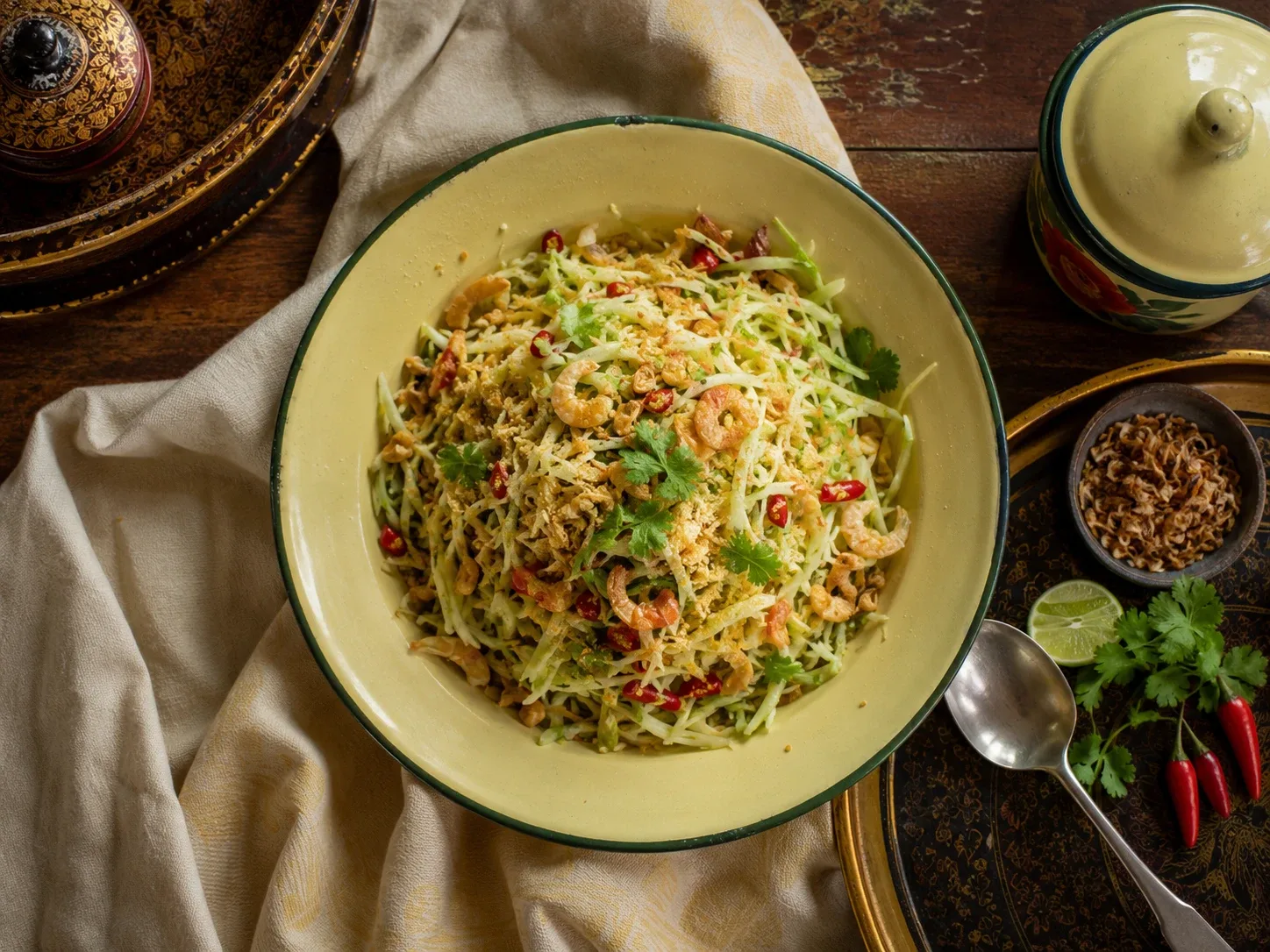
Thayet Thi Thanat, Green Mango Pickle-Saladသရက်သီးသနပ်
Tart, crunchy green-mango shreds dressed with fried garlic oil, chili, dried shrimp, and toasted chickpea flour — the sour thanat that cuts a heavy Burmese meal.
 ၄
၄Salads & Thoke · 20 min · Beginner
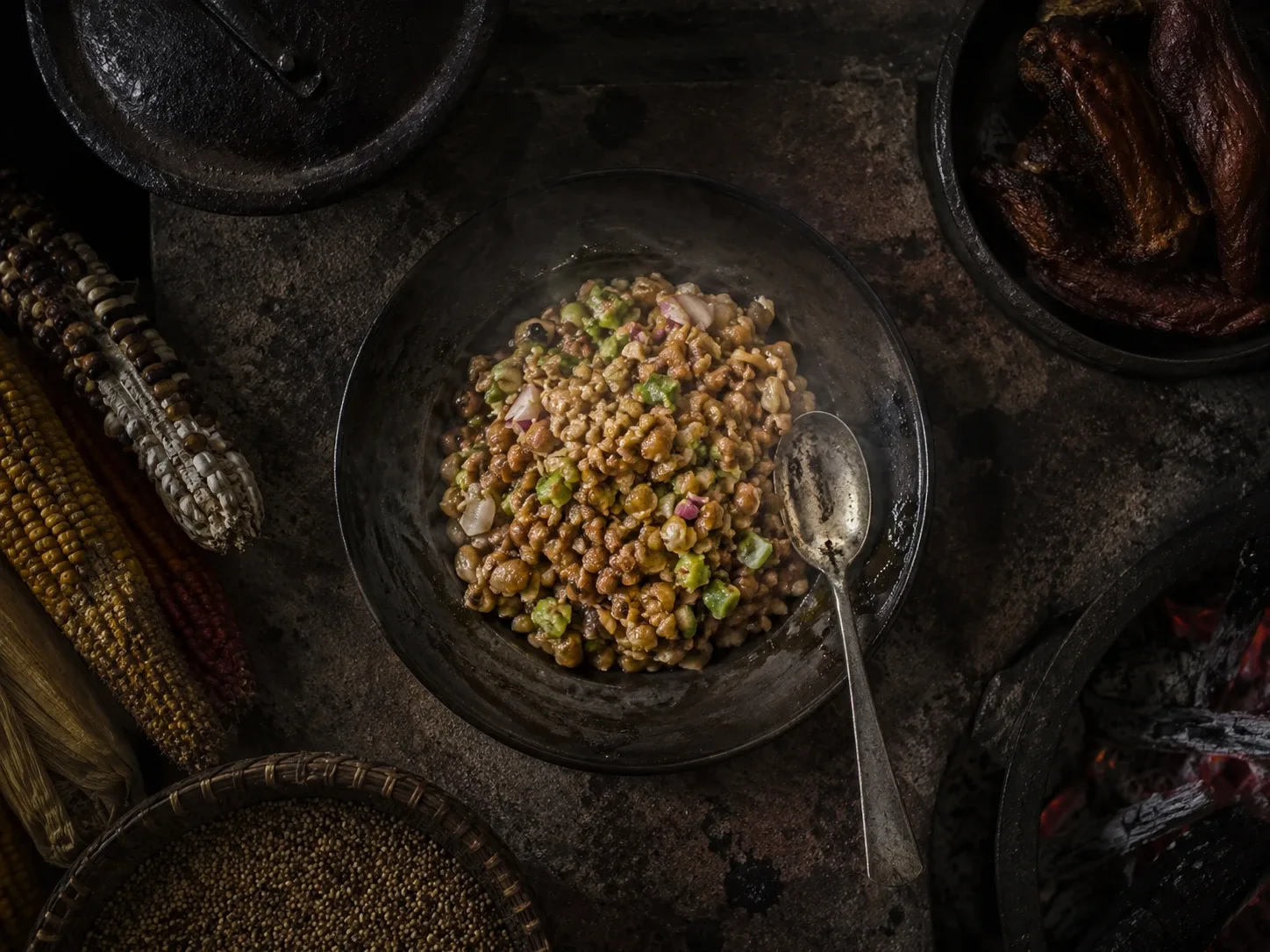
Bekang Rawt, Fermented Soybean Salad
Fermented soybeans pounded with shallots, green chili, and salt — the Chin hills' pungent everyday salad, a mountain cousin of natto, eaten with hot rice.
 ၅
၅Soups & Broths · 165 min · Beginner
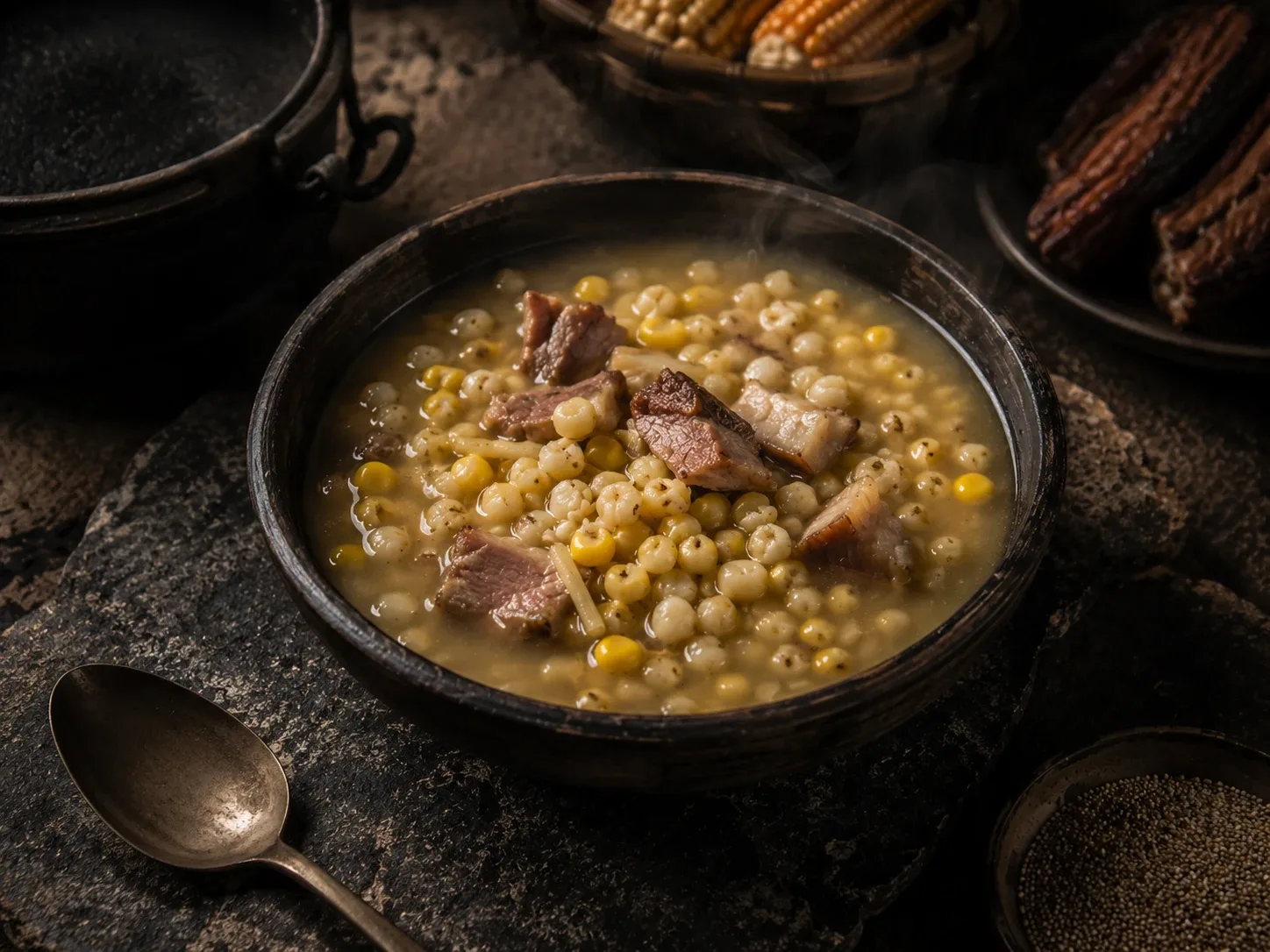
Sabuti, the Chin Corn Soup
The Chin hills' great corn soup — hominy maize simmered slowly with smoked pork and ginger, frugal mountain cooking that somehow eats like plenty.