Kachin Dried Bamboo Shoot Pork
မျှစ်ခြောက်ဝက်သားဟင်း
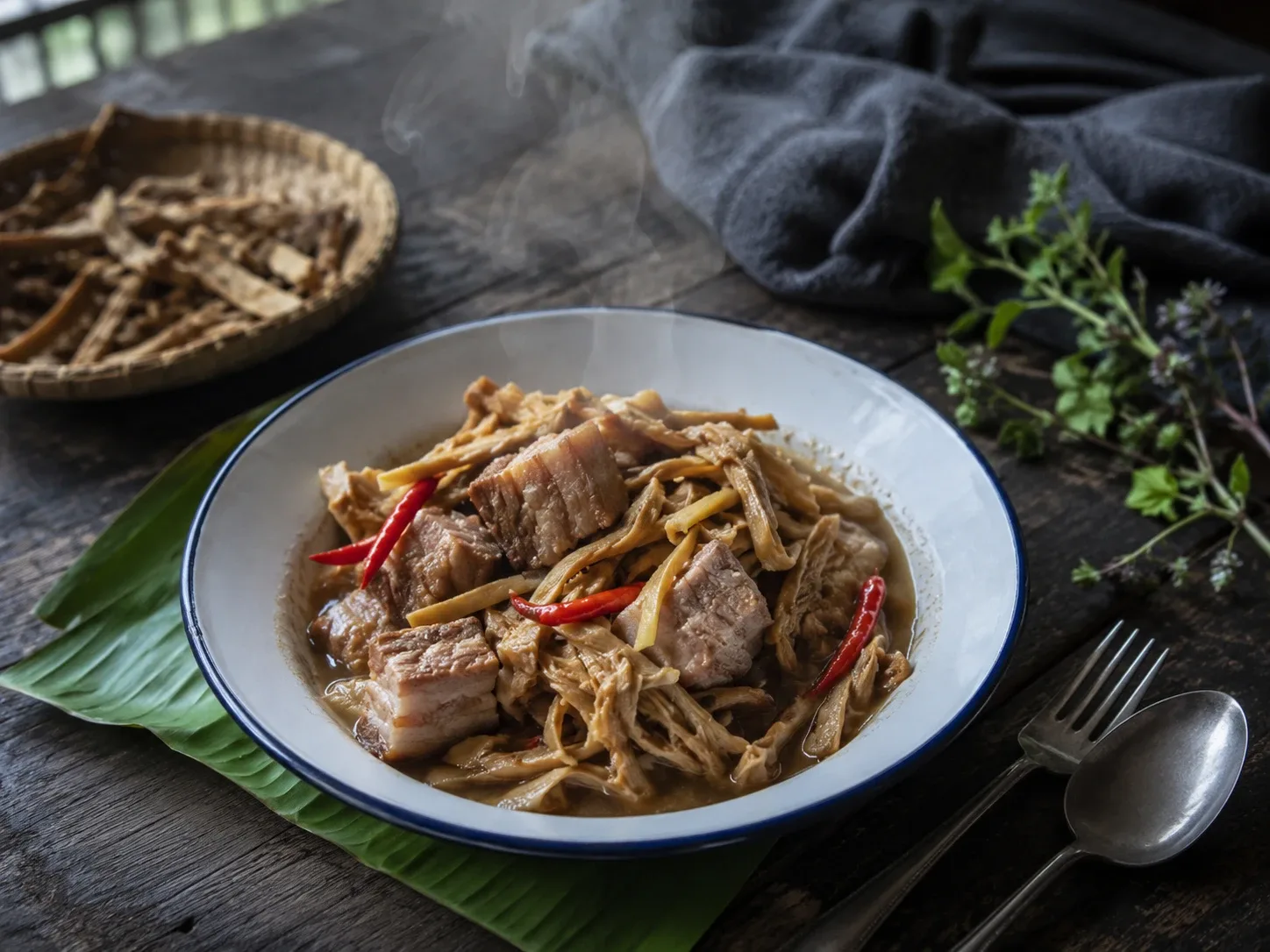
Pork belly simmered slow with rehydrated dried bamboo shoots, ginger, and chilies — the deep, smoky-tasting braise of the Kachin dry-season larder.
By Burmese Cookbook Kitchen · July 9, 2026
ကချင် Kachin StateBritish Burma, 1826–1948
 ၃
၃- Prep
- 25 min
- Cook
- 110 min
- Serves
- 6
- Level
- Intermediate
The monsoon gives the Kachin hills more bamboo than anyone can eat, and the hills answer with two jars: one fermented sour, one dried in the sun until the shoots turn tan and leathery and taste, improbably, almost of smoke. That second jar — hmyit chauk, dried bamboo — is the dry-season insurance policy, and this braise is what it was saved for: pork belly rendered in its own fat, ginger and garlic pounded in, and the rehydrated shoots simmered alongside until they have drunk their share and turned from chewy strangers into the best thing in the pot.
Drying the rainy season's surplus is exactly the sort of hill-country housekeeping colonial-era observers recorded across northern Burma, so we date the record there and grant the habit its obvious greater age. Bamboo and pork are braised together all along the hills of Southeast Asia; the Kachin pot marks itself by restraint — no added oil beyond what the belly carries, salt over fish sauce, whole chilies for warmth, and a late whisper of Sichuan pepper where a lowland kitchen would reach for more fat and a redder gravy.
The bamboo sets the schedule and there is no negotiating with it. Soak overnight, boil once and rinse — the pre-boil sheds the drying rack's funk and keeps the deep savor — and then give the braise its full, unhurried hour and a half. Rushed, the shoots stay wooden and the pork sulks. Given time, the two trade virtues until you cannot tell who is seasoning whom, which is the whole definition of a braise.
Dried bamboo is a sponge with opinions — it gives nothing until it has soaked long enough, then drinks the pork fat like it was owed it.
မီးဖိုချောင်စကား · A word from the kitchen
Ingredientsပါဝင်ပစ္စည်း
Serves 6
Tap to check off as you gather
For the bamboo
- dried bamboo shoots — the tan, leathery strips (hmyit chauk) from Asian markets — 80 g dried swells to a generous potful
- water — for soaking, plus more for the pre-boil
For the braise
- pork belly — skin on, cut into 3 cm chunks — shoulder works, leaner and a little less voiced
- fresh ginger — half sliced, half pounded
- garlic — pounded with the ginger
- dried red chilies — left whole
- salt
- water
To finish
- Sichuan peppercorns — lightly crushed, added late — optional but very northern
- spring onions — sliced
- cilantro — roughly torn
Methodချက်နည်း
Tap a numeral as you finish each step
Step 1: Soak the bamboo overnight
Cover the dried bamboo strips with the litre of cold water and soak 8 hours or overnight, until leathery turns pliable. This cannot be rushed with hot water without turning the outside mushy while the core stays wooden — the strips were dried in the sun over days and ask for a fraction of that time back.
Step 2: Boil and rinse it
Drain the soaked bamboo, cover with fresh water, boil for 20 minutes, then drain and rinse. Tear any wide strips into pencil-width lengths along the grain. The pre-boil sheds the ferment-adjacent funk of the drying rack, leaving the deep, almost smoky flavor you actually want in the pot.
Step 3: Render the pork
Put the pork belly in a dry, heavy pot over medium heat and let it sizzle and turn in its own melting fat for 8 to 10 minutes, until lightly browned at the edges. No added oil — the belly brings its own, which is as much frying as this northern pot permits.
Step 4: Add aromatics and water
Add the pounded ginger and garlic to the pork fat and stir for a minute until fragrant, then add the sliced ginger, whole chilies, salt, bamboo, and the 800 ml of water. Bring to a simmer, scraping up the browned bits — they are seasoning, not residue.
Step 5: Braise until married
Cover partly and simmer at a lazy bubble for 75 to 90 minutes, until the pork yields and the bamboo has gone from chewy stranger to tender resident, drinking the pork fat as the liquid reduces to a loose gravy. Stir occasionally; add a splash of water if it threatens to catch. The dish is done when you cannot decide which of the two things in the pot is better.
Step 6: Finish and rest
Stir in the crushed Sichuan pepper for the last 10 minutes, then taste for salt. Off the heat, scatter with spring onions and cilantro and let it stand 10 minutes — like every braise it composes itself as it rests. Serve with plain or sticky rice and something sharp and clear alongside.
ခွက်ယောက် · The tools
Equipment
Carbon-steel wok
ဒယ်အိုးThe dai-oh — for si pyan curries, fritters, and every fried-noodle dish here. Carbon steel, seasoned dark, nothing fancy.
Shop on Amazon →Heavy pot / Dutch oven
အိုးကြီးDeep and heat-retentive — for mohinga broth, long-simmered hin, and deep-frying without temperature crashes.
Shop on Amazon →Stone mortar & pestle
ဆုံFor garlic-ginger paste, pounded dried shrimp fluff, and crushed peanuts — the blender lies about texture; the stone doesn’t.
Shop on Amazon →
Equipment links are Amazon affiliate links. As an Amazon Associate we earn from qualifying purchases, at no cost to you. Disclosure.
ဟင်းစုံ · Set the table
A Burmese meal is a spread
A curry is the anchor, not the whole meal. Round out the table:
- Steamed riceထမင်းThe centre of the table — everything else is built around it.
- A light soupဟင်းချိုThe clear, sour broth sipped between mouthfuls of rice.
- Toh sa yar & ngapi dipတို့စရာRaw and blanched vegetables with a pungent fish-paste dip — the fresh, bitter counterpoint.
- Balachaungဘလချောင်းThe crispy shrimp relish that lives on every Burmese table.
- Crispy fried shallotsကြက်သွန်ကြော်A spoonful of crunch and sweet shallot oil over anything.
- A hand-tossed thokeအသုပ်A bright, sour salad to lift the whole spread.
Questions from the kitchen
Can I use fresh or canned bamboo shoots?
They make a pleasant, different, lesser dish — grassy where this one is deep. Drying concentrates the shoot into something with real savor, closer to a dried mushroom than a vegetable. Canned shoots added in the last half hour will feed you; they will not explain why anyone bothers to dry bamboo.
How is this different from the sour bamboo soup?
Different preservation, different dish. Hmyit chin is fermented — sour, bright, brothy, nearly fat-free. Hmyit chauk is sun-dried — deep, savory, and built to braise with pork fat. The Kachin larder keeps both because the rains give more bamboo than any table can eat fresh, and the two jars point at opposite dinners.
Is pork belly essential?
The bamboo wants fat to drink, and belly is the traditional donor. Shoulder works with a slightly leaner, quieter result. What fails is lean loin — the bamboo stays thirsty and the gravy never develops, and you end up seasoning the pot with regret.
Does it keep?
Beautifully — this is larder cooking, and it is better the next day, after the bamboo has had a night to keep drinking. Three days in the fridge, a month in the freezer. Reheat gently with a splash of water and refresh the herbs.
နောက်တစ်ခု · Cook next
Keep the wok hot
 ၃
၃Curries · 125 min · Intermediate
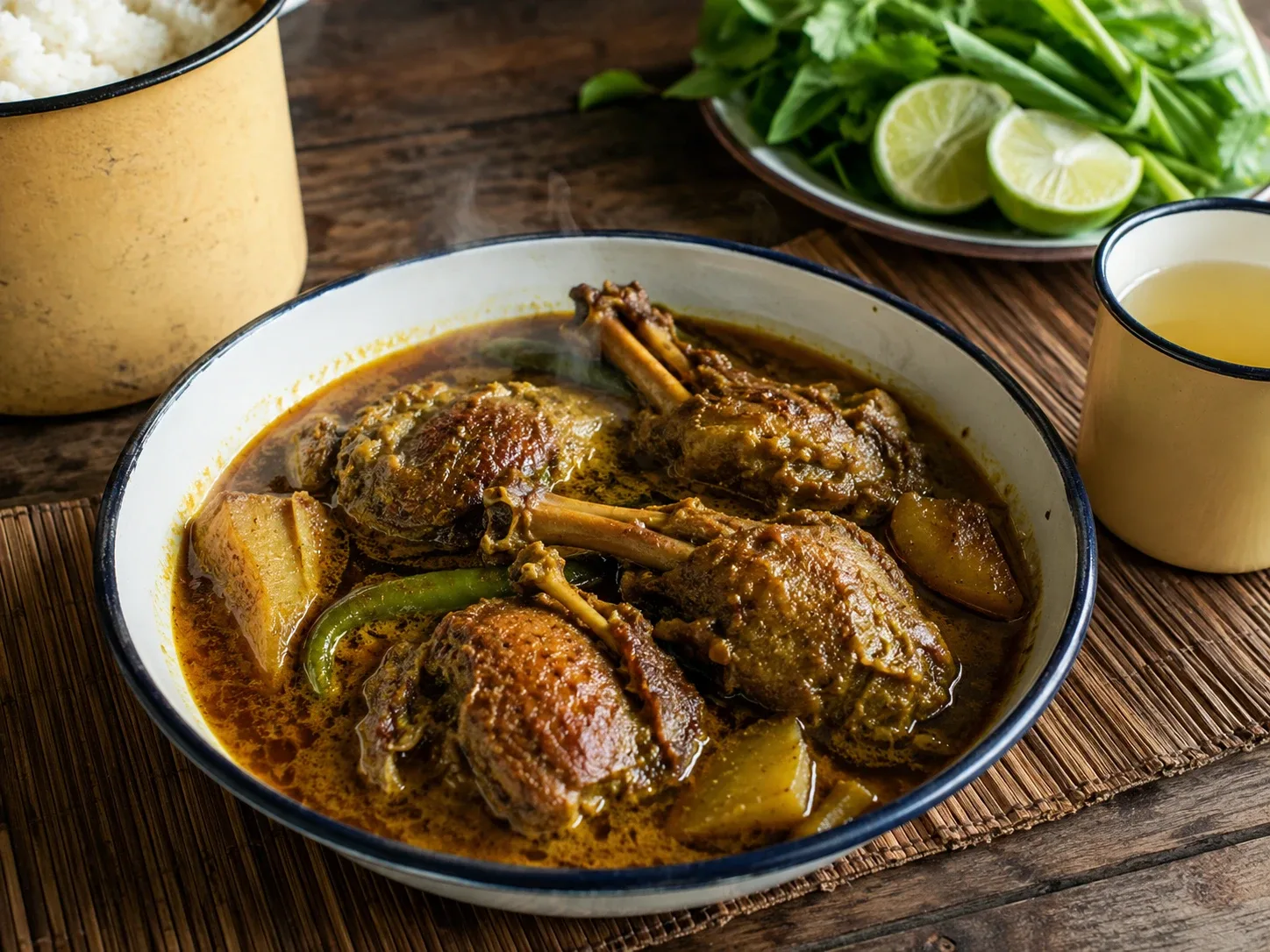
Be Thar Hin, Delta Duck Curryဘဲသားဟင်း
Duck curry from the Ayeyarwady, where ducks glean the rice paddies — browned in its own fat, then braised si pyan style until the amber oil returns.
 ၃
၃Curries · 45 min · Beginner
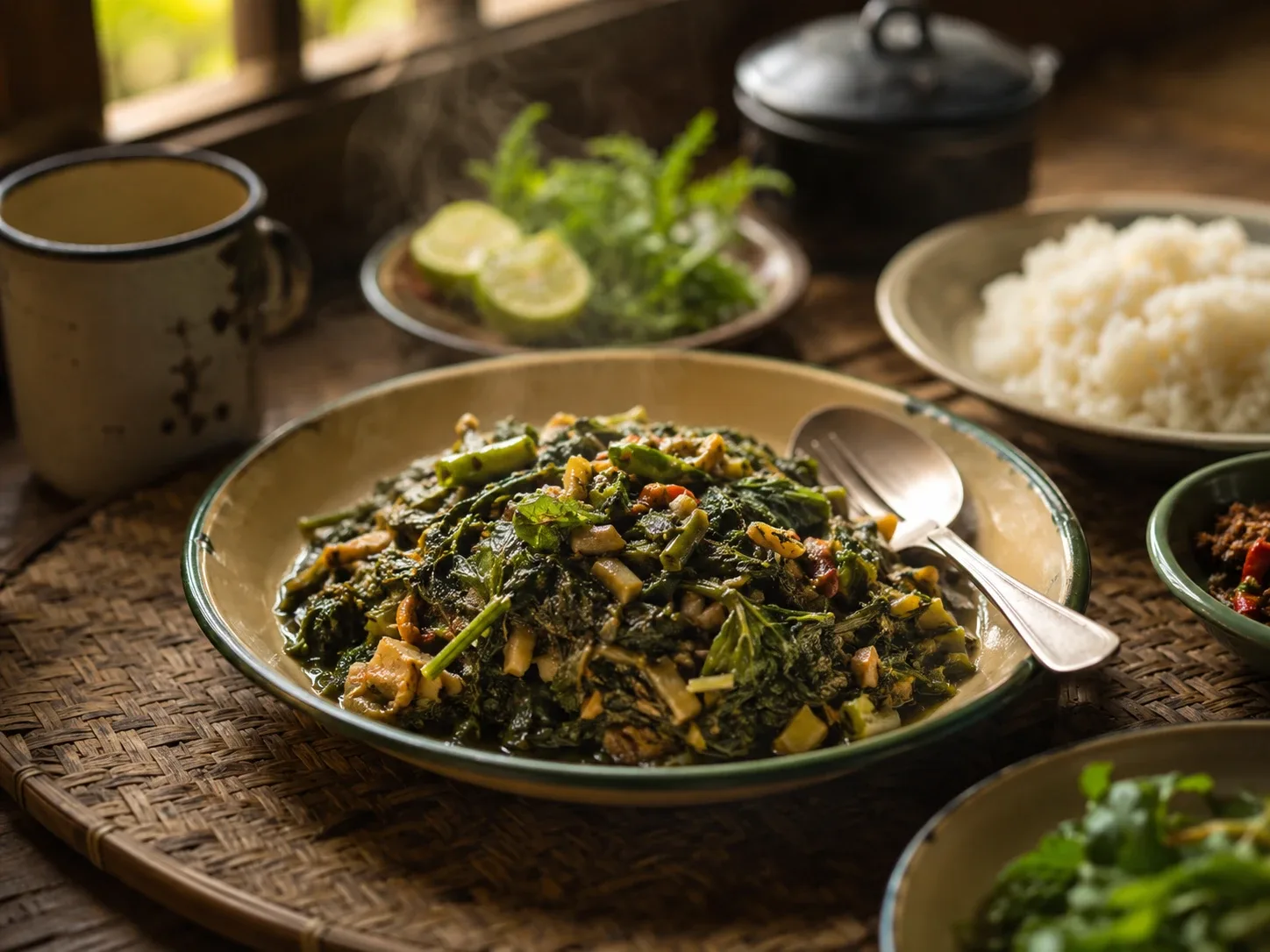
Chin Baung Kyaw, Sour Roselle Leavesချဉ်ပေါင်ကြော်
Lower Burma's beloved sour greens — roselle leaves fried down with bamboo shoots, dried shrimp, and green chili until they collapse into a dark tangy relish.
 ၃
၃Curries · 100 min · Intermediate
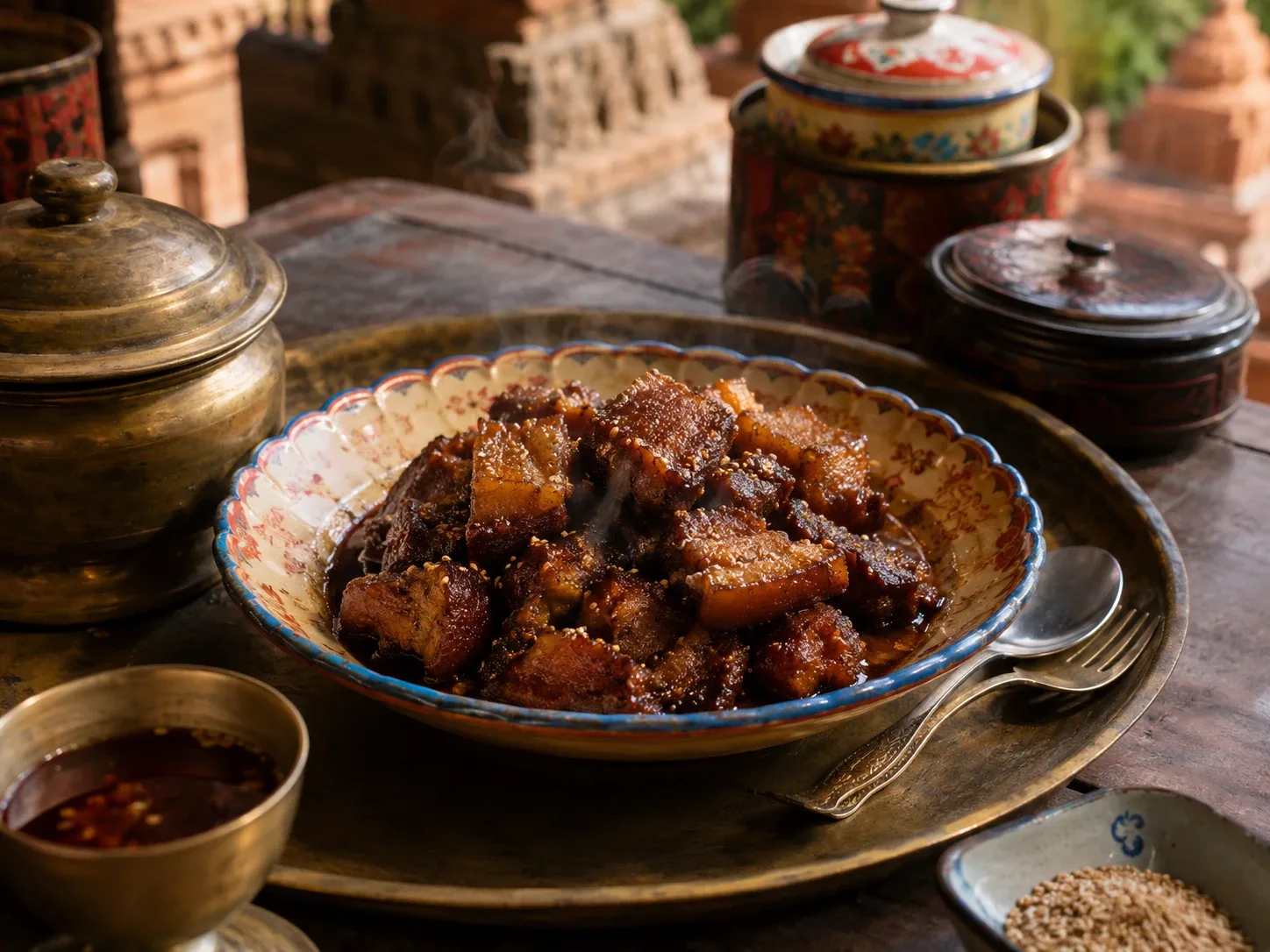
Wet Thar Pone Yay Gyi, Bagan Pork Curryပုန်းရည်ကြီးဝက်သား
Bagan's signature pork curry — pone yay gyi braised si pyan style until the oil returns, the sauce dark and sour with fermented horse-gram bean paste.