Kachin Pounded Fish
ကချင်ငါးထောင်း
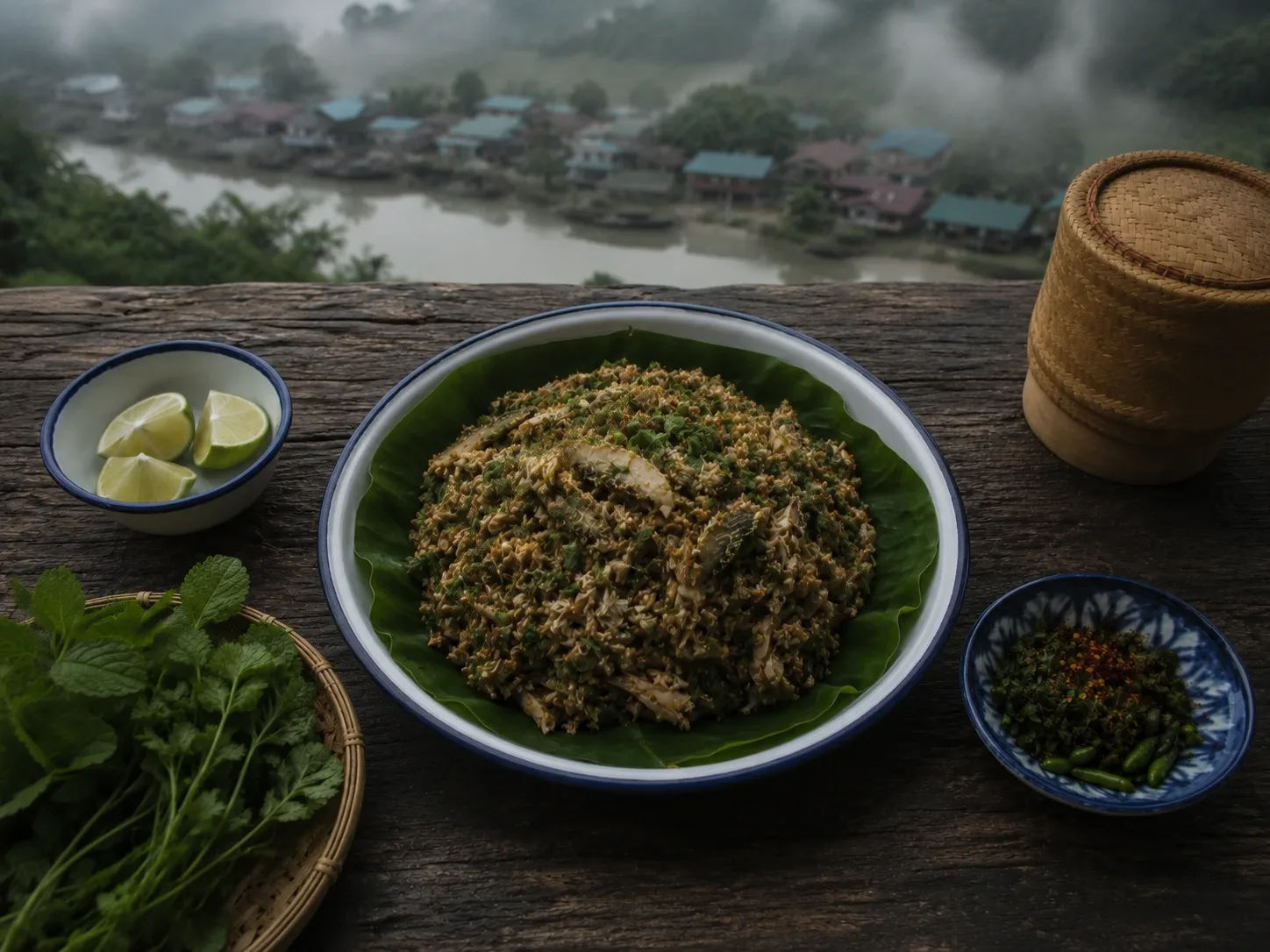
Grilled river fish flaked and pounded with roasted chili, Sichuan pepper, ginger, and raw herbs — the smoky, oil-free fish salad of the Kachin hills.
By Burmese Cookbook Kitchen · July 9, 2026
ကချင် Kachin StateOpening & Diaspora, 1988–present
 ၄
၄- Prep
- 25 min
- Cook
- 20 min
- Serves
- 4
- Level
- Intermediate
The Kachin mortar does not stop at beef. The same logic that produces amè htaung — char first, pound second, season with the pounding itself — is turned on the rivers that thread down from the ice mountains, and the result is nga htaung: grilled fish flaked into a stone bowl and worked through a fierce paste of roasted chili, toasted Sichuan pepper, garlic, and ginger, then rescued by raw mint, cilantro, and shallot. There is no oil, no dressing, and nothing missing. On Kachin restaurant menus it sits beside the pounded beef as the lighter, quicker sibling, and at the table it often goes first.
The technique asks for a double standard, and the dish depends on it. The aromatics are pounded without mercy, because they are the only seasoning half a kilo of mild fish will get. The fish itself is barely pounded at all — folded and pressed just enough to lace the flakes, because fish fibers collapse in a tenth of the strokes beef demands. Get the ratio of violence right and every flake tastes seasoned from within; get it wrong and you have either plain fish with spicy patches or a gray paste.
Like most of the hill repertoire, nga htaung was cooked for generations before anyone wrote it down, and it entered the wider record with the Kachin restaurant wave of the 2000s — so we date it modern, honestly. The char is the one thing you cannot negotiate. It is the hearth, translated.
Pound the aromatics hard and the fish gently — the mortar is there to season the flakes, not to erase them.
မီးဖိုချောင်စကား · A word from the kitchen
Ingredientsပါဝင်ပစ္စည်း
Serves 4
Tap to check off as you gather
For the fish
- firm white fish fillets — tilapia, trout, or catfish, skin on if possible — a river fish is the spirit of it
- salt
For the mortar
- dried red chilies — toasted whole until brittle
- Sichuan peppercorns — toasted, ground, husks sifted out
- garlic
- fresh ginger — roughly chopped
- salt
To finish
- shallots — sliced into thin rings
- cilantro — roughly torn, stems included
- mint — leaves only
- spring onions — sliced fine
- lime — in wedges — optional; the hills often serve it without
Methodချက်နည်း
Tap a numeral as you finish each step
Step 1: Salt and grill the fish
Salt the fillets and let them sit 10 minutes while a grill, broiler, or heavy pan gets properly hot. Cook the fish without any oil, 4 to 6 minutes a side, until the surface chars in patches and the flesh flakes. The char is the seasoning this dish is built around — it stands in for the hearth smoke of a hill kitchen, and a pale fillet makes a pale salad.
Step 2: Flake and pick
Rest the fish 5 minutes, then flake it into large pieces with your fingers, hunting out every bone and keeping any crisped skin — torn into shreds, it is the best part. Large flakes matter: the mortar will reduce them further, so start bigger than you want to finish.
Step 3: Pound the aromatics
Pound the toasted chilies, Sichuan pepper, and salt to a coarse rubble, then add the garlic and ginger and work to a rough, juicy paste. It should be fierce on its own — it is about to be diluted by half a kilo of mild fish, and timid paste makes a forgettable plate.
Step 4: Marry fish and paste
Add the flaked fish to the mortar and work it through the paste with a few gentle folds and light strokes of the pestle — enough to lace every flake with aromatics, not enough to mash it to floss. Fish fibers give up far faster than beef; treat the pestle as a spoon with opinions.
Step 5: Finish with the herbs
Tip into a bowl and fold in the shallots, spring onions, cilantro, and mint with your hands. Taste — it should be smoky, warm, faintly numbing, and seasoned with salt alone. Serve at room temperature with rice or sticky rice, lime on the side for those who want it.
ခွက်ယောက် · The tools
Equipment
Stone mortar & pestle
ဆုံFor garlic-ginger paste, pounded dried shrimp fluff, and crushed peanuts — the blender lies about texture; the stone doesn’t.
Shop on Amazon →
Equipment links are Amazon affiliate links. As an Amazon Associate we earn from qualifying purchases, at no cost to you. Disclosure.
ဟင်းစုံ · Set the table
A Burmese meal is a spread
A thoke is part of a spread as often as it is a light meal on its own:
- Steamed riceထမင်းThe centre of the table — everything else is built around it.
- A curryဟင်းSlow-cooked until the oil returns — the richness the sides cut against.
- Balachaungဘလချောင်းThe crispy shrimp relish that lives on every Burmese table.
- Crispy fried shallotsကြက်သွန်ကြော်A spoonful of crunch and sweet shallot oil over anything.
- Toh sa yar & ngapi dipတို့စရာRaw and blanched vegetables with a pungent fish-paste dip — the fresh, bitter counterpoint.
Questions from the kitchen
Can I use steamed or poached fish instead?
You can, and you will taste what is missing — the char is doing the work smoke does in the hills, and steamed fish gives a gentler, flatter salad. If the stove is your only option, sear the flaked fish briefly in a dry nonstick pan until the edges catch before pounding.
How is this different from lowland fish thoke?
No oil, no fried shallot crumble, no chickpea flour — and Sichuan pepper instead of lime doing the lifting. Lowland thoke is dressed; this is seasoned from within by the mortar. Put them side by side and you taste the delta versus the hills.
Which fish holds up best?
Trout is the sweet spot — firm flakes, skin that crisps, and a freshwater sweetness close to the rivers this dish comes from. Tilapia is the easy call, catfish the closest to home. Oily sea fish like mackerel bully the herbs; leave them for another plate.
Can I make it ahead?
The grilled, flaked fish keeps a day in the fridge, and the pounded paste keeps two — but once combined with the herbs and shallots, the salad is best within the hour. Assembled leftovers turn watery as the salt draws the herbs down.
နောက်တစ်ခု · Cook next
Keep the wok hot
 ၄
၄Salads & Thoke · 30 min · Beginner
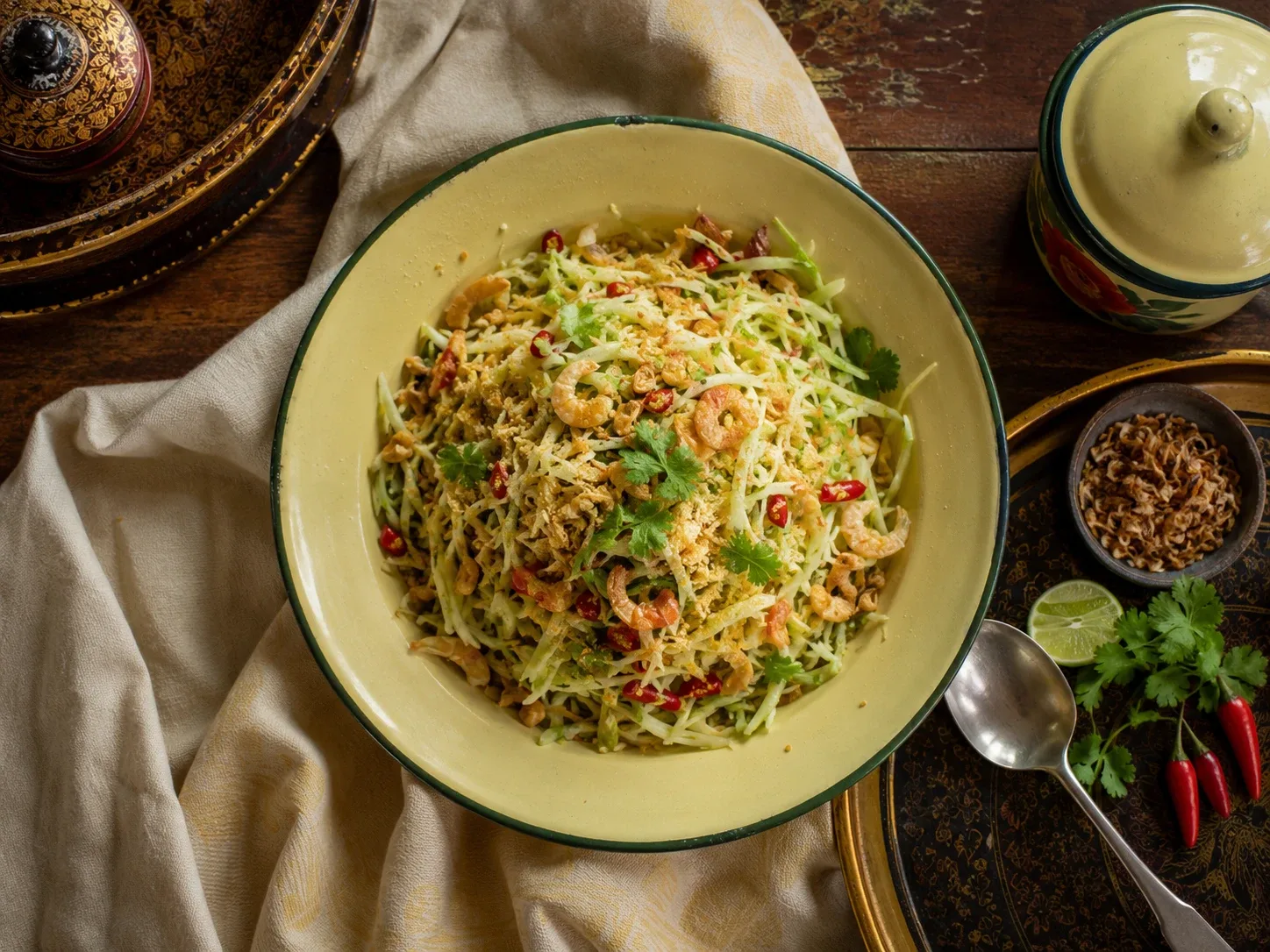
Thayet Thi Thanat, Green Mango Pickle-Saladသရက်သီးသနပ်
Tart, crunchy green-mango shreds dressed with fried garlic oil, chili, dried shrimp, and toasted chickpea flour — the sour thanat that cuts a heavy Burmese meal.
 ၄
၄Salads & Thoke · 20 min · Beginner
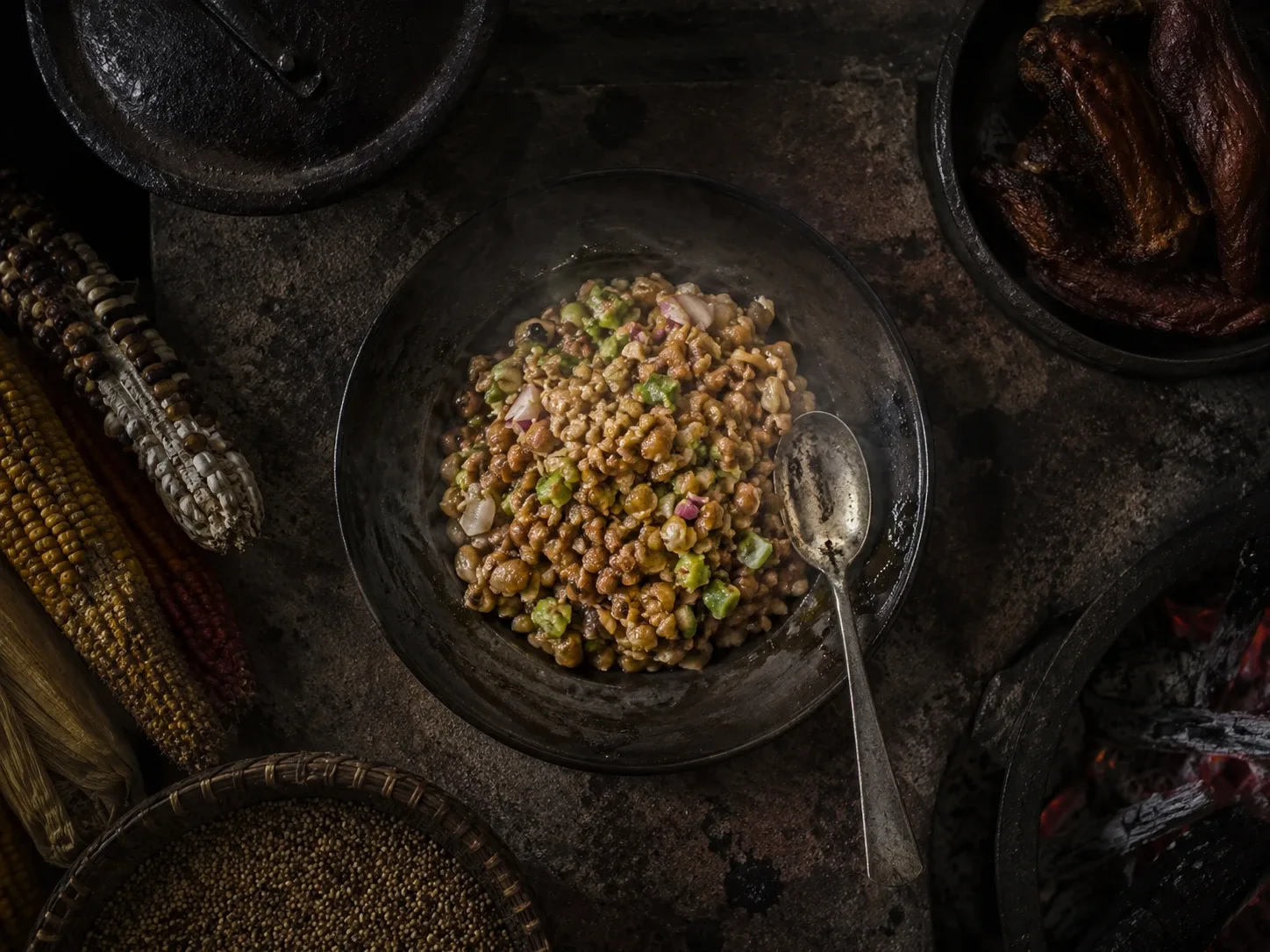
Bekang Rawt, Fermented Soybean Salad
Fermented soybeans pounded with shallots, green chili, and salt — the Chin hills' pungent everyday salad, a mountain cousin of natto, eaten with hot rice.
 ၇
၇Sweets & Mont · 25 min · Beginner
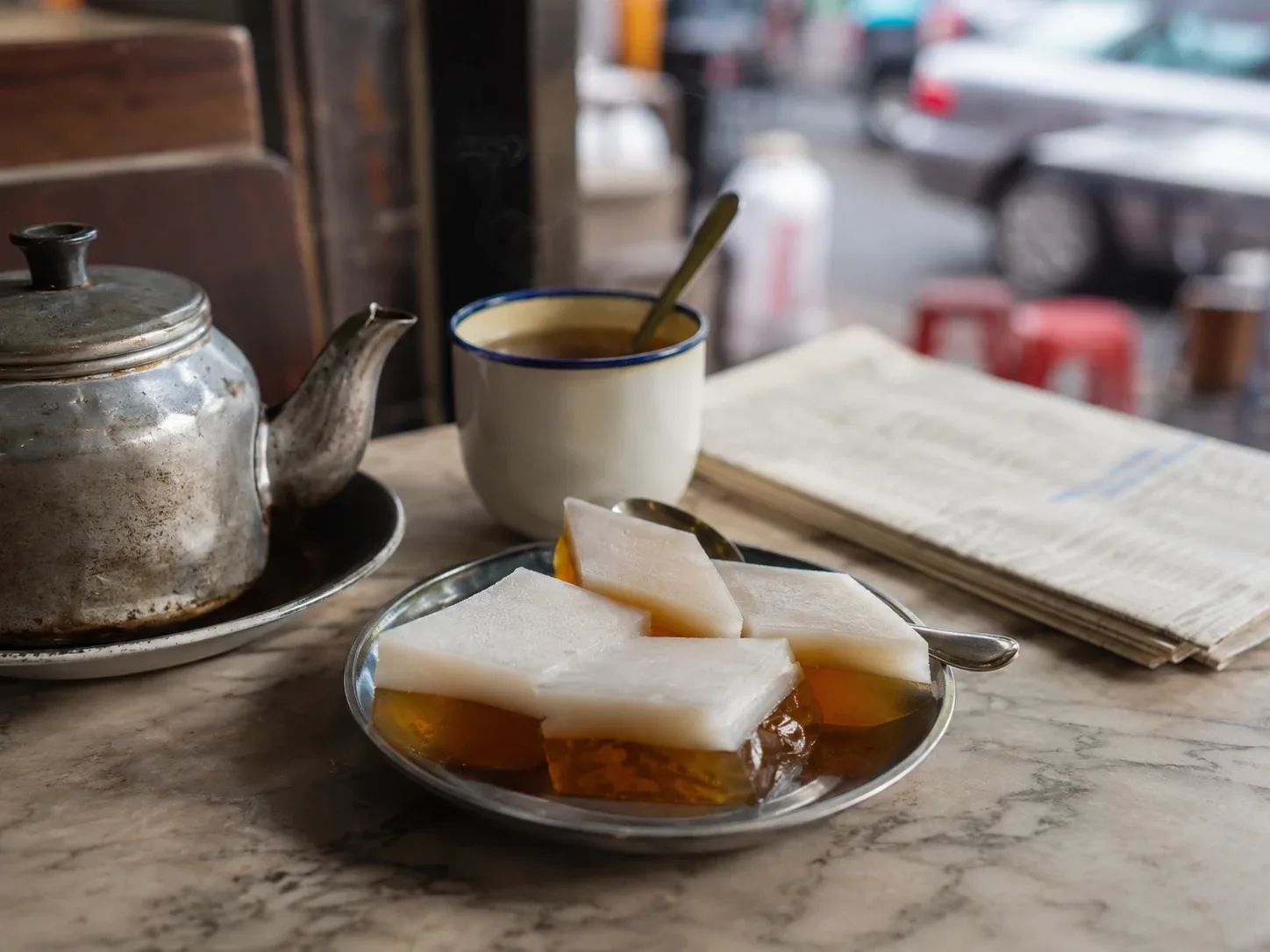
Kyauk Kyaw, Two-Layer Coconut Jellyကျောက်ကျော
Myanmar's two-layer agar jelly, done the Yangon way — coconut cream rises as it sets over a clear amber base, then the slab is cut into cool diamonds.