Khaw Pote, Shan Pounded Sticky Rice
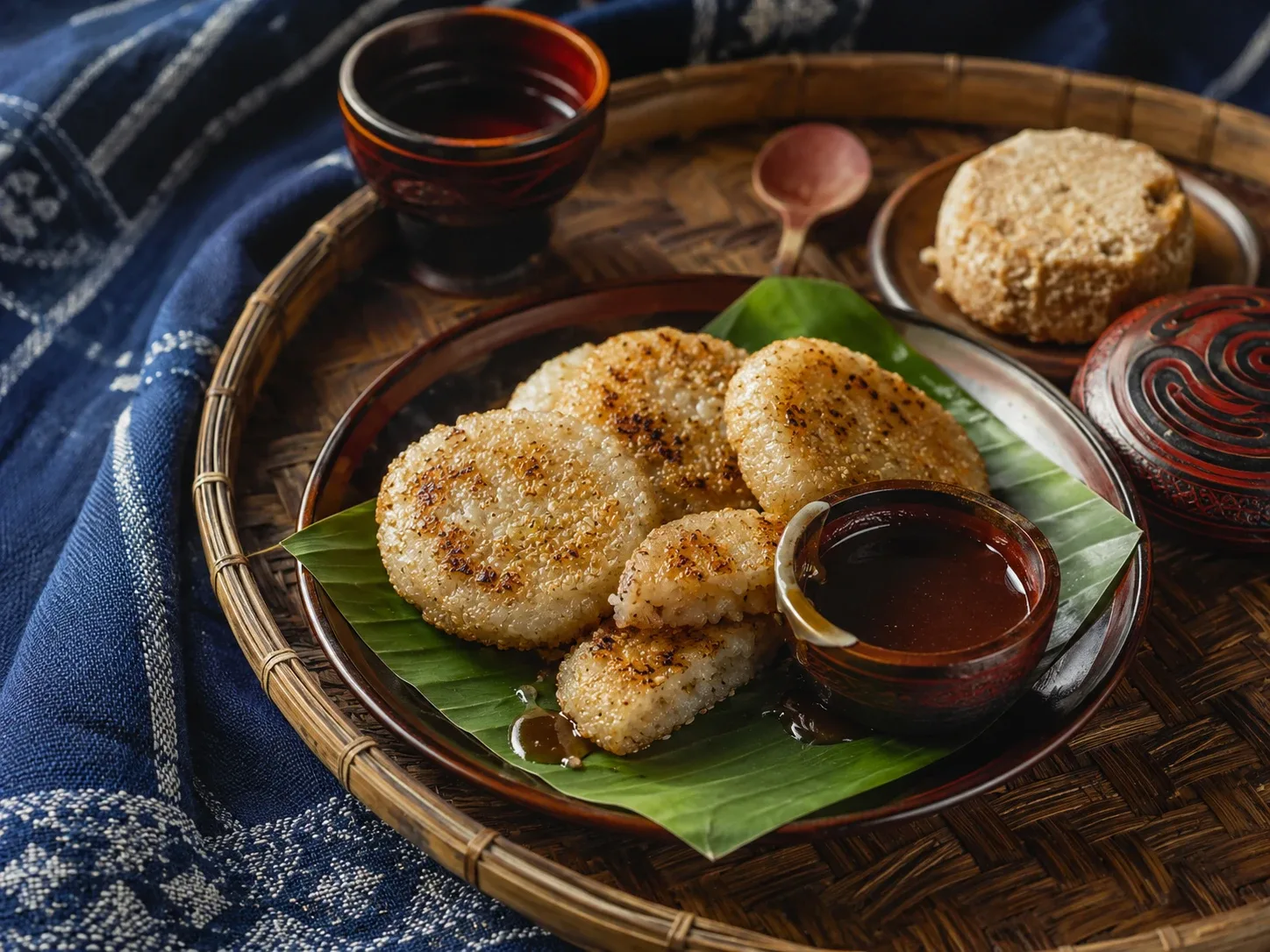
Steamed sticky rice pounded with toasted sesame, patted into cakes, and toasted until blistered — the Shan New Year sweet, served with jaggery syrup.
Also spelled: Khao Puk · Khaw Poat · Khao Pouk
By Burmese Cookbook Kitchen · July 9, 2026
ရှမ်း Shan StateKonbaung, 1752–1885
 ၇
၇- Prep
- 30 min
- Cook
- 50 min
- Serves
- 6
- Level
- Intermediate
On the mornings around Shan New Year — celebrated on the first day of the lunar month of Tai, in the cold-season heart of December — the sound of the holiday is a heavy wooden thump. In courtyards across the plateau, steamed sticky rice goes into big mortars with toasted sesame and gets pounded, turn and thump, turn and thump, until it becomes khao pouk: a stretchy, faintly grainy cake that is then toasted over coals until it blisters, and eaten warm with jaggery syrup running into the cracks.
Pounded sticky rice runs across the whole Tai world and beyond — the lowland Burmese htoe mont is a cousin, and so are the mochi traditions far to the east. The Shan version is distinguished by its sesame, pounded in rather than sprinkled on, and by its place in the calendar: this is festival food, made in quantity and handed out to guests and neighbors, which is why so much of it is made from dramatic black glutinous rice. We date it to the Konbaung era, when the Shan principalities and their New Year courts are well recorded, while saying plainly that the pounding is older than any document about it.
Only one thing truly matters: heat. The rice must be pounded straight from the steamer, while its starches are still willing — and the finished cakes must be toasted until the skin crackles. Cold khao pouk is a rice brick. Warm, it is the taste of a hill-country holiday.
Pound the rice hot or not at all. The grains only surrender while they steam; once cool they turn stubborn, and no amount of muscle afterward buys back what five idle minutes lost.
မီးဖိုချောင်စကား · A word from the kitchen
Ingredientsပါဝင်ပစ္စည်း
Serves 6
Tap to check off as you gather
For the cakes
- glutinous rice — black or white — soaked overnight in plenty of cold water
- sesame seeds
- salt
- peanut oil — for your hands and the pestle
For serving
- palm sugar (jaggery) — chopped
- water
- sesame seeds — toasted, for scattering
- grated coconut — optional, fresh or rehydrated dried
Methodချက်နည်း
Tap a numeral as you finish each step
Step 1: Steam the rice
Drain the soaked rice and steam it in a cloth-lined steamer for 30 to 35 minutes, until completely tender with no chalky center — sticky rice is steamed, never boiled, or it collapses to paste before the pounding can do its finer work. Keep it covered and hot.
Step 2: Toast and grind the sesame
While the rice steams, toast the 4 tbsp of sesame seeds in a dry pan until they smell warm and begin to hop, then grind them roughly with the salt in a mortar. The sesame perfumes the whole cake from the inside; raw seeds would just sit there politely.
Step 3: Pound while hot
Working fast, turn the hot rice into a sturdy mortar (or a deep, heavy bowl) with the ground sesame and pound with an oiled pestle — press, thump, fold, repeat — for 10 to 15 minutes. The grains should break down into a stretchy, cohesive mass, still faintly grainy; Shan khao pouk keeps a little texture and is prouder of it than a perfectly smooth mochi would be.
Step 4: Shape the cakes
With oiled hands, pinch off portions and pat them into flat rounds about 8 cm across and 1.5 cm thick. Work while the mass is warm and pliable. They can rest at this stage for a few hours, covered, without complaint.
Step 5: Make the jaggery syrup
Melt the jaggery with the water over low heat, stirring, until it runs like thin honey, then pull it off before it darkens. Jaggery scorches quickly and turns bitter — low and slow is the entire instruction.
Step 6: Toast and serve
Toast the cakes in a dry heavy pan or under a grill until blistered and lightly browned in spots and puffed a little at the center — 3 to 4 minutes a side. Serve warm, drizzled with the syrup and scattered with toasted sesame and coconut. The contrast — crisp blistered skin, soft chewy middle, smoky-sweet syrup — is the whole celebration.
ခွက်ယောက် · The tools
Equipment
Tiered steamer
ပေါင်းအိုးFor sticky rice, steamed mont, and reheating without drying out. Bamboo or stainless both work.
Shop on Amazon →Stone mortar & pestle
ဆုံFor garlic-ginger paste, pounded dried shrimp fluff, and crushed peanuts — the blender lies about texture; the stone doesn’t.
Shop on Amazon →Box grater / microplane
ခြစ်စက်Fine ginger, green papaya shreds, and toddy-palm jaggery shavings.
Shop on Amazon →
Equipment links are Amazon affiliate links. As an Amazon Associate we earn from qualifying purchases, at no cost to you. Disclosure.
ဟင်းစုံ · Set the table
A Burmese meal is a spread
A mont wants a cup of something beside it:
How a Burmese meal is built →Questions from the kitchen
Black or white sticky rice?
Both are traditional; black glutinous rice makes the dramatic purple-dark cakes seen at Shan New Year fairs and carries a nuttier flavor, while white is softer and more everyday. Soak black rice a full night and expect a slightly longer steam.
Can I use a stand mixer or food processor instead of pounding?
A stand mixer with the paddle on low for 8 to 10 minutes gets honorably close while the rice is hot. A food processor overworks it to glue in seconds — avoid. And genuinely, ten minutes with a pestle is the traditional workout and the better texture.
How long do the cakes keep?
A day at cool room temperature, wrapped; they firm as they sit, which is fine because toasting revives them completely. Freeze extras between parchment for a month and toast straight from frozen, a few minutes longer per side.
နောက်တစ်ခု · Cook next
Keep the wok hot
 ၇
၇Sweets & Mont · 50 min · Beginner
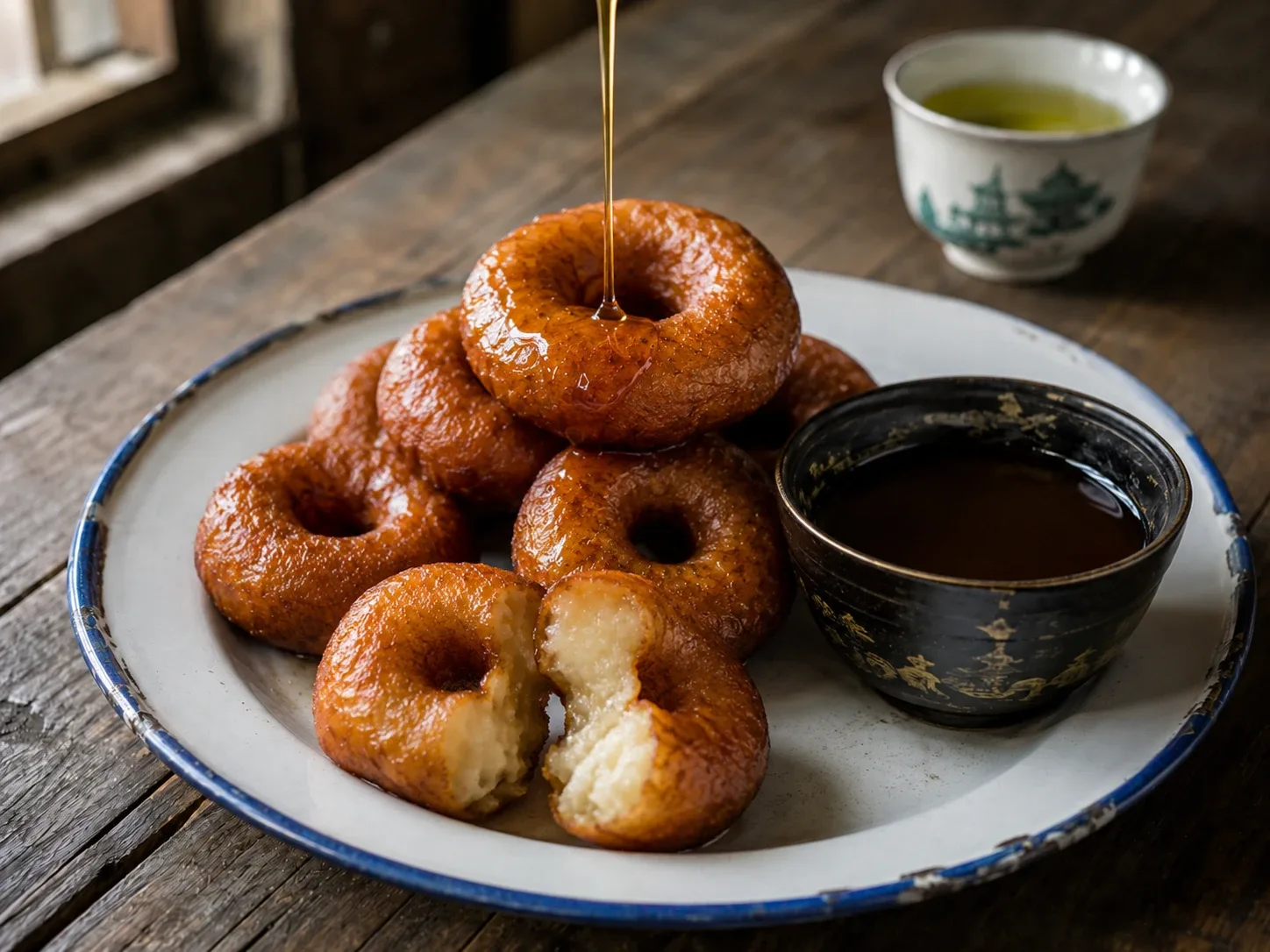
Mont Let Kauk, the Burmese Bracelet Doughnutမုန့်လက်ကောက်
Chewy glutinous rice rings fried until blistered and gold, then drowned in warm toddy-palm jaggery syrup — the teahouse doughnut Burma names after a bracelet.
 ၇
၇Sweets & Mont · 40 min · Beginner
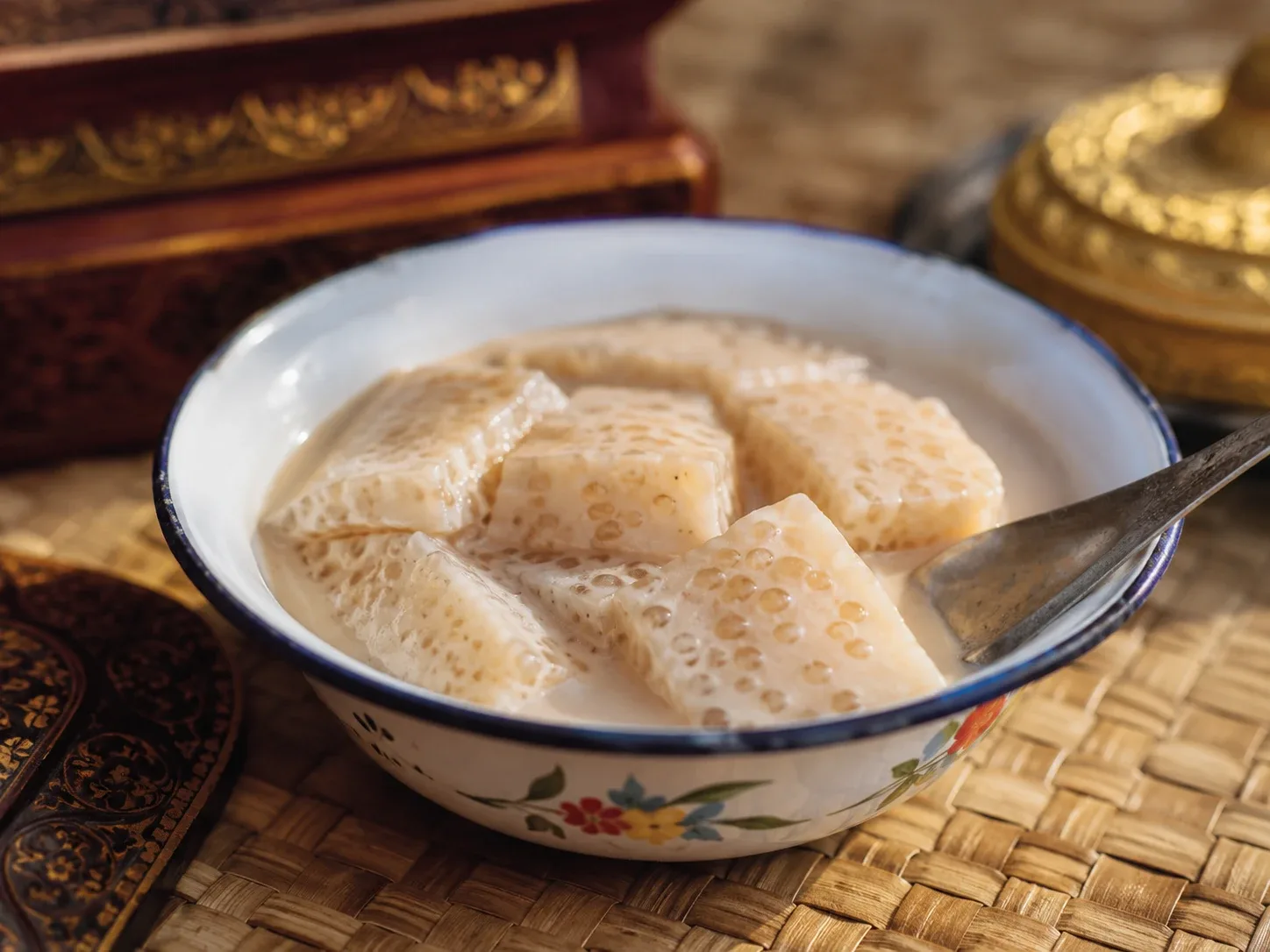
Thagu Byin, Sago & Coconut Milk Puddingသကူမုန့်
A cooling hot-season pudding of translucent sago pearls set in coconut milk and palm sugar, sliced into wobbling squares — sold from glass cabinets on the hottest afternoons.
 ၃
၃Curries · 100 min · Intermediate
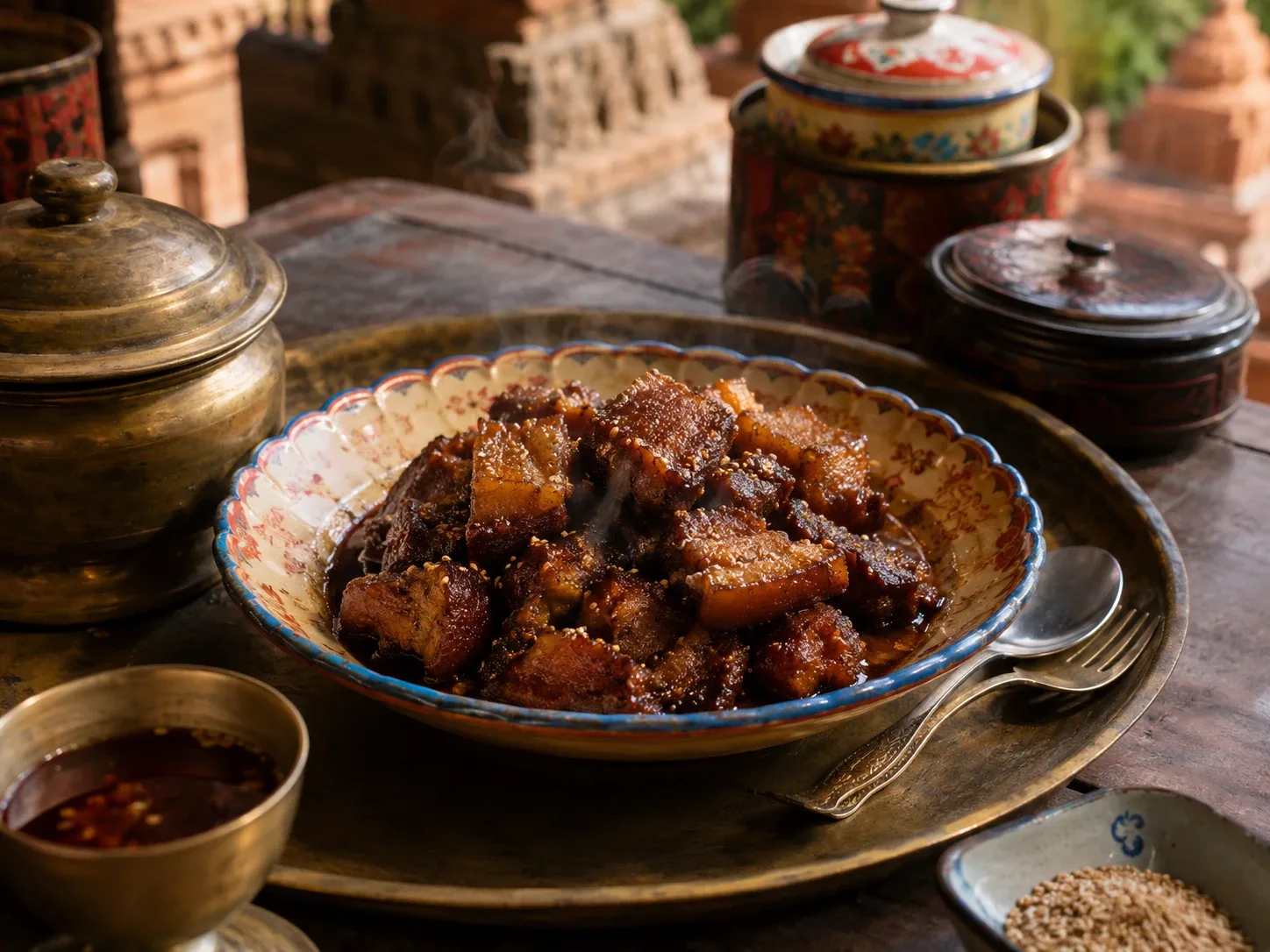
Wet Thar Pone Yay Gyi, Bagan Pork Curryပုန်းရည်ကြီးဝက်သား
Bagan's signature pork curry — pone yay gyi braised si pyan style until the oil returns, the sauce dark and sour with fermented horse-gram bean paste.