Paung Din, the Golden Rock Bamboo Rice
ကောက်ညှင်းကျည်တောက်
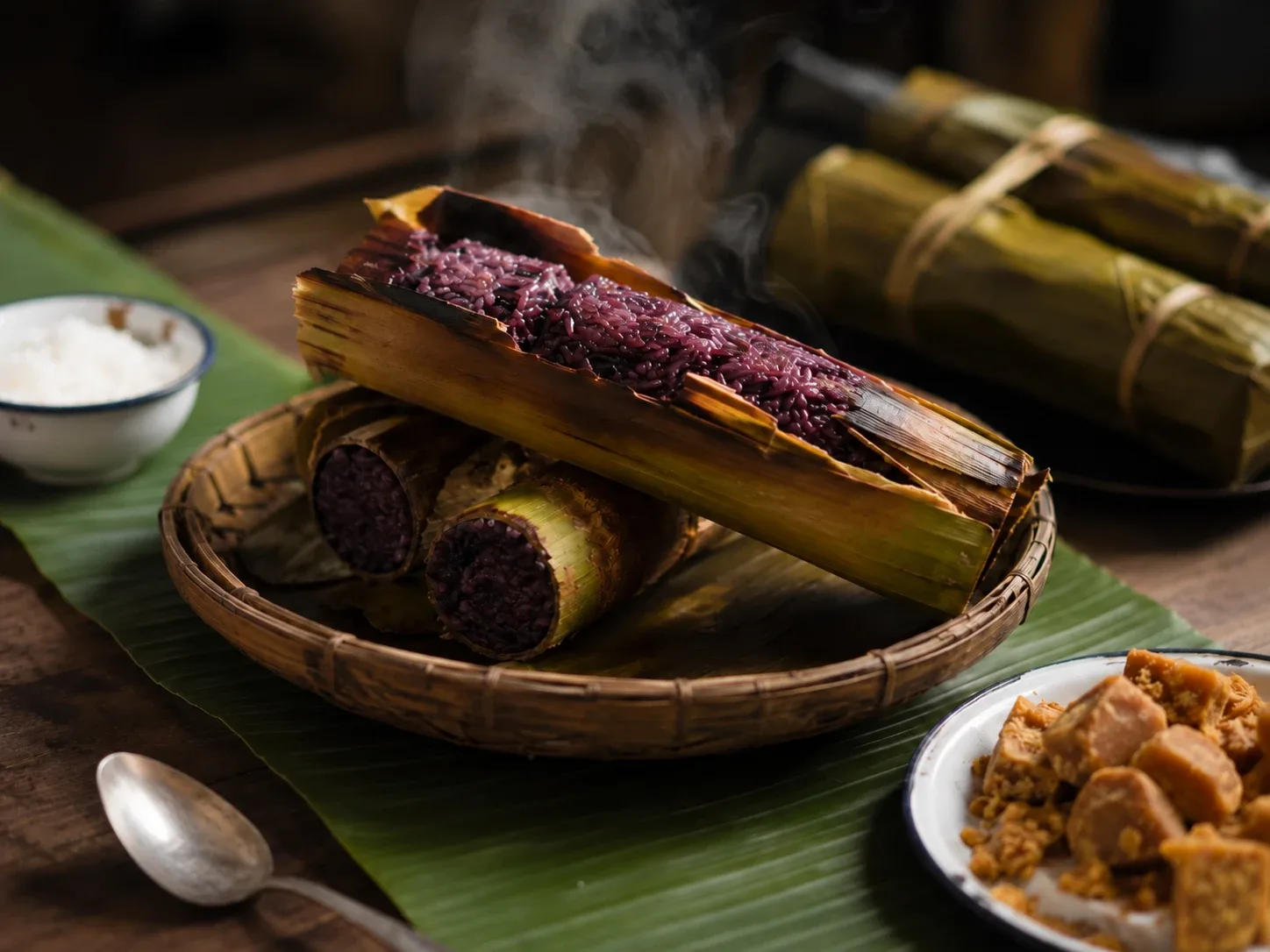
Purple sticky rice packed into green bamboo and roasted over coals until it peels like fruit — the pilgrim snack of the Golden Rock road in Mon State.
By Burmese Cookbook Kitchen · July 9, 2026
မွန် Mon & Kayin CountryOpening & Diaspora, 1988–present
 ၆
၆- Prep
- 20 min
- Cook
- 60 min
- Serves
- 4
- Level
- Intermediate
Every pilgrim who has climbed to the Golden Rock — the gilded boulder balanced impossibly on the cliff edge at Kyaiktiyo, in Mon State — knows the sound of paung din being sold: the crack of a knife spine on bamboo, up and down the stalls that line the pilgrim road. Inside each tube is a log of violet sticky rice that peels open like fruit, wearing the bamboo's thin inner skin as its wrapper. It is breakfast, provisions, and souvenir in one green cylinder.
Legend says the boulder itself is held in place by a single hair of the Buddha, enshrined by a hermit and a Mon king — and legend is what that story is, told here with affection rather than footnotes. The snack's own record is humbler and more recent: cooking rice in bamboo is an old upland technique found across Southeast Asia, but paung din as the signature of the Kyaikto pilgrim trade belongs to the modern era of mass pilgrimage, and we credit it honestly as such.
The recipe is really one long act of restraint. Fill the tube only two-thirds. Turn it patiently. Rest it before you crack it. Each rule exists because glutinous rice swells, steams, and sets on its own schedule, and the bamboo is both pot and plate — rush any stage and you get either a burst tube or rice that refuses its famous peel. Done right, it needs nothing but sesame salt, a pinch of coconut, and ideally a mountain view.
The bamboo's inner skin is the whole trick — it clings to the rice so each tube peels like a banana. Fresh green bamboo only; dried tubes give nothing.
မီးဖိုချောင်စကား · A word from the kitchen
Ingredientsပါဝင်ပစ္စည်း
Serves 4
Tap to check off as you gather
For the rice
- glutinous rice — soaked overnight
- black glutinous rice — soaked overnight — this gives paung din its violet blush
- salt
- water — or half water, half thin coconut milk for a richer roadside style
- fresh green bamboo tubes — about 30 cm long, one node closed — from Asian grocers or online; banana leaf is the fallback
To serve
- sesame seeds — toasted with 1/2 tsp salt and lightly crushed
- grated coconut — fresh or frozen, optional but very Kyaikto
Methodချက်နည်း
Tap a numeral as you finish each step
Step 1: Soak the two rices overnight
Rinse both rices together until the water runs nearly clear, then soak them overnight in plenty of cold water. Glutinous rice cooks by steaming in place rather than boiling, so the grains must carry their water in with them — under-soaked rice roasts to a chalky center no amount of extra fire will fix.
Step 2: Pack the tubes
Drain the rice and mix in the salt. Fill each bamboo tube two-thirds full — no more — then pour in water (or the coconut-milk blend) to cover the rice by a finger's width. The empty third is not waste; the rice swells by half again, and an overfilled tube splits on the coals. Plug each mouth loosely with a twist of banana leaf or foil.
Step 3: Roast and turn
Stand or lean the tubes over medium charcoal — or lay them on a rack in a 200°C oven — and roast for 45 to 55 minutes, giving each a quarter turn every ten minutes. The green skin will scorch and split in places; that is the fire doing its work. The rice inside steams in its own sealed chamber, taking on the faint sweetness of the sap.
Step 4: Rest before opening
Let the tubes stand ten minutes off the heat. The rest lets the rice firm into a single sliceable log and lets the bamboo's papery inner membrane bond to its surface — the signature of true paung din, a skin that travels with the rice when you peel it.
Step 5: Crack, peel, and serve
Whack each tube along its length with the spine of a heavy knife until the bamboo splits, then peel the strips back like a banana. Eat warm from the shell with sesame salt and grated coconut. If you used the banana-leaf fallback — a tight leaf-wrapped log steamed 40 minutes, then charred briefly over flame — the smoke note is shallower but honest.
ခွက်ယောက် · The tools
Equipment
Frying spider
ဇကာLift fritters clean out of the oil and drain them fast, before the crust turns soft. The street cook’s third hand.
Shop on Amazon →Box grater / microplane
ခြစ်စက်Fine ginger, green papaya shreds, and toddy-palm jaggery shavings.
Shop on Amazon →
Equipment links are Amazon affiliate links. As an Amazon Associate we earn from qualifying purchases, at no cost to you. Disclosure.
ဟင်းစုံ · Set the table
A Burmese meal is a spread
Snack-shop fare, eaten with the usual scatter of condiments:
- Si chet, chili oilဆီချက်The fragrant red oil every household keeps by the stove.
- Crispy fried shallotsကြက်သွန်ကြော်A spoonful of crunch and sweet shallot oil over anything.
- Teahouse milk teaလက်ဖက်ရည်How a Burmese meal ends — sweet, strong, and slow.
Questions from the kitchen
Where do I find green bamboo tubes?
Larger Asian grocers sell fresh bamboo sections for exactly this kind of cooking, and online suppliers ship them cut to length. They must be green and fresh — the moisture in the walls is what keeps the tube from burning through and what lends the rice its grassy sweetness. Dried decorative bamboo will scorch and season nothing.
Can I make this without any bamboo at all?
Yes — wrap the soaked, salted rice in a double layer of banana leaf as a snug log, steam it for 40 minutes, then roll it briefly over an open flame until the leaf chars and perfumes. You lose the peel-back theater, but the flavor lands closer than you might expect.
Why mix white and black glutinous rice?
The Kyaikto sellers' trick — black glutinous rice alone cooks up chewy and stern, while a quarter measure bleeds its violet color and wine-like aroma into the white rice without hijacking the texture. All white works fine; all black is a different, heavier snack.
နောက်တစ်ခု · Cook next
Keep the wok hot
 ၆
၆Street & Fritters · 40 min · Intermediate
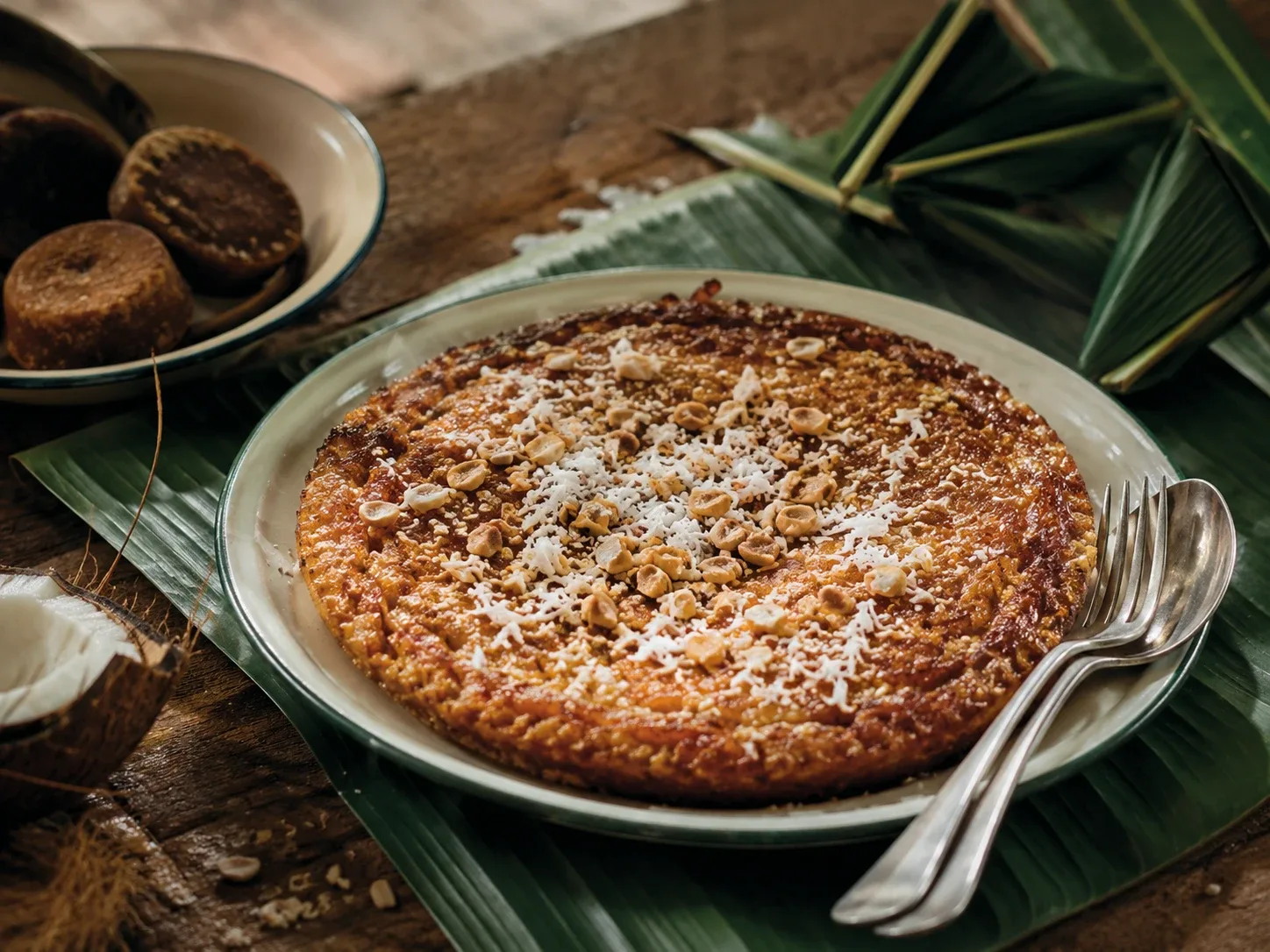
Bein Mont, the Jaggery Griddle Pancakeဘိန်းမုန့်
A thick rice-flour pancake raised on jaggery and crisped in a covered pan, showered with peanuts, coconut, and sesame — Lower Burma's teashop griddle mont.
 ၆
၆Street & Fritters · 25 min · Beginner
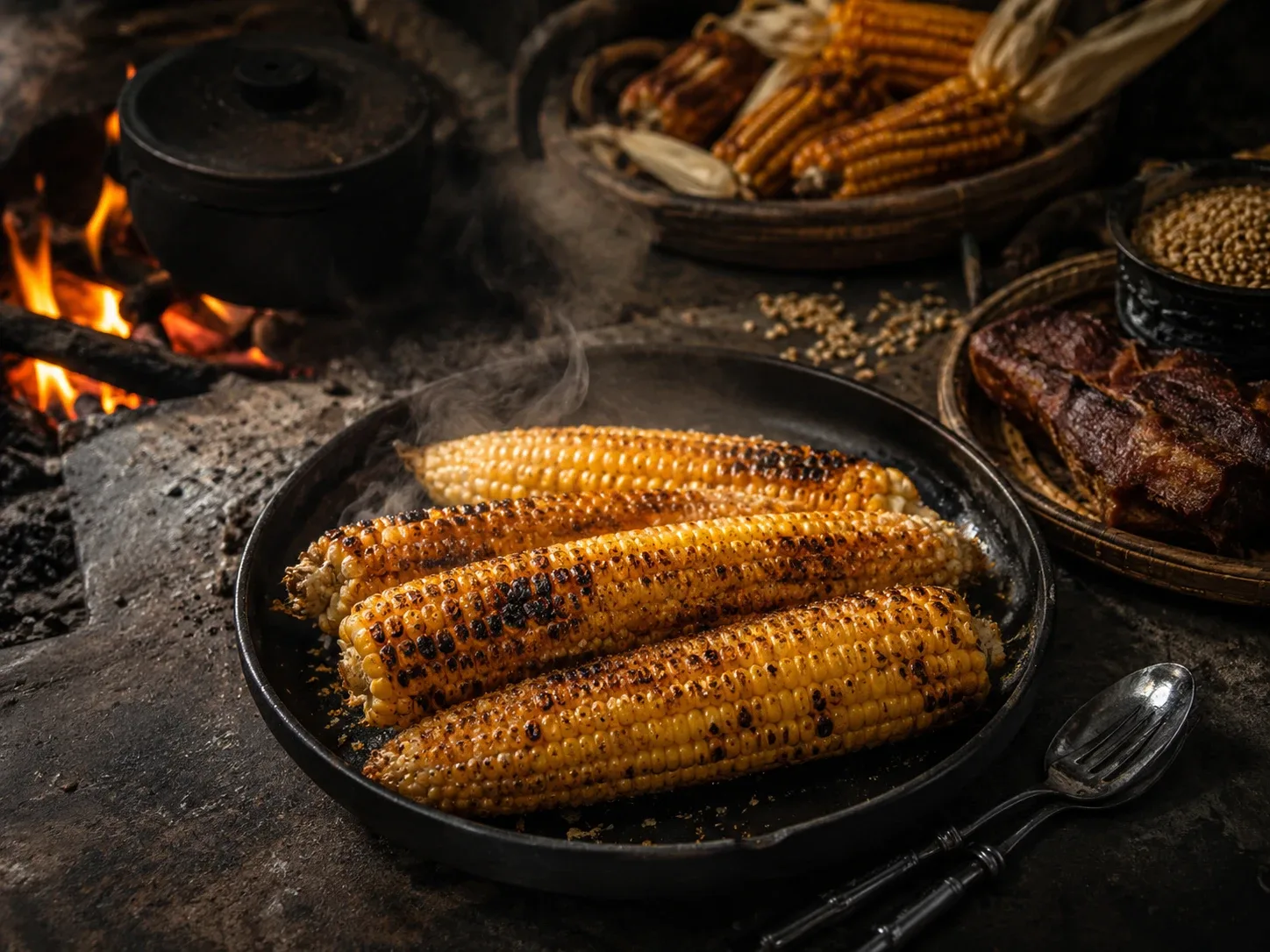
Fire-Roasted Corn with Chili Salt
Ears of corn roasted dark over open coals and rubbed with pounded chili salt — the taste of a Chin market morning, where maize is the mountain staple.
 ၅
၅Soups & Broths · 165 min · Beginner
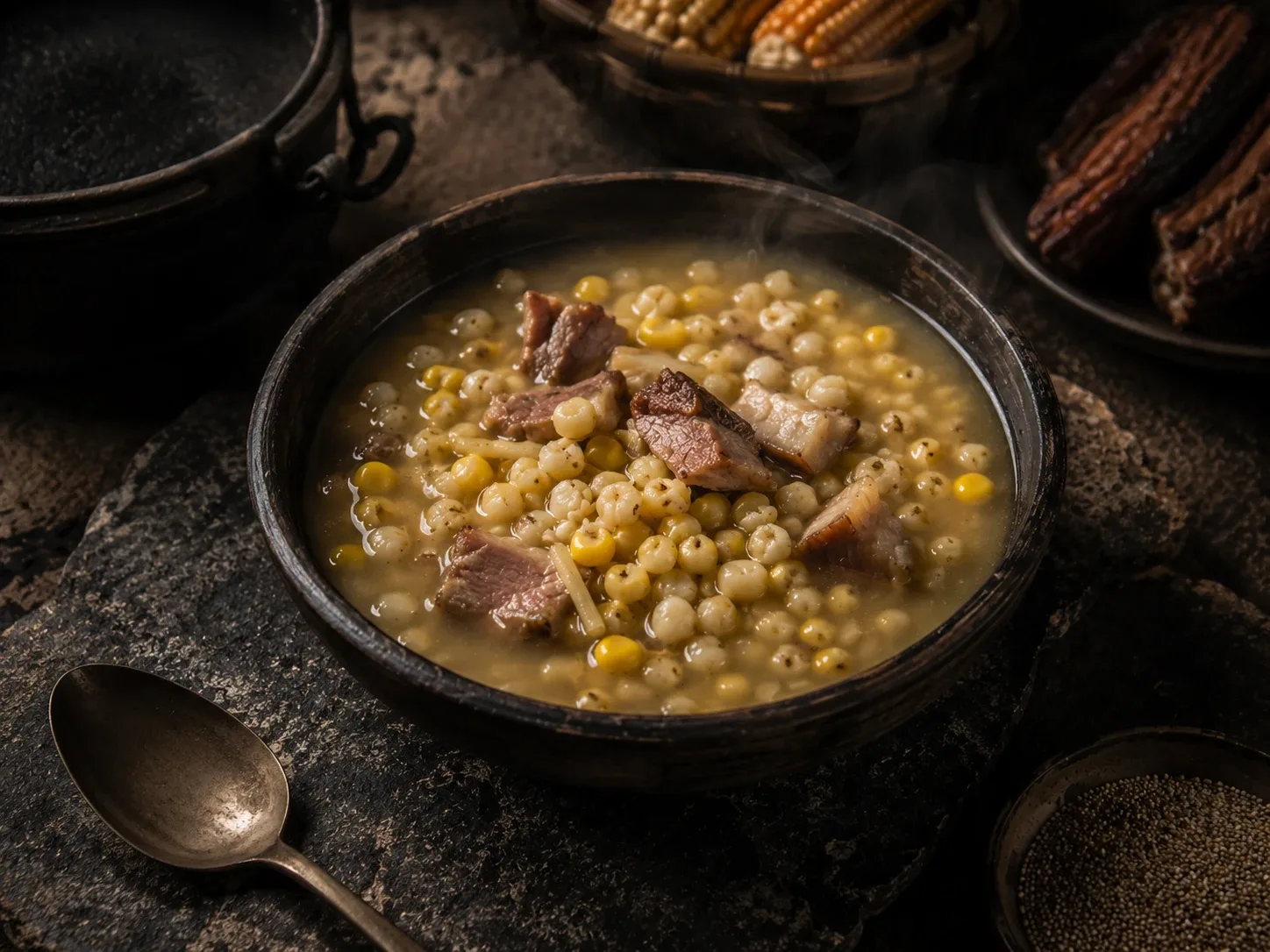
Sabuti, the Chin Corn Soup
The Chin hills' great corn soup — hominy maize simmered slowly with smoked pork and ginger, frugal mountain cooking that somehow eats like plenty.