Thingyan Htamin, New Year Water Rice
သင်္ကြန်ထမင်း
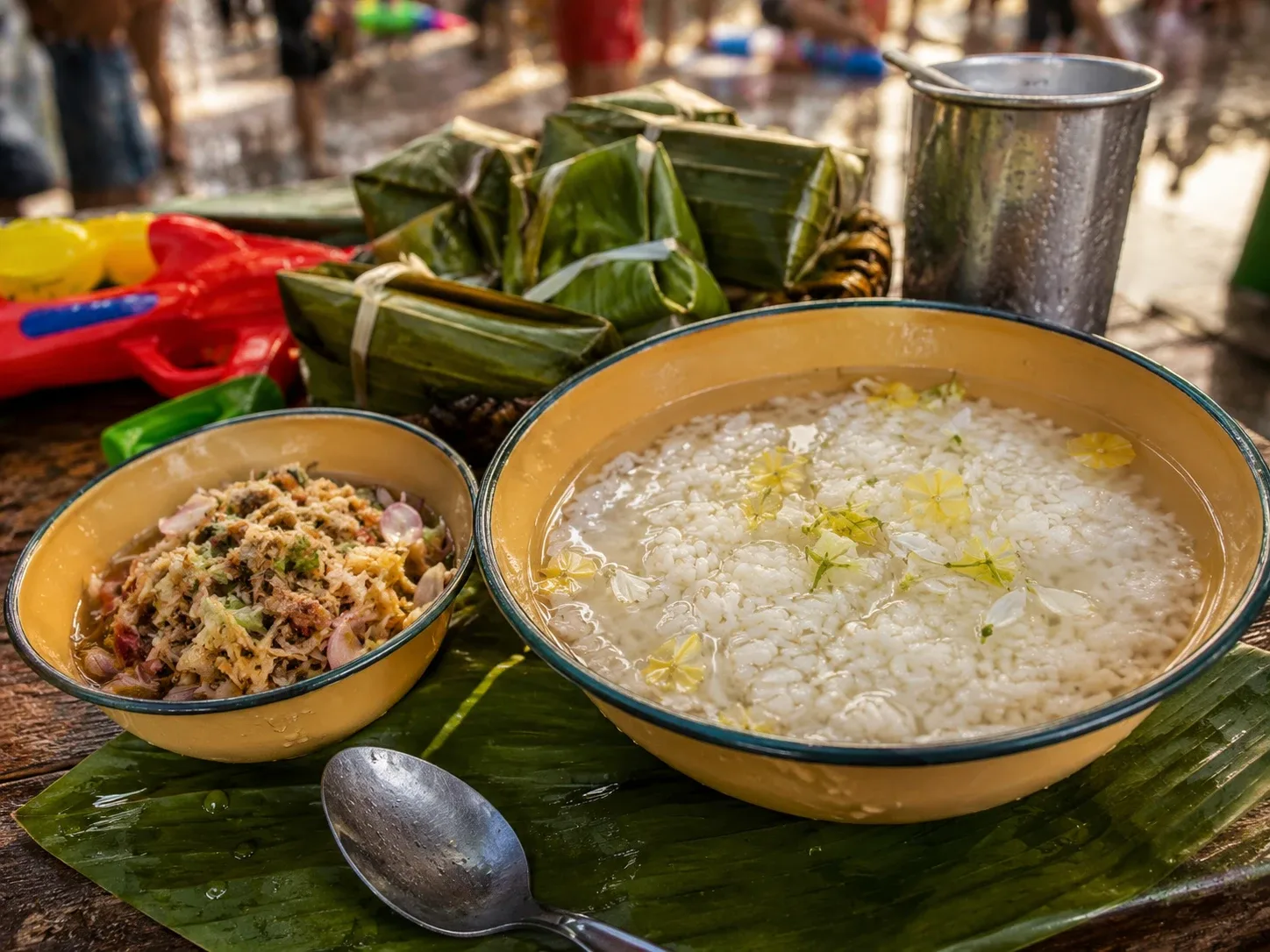
Cool water rice for the April new year — jasmine-scented, served with crisp dried fish and a green mango relish, a Thingyan custom the Bamar credit to the Mon.
By Burmese Cookbook Kitchen · July 9, 2026
မွန် Mon & Kayin CountryHanthawaddy, 1287–1552
 ၁
၁- Prep
- 30 min
- Cook
- 25 min
- Serves
- 4
- Level
- Beginner
Thingyan, the April water festival, arrives at the crown of the hot season, when the plains bake and appetite retreats. The kitchen's answer is thingyan htamin: rice cooked firm, washed cool and clean of its starch, and served under clear water scented with jasmine, with fierce little sides — crisp-fried dried fish, a sharp green mango relish — doing the arguing that the rice politely declines to do. It is less a recipe than a temperature, and in the right week there is nothing better.
The custom is widely credited to the Mon, and for once the neighbors corroborate. In Thailand the same dish appears as khao chae, and Thai food writers themselves trace it to Mon communities who carried their new-year water rice into Siam, where the palace kitchens of Bangkok elaborated it into a courtly April ritual. When two countries point independently at the same source, the arrow means something — so we file the dish under Hanthawaddy, the Mon kingdom whose coast it comes from, while saying plainly that this is tradition corroborated by tradition, not a dated document. Legend, labeled as such, but legend with witnesses.
Success is mostly washing. The cooked rice must be rinsed until the water runs glass-clear — loose starch is what clouds the bowl and, in April heat, sours it by evening. Keep the water cool rather than cold, keep the sides fierce rather than polite, and eat it the way it is meant to be eaten: in alternation, spoon and shard, until the afternoon feels survivable again.
The water over the rice must be clear as glass. If it clouds, the rice was not rinsed enough after cooking — cloudy water is the mark of a rushed house.
မီးဖိုချောင်စကား · A word from the kitchen
Ingredientsပါဝင်ပစ္စည်း
Serves 4
Tap to check off as you gather
For the rice and water
- jasmine rice
- cool drinking water — boiled and fully cooled, or good bottled water — it is an ingredient here, not a medium
- jasmine blossoms — unsprayed, steeped in the water an hour; honestly optional — plain cool water is the everyday version
For the fried dried fish
- dried fish — snakehead or threadfin from a Burmese or Thai grocer; dried shrimp work in a pinch
- peanut oil
For the green mango relish
- green mango — hard and sour, coarsely shredded
- shallots — sliced paper-thin
- green chili — minced
- fish sauce
- palm sugar (jaggery)
Methodချက်နည်း
Tap a numeral as you finish each step
Step 1: Scent the water
If using jasmine, float the blossoms in the cool water, cover, and let it steep for an hour, then lift them out. The perfume should be a suggestion, not a soap — this is drinking water that happens to have walked through a garden.
Step 2: Cook the rice a shade firm
Cook the rice as for plain htamin but with a splash less water, so the grains finish distinct and slightly firm. Soft rice drinks the serving water and slumps into porridge; firm rice stays separate and cool on the tongue, which is the entire point.
Step 3: Rinse the rice cool and clean
Spread the cooked rice loosely and let it stop steaming, then rinse it gently in a colander under cool water, turning with your fingers, until the water runs absolutely clear and the grains are cool to the touch. You are washing away every trace of loose starch — it is the starch, not the rice, that clouds and sours the bowl.
Step 4: Fry the dried fish
Fry the dried fish in the oil over medium heat until deeply crisp and a shade darker, 2 to 3 minutes a side, then drain and break into shards. Its salt and smoke are the counterweight to all that coolness — water rice without something fierce beside it is an austerity, not a dish.
Step 5: Toss the relish
Toss the shredded mango with the shallots, chili, fish sauce, and jaggery just before serving. It should bite back — sour first, then salt, then a little sweetness making peace.
Step 6: Assemble at the last minute
Mound the cool rice in deep bowls and pour the scented water over to just cover it. Set the fried fish and mango relish alongside, to be eaten in alternation — a spoonful of cool rice and water, a shard of hot-salty fish, a pinch of sharp mango. Serve immediately, while the water is still cool; this dish's clock runs in minutes.
ခွက်ယောက် · The tools
Equipment
Rice cooker
ထမင်းအိုးConsistent long-grain rice with zero attention — and in a Burmese kitchen the rice is never optional.
Shop on Amazon →Noodle basket / colander
ဆန်ခါBlanch and lift rice noodles in seconds — mohinga service moves fast, and soggy noodles wait for no one.
Shop on Amazon →Mandoline slicer
အလွှာစက်Paper-thin shallots for even frying and cabbage fine enough for thoke — seconds, not knife-years.
Shop on Amazon →Box grater / microplane
ခြစ်စက်Fine ginger, green papaya shreds, and toddy-palm jaggery shavings.
Shop on Amazon →
Equipment links are Amazon affiliate links. As an Amazon Associate we earn from qualifying purchases, at no cost to you. Disclosure.
ဟင်းစုံ · Set the table
A Burmese meal is a spread
The quiet base of the meal — build the rest of the spread around it:
- A curryဟင်းSlow-cooked until the oil returns — the richness the sides cut against.
- A light soupဟင်းချိုThe clear, sour broth sipped between mouthfuls of rice.
- Toh sa yar & ngapi dipတို့စရာRaw and blanched vegetables with a pungent fish-paste dip — the fresh, bitter counterpoint.
- A hand-tossed thokeအသုပ်A bright, sour salad to lift the whole spread.
- Si chet, chili oilဆီချက်The fragrant red oil every household keeps by the stove.
Questions from the kitchen
Is this the same dish as Thai khao chae?
First cousins, and the kinship is documented. Khao chae is credited in Thailand to Mon communities, who brought their new-year water rice into Siam, where the Bangkok palace dressed it up with ice and ornate side dishes. Thingyan htamin is the plainer, older-mannered relative still eaten on its home coast.
Can I just add ice?
A cube or two is a forgivable modern mercy in April heat, and Thai khao chae uses ice without shame. Refrigerator-cold water, though, numbs the jasmine and turns the rice grains hard and waxy — cool, not cold, is the traditional and better temperature.
What else can go alongside?
Anything small, intense, and dry-ish: a spoon of balachaung, fried dried prawns, salted duck egg in wedges, or crisp fried shallots. The grammar is fixed even when the words change — cool and mild in the bowl, hot and fierce on the plate beside it.
Why did my serving water turn cloudy and sour by evening?
Water rice does not hold. Rinsed rice sitting in water ferments within hours in April heat — which is, incidentally, how several beloved Southeast Asian sour-rice dishes were born. Assemble only what will be eaten now, and keep rice and water separate until the last minute.
နောက်တစ်ခု · Cook next
Keep the wok hot
 ၁
၁Rice & Foundations · 30 min · Beginner
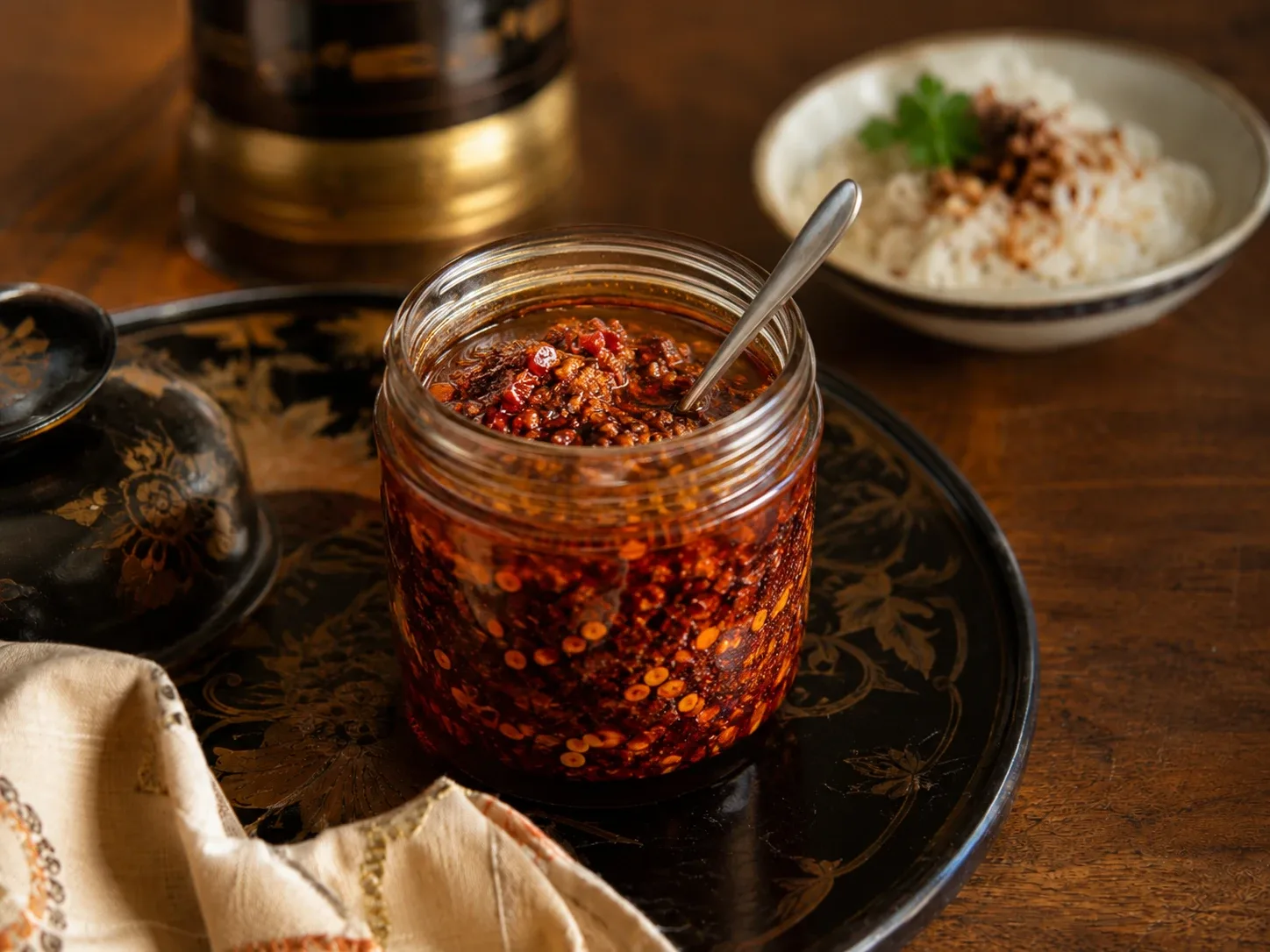
Si Chet, Burmese Chili Oilဆီချက်
The essential Burmese table oil — peanut oil gently fried with chili flakes, garlic, shallot, and a little ngapi, then spooned red over rice, noodles, and salads.
 ၁
၁Rice & Foundations · 40 min · Beginner
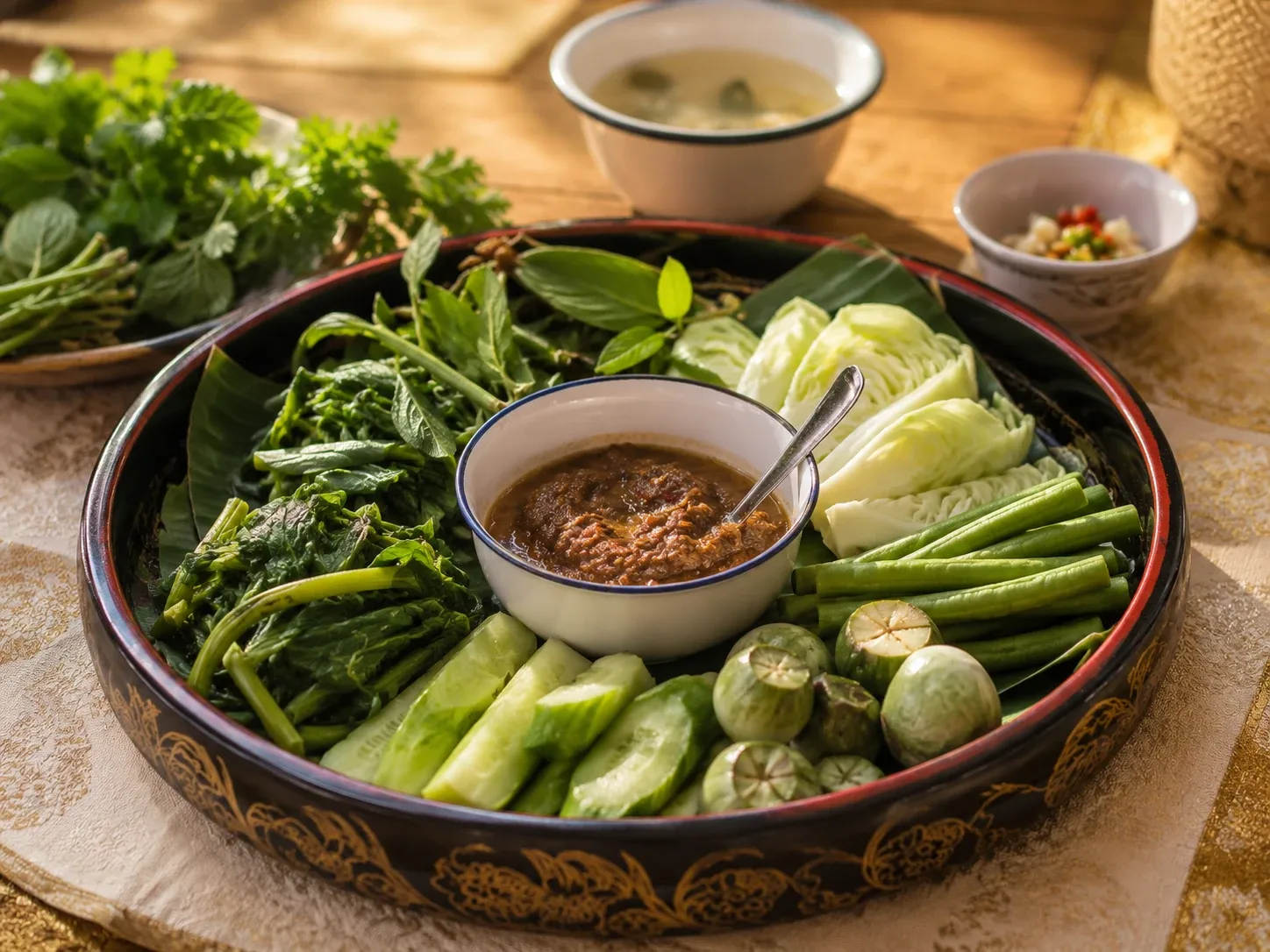
Toh Sa Yar, the Vegetable & Ngapi Platterတို့စရာ
The platter of raw and blanched vegetables around a pungent ngapi dip that no Burmese meal is complete without — the fresh, bitter counterpoint to curry.
 ၃
၃Curries · 100 min · Intermediate
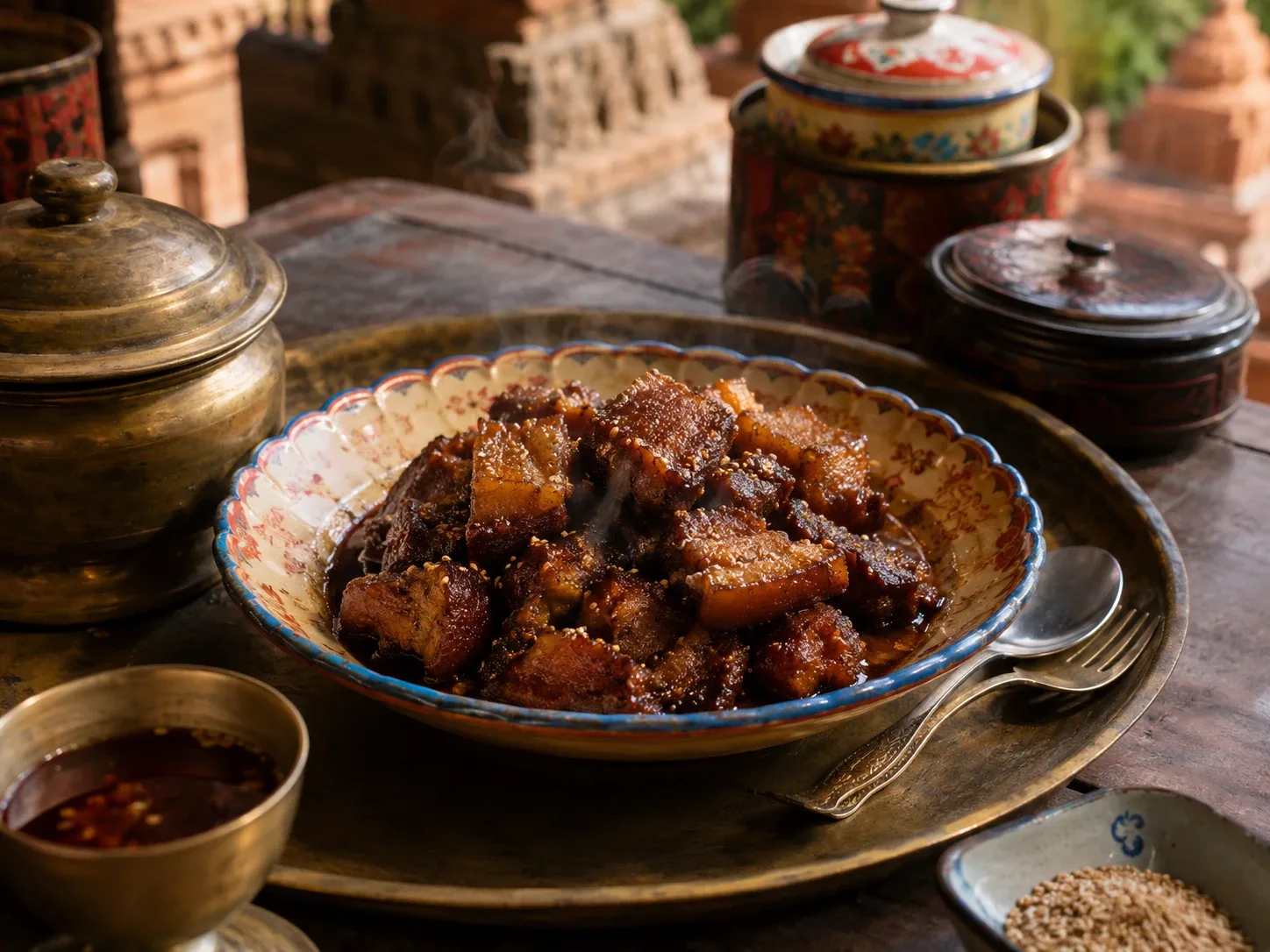
Wet Thar Pone Yay Gyi, Bagan Pork Curryပုန်းရည်ကြီးဝက်သား
Bagan's signature pork curry — pone yay gyi braised si pyan style until the oil returns, the sauce dark and sour with fermented horse-gram bean paste.