Wet Thar Chin, Shan Sour Pork
ဝက်သားချဉ်
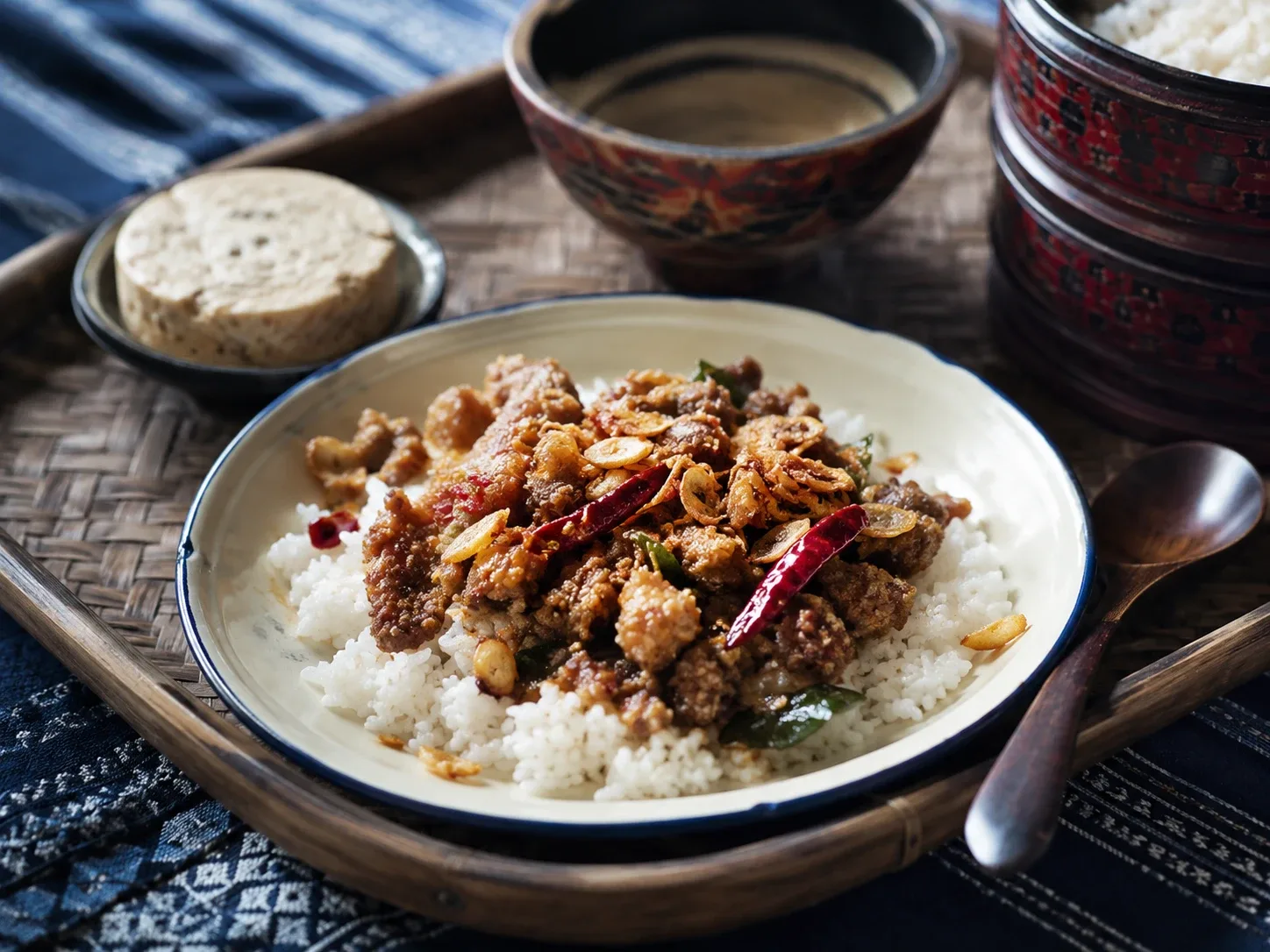
Shan sour pork — pork and sticky rice fermented in banana leaf until bright and tangy, then fried hard with garlic and chilies to eat over rice.
By Burmese Cookbook Kitchen · July 9, 2026
ရှမ်း Shan StateBritish Burma, 1826–1948
 ၁
၁- Prep
- 25 min
- Cook
- 15 min
- Serves
- 4
- Level
- Advanced
In the markets of the Shan hills, alongside the tofu and the pickled mustard, you will find neat banana-leaf parcels tied with string, their contents firm and rosy and smelling like a handshake between a salami and a lime. This is wet thar chin — sour pork — the hills' way of keeping their excellent pork beyond the day of slaughter: minced meat kneaded with salt, garlic, and cooked sticky rice, wrapped tight, and left to sour for a few warm days while lactic bacteria do the preserving.
It belongs to a great arc of fermented pork that runs through the Tai world — Thailand's naem and the Lao and Vietnamese cousins are the same idea in different wrappers — and the Shan version sits at its northern, garlicky end. Documentation, as with most hill preserves, is thin and mostly colonial-era, when market-town accounts began noticing what the hills had long been making; the practice itself is plainly far older. Households eat it every way a preserve can be eaten, but the classic is the one given here: fried hard with garlic and dried chilies until the edges brown, then piled over rice with raw cabbage and cucumber standing coolly by.
Read the fermentation notes before you begin — fresh pork, full salt, and a short, warm, well-watched ferment are the discipline of the dish, and this version is always cooked through before serving. The reward for that care is remarkable: pork that tastes louder than pork, sour and savory at once, the flavor of the hills' long memory for making good things last.
The ferment is done when the parcel smells like a good salami with a squeeze of lime — clean, meaty, and bright. Trust your nose over the clock; it has been fermenting pork longer than calendars have existed.
မီးဖိုချောင်စကား · A word from the kitchen
Ingredientsပါဝင်ပစ္စည်း
Serves 4
Tap to check off as you gather
For the ferment (start three days ahead)
- pork shoulder — the freshest you can buy, minced coarsely — grind it yourself or ask the butcher for a same-day grind
- glutinous rice — cooked, cooled to just warm — the starch feeds the souring bacteria
- salt — coarse, non-iodized; this is the safety rail, do not reduce it
- garlic — pounded to a paste
- dried chili flakes
- banana leaves — wilted over a flame until pliable; parchment plus foil is the stand-in
For frying and serving
- peanut oil
- garlic — sliced
- dried red chilies — snipped into pieces
- spring onions — cut into short lengths
- cilantro
- cabbage — cut into wedges, plus cucumber spears — the raw, cooling escort
Methodချက်နည်း
Tap a numeral as you finish each step
Step 1: Mix the cure
With scrupulously clean hands and bowl, knead the minced pork with the salt first, working it until tacky — the salt drawing out sticky proteins is what will hold the parcels together and keep the wrong microbes out. Then knead in the cooked rice, garlic paste, and chili flakes until completely even. The rice is not filler; its starch is the fuel the souring bacteria run on.
Step 2: Wrap tight
Divide the mixture into four logs and wrap each hard in banana leaf, folding the ends under and tying with string — tight matters, because this ferment wants as little air as possible. The leaf flavors the pork faintly and lets it breathe just enough.
Step 3: Ferment warm and briefly
Leave the parcels at warm room temperature — 24 to 30°C is the happy zone — for two to three days. In cool kitchens give them the top of the fridge or another gently warm spot, and up to a day longer. The pork is ready when it smells sour-bright and clean, like salami with lime, and feels firmer and springier than it did. Then refrigerate; cold stops the clock wherever you like the flavor.
Step 4: Fry hard
Unwrap and slice or crumble the sour pork. Heat the oil in a wok over high heat, fry the sliced garlic and dried chilies for thirty seconds, then add the pork and stir-fry hard for 5 to 7 minutes until browned at the edges and cooked through completely — this recipe always cooks the ferment before eating, the home cook's margin of safety and, happily, also the best-tasting version.
Step 5: Serve with rice and raw things
Toss through the spring onions, tip onto a plate, and shower with cilantro. Serve with hot rice and the cabbage and cucumber alongside — the cool crunch against the hot, sour, garlicky pork is the entire architecture of the dish. A little fried sour pork seasons a lot of rice; it is a condiment with ambitions.
ခွက်ယောက် · The tools
Equipment
Carbon-steel wok
ဒယ်အိုးThe dai-oh — for si pyan curries, fritters, and every fried-noodle dish here. Carbon steel, seasoned dark, nothing fancy.
Shop on Amazon →Rice cooker
ထမင်းအိုးConsistent long-grain rice with zero attention — and in a Burmese kitchen the rice is never optional.
Shop on Amazon →Stone mortar & pestle
ဆုံFor garlic-ginger paste, pounded dried shrimp fluff, and crushed peanuts — the blender lies about texture; the stone doesn’t.
Shop on Amazon →
Equipment links are Amazon affiliate links. As an Amazon Associate we earn from qualifying purchases, at no cost to you. Disclosure.
ဟင်းစုံ · Set the table
A Burmese meal is a spread
The quiet base of the meal — build the rest of the spread around it:
- A curryဟင်းSlow-cooked until the oil returns — the richness the sides cut against.
- A light soupဟင်းချိုThe clear, sour broth sipped between mouthfuls of rice.
- Toh sa yar & ngapi dipတို့စရာRaw and blanched vegetables with a pungent fish-paste dip — the fresh, bitter counterpoint.
- A hand-tossed thokeအသုပ်A bright, sour salad to lift the whole spread.
- Si chet, chili oilဆီချက်The fragrant red oil every household keeps by the stove.
Questions from the kitchen
Is fermenting pork at home actually safe?
Treated with respect, yes — this is the same family as Thai naem and Vietnamese nem chua, made daily across Southeast Asia. The guardrails are non-negotiable: same-day-ground fresh pork, the full measure of salt, clean hands and tools, a tight wrap, a short warm ferment, and — in this version — always frying until fully cooked before eating. If a parcel ever smells rotten rather than sour, or turns slimy or grey, throw it away without debate.
What does the sourness actually come from?
Lactic acid bacteria — the sauerkraut and yogurt workers — eating the rice starch and salting the pork with acid as they go. The dropping pH is also what preserves the meat; sourness and safety are the same chemistry here.
I have no banana leaves. Now what?
Wrap tightly in parchment, then foil, and proceed — you lose a faint grassy note and nothing else. Some modern Shan kitchens use clean plastic wrap the same way. Whatever the wrapper, tight and airless is the rule.
နောက်တစ်ခု · Cook next
Keep the wok hot
 ၁
၁Rice & Foundations · 30 min · Beginner
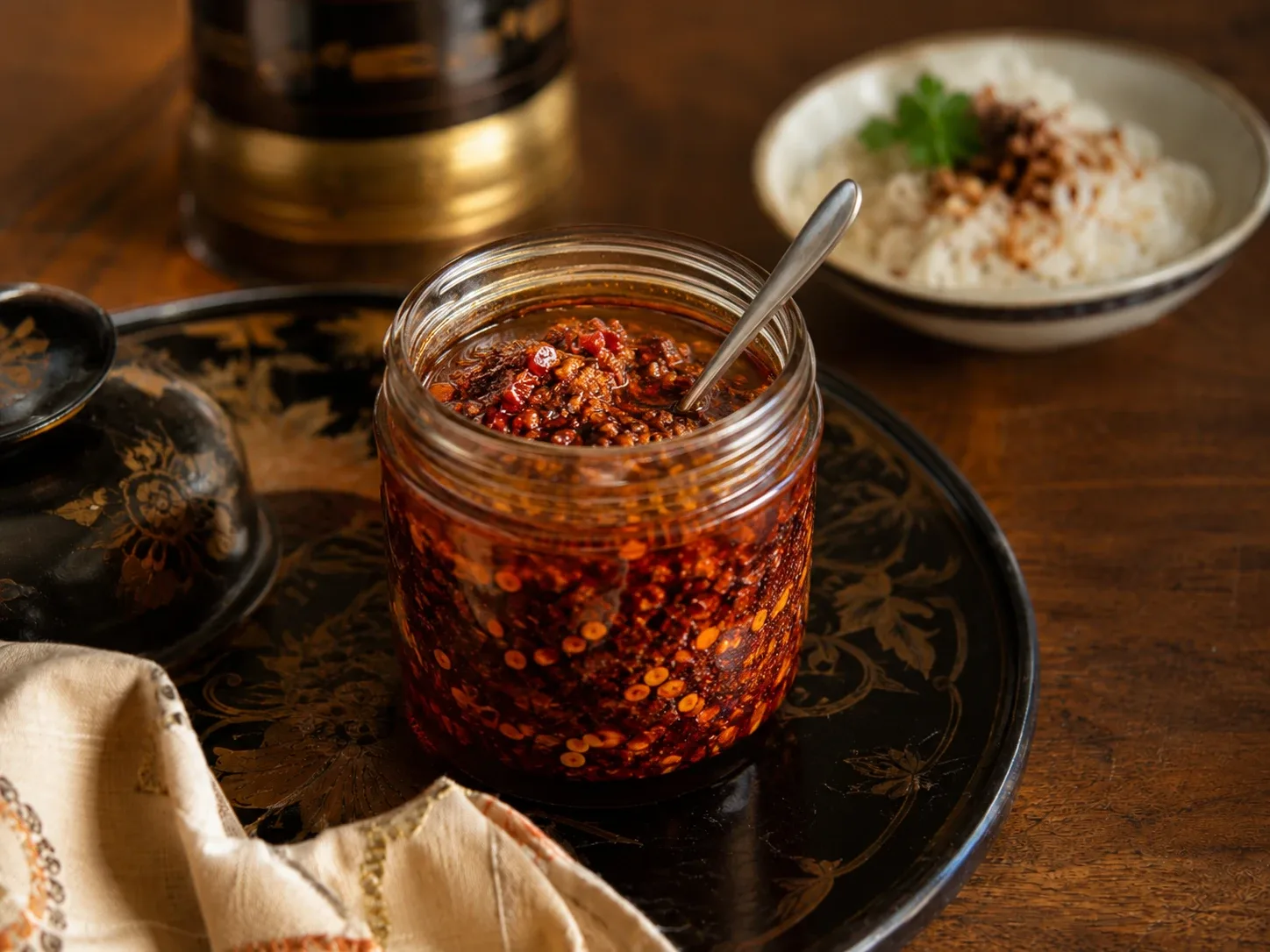
Si Chet, Burmese Chili Oilဆီချက်
The essential Burmese table oil — peanut oil gently fried with chili flakes, garlic, shallot, and a little ngapi, then spooned red over rice, noodles, and salads.
 ၁
၁Rice & Foundations · 40 min · Beginner
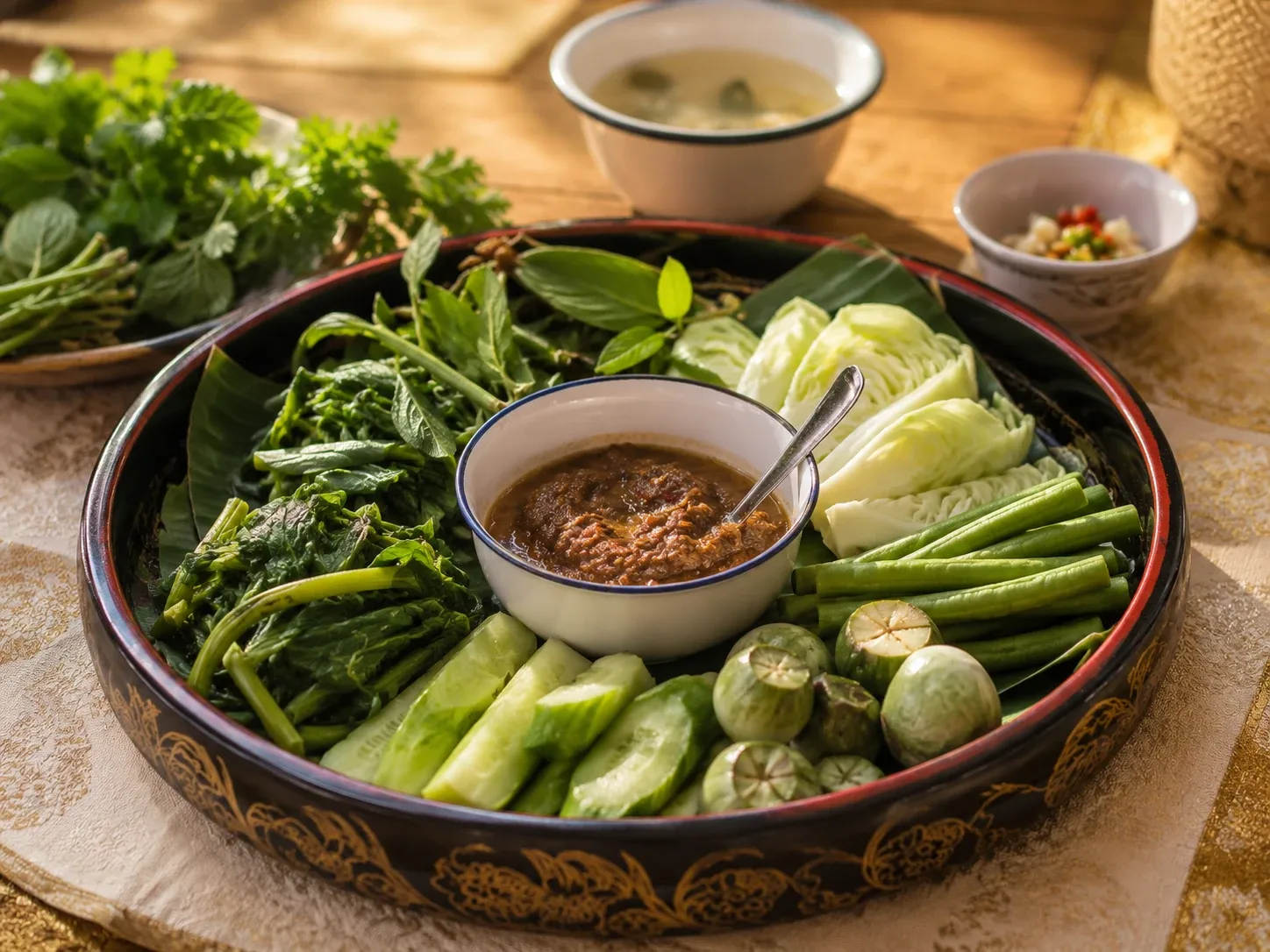
Toh Sa Yar, the Vegetable & Ngapi Platterတို့စရာ
The platter of raw and blanched vegetables around a pungent ngapi dip that no Burmese meal is complete without — the fresh, bitter counterpoint to curry.
 ၅
၅Soups & Broths · 165 min · Beginner
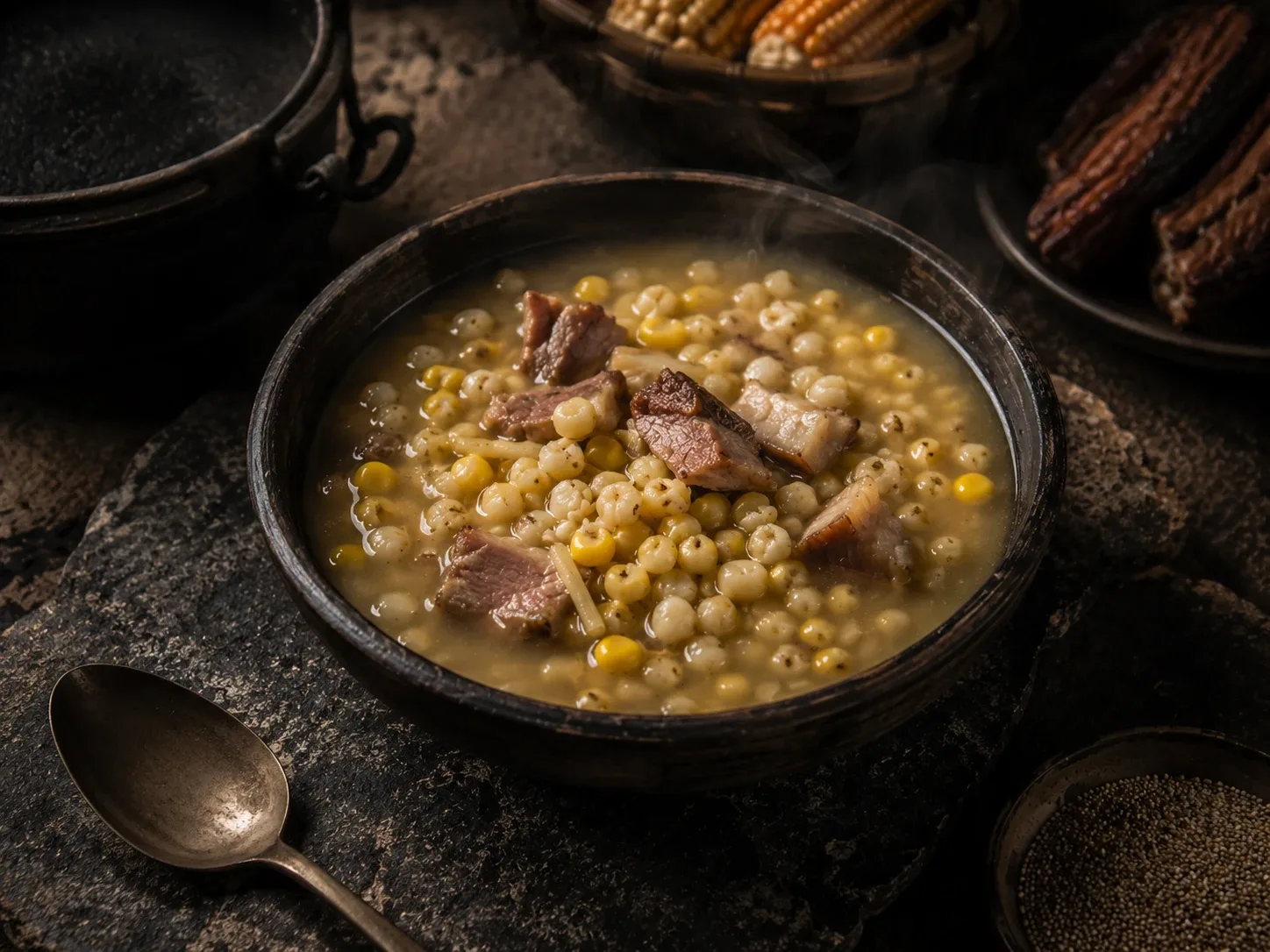
Sabuti, the Chin Corn Soup
The Chin hills' great corn soup — hominy maize simmered slowly with smoked pork and ginger, frugal mountain cooking that somehow eats like plenty.