Kachin Herbal Chicken Soup
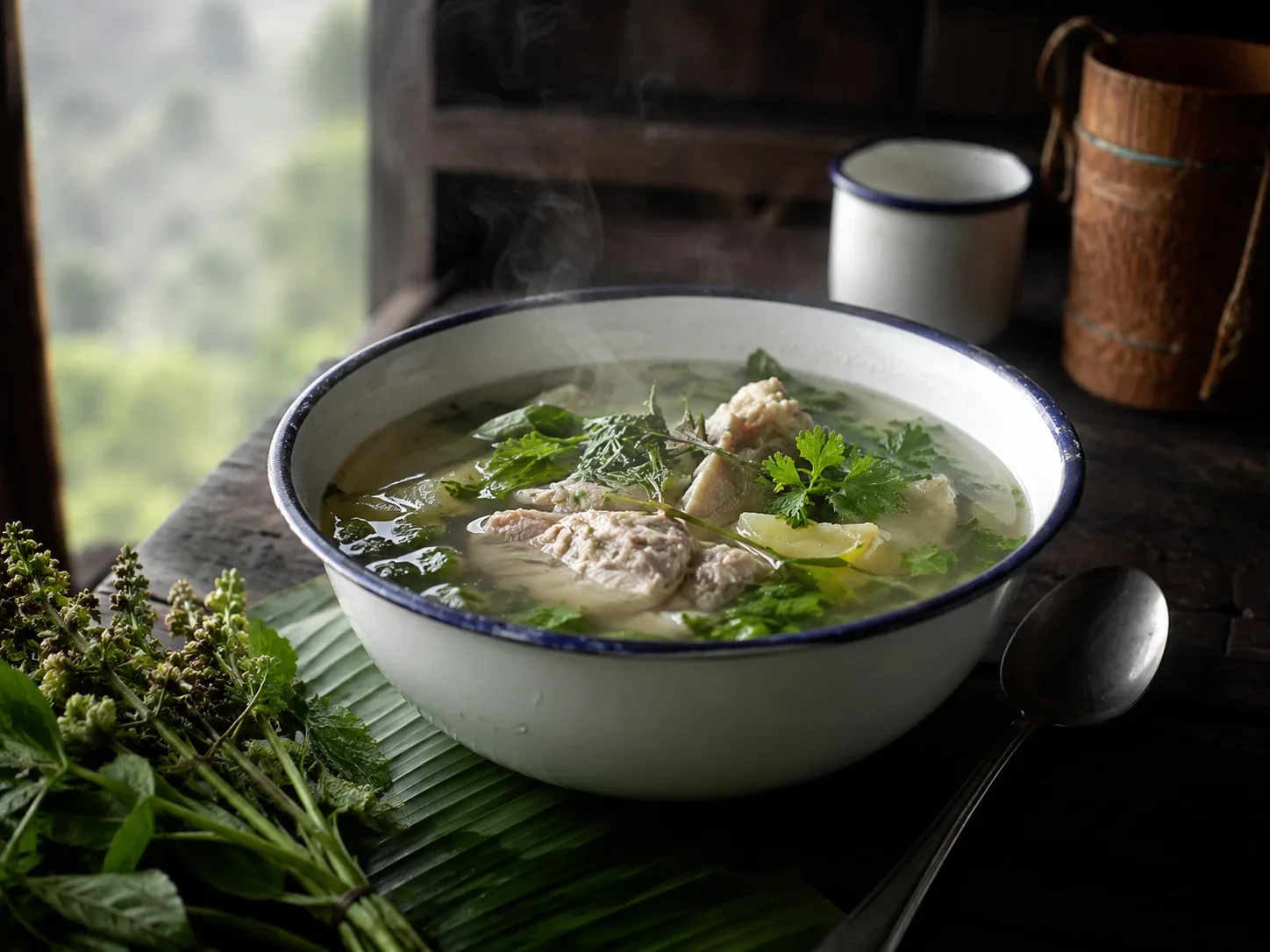
A clear Kachin chicken broth built on ginger, garlic, and a late whisper of Sichuan pepper, finished with raw herbs — the restorative of the northern hills.
By Burmese Cookbook Kitchen · July 9, 2026
ကချင် Kachin StateOpening & Diaspora, 1988–present
 ၅
၅- Prep
- 15 min
- Cook
- 60 min
- Serves
- 4
- Level
- Beginner
Every cuisine keeps a pot it trusts with its weakest moments, and in the Kachin hills that pot is this one: chicken simmered slow and clear with a heavy hand of ginger, garlic, salt, and — in the closing minutes — a crushed spoonful of Sichuan pepper that hums behind the broth like a struck string. There is no oil and no frying, and nothing about that is an omission. Kachin cooking earned its reputation as Myanmar's healthy cuisine on exactly this kind of bowl, where water and patience are asked to do the work the lowlands assign to peanut oil.
At home it is the restorative — cooked for the convalescent, for cold-season evenings, and above all for new mothers, for whom the ginger is doubled and the pot kept warm for days. Versions of ginger-chicken soup exist across Asia; what marks the Kachin pot is the late-added Sichuan pepper, the raw herbs wilted in at the end, and the discipline of seasoning with salt alone. Home practice in the hills is generations old, but the dish entered the wider national record with the Kachin restaurant wave of the 2000s, so we date it there and say so plainly.
Technique is mostly restraint. Start cold and skim once, so the broth stays glass-clear. Hold the simmer at a whisper — a rolling boil turns it milky. And keep the pepper to its final ten minutes; steeped longer it goes medicinal, and this soup is medicine enough already.
If you are tempted to brown the chicken first, put the pot down — this soup is an argument for what water, ginger, and patience can do without oil.
မီးဖိုချောင်စကား · A word from the kitchen
Ingredientsပါဝင်ပစ္စည်း
Serves 4
Tap to check off as you gather
For the broth
- bone-in chicken legs — cut through the bone into chunks if your cleaver allows; whole is fine
- fresh ginger — sliced thick and bruised — this is a ginger-forward soup
- garlic — bruised, skins off
- water
- salt
For the pepper and heat
- Sichuan peppercorns — lightly crushed, added late
- green bird's eye chilies — bruised and left whole — optional, for warmth without fire
To finish
- spring onions — cut into 3 cm lengths
- cilantro — roughly torn
- sawtooth coriander — sliced into ribbons, if you can get it
Methodချက်နည်း
Tap a numeral as you finish each step
Step 1: Start everything cold
Put the chicken, ginger, garlic, salt, and water into a pot together, cold, and bring it slowly up to a bare simmer. Starting cold draws the proteins out gently so they rise as skimmable foam instead of clouding the broth — clarity is the whole aesthetic here.
Step 2: Skim once, then leave it alone
When the foam gathers in the first ten minutes, skim it off in two or three passes, then partly cover and hold the pot at the laziest possible simmer for 45 minutes. Bubbles that roll will emulsify the chicken fat into the broth and turn it milky; bubbles that whisper keep it clear and light.
Step 3: Add the pepper late
Crush the Sichuan peppercorns and add them, with the bruised chilies if using, for the final 10 minutes only. Steeped from the start the pepper turns bitter and medicinal; added late it lands as a citrusy hum just behind the ginger, which is exactly where it belongs.
Step 4: Season with salt alone
Taste and correct with salt — resist the fish sauce. The hill version of this soup is seasoned with salt so the ginger and chicken speak in their own voices, and the difference is real: fish sauce rounds it toward the lowlands, salt keeps it mountain-clear.
Step 5: Finish with raw herbs
Off the heat, drop in the spring onions, cilantro, and sawtooth coriander so they wilt without cooking, and let the pot stand five minutes. Serve steaming, meat and broth together, over rice or beside it — and give the drinker of the last ladle their due respect.
ခွက်ယောက် · The tools
Equipment
Heavy pot / Dutch oven
အိုးကြီးDeep and heat-retentive — for mohinga broth, long-simmered hin, and deep-frying without temperature crashes.
Shop on Amazon →Stone mortar & pestle
ဆုံFor garlic-ginger paste, pounded dried shrimp fluff, and crushed peanuts — the blender lies about texture; the stone doesn’t.
Shop on Amazon →
Equipment links are Amazon affiliate links. As an Amazon Associate we earn from qualifying purchases, at no cost to you. Disclosure.
ဟင်းစုံ · Set the table
A Burmese meal is a spread
A Burmese soup sits beside the rice, not on its own. Set the table with:
- Steamed riceထမင်းThe centre of the table — everything else is built around it.
- A curryဟင်းSlow-cooked until the oil returns — the richness the sides cut against.
- Toh sa yar & ngapi dipတို့စရာRaw and blanched vegetables with a pungent fish-paste dip — the fresh, bitter counterpoint.
- Balachaungဘလချောင်းThe crispy shrimp relish that lives on every Burmese table.
- Crispy fried shallotsကြက်သွန်ကြော်A spoonful of crunch and sweet shallot oil over anything.
Questions from the kitchen
Is this really a whole dish, not a side soup?
Both, honestly. Beside rice and a pounded meat it plays the clear counterpoint, the role hin cho plays on any Burmese table. Cooked for someone recovering — or newly a mother — it is the whole meal, and the ginger gets doubled without apology.
Can I use a whole chicken?
Yes — a small whole bird, jointed, is the festive version and makes a rounder broth. Keep the times: 45 gentle minutes, pepper in the last ten. Breast pieces can come out at the half-hour mark so they stay tender while the legs finish the work.
What does the Sichuan pepper do in a soup?
Added late, it does not numb — it hums. You get the citrus-pine aroma and a faint tingle at the edge of each sip, a signature of the Kachin hills that separates this from every other ginger chicken soup in Asia. Ten minutes of steeping is the ceiling; taste at five if you are new to it.
Can I add noodles or rice to the pot?
Ladle it over cooked rice in the bowl rather than simmering rice in the pot — the starch would cloud the broth you just spent an hour keeping clear. Fine rice vermicelli, blanched separately and added at serving, turns it into a very good light noodle supper.
နောက်တစ်ခု · Cook next
Keep the wok hot
 ၅
၅Soups & Broths · 135 min · Beginner
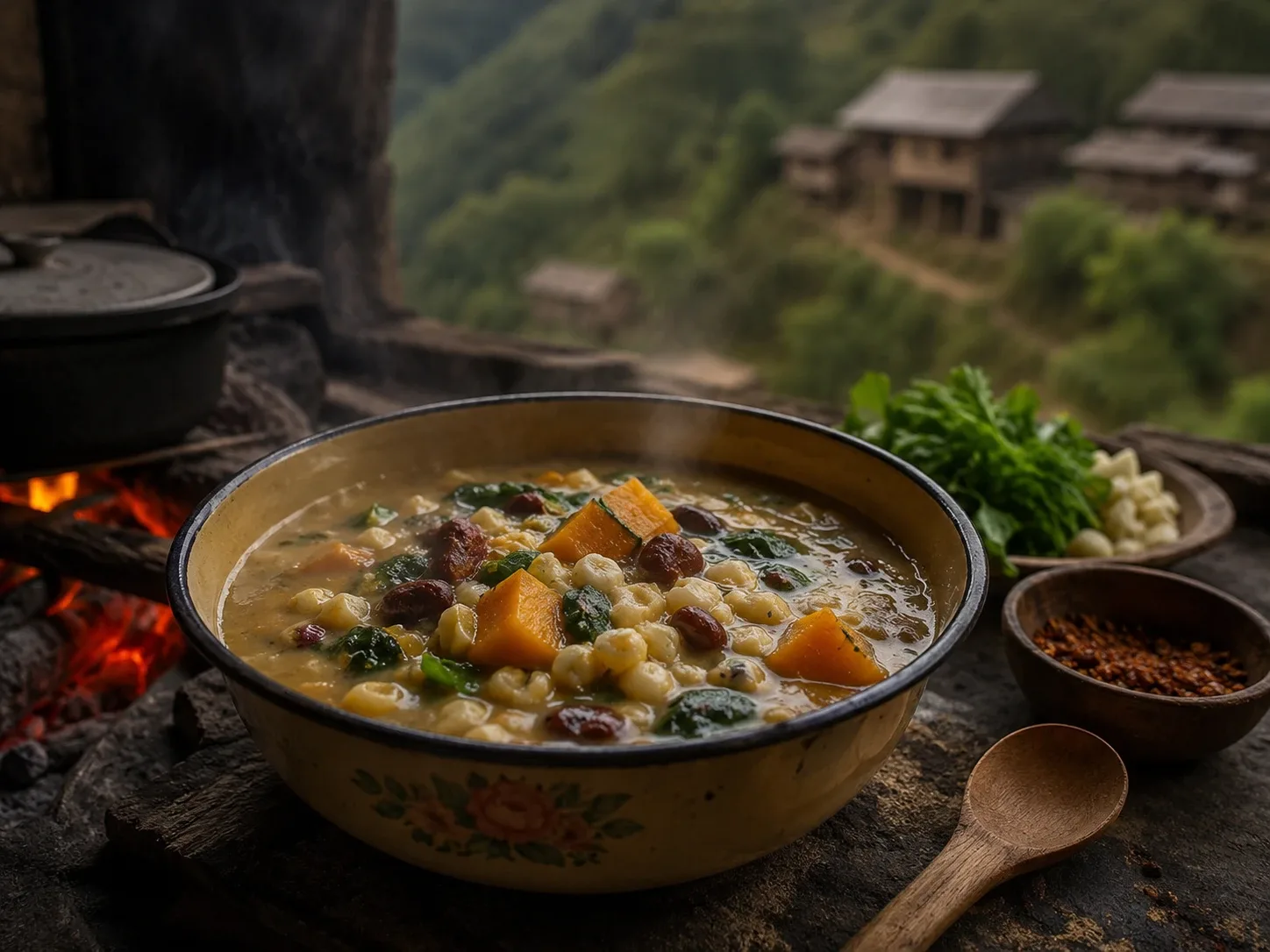
An Buti, the Meatless Corn Soup
Sabuti's meatless sibling from the Chin hills — hominy corn simmered with red beans, pumpkin, and greens until the pot thickens into gentle, vegetable plenty.
 ၅
၅Soups & Broths · 55 min · Intermediate
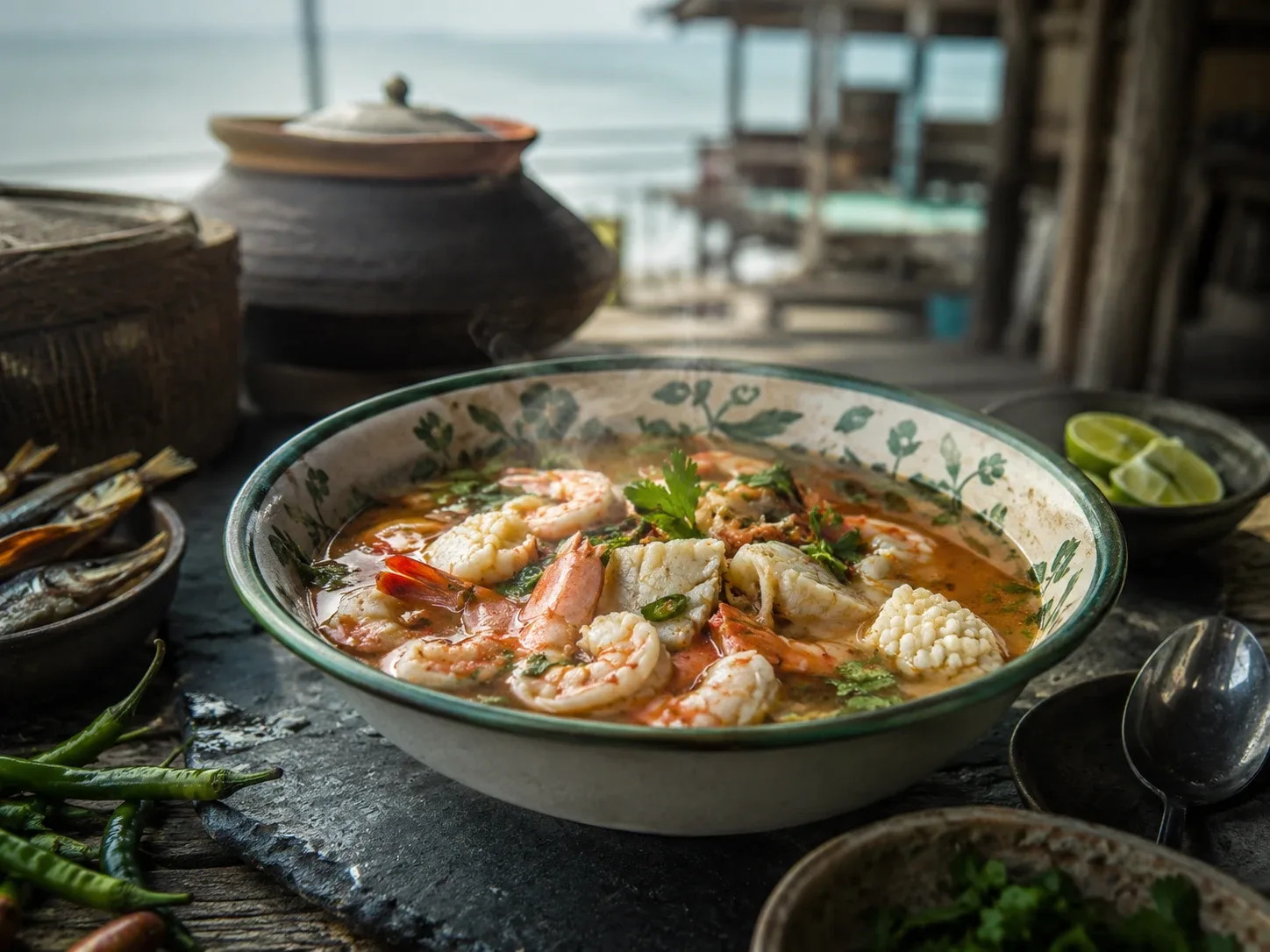
Ar Pu Shar Pu, the Burning-Mouth Bowl
Sittwe's famous hot-and-sour seafood soup — fish, prawns, and squid in a tamarind broth pounded through with green chilies, finished with lime and herbs.
 ၂
၂Noodles & Mohinga · 50 min · Beginner
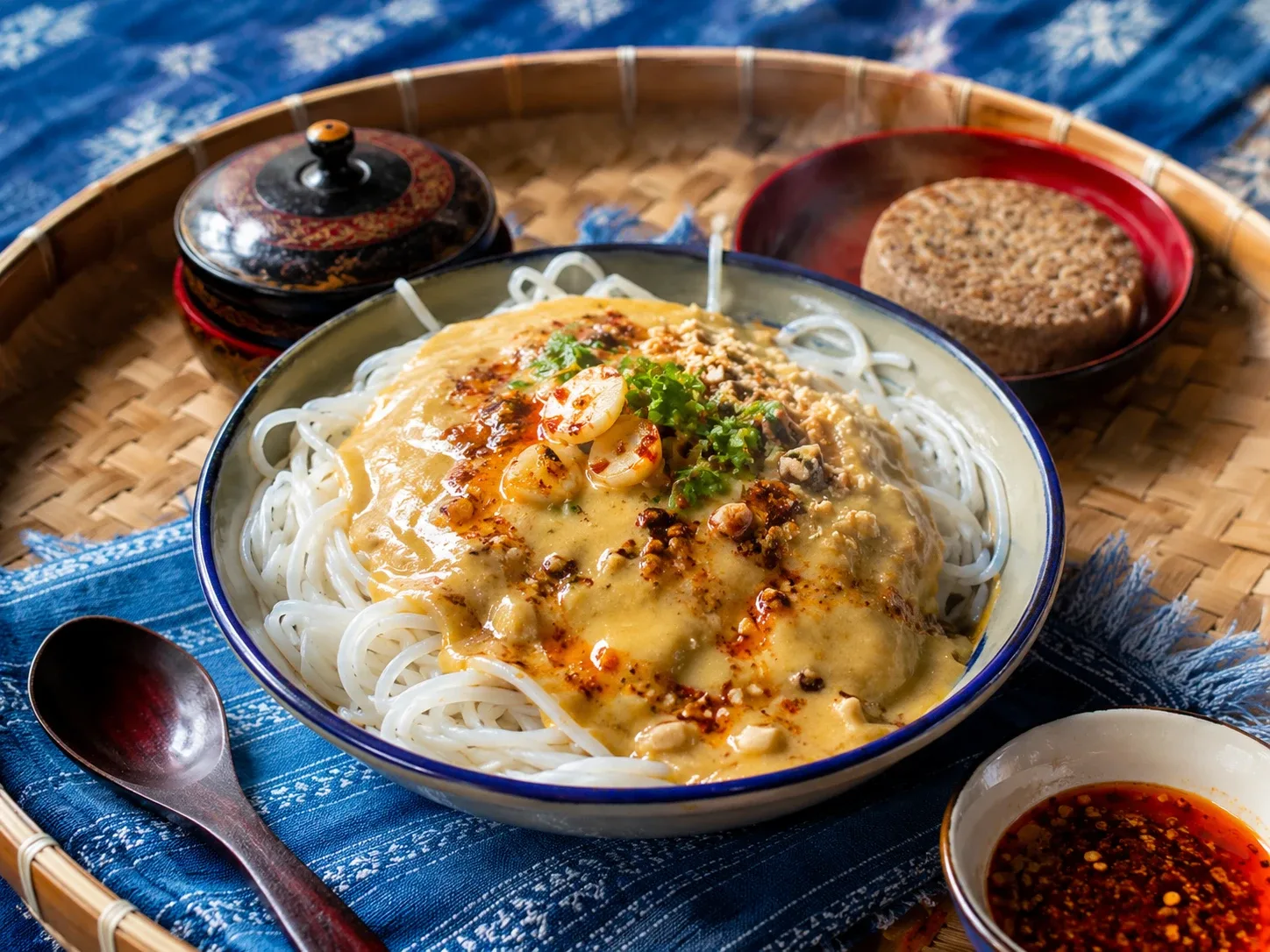
Tofu Nway, Warm Shan Tofu Noodlesတိုဟူးနွေး
Warm chickpea tofu that never sets, ladled like golden custard over rice noodles with garlic oil, chili, and peanuts — Shan State's great breakfast.