Nga Kin, Banana-Leaf Grilled Fish
ငါးကင်
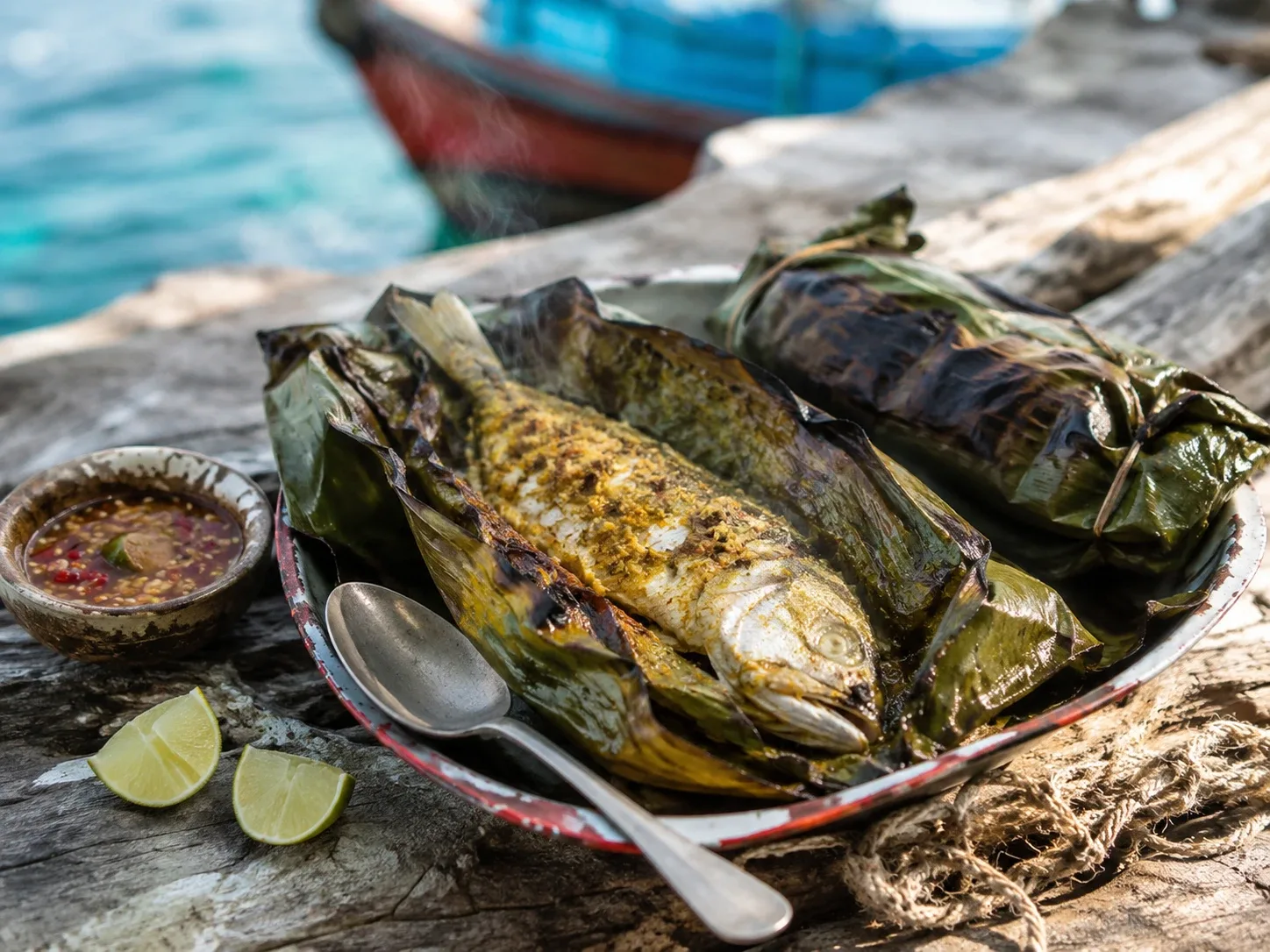
Whole fish rubbed with turmeric, salt, and pounded lemongrass, wrapped in banana leaf and grilled over coals — jetty-stall food of the Myeik islands.
By Burmese Cookbook Kitchen · July 9, 2026
တနင်္သာရီ TanintharyiOpening & Diaspora, 1988–present
 ၆
၆- Prep
- 25 min
- Cook
- 20 min
- Serves
- 4
- Level
- Beginner
Down the Tanintharyi coast — through Dawei, Myeik, and Kawthaung at the country's southern tip — the evening grill stall is as fixed a feature of the waterfront as the tide. Whatever the boats brought in gets scored, rubbed gold with turmeric and salt, wrapped in a banana leaf, and laid over coals. There is no menu; there is what swam that morning.
Grilling fish in leaves is older than any record and belongs to every coastline in Southeast Asia — we make no grand claims of invention here. What the record does show is the modern southern stall culture that perfected the ritual: parcels blackening in rows, the leaf swapped fresh for each fish, a pounded green chili dip standing by. The leaf is the technique. It steams the flesh from inside while its outer surface scorches and gives up a faint, grassy smoke, so a whole fish arrives both juicy at the bone and perfumed like the fire.
The dip deserves equal billing. Chilies, garlic, and shallots are charred soft at the grill's edge before being pounded with fish sauce, lime, and a thumb of palm sugar — charring first turns raw heat into something rounder and almost sweet, and you will find cousins of this sauce on both sides of the nearby Thai border. Open the parcel at the table, let the steam speak, and eat with rice, working from cheek to tail. This is street food that happens to be a feast.
The banana leaf is not packaging — it steams the flesh while the coals perfume it, and the fish is done when the leaf is blackened and brittle.
မီးဖိုချောင်စကား · A word from the kitchen
Ingredientsပါဝင်ပစ္စည်း
Serves 4
Tap to check off as you gather
For the fish
- whole fish — about 500 g each — snapper, sea bream, or mackerel, gutted and scaled
- turmeric
- salt
- lemongrass — tender parts pounded to a rough paste, tough tops tucked in the cavity
- garlic — pounded with the lemongrass
- peanut oil
- banana leaves — large sections, wiped clean; foil is the unlovely but working stand-in
For the green chili dip
- green chilies
- garlic — unpeeled
- shallots — unpeeled
- fish sauce
- lime — juiced
- palm sugar (jaggery)
- cilantro — chopped
Methodချက်နည်း
Tap a numeral as you finish each step
Step 1: Score and season the fish
Cut three diagonal slashes down to the bone on each side of both fish. Work the turmeric, salt, and oil into the skin, the slashes, and the cavity, then pack the pounded lemongrass-garlic paste into the slashes and tuck the bruised lemongrass tops inside. The slashes are what let a whole fish cook through before the outside dries — skip them and you choose between raw spine and leather skin.
Step 2: Wrap in banana leaf
Pass the banana leaf sections briefly over the flame until they turn glossy and pliable — an unwilted leaf cracks when folded. Wrap each fish in a snug double layer, seam down, secured with skewers or kitchen twine. The leaf traps steam so the flesh cooks gently while the outside of the parcel chars and lends its faint tea-like smoke.
Step 3: Char the dip ingredients
While the coals settle, lay the chilies and the unpeeled garlic and shallots at the grill's edge until blistered and soft, about 5 minutes, turning once. Charring first is the whole character of the dip — raw chili is a slap, charred chili is an argument worth having. Peel the garlic and shallots, then pound everything to a coarse paste with the fish sauce, lime, and palm sugar. Stir in the cilantro.
Step 4: Grill the parcels
Set the parcels over medium coals — a controlled glow, not the raging heat you would use for squid — and grill 8 to 10 minutes a side. The leaf will blacken and go brittle; that is correct and part of the plan. The fish is done when a skewer slides through the thickest part without resistance.
Step 5: Open at the table
Bring the parcels to the table intact and open them there — the sigh of lemongrass steam is half the pleasure and the leaf doubles as the plate. Serve with the green chili dip, lime wedges, and rice, and let everyone pick the fish to its frame, cheeks included.
ခွက်ယောက် · The tools
Equipment
Frying spider
ဇကာLift fritters clean out of the oil and drain them fast, before the crust turns soft. The street cook’s third hand.
Shop on Amazon →Stone mortar & pestle
ဆုံFor garlic-ginger paste, pounded dried shrimp fluff, and crushed peanuts — the blender lies about texture; the stone doesn’t.
Shop on Amazon →
Equipment links are Amazon affiliate links. As an Amazon Associate we earn from qualifying purchases, at no cost to you. Disclosure.
ဟင်းစုံ · Set the table
A Burmese meal is a spread
Snack-shop fare, eaten with the usual scatter of condiments:
- Si chet, chili oilဆီချက်The fragrant red oil every household keeps by the stove.
- Crispy fried shallotsကြက်သွန်ကြော်A spoonful of crunch and sweet shallot oil over anything.
- Teahouse milk teaလက်ဖက်ရည်How a Burmese meal ends — sweet, strong, and slow.
Questions from the kitchen
I can't get banana leaves. Is foil really acceptable?
It works — the fish steams and stays juicy — but be honest about the loss, which is the leaf's gentle, grassy smoke as it scorches. Split the difference by grilling in foil and finishing 2 minutes unwrapped over the coals, or look for frozen banana leaves in Asian and Latin groceries — they thaw in minutes and grill just as well.
Which fish should I actually buy?
Anything whole, fresh, and plate-sized with skin worth eating — snapper and sea bream are the easy calls, mackerel is the cheaper, oilier, very Burmese one. Avoid thick-bodied giants; past a kilo the outside gives up before the spine cooks.
Can I do this in an oven?
A 220°C oven cooks the parcel perfectly well in about 25 minutes, and the leaf still perfumes the flesh. What you lose is char and smoke — run the broiler for the final 3 minutes with the parcel opened to claw some of it back.
နောက်တစ်ခု · Cook next
Keep the wok hot
 ၆
၆Street & Fritters · 40 min · Intermediate
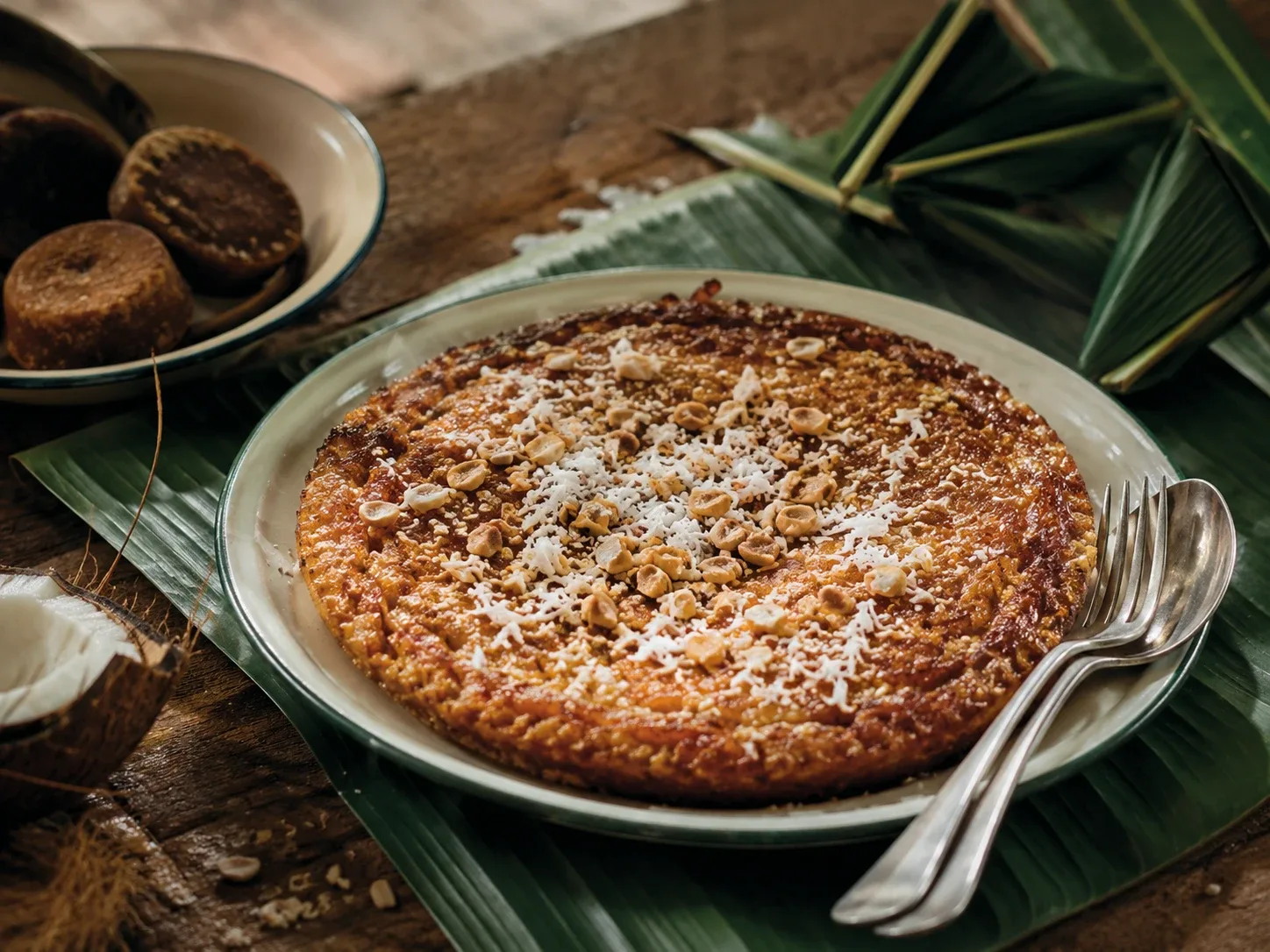
Bein Mont, the Jaggery Griddle Pancakeဘိန်းမုန့်
A thick rice-flour pancake raised on jaggery and crisped in a covered pan, showered with peanuts, coconut, and sesame — Lower Burma's teashop griddle mont.
 ၆
၆Street & Fritters · 25 min · Beginner
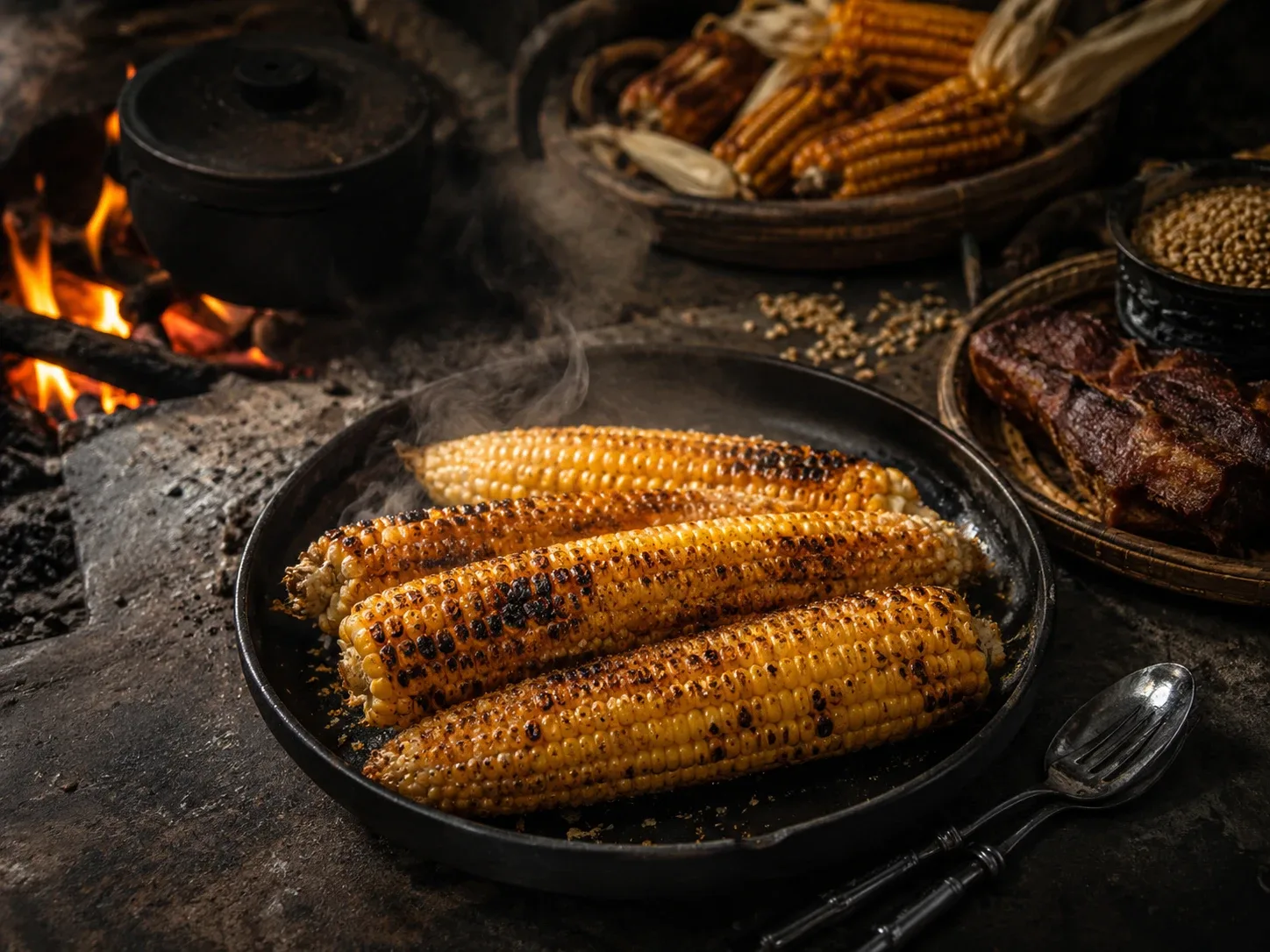
Fire-Roasted Corn with Chili Salt
Ears of corn roasted dark over open coals and rubbed with pounded chili salt — the taste of a Chin market morning, where maize is the mountain staple.
 ၃
၃Curries · 100 min · Intermediate
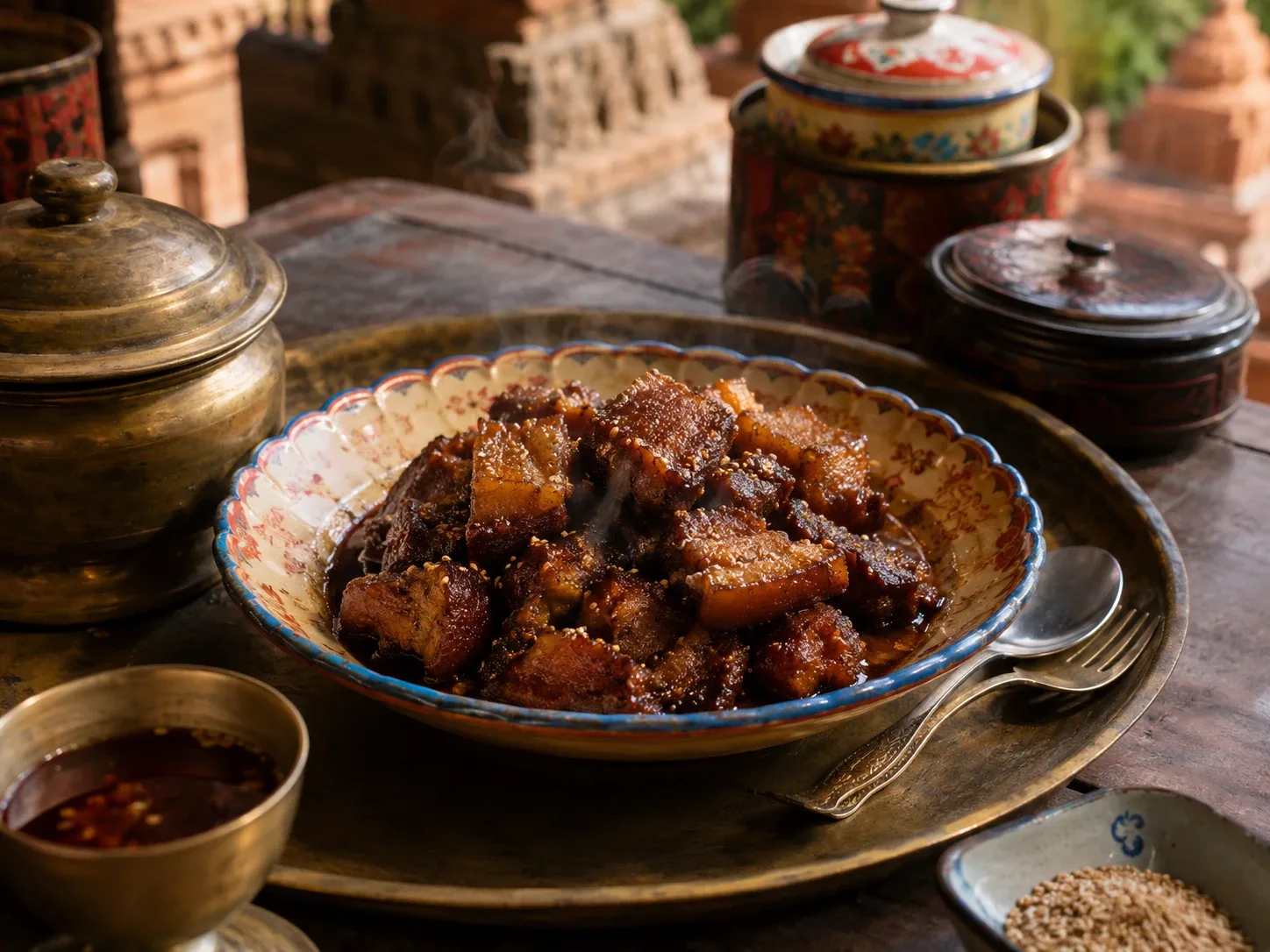
Wet Thar Pone Yay Gyi, Bagan Pork Curryပုန်းရည်ကြီးဝက်သား
Bagan's signature pork curry — pone yay gyi braised si pyan style until the oil returns, the sauce dark and sour with fermented horse-gram bean paste.