Pone Yay Gyi Thoke, Bagan's Black Bean Salad
ပုန်းရည်ကြီးသုပ်
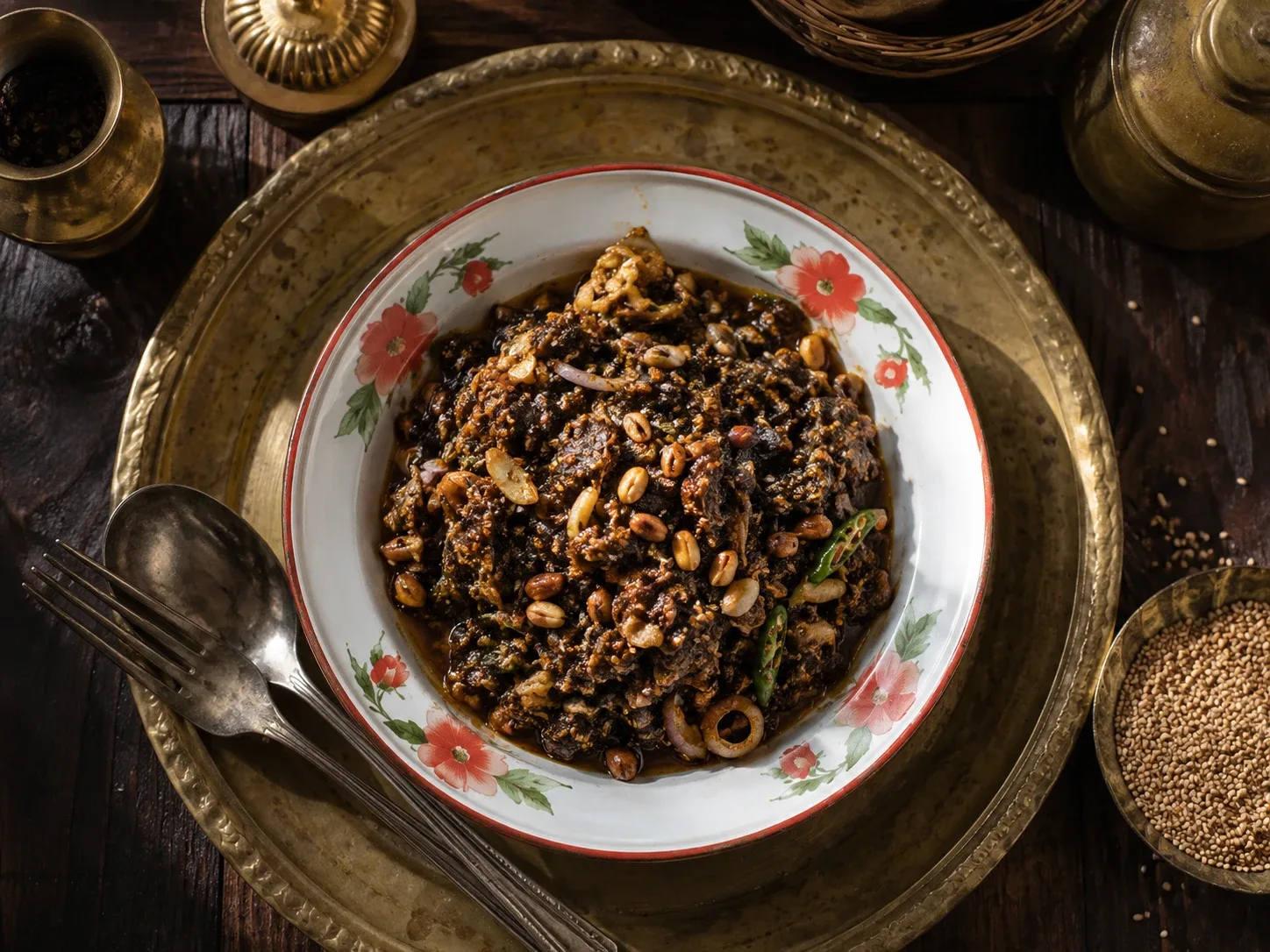
Bagan's signature salad of inky fermented horse gram paste tossed with shallots, crisp garlic, peanuts, and green chili — pungent, deep, made for hot rice.
By Burmese Cookbook Kitchen · July 9, 2026
အညာ Upper Burma & MandalayKonbaung, 1752–1885
 ၄
၄- Prep
- 15 min
- Cook
- 10 min
- Serves
- 4
- Level
- Beginner
Drive through the dry zone around Bagan and you will see the source of this dish drying in courtyards: horse gram beans, boiled down, fermented, and reduced to a black paste called pone yay gyi — literally "big pot liquid." The paste is Bagan's pantry signature the way ngapi belongs to the coast. Souvenir shops by the temples sell it in tubs to Burmese tourists, who would no more leave Bagan without it than leave Shan State without pickled tea.
Local sellers will tell you the paste goes back to the Bagan kings, and the horse gram fields are certainly old — but that is legend doing what legend does. The documented record of pone yay gyi as a traded specialty runs through the Konbaung era, when Upper Burma's market towns moved it up and down the Ayeyarwady, and it has been the taste of the region ever since.
The salad is the simplest and best introduction. There is no cooking beyond frying garlic; the craft is all in balance and in the hands. The paste comes out of the jar too dense and too fierce, so you loosen it with warm garlic oil, then massage it into raw shallot rings until they gloss black and give up a little juice — a thoke is kneaded, never tossed with a spoon. Crushed peanuts soften the ferment's edge, green chili sharpens it, and hot rice carries it. Pungent, savory, faintly sour — it is the dry zone in a bowl, and it converts nearly everyone who tries it beside a plate of rice.
Taste the paste before you salt anything — every pot of pone yay gyi carries its own saltiness, and the salad is seasoned around it, not on top of it.
မီးဖိုချောင်စကား · A word from the kitchen
Ingredientsပါဝင်ပစ္စည်း
Serves 4
Tap to check off as you gather
For the salad
- pone yay gyi (fermented horse gram paste) — the thick black paste sold in tubs and jars around Bagan; some jars run wetter — drain off surface liquid
- shallots — sliced into fine rings, plus 1 more for the frying oil
- roasted peanuts — coarsely crushed
- green chilies — sliced thin — bird's eye if you like Bagan-level heat
- lime juice — optional; some households add it, many consider the paste sour enough
For the fried garlic and oil
- peanut oil
- garlic — sliced into thin chips
To serve
- hot cooked jasmine rice
- cilantro — optional, for scattering
Methodချက်နည်း
Tap a numeral as you finish each step
Step 1: Fry the garlic chips
Heat the peanut oil in a small pan over medium-low heat and fry the garlic slices, stirring, until they turn the color of pale straw — 3 to 4 minutes. Lift them out the moment they color; they keep darkening off the heat, and bitter garlic will bully the whole salad. Keep every drop of the oil — it is now a seasoning, not a cooking medium.
Step 2: Soften a shallot in the warm oil
Drop the extra sliced shallot into the still-warm garlic oil and let it sit for a minute. This half-cooks it, pulling out sweetness while keeping the crunch — a small trick Bagan cooks use to round off the paste's sharp edges.
Step 3: Loosen the paste
Put the pone yay gyi in a wide bowl and work in a spoonful of the warm oil with the back of a spoon until it loosens to the texture of soft tapenade. Straight from the jar the paste is too dense to coat anything; the oil is what turns a condiment into a salad.
Step 4: Massage the salad together
Add the raw shallot rings, softened shallot with its oil, half the peanuts, and the green chilies. Toss with your fingers, squeezing gently, until every ring of shallot is glossed black. A thoke is massaged, never stirred — the light bruising lets the shallots drink in the paste. Taste, then add lime juice only if it needs lift.
Step 5: Finish and serve
Mound the salad in a small bowl, scatter over the remaining peanuts, the garlic chips, and cilantro if using. Serve beside hot rice — a little of the thoke folded into each spoonful of rice is how it is eaten in Bagan, as much relish as salad.
ခွက်ယောက် · The tools
Equipment
Stone mortar & pestle
ဆုံFor garlic-ginger paste, pounded dried shrimp fluff, and crushed peanuts — the blender lies about texture; the stone doesn’t.
Shop on Amazon →
Equipment links are Amazon affiliate links. As an Amazon Associate we earn from qualifying purchases, at no cost to you. Disclosure.
ဟင်းစုံ · Set the table
A Burmese meal is a spread
A thoke is part of a spread as often as it is a light meal on its own:
- Steamed riceထမင်းThe centre of the table — everything else is built around it.
- A curryဟင်းSlow-cooked until the oil returns — the richness the sides cut against.
- Balachaungဘလချောင်းThe crispy shrimp relish that lives on every Burmese table.
- Crispy fried shallotsကြက်သွန်ကြော်A spoonful of crunch and sweet shallot oil over anything.
- Toh sa yar & ngapi dipတို့စရာRaw and blanched vegetables with a pungent fish-paste dip — the fresh, bitter counterpoint.
Questions from the kitchen
Where do I find pone yay gyi outside Myanmar?
Burmese grocers and some Thai-Burmese border shops stock it in jars, sometimes labeled fermented soybean or bean paste from Bagan. Check that the ingredient is horse gram or beans and salt, nothing more. There is no convincing substitute — miso is sweeter and wetter, and the salad built on it is a different dish. If you cannot find it, cook something else and keep looking.
Is it supposed to taste this strong?
Yes. Pone yay gyi is tangy, salty, and faintly bitter all at once — closer to an olive paste than to any bean dish most cooks know. The shallots, peanuts, and rice are not garnishes; they are the dilution the paste is designed for. Judge the salad on a spoonful with rice, not on the paste alone.
Can I add meat to this?
Absolutely — pork simmered with the same paste is a famous Bagan dish in its own right, and shredded leftover pork folded through this salad is common home practice. Keep the additions warm and mild; the paste supplies all the seasoning the meat needs.
နောက်တစ်ခု · Cook next
Keep the wok hot
 ၄
၄Salads & Thoke · 30 min · Beginner
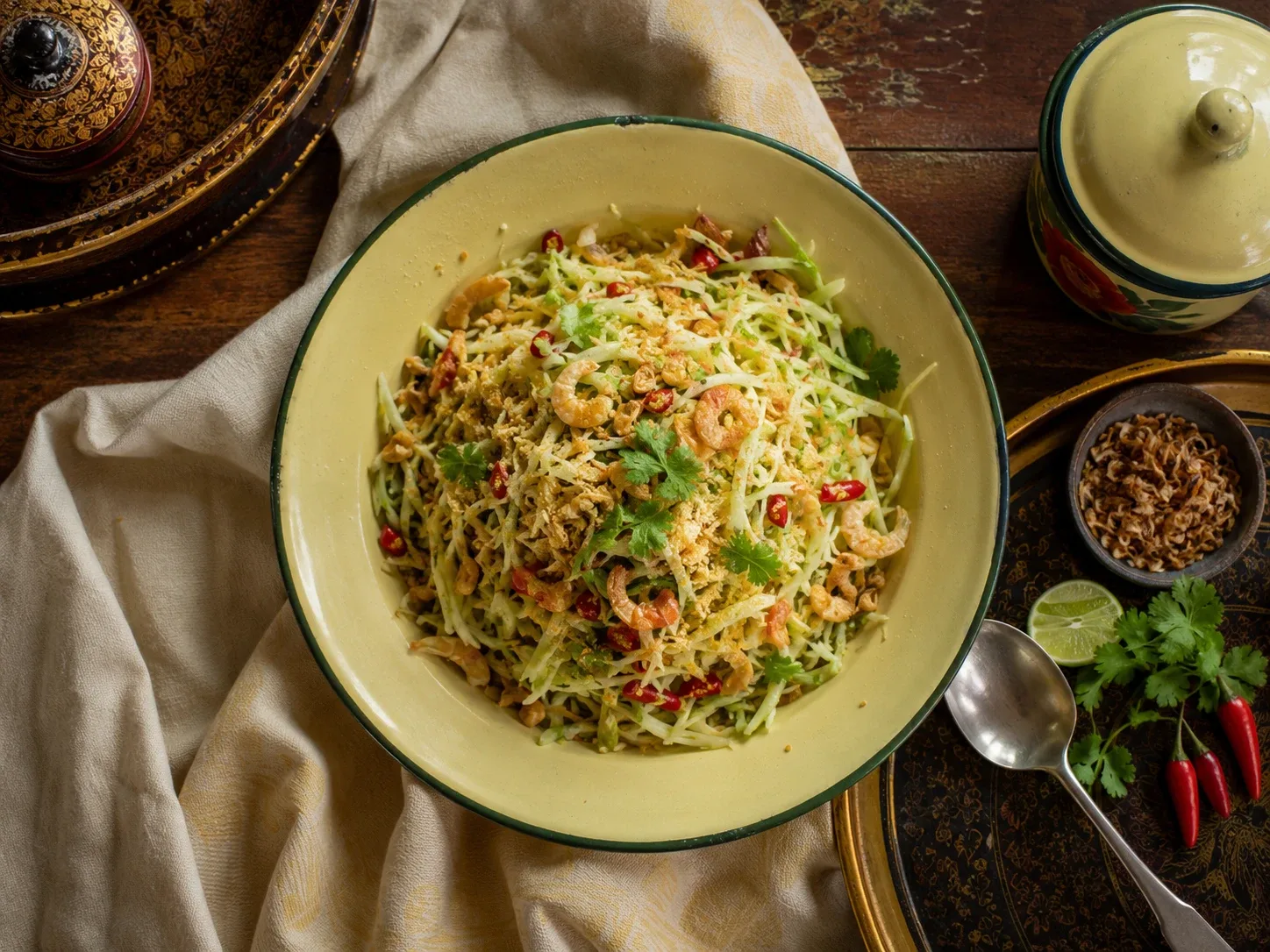
Thayet Thi Thanat, Green Mango Pickle-Saladသရက်သီးသနပ်
Tart, crunchy green-mango shreds dressed with fried garlic oil, chili, dried shrimp, and toasted chickpea flour — the sour thanat that cuts a heavy Burmese meal.
 ၄
၄Salads & Thoke · 20 min · Beginner
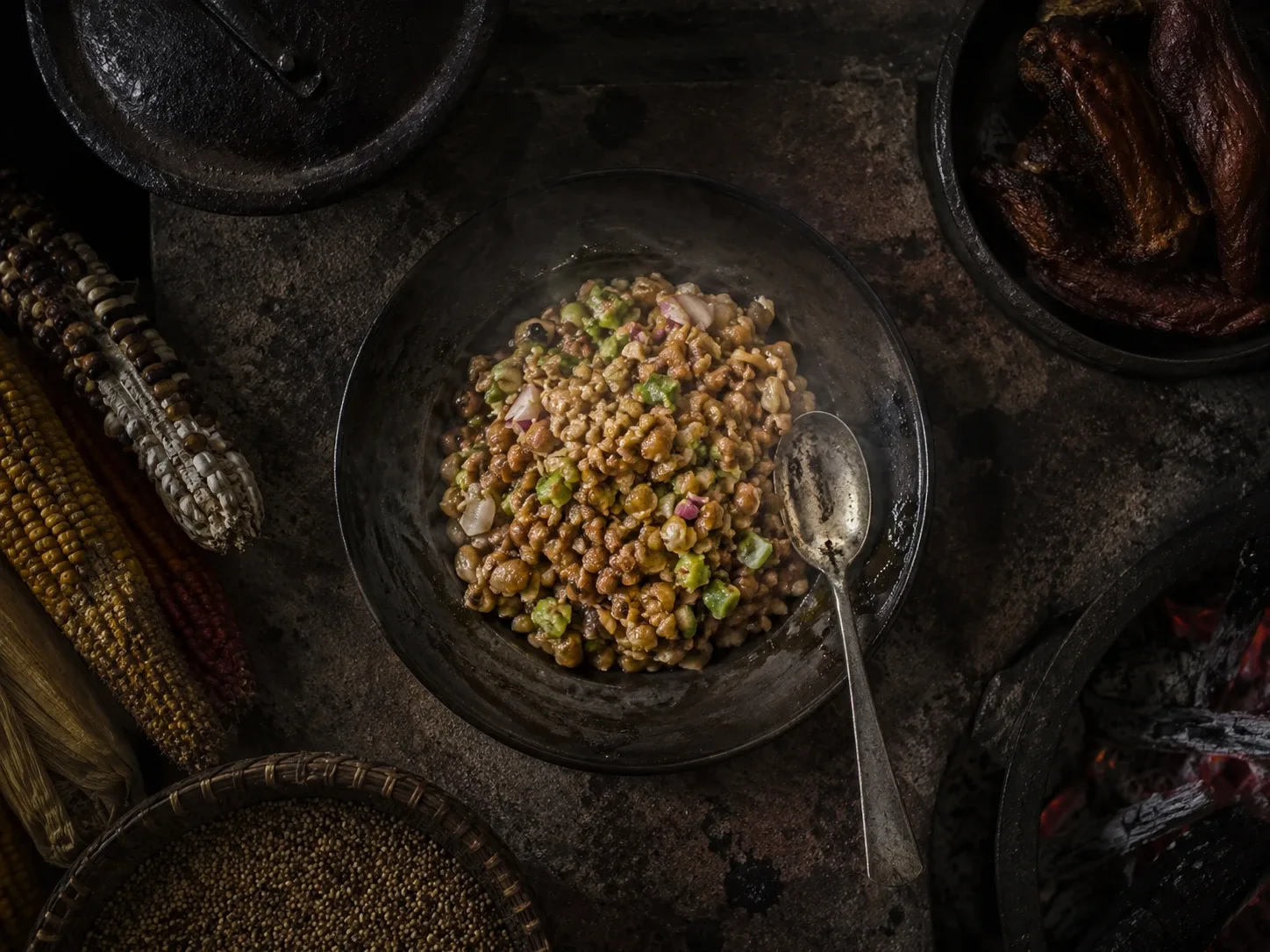
Bekang Rawt, Fermented Soybean Salad
Fermented soybeans pounded with shallots, green chili, and salt — the Chin hills' pungent everyday salad, a mountain cousin of natto, eaten with hot rice.
 ၇
၇Sweets & Mont · 105 min · Intermediate
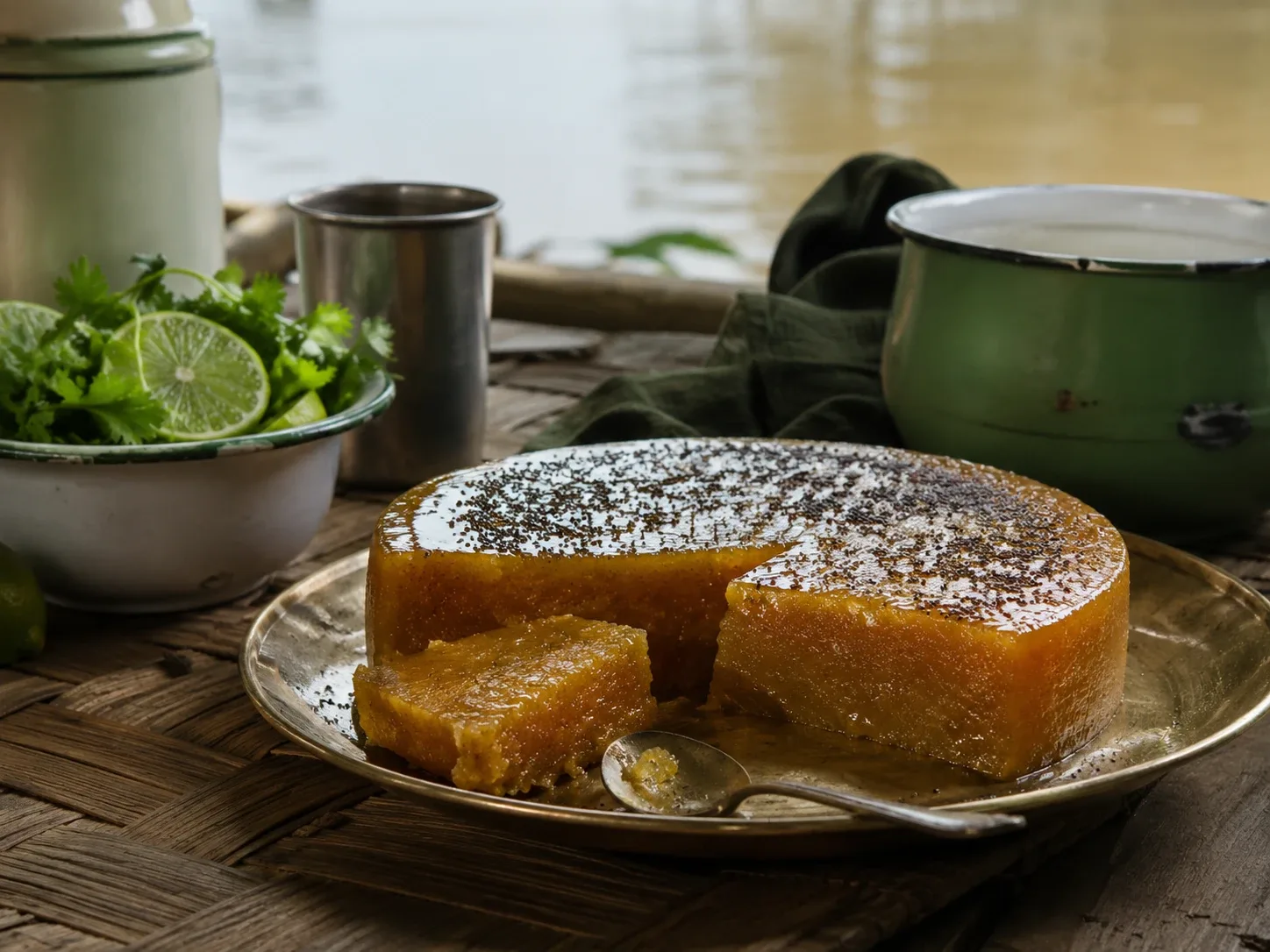
Pathein Halawa, the Delta's Gilded Sweetပုသိမ်ဟလဝါ
Pathein's famous glutinous-rice halawa — coconut milk, sugar, and ghee stirred patiently down to a dense, gleaming amber slab crowned with toasted poppy seeds.