Pyar Hin, the Chin Ash Curry
ပြာဟင်း
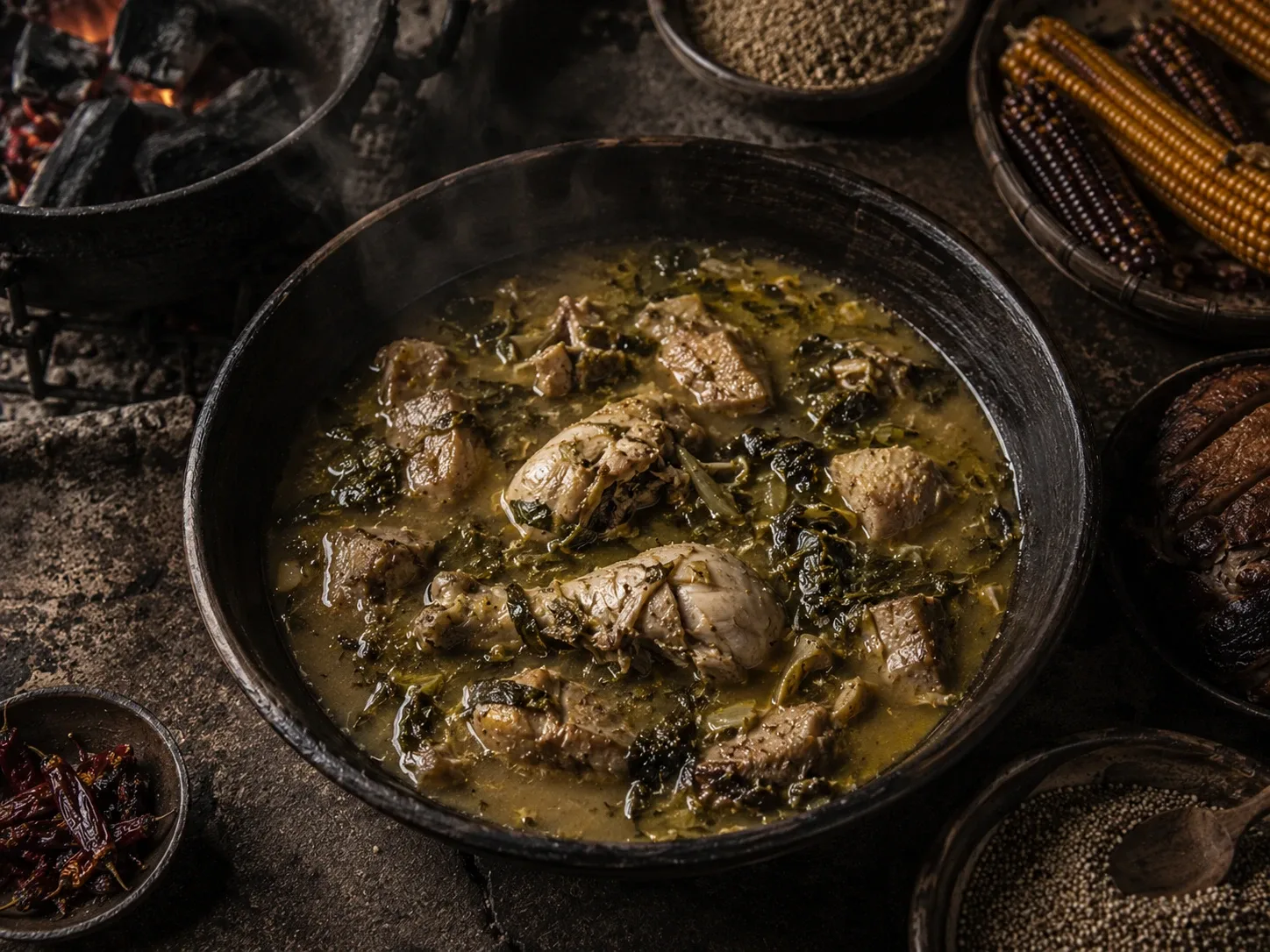
Southern Chin State's ash curry — chicken simmered in a filtered corn-cob ash lye with ginger and pumpkin leaves, the mineral-deep pot of Mindat and Kanpetlet.
By Burmese Cookbook Kitchen · July 9, 2026
ချင်း Chin HillsOpening & Diaspora, 1988–present
 ၃
၃- Prep
- 25 min
- Cook
- 70 min
- Serves
- 4
- Level
- Intermediate
Pyar hin means, with no poetry at all, ash curry — pya is ash, hin is curry — and it is exactly what it says. In the southern Chin hills around Mindat and Kanpetlet, cooks burn dried corn cobs, yam leaves, banana leaves, or millet stalks, steep the ash in water, filter it clear, and simmer meat in the resulting mild lye. No oil, no ngapi, no turmeric. The alkaline water tenderizes the meat, silks the greens, and seasons the pot with a mineral depth that salt alone cannot reach.
Honesty about the record: Chin cuisine is thinly written, and pyar hin enters the books only in recent decades, by way of tourism-board lists and travel writing about K'cho country. The technique is plainly far older — this is the same alkali chemistry that makes hominy from corn and slippery greens from potash across half the world, and the hills have been burning their fields' leavings forever — but how old is oral tradition's secret to keep. We label the era by the paper trail and let the essay say what the paper cannot.
Two things decide the pot. The fuel must be clean — food ash means plant matter and nothing else, ever. And the filtrate must be tasted before the meat goes in, because strength varies with every burn. Get those right and pyar hin is weeknight-simple: a lazy simmer, a handful of greens, salt at the end. It tastes like the hills sound — quiet, stony, and sure of itself.
Good ash water tastes faintly mineral, like water from a stone well. If a sip of the filtrate makes you wince, dilute it before the meat goes in — you cannot take lye back out of a curry.
မီးဖိုချောင်စကား · A word from the kitchen
Ingredientsပါဝင်ပစ္စည်း
Serves 4
Tap to check off as you gather
For the ash water
- corn-cob ash — loosely packed, from clean-burned dried corn cobs or untreated hardwood — never briquettes, painted wood, or anything glued
- water — hot from the kettle
- baking soda — the honest stand-in if you cannot burn your own ash — dissolve in 750 ml water and skip to step three
For the pot
- chicken — bone-in, chopped into large pieces; pork shoulder is equally traditional
- fresh ginger — sliced into coins
- garlic — smashed
- dried red chilies — left whole
- pumpkin leaves — or chard or spinach, roughly torn
- salt
Methodချက်နည်း
Tap a numeral as you finish each step
Step 1: Burn clean ash
Burn dried corn cobs — or untreated hardwood — down to a fine, grey-white ash and let it cool completely. You need about a cupful. This is the only step where the dish can go genuinely wrong, so be strict about the fuel; anything treated, glued, or briquetted has no business near a pot. Cooks without a fire should take the baking-soda road without shame.
Step 2: Steep and settle
Stir the ash into the hot water in a bowl and leave it to settle for 30 minutes. The soluble minerals — a mild, food-safe lye — pass into the water while the grit sinks. Patience here is the filtration doing half its work for free.
Step 3: Filter to clear amber
Pour the liquid off the settled ash through a cloth-lined sieve, twice if needed, until it runs clear and faintly amber. Taste a drop from a spoon — it should be mineral and slightly slippery, not harsh. Discard the sludge; the filtrate is the whole seasoning of the dish.
Step 4: Simmer the chicken in the ash water
Bring the filtrate to a lazy simmer with the ginger, garlic, and whole chilies, and slide in the chicken. Cook gently, partly lidded, for 40 to 45 minutes. The mild alkalinity tenderizes the meat and gives the broth a silky body no thickener could — this is the same chemistry that turns corn into hominy, pointed at a curry instead.
Step 5: Add the greens
Stir in the pumpkin leaves and simmer 10 minutes more. Alkaline water is kind to greens — they collapse silky and stay deep green instead of going army-drab. The pot should look like a loose, dark-jade stew around pale meat.
Step 6: Season with salt and judge
Add the salt, taste, and think. Right is savory with a pleasant mineral edge, the way good spring water tastes of its rocks; wrong is soapy. If it leans soapy, add a cup of plain water and ten more minutes — dilution is the only cure. Serve over rice, or beside a pot of plain boiled corn the way the hills do.
ခွက်ယောက် · The tools
Equipment
Carbon-steel wok
ဒယ်အိုးThe dai-oh — for si pyan curries, fritters, and every fried-noodle dish here. Carbon steel, seasoned dark, nothing fancy.
Shop on Amazon →Fine sieve / muslin
စစ်ခွက်For straining tamarind, pressing broth clear, and sifting flours — line it with muslin for the cleanest pour.
Shop on Amazon →Heavy kettle
ရေနွေးအိုးTeahouse tea starts with water at a hard rolling boil — and lots of it, all morning.
Shop on Amazon →
Equipment links are Amazon affiliate links. As an Amazon Associate we earn from qualifying purchases, at no cost to you. Disclosure.
ဟင်းစုံ · Set the table
A Burmese meal is a spread
A curry is the anchor, not the whole meal. Round out the table:
- Steamed riceထမင်းThe centre of the table — everything else is built around it.
- A light soupဟင်းချိုThe clear, sour broth sipped between mouthfuls of rice.
- Toh sa yar & ngapi dipတို့စရာRaw and blanched vegetables with a pungent fish-paste dip — the fresh, bitter counterpoint.
- Balachaungဘလချောင်းThe crispy shrimp relish that lives on every Burmese table.
- Crispy fried shallotsကြက်သွန်ကြော်A spoonful of crunch and sweet shallot oil over anything.
- A hand-tossed thokeအသုပ်A bright, sour salad to lift the whole spread.
Questions from the kitchen
Is cooking with ash actually safe?
Yes, with the same caveat every tradition that does it observes — the ash must come from clean-burned plant matter only. Filtered plant-ash lye is the oldest food alkali in the world; it makes hominy in the Americas, pretzels in Europe, and pyar hin in the Chin hills. Charcoal briquettes, treated lumber, and painted wood are poison, not pantry.
Can I just use baking soda?
You can, and the pot will be close — half a teaspoon in 750 ml of water gives roughly the right alkalinity. What you lose is the faint smoky, mineral undertone real corn-cob ash carries, which is the dish's signature. Call it the difference between well water and tap water and decide how far you want to walk.
What meat is traditional?
Chicken and pork are the everyday choices, and beef where cattle are kept. In the southern Chin hills the festival version is made with mithun, the semi-wild mountain gaur that is the region's measure of wealth — if a recipe ever calls for mithun, you are reading something written close to home.
Why did my curry turn bitter and harsh?
The ash water was too strong — too much ash for the water, or poured off before the sediment settled. Taste the filtrate before the meat goes in; it should be faintly mineral, never acrid. A too-strong batch can be diluted with plain water at any stage, so err weak and let the simmer concentrate it.
နောက်တစ်ခု · Cook next
Keep the wok hot
 ၃
၃Curries · 125 min · Intermediate
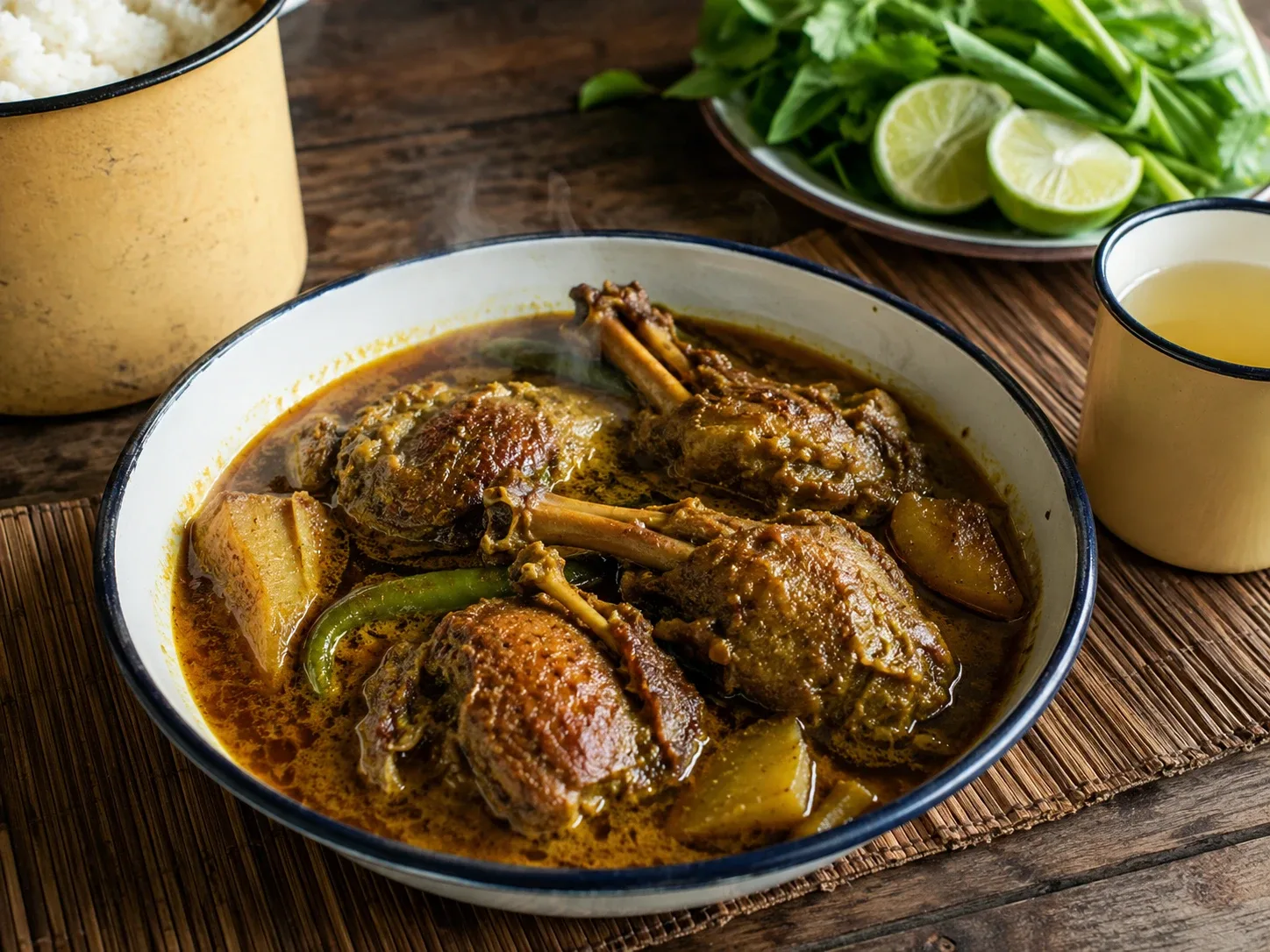
Be Thar Hin, Delta Duck Curryဘဲသားဟင်း
Duck curry from the Ayeyarwady, where ducks glean the rice paddies — browned in its own fat, then braised si pyan style until the amber oil returns.
 ၃
၃Curries · 45 min · Beginner
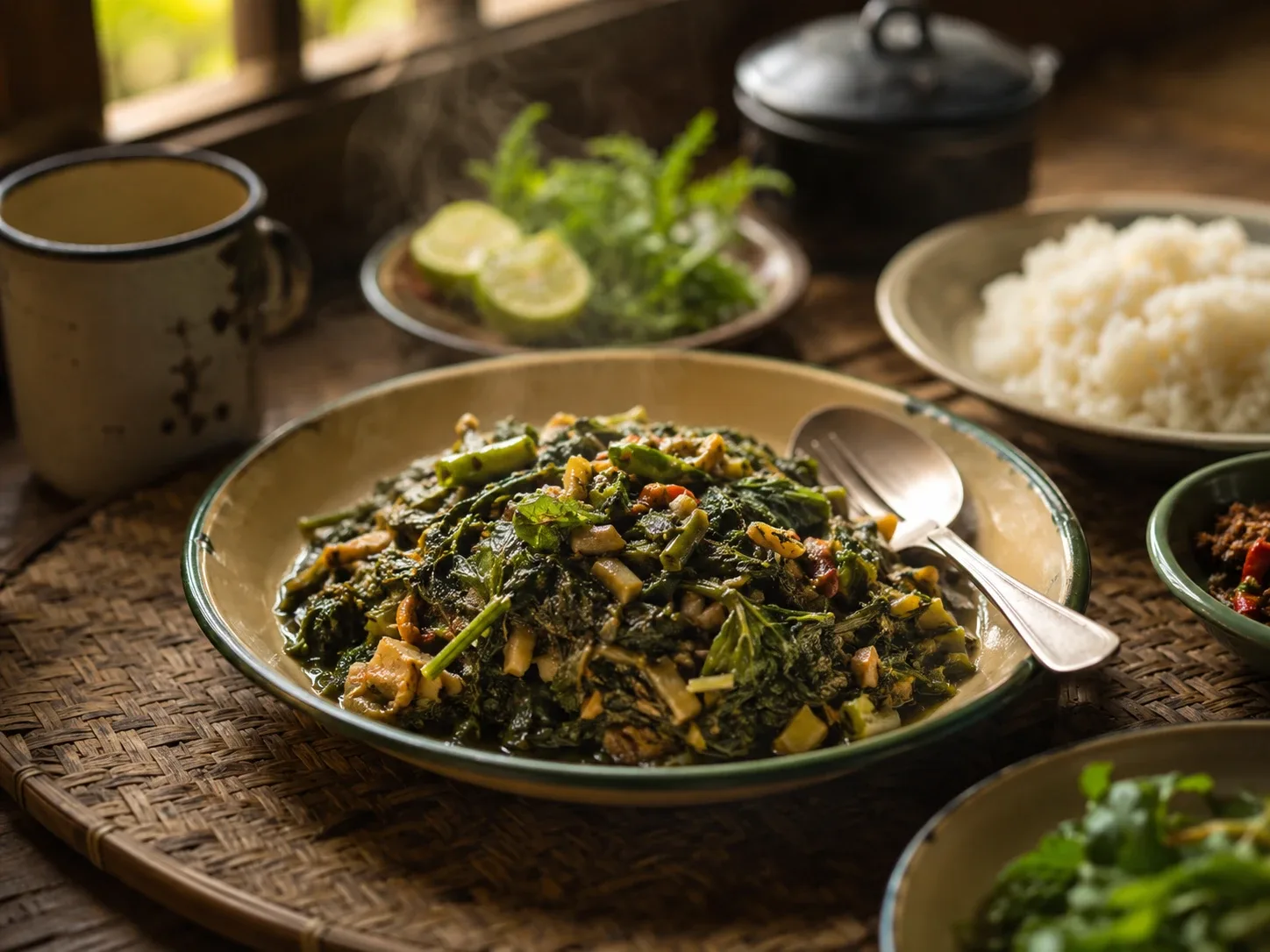
Chin Baung Kyaw, Sour Roselle Leavesချဉ်ပေါင်ကြော်
Lower Burma's beloved sour greens — roselle leaves fried down with bamboo shoots, dried shrimp, and green chili until they collapse into a dark tangy relish.
 ၁
၁Rice & Foundations · 210 min · Intermediate
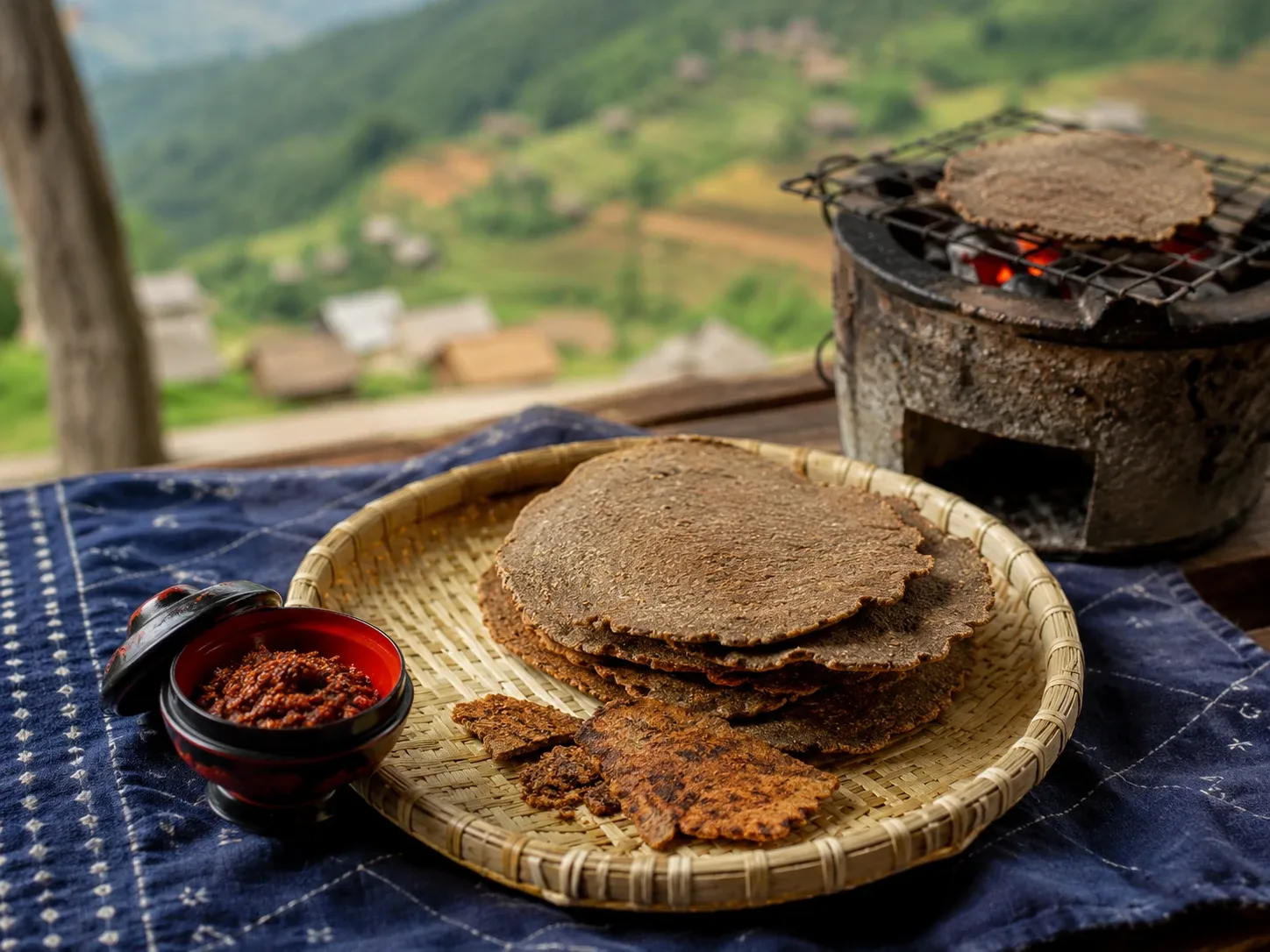
Tua Nao, Shan Fermented Soybean Discsပဲပုပ်
Shan State's seasoning backbone — soybeans boiled, fermented, pounded, and sun-dried into discs you toast over flame and crumble into everything.