Rakhine Fish Curry
ရခိုင်ငါးဟင်း
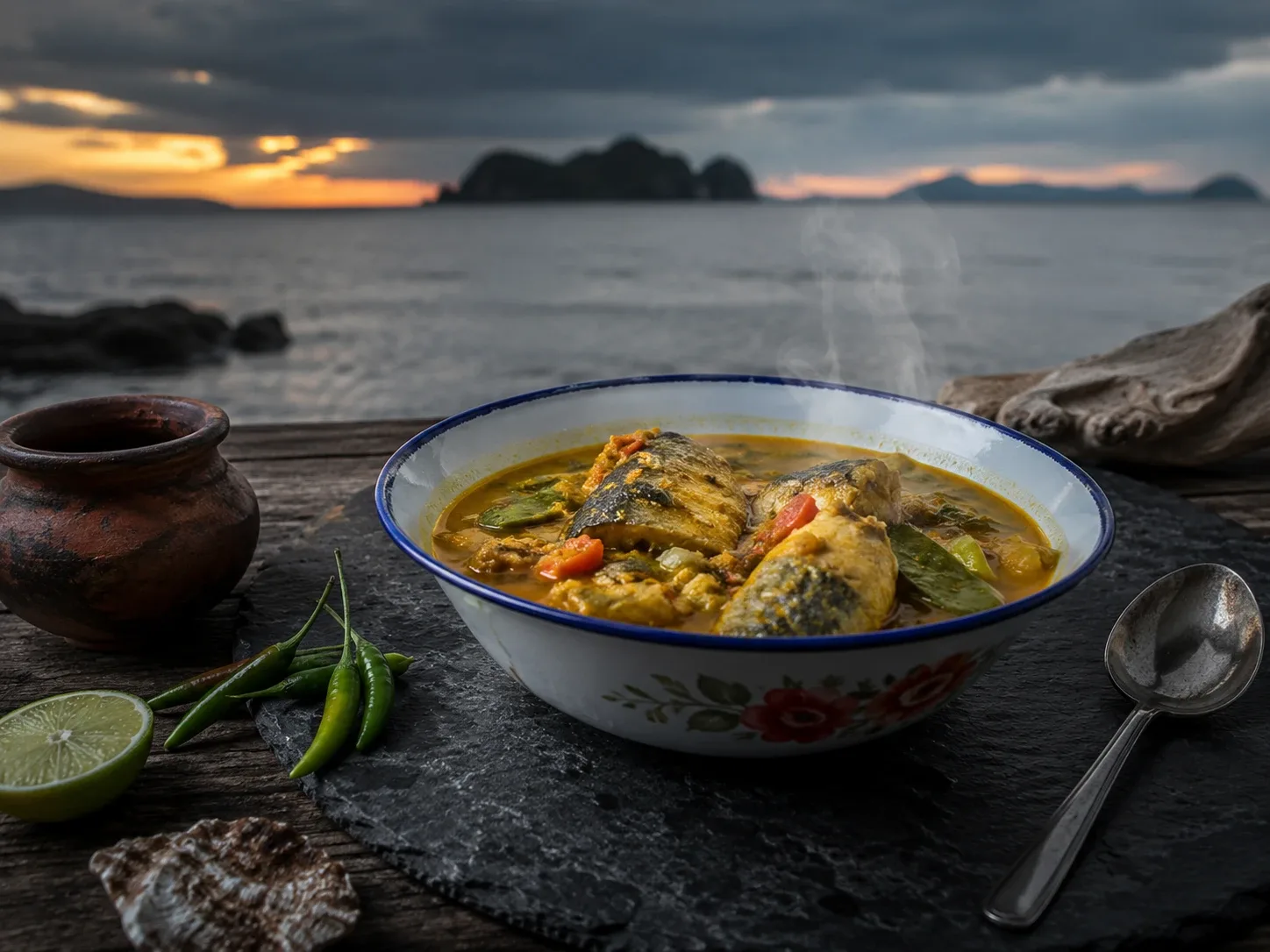
Rakhine's lean, fiery fish curry — fresh fish simmered with pounded green chilies, garlic, and turmeric in barely a spoonful of oil, the anti si pyan.
By Burmese Cookbook Kitchen · July 9, 2026
ရခိုင် Rakhine CoastMrauk-U, 1429–1785
 ၃
၃- Prep
- 20 min
- Cook
- 35 min
- Serves
- 4
- Level
- Beginner
Every food conversation in Myanmar eventually arrives at the same border: central Burmese cooking measures a curry's seriousness by its oil, and Rakhine cooking regards that entire idea as a misunderstanding. On the Bay of Bengal coast, where the Mrauk-U kingdom once traded rice and ngapi with Bengal and looked west while the heartland looked inland, the fish curry is lean by conviction. Two tablespoons of oil in this pot is not a dieter's compromise — it is the tradition, and Rakhine cooks will tell you, with some satisfaction, that their food needs no puddle to hide in.
What replaces the oil is heat and sourness. Green chilies go in pounded, whole, and — at the table, if you are eating with Rakhine people — raw on the side. Tamarind pulls the broth taut. The paste is barely fried, so the flavors stay sharp and green instead of sweet and rounded, and the fish simmers in something closer to a fierce broth than a gravy. Whether the courtiers of Mrauk-U ate this exact pot is not documented; the style — fish-first, low-fat, chili-forward — is what every account of Rakhine cooking agrees on, and this is its plainest expression.
The technique that matters is negative: do not stir. Shake the pot. Fish steaks moved with a spoon arrive as flakes; steaks rocked in their broth arrive whole, and in a curry this transparent there is nowhere for ragged fish to hide.
If the surface of a Rakhine fish curry glistens with returned oil, you have cooked a good curry from somewhere else. Here the shine comes from the broth itself — thin, hot, and unapologetic.
မီးဖိုချောင်စကား · A word from the kitchen
Ingredientsပါဝင်ပစ္စည်း
Serves 4
Tap to check off as you gather
For the fish
- firm white fish steaks — sea bass, snapper, or catfish — bone-in steaks hold together and feed the sauce
- turmeric
- salt
For the pot
- green chilies — four pounded, two left whole — a Rakhine cook would double both
- garlic
- onion — half pounded, half sliced into thin wedges
- fresh ginger
- paprika — for color more than heat — the green chilies do the real work
- peanut oil — this is the whole allowance; do not round up
- tomatoes — roughly chopped
- tamarind — soaked in 100 ml hot water and squeezed
- fish sauce
- water
- cilantro — roughly torn, to finish
Methodချက်နည်း
Tap a numeral as you finish each step
Step 1: Salt the fish
Rub the fish steaks with the turmeric and salt and let them sit while you build the rest of the pot. The salt firms the flesh so the steaks survive the simmer whole, and the turmeric does its quiet work against any fishiness — the same first move as everywhere in Myanmar, before the roads diverge.
Step 2: Pound the paste
Pound four green chilies, the garlic, ginger, and half the onion to a rough, wet paste in a mortar. Rough is correct — this paste dissolves into the broth rather than frying into a base, so you want texture that can melt, not a purée that clouds.
Step 3: Start the pot — gently
Warm the oil in a wide pot over medium heat and stir in the paste with the paprika for just two to three minutes, until it smells sharp and green rather than sweet and fried. Stop there. In a central-Burmese curry you would push on until the oil returns; the Rakhine move is to refuse that entire project and let water do what oil does elsewhere.
Step 4: Build the broth
Add the tomatoes, sliced onion, fish sauce, and water and bring to a lively simmer for ten minutes, until the tomatoes have slumped and the broth has taken color. Taste — it should already be savory and hot at the back of the throat before the fish arrives.
Step 5: Lay in the fish
Slide in the steaks in one layer with the two whole chilies, spoon broth over them, and simmer uncovered at a murmur for twelve to fifteen minutes. Do not stir — shake the pot by its handles now and then, the way fish curries are moved all along the coast, so the steaks stay whole and the broth reduces to a thin, clinging gravy.
Step 6: Sour and finish
Add the tamarind water in the last five minutes and taste for balance — sour just ahead of salt, chili unmistakable. Scatter the cilantro off the heat and serve straight from the pot with a great deal of rice, which is the only thing in the meal that will take your side.
ခွက်ယောက် · The tools
Equipment
Carbon-steel wok
ဒယ်အိုးThe dai-oh — for si pyan curries, fritters, and every fried-noodle dish here. Carbon steel, seasoned dark, nothing fancy.
Shop on Amazon →Stone mortar & pestle
ဆုံFor garlic-ginger paste, pounded dried shrimp fluff, and crushed peanuts — the blender lies about texture; the stone doesn’t.
Shop on Amazon →
Equipment links are Amazon affiliate links. As an Amazon Associate we earn from qualifying purchases, at no cost to you. Disclosure.
ဟင်းစုံ · Set the table
A Burmese meal is a spread
A curry is the anchor, not the whole meal. Round out the table:
- Steamed riceထမင်းThe centre of the table — everything else is built around it.
- A light soupဟင်းချိုThe clear, sour broth sipped between mouthfuls of rice.
- Toh sa yar & ngapi dipတို့စရာRaw and blanched vegetables with a pungent fish-paste dip — the fresh, bitter counterpoint.
- Balachaungဘလချောင်းThe crispy shrimp relish that lives on every Burmese table.
- Crispy fried shallotsကြက်သွန်ကြော်A spoonful of crunch and sweet shallot oil over anything.
- A hand-tossed thokeအသုပ်A bright, sour salad to lift the whole spread.
Questions from the kitchen
How is this different from the delta fish curry (nga hin)?
Technique, not ingredients. The delta curry fries its paste in generous oil until the oil returns — si pyan — and wears that amber slick as a badge. The Rakhine pot uses a fraction of the oil, barely fries the paste, and finishes thin, sour, and much hotter. Same fish, opposite doctrine; cook both and you will understand western Myanmar's favorite argument.
What fish should I actually buy?
Bone-in steaks of any firm white fish — sea bass, snapper, tilapia, catfish. The bones matter more than the species; they hold the steaks together and enrich the thin broth. Delicate fillets like sole disintegrate, and oily fish like mackerel fight the tamarind.
Can I make it milder without ruining it?
Halve the pounded chilies and keep the whole ones, which perfume more than they burn. But leave the black-pepper edge of fish sauce and the full tamarind — a mild Rakhine curry survives; a flat one was never Rakhine to begin with.
နောက်တစ်ခု · Cook next
Keep the wok hot
 ၃
၃Curries · 125 min · Intermediate
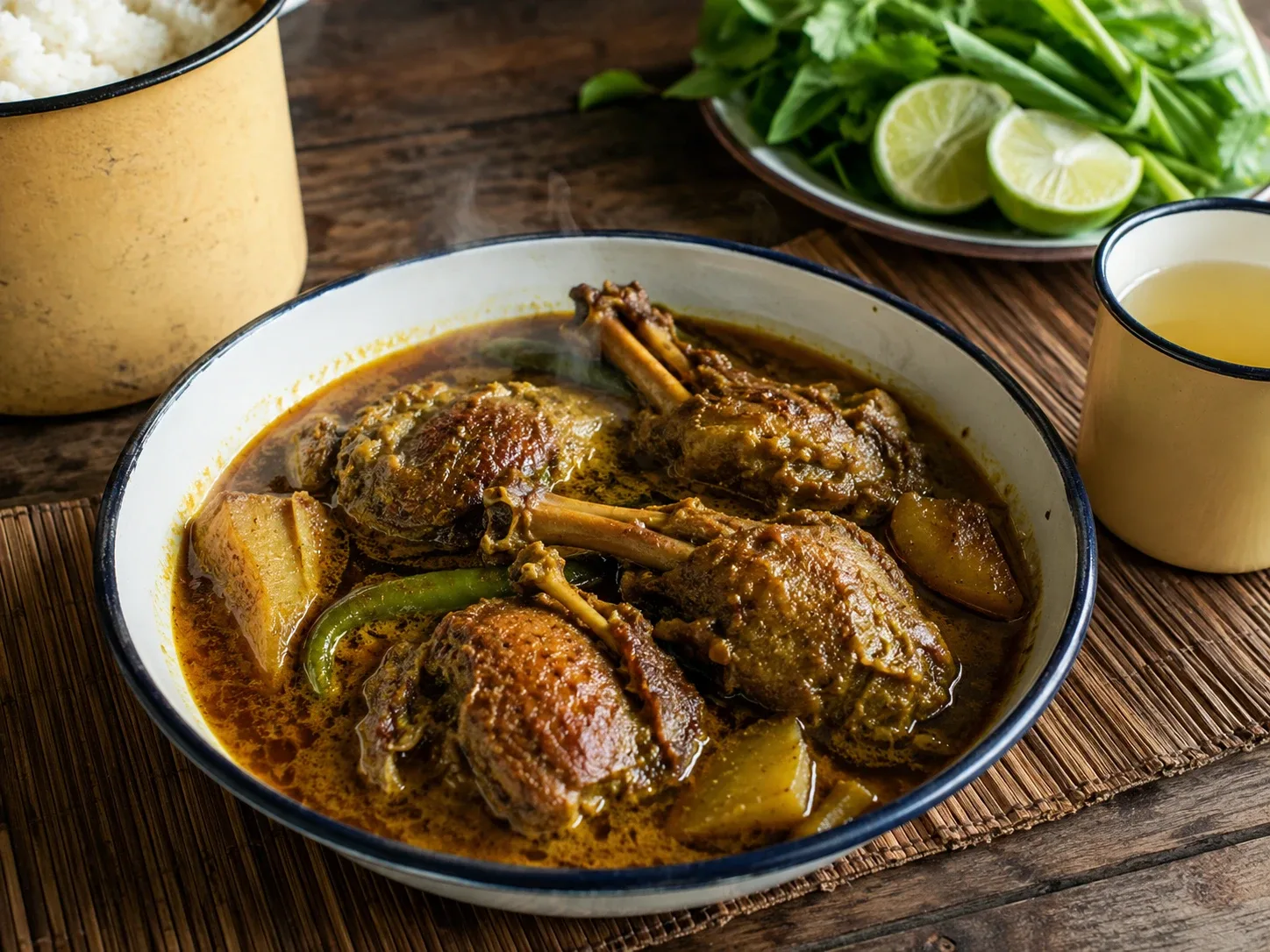
Be Thar Hin, Delta Duck Curryဘဲသားဟင်း
Duck curry from the Ayeyarwady, where ducks glean the rice paddies — browned in its own fat, then braised si pyan style until the amber oil returns.
 ၃
၃Curries · 45 min · Beginner
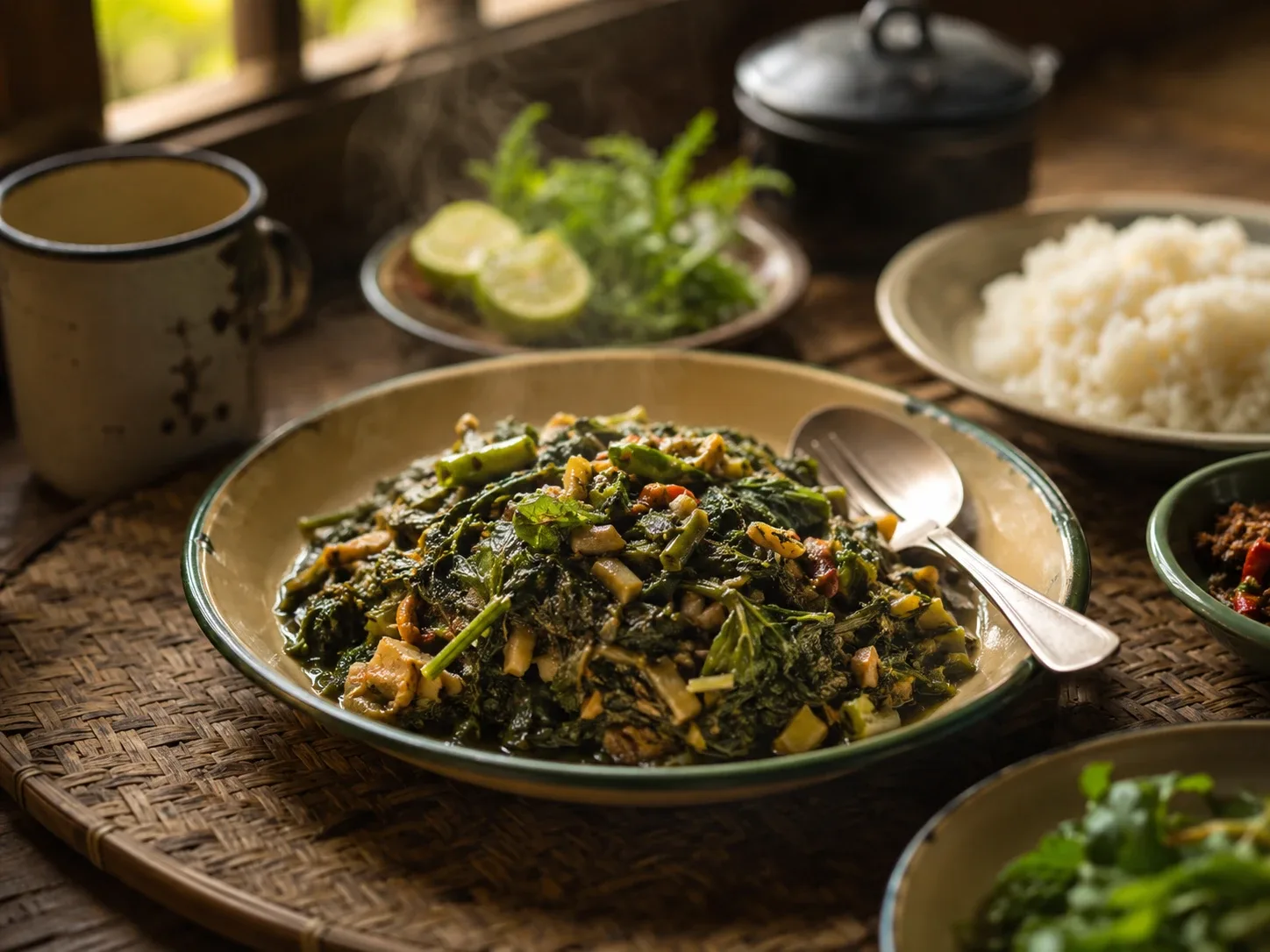
Chin Baung Kyaw, Sour Roselle Leavesချဉ်ပေါင်ကြော်
Lower Burma's beloved sour greens — roselle leaves fried down with bamboo shoots, dried shrimp, and green chili until they collapse into a dark tangy relish.
 ၇
၇Sweets & Mont · 105 min · Intermediate
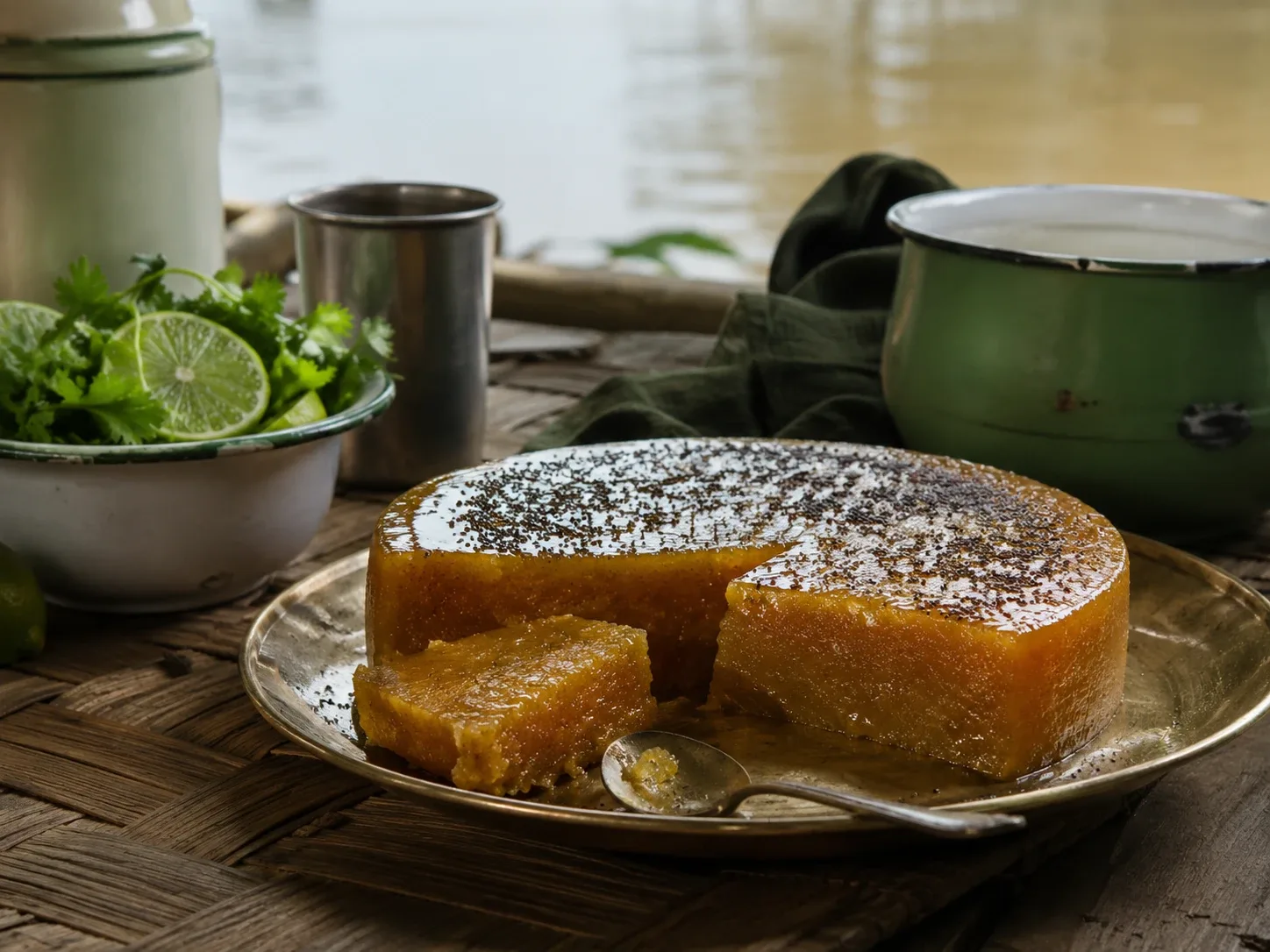
Pathein Halawa, the Delta's Gilded Sweetပုသိမ်ဟလဝါ
Pathein's famous glutinous-rice halawa — coconut milk, sugar, and ghee stirred patiently down to a dense, gleaming amber slab crowned with toasted poppy seeds.