Wet Thar Dote Htoe, the Mandalay Skewer Pot
ဝက်သားဒုတ်ထိုး
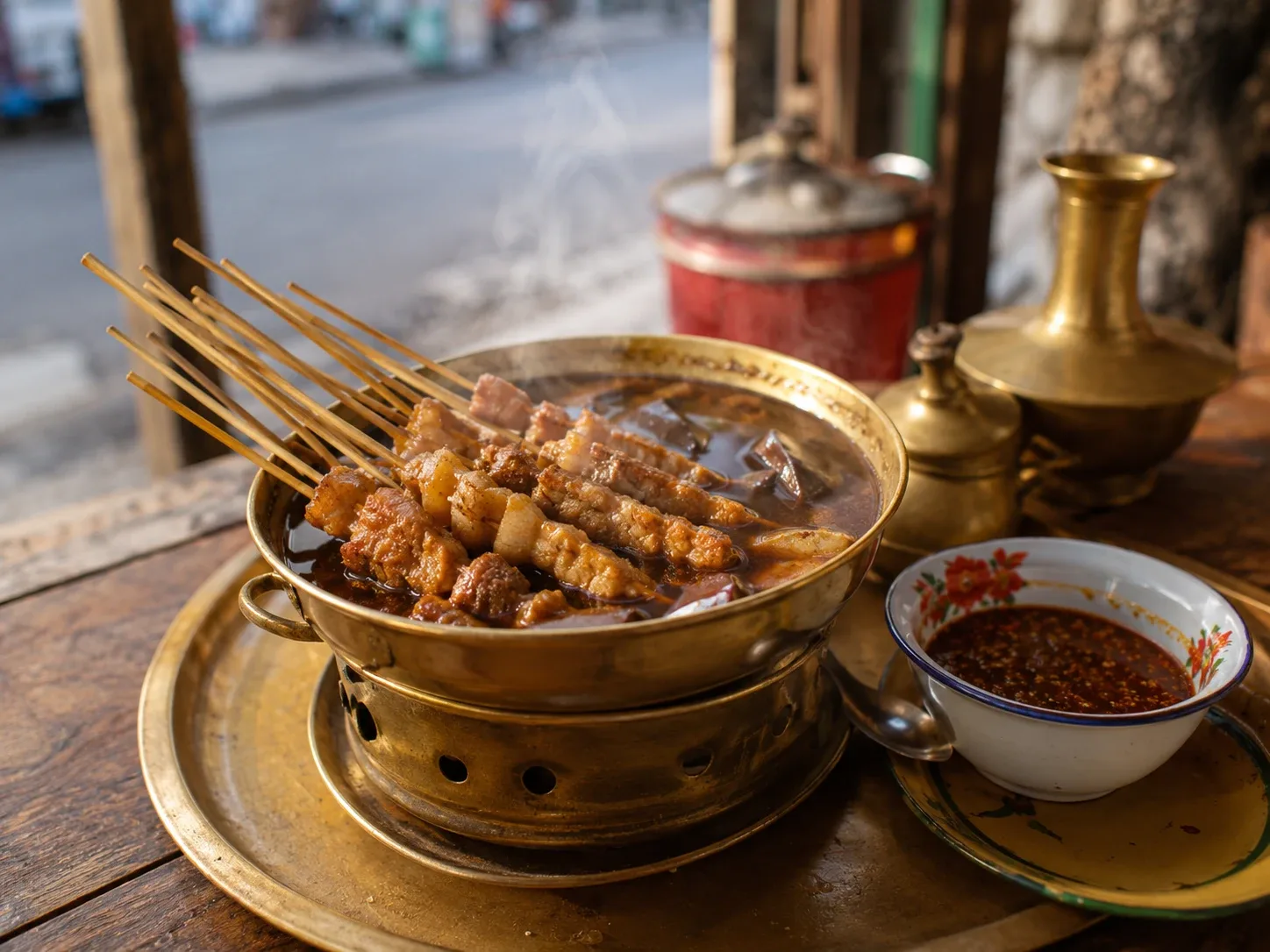
Mandalay's street-corner skewer pot — pork simmered on bamboo sticks in a dark anise-scented broth, eaten around the pot with a sharp tamarind-chili dip.
By Burmese Cookbook Kitchen · July 9, 2026
အညာ Upper Burma & MandalayOpening & Diaspora, 1988–present
 ၆
၆- Prep
- 30 min
- Cook
- 90 min
- Serves
- 6
- Level
- Intermediate
Evening in Mandalay collects around low pots. Squat stools, a ring of knees, steam rising off a dark broth bristling with bamboo sticks — this is wet thar dote htoe, "pork poked on sticks," and the ritual is as fixed as any liturgy. You pull a skewer, dunk it in tamarind-chili sauce, eat, and drop the stick in your pile; when you stand up, the vendor counts the sticks and that is your bill.
The dish is honest modern history, not ancient legend. Master-broth stick pots came south with Chinese cooking — Mandalay's Yunnanese connection runs deep — and the city made the idea Burmese over the last several decades: fish sauce and jaggery in the simmer, star anise from the bazaar, a dip built on tamarind rather than vinegar alone. Today dote htoe stalls run from Mandalay's night corners to Yangon, but the pot's home accent is upcountry, and everyone says so.
At home the recipe is a gentle braise wearing street clothes. Blanch the pork so the broth stays clear, keep each cut on its own stick so nothing overcooks, and simmer patiently — belly and shoulder take their time, liver takes almost none. The dip should bite harder than you think polite, because the broth is doing all the soothing. And whatever you do, keep the broth: strained and frozen, it becomes the mother of every future pot, which is exactly how the old stalls got so good.
The broth is the business and the skewers are the stock — never pour it away. Strained and frozen, it starts your next pot a year ahead of a new one.
မီးဖိုချောင်စကား · A word from the kitchen
Ingredientsပါဝင်ပစ္စည်း
Serves 6
Tap to check off as you gather
For the pot
- pork belly — skin on, cut into 3 cm pieces
- pork shoulder — cut into 3 cm pieces
- pork liver or offal of choice — optional but true to the stalls — ears, tongue, and intestine all belong
- bamboo skewers — soaked in water for 30 minutes so they survive the simmer
For the broth
- water
- soy sauce — light soy; add 1 tbsp dark soy if you have it, for the mahogany color
- fish sauce
- palm sugar (jaggery)
- garlic — smashed
- fresh ginger — sliced into coins
- star anise
- cinnamon
- white pepper
For the tamarind-chili dip
- tamarind — pulp, soaked in 100 ml hot water and strained
- fish sauce
- palm sugar (jaggery)
- green chilies — minced, or 1 tbsp chili flakes for a smokier heat
- garlic — minced
- cilantro — chopped
Methodချက်နည်း
Tap a numeral as you finish each step
Step 1: Blanch the pork
Cover all the pork (and offal, if using) with cold water, bring to a boil, simmer 3 minutes, then drain and rinse. This throws off the scum that would otherwise cloud the master broth — and a dote htoe broth is meant to be dark, clear, and worth keeping.
Step 2: Build the broth
In a wide, shallow pot — the shape matters, the skewers must stand at an angle — combine the water, soy sauce, fish sauce, jaggery, garlic, ginger, star anise, cinnamon, and white pepper. Bring to a simmer and let it get acquainted with itself for 10 minutes before anything else goes in.
Step 3: Skewer the meat
Thread three or four pieces of one kind of meat onto each soaked skewer — one cut per stick, never mixed. At the stalls each variety has its own zone in the pot and its own price; keeping cuts separate also means you can pull each one out exactly when it is done.
Step 4: Simmer low and uncovered
Stand the skewers in the broth, leaning them against the pot's side with the sticks up, and simmer very gently, uncovered, for 60 to 75 minutes. Belly and shoulder want the full time; liver wants only the last 15 minutes or it turns to chalk. Top up with hot water if the broth drops below the meat.
Step 5: Make the dip while it simmers
Stir the strained tamarind with the fish sauce, jaggery, chilies, and garlic until the sugar dissolves, then add the cilantro. It should taste sharper than seems polite — sour and hot first, sweet behind. The broth is rich and the meat is rich; the dip is the argument that keeps you eating.
Step 6: Serve around the pot
Bring the pot to the table — or better, seat everyone around the stove — with the dip alongside. Each person pulls skewers straight from the broth, dunks, and eats, keeping their spent sticks in a pile. At a Mandalay stall the bill is the stick count; at home the pile is just the scoreboard.
ခွက်ယောက် · The tools
Equipment
Frying spider
ဇကာLift fritters clean out of the oil and drain them fast, before the crust turns soft. The street cook’s third hand.
Shop on Amazon →
Equipment links are Amazon affiliate links. As an Amazon Associate we earn from qualifying purchases, at no cost to you. Disclosure.
ဟင်းစုံ · Set the table
A Burmese meal is a spread
Snack-shop fare, eaten with the usual scatter of condiments:
- Si chet, chili oilဆီချက်The fragrant red oil every household keeps by the stove.
- Crispy fried shallotsကြက်သွန်ကြော်A spoonful of crunch and sweet shallot oil over anything.
- Teahouse milk teaလက်ဖက်ရည်How a Burmese meal ends — sweet, strong, and slow.
Questions from the kitchen
What does dote htoe actually mean?
Roughly "poked with a stick" — dote is a short stick or baton, htoe is to poke or skewer. The name describes the eating method, not the recipe, which is why you will also meet the same word around other stick-food stalls in Myanmar.
Do I have to use offal?
No — belly and shoulder alone make an honest home pot, and this recipe treats offal as optional. But know that at the stalls the variety is the point: ears for chew, tongue for silk, intestine for the brave. If you try one, liver is the gentlest start, added late so it stays tender.
Can I reuse the broth?
You should — that is the tradition. Strain it, chill it, lift the fat cap, and freeze. Each pot cooked in it leaves the broth deeper, which is why the oldest stalls guard theirs like an heirloom. Boil it hard for a few minutes each time you revive it.
Is this the same as Japanese oden or Chinese lu wei?
They are cousins — all master-broth street pots with Chinese roots. The Mandalay version speaks Burmese: fish sauce and jaggery in the broth, a tamarind-chili dip instead of mustard, and the squat-stool, pay-per-stick ritual that makes it a social event as much as a meal.
နောက်တစ်ခု · Cook next
Keep the wok hot
 ၆
၆Street & Fritters · 40 min · Intermediate
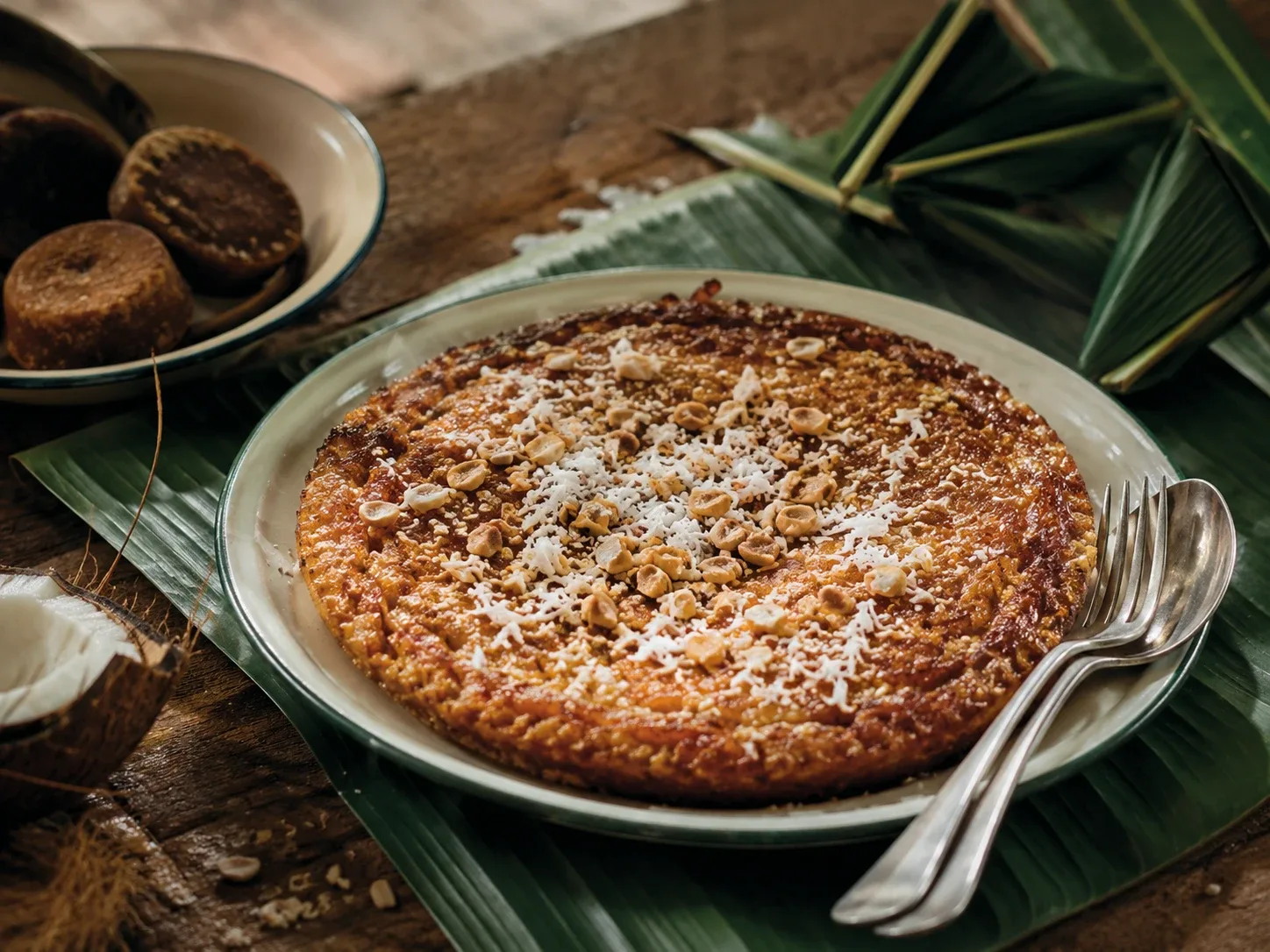
Bein Mont, the Jaggery Griddle Pancakeဘိန်းမုန့်
A thick rice-flour pancake raised on jaggery and crisped in a covered pan, showered with peanuts, coconut, and sesame — Lower Burma's teashop griddle mont.
 ၆
၆Street & Fritters · 25 min · Beginner
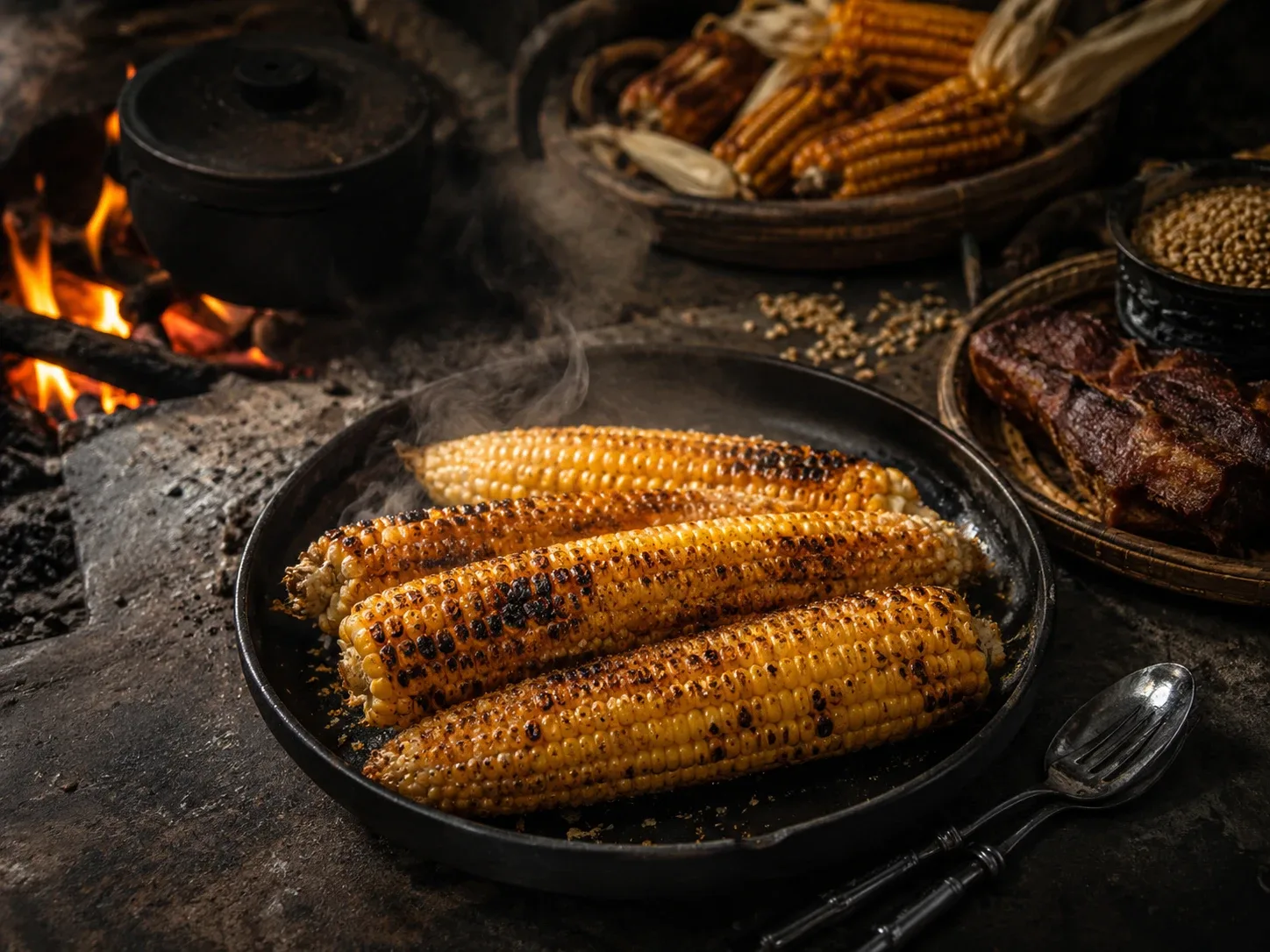
Fire-Roasted Corn with Chili Salt
Ears of corn roasted dark over open coals and rubbed with pounded chili salt — the taste of a Chin market morning, where maize is the mountain staple.
 ၂
၂Noodles & Mohinga · 50 min · Beginner
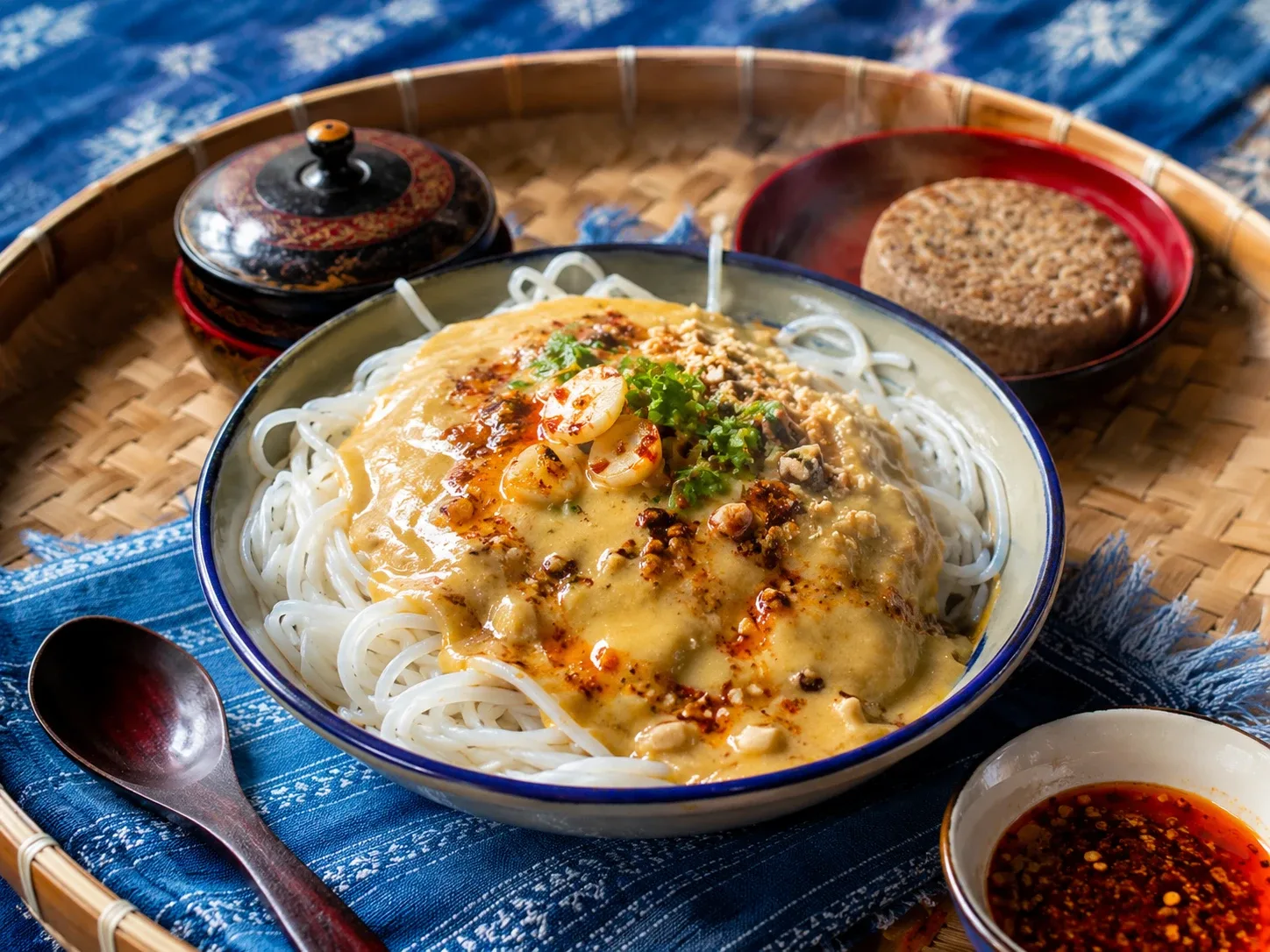
Tofu Nway, Warm Shan Tofu Noodlesတိုဟူးနွေး
Warm chickpea tofu that never sets, ladled like golden custard over rice noodles with garlic oil, chili, and peanuts — Shan State's great breakfast.