Inle Nga Hin, Intha Tomato Fish Curry
အင်းလေးငါးဟင်း
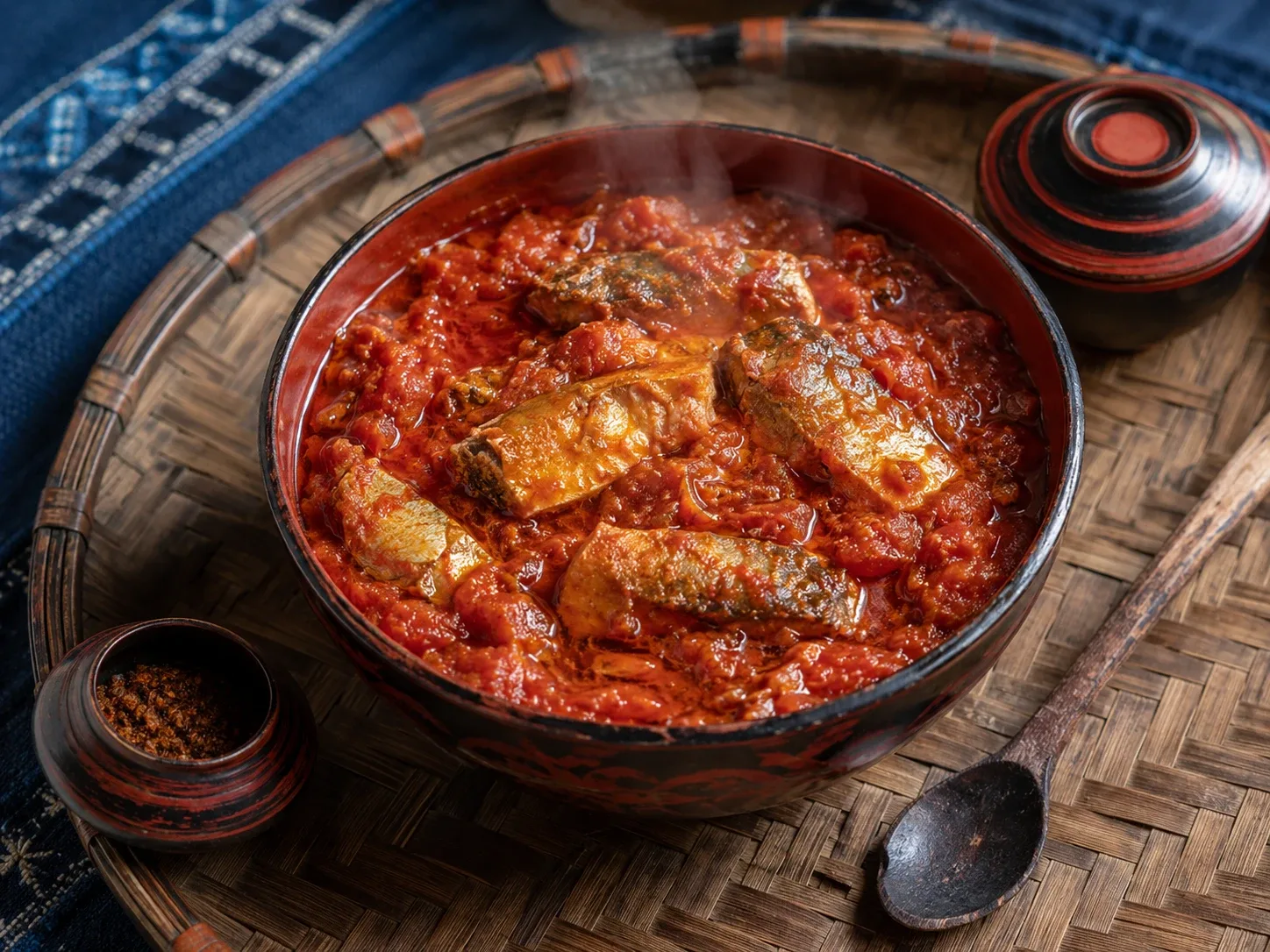
The Intha fish curry of Inle Lake — freshwater fish simmered in a jammy mass of floating-garden tomatoes until the oil returns red and glowing.
By Burmese Cookbook Kitchen · July 9, 2026
ရှမ်း Shan StateBritish Burma, 1826–1948
 ၃
၃- Prep
- 25 min
- Cook
- 45 min
- Serves
- 4
- Level
- Intermediate
From a boat on Inle Lake you can watch both halves of this curry growing at once: fish traps in the open water, and tomatoes — hectares of them — ripening on the floating gardens, beds of woven water hyacinth and lake-bed silt staked in place with bamboo. The Intha, "sons of the lake," farm the water itself, and their signature curry says so: freshwater fish laid into a mass of tomatoes cooked down until the oil returns through them, red and glowing.
Regional variants of nga hin are everywhere in Myanmar, and we say honestly that this is one — but it is a genuinely distinct one. The floating gardens turned decisively to tomatoes during the colonial era, when new roads and the railway to Shwenyaung gave lake farmers a cash crop and lowland markets a taste for hill tomatoes, and the Intha kitchen followed its own harvest. The seasoning tells the same story: a little soy sauce alongside the fish sauce, the hills and the lowlands meeting in one pan.
Everything depends on patience with the tomatoes. They must pass through sauce and arrive at jam, frying gently in the spice base until the oil separates — si pyan, the returning of the oil, the proof the water is gone and the flavor is concentrated. Give that stage its full twenty minutes and the fish needs only ten more. Rice, cilantro, and a slit green chili finish one of the prettiest curries in the country.
The tomatoes are not a sauce ingredient here — they are the second main ingredient. If your pile of chopped tomatoes does not look excessive, it is not Intha enough.
မီးဖိုချောင်စကား · A word from the kitchen
Ingredientsပါဝင်ပစ္စည်း
Serves 4
Tap to check off as you gather
For the fish
- freshwater fish fillets — tilapia, trout, or carp — Inle cooks use the lake's own nga hpein
- turmeric
- salt
- fish sauce
For the curry
- ripe tomatoes — chopped rough, skins and all — the ripest you can find
- shallots — finely chopped
- garlic — minced
- fresh ginger — minced
- turmeric
- paprika — for color and gentle warmth, the Burmese way
- peanut oil
- soy sauce — light — the Shan hills' seasoning hand, alongside the fish sauce
- green chilies — slit lengthwise
- cilantro
- spring onions — cut into short lengths
Methodချက်နည်း
Tap a numeral as you finish each step
Step 1: Season the fish
Cut the fillets into generous chunks and rub them with the turmeric, salt, and fish sauce. Let them sit while you build the curry — the turmeric does its quiet work of taming any muddy lake-fish edge, the same trick mohinga uses downstream.
Step 2: Fry the base
Heat the peanut oil in a wide, heavy pan and fry the shallots, garlic, and ginger with the turmeric and paprika over medium heat until soft, golden at the edges, and sweet-smelling — 6 to 8 minutes. Do not rush; a pale base makes a thin curry no quantity of tomato can rescue.
Step 3: Cook the tomatoes down hard
Add all the tomatoes with a pinch of salt and cook, stirring now and then and crushing them against the pan, for 20 to 25 minutes. This is the heart of the dish. They must collapse past sauce into jam — thick, brick-red, and starting to fry rather than simmer — before the fish goes anywhere near the pan.
Step 4: Wait for the oil to return
Keep cooking until the oil separates and pools red and glossy at the edges — the si pyan moment every Burmese curry answers to. If the pan looks dry rather than shiny, loosen it with a spoonful of water and keep going; the oil will come back when the tomatoes have truly surrendered.
Step 5: Lay in the fish
Nestle the fish chunks into the tomato jam with the green chilies, spooning some of it over each piece. Add the soy sauce and 100 ml of water, cover, and cook gently for 8 to 10 minutes, shaking the pan rather than stirring — stirred fish is broken fish.
Step 6: Rest and finish
Pull the pan off the heat and let it stand five minutes, uncovered, so the fish firms and the flavors knit. Taste for salt, then shower with cilantro and spring onions and serve with plain rice — which is not a side here so much as the other half of the dish.
ခွက်ယောက် · The tools
Equipment
Carbon-steel wok
ဒယ်အိုးThe dai-oh — for si pyan curries, fritters, and every fried-noodle dish here. Carbon steel, seasoned dark, nothing fancy.
Shop on Amazon →
Equipment links are Amazon affiliate links. As an Amazon Associate we earn from qualifying purchases, at no cost to you. Disclosure.
ဟင်းစုံ · Set the table
A Burmese meal is a spread
A curry is the anchor, not the whole meal. Round out the table:
- Steamed riceထမင်းThe centre of the table — everything else is built around it.
- A light soupဟင်းချိုThe clear, sour broth sipped between mouthfuls of rice.
- Toh sa yar & ngapi dipတို့စရာRaw and blanched vegetables with a pungent fish-paste dip — the fresh, bitter counterpoint.
- Balachaungဘလချောင်းThe crispy shrimp relish that lives on every Burmese table.
- Crispy fried shallotsကြက်သွန်ကြော်A spoonful of crunch and sweet shallot oil over anything.
- A hand-tossed thokeအသုပ်A bright, sour salad to lift the whole spread.
Questions from the kitchen
What fish is closest to the real thing?
Inle cooks use lake carp and the small native nga hpein. Tilapia is honestly the nearest fish most of us can buy — it is farmed all over the lake now — and trout works beautifully. Any mild, firm freshwater fillet is right; strong oily sea fish argue with the tomato.
Can I use canned tomatoes?
In the depths of winter, yes — a 700 g can of whole tomatoes, drained a little and crushed by hand. You lose the fresh brightness the floating gardens are famous for, so sharpen the finished curry with a squeeze of lime. In tomato season, only fresh.
How is this different from other Burmese fish curries?
Proportion and seasoning. A lowland nga hin builds on onion and oil with tomato in a supporting role; the Intha version inverts it, with tomato as co-star and a lighter, soy-touched hand that tastes of the Shan hills around the lake. It is brighter, sweeter, and less oily than its delta cousins.
နောက်တစ်ခု · Cook next
Keep the wok hot
 ၃
၃Curries · 125 min · Intermediate
Be Thar Hin, Delta Duck Curryဘဲသားဟင်း
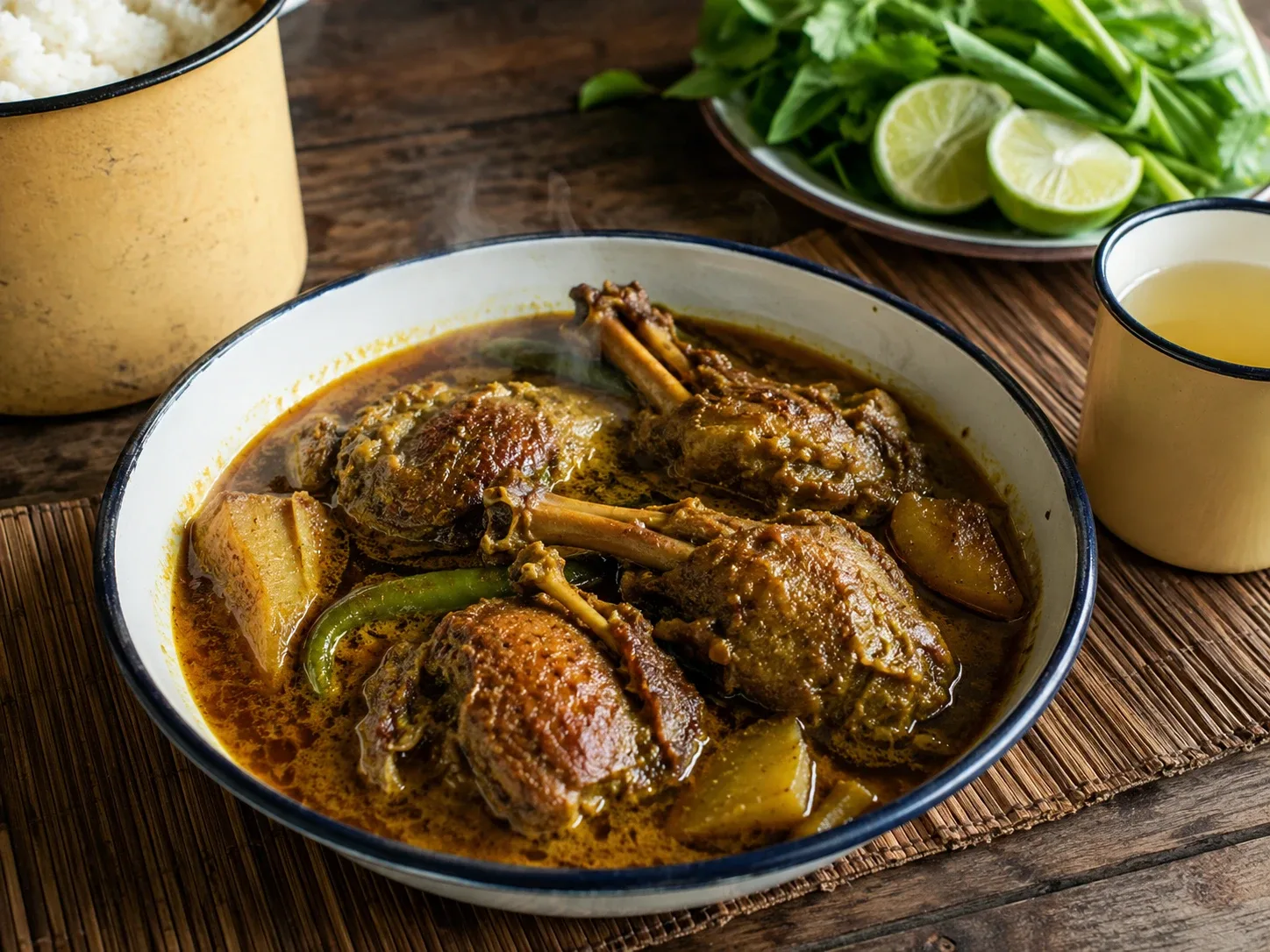
Duck curry from the Ayeyarwady, where ducks glean the rice paddies — browned in its own fat, then braised si pyan style until the amber oil returns.
 ၃
၃Curries · 45 min · Beginner
Chin Baung Kyaw, Sour Roselle Leavesချဉ်ပေါင်ကြော်
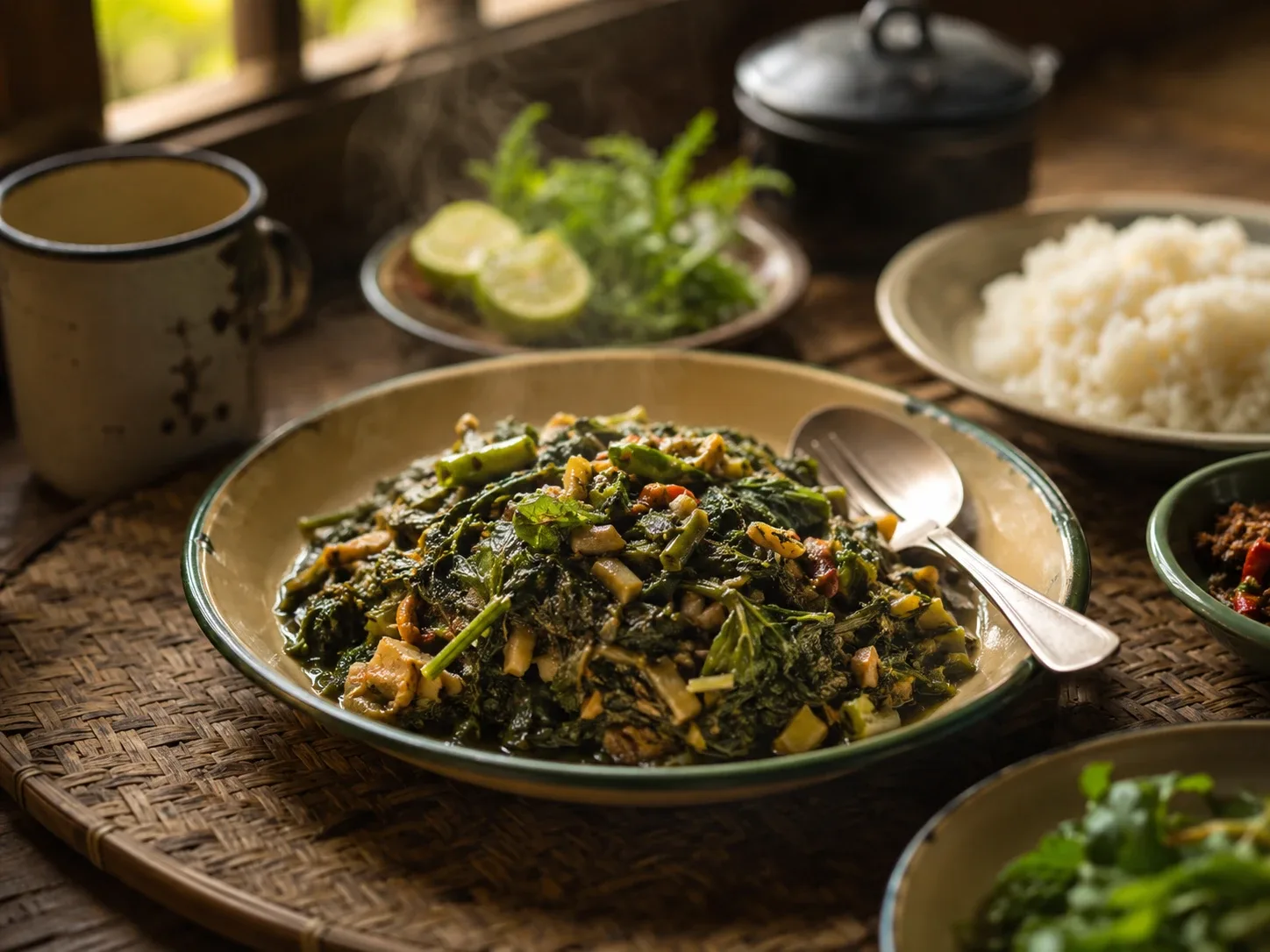
Lower Burma's beloved sour greens — roselle leaves fried down with bamboo shoots, dried shrimp, and green chili until they collapse into a dark tangy relish.
 ၂
၂Noodles & Mohinga · 50 min · Beginner
Tofu Nway, Warm Shan Tofu Noodlesတိုဟူးနွေး
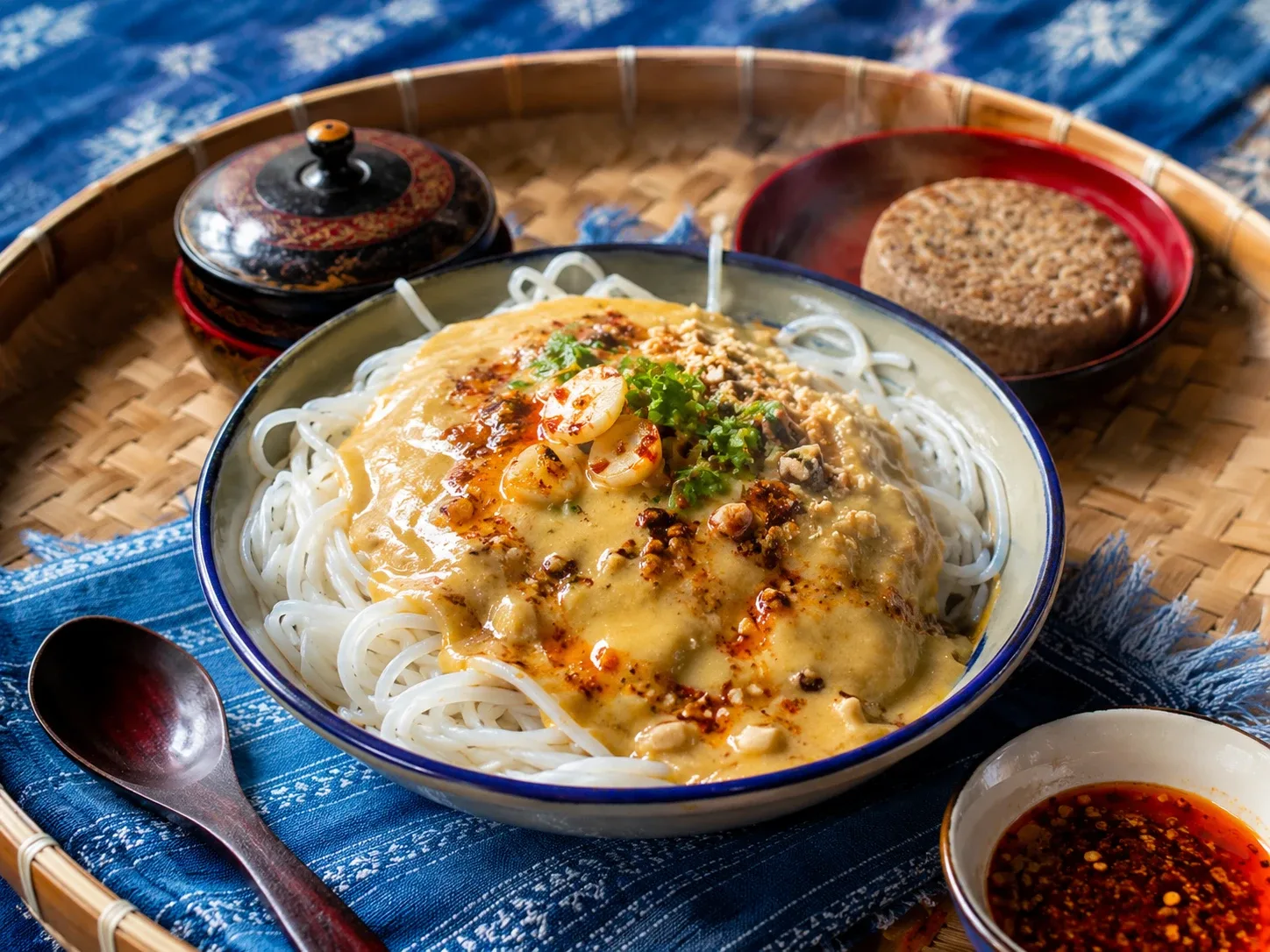
Warm chickpea tofu that never sets, ladled like golden custard over rice noodles with garlic oil, chili, and peanuts — Shan State's great breakfast.