Kachin Pounded Beef
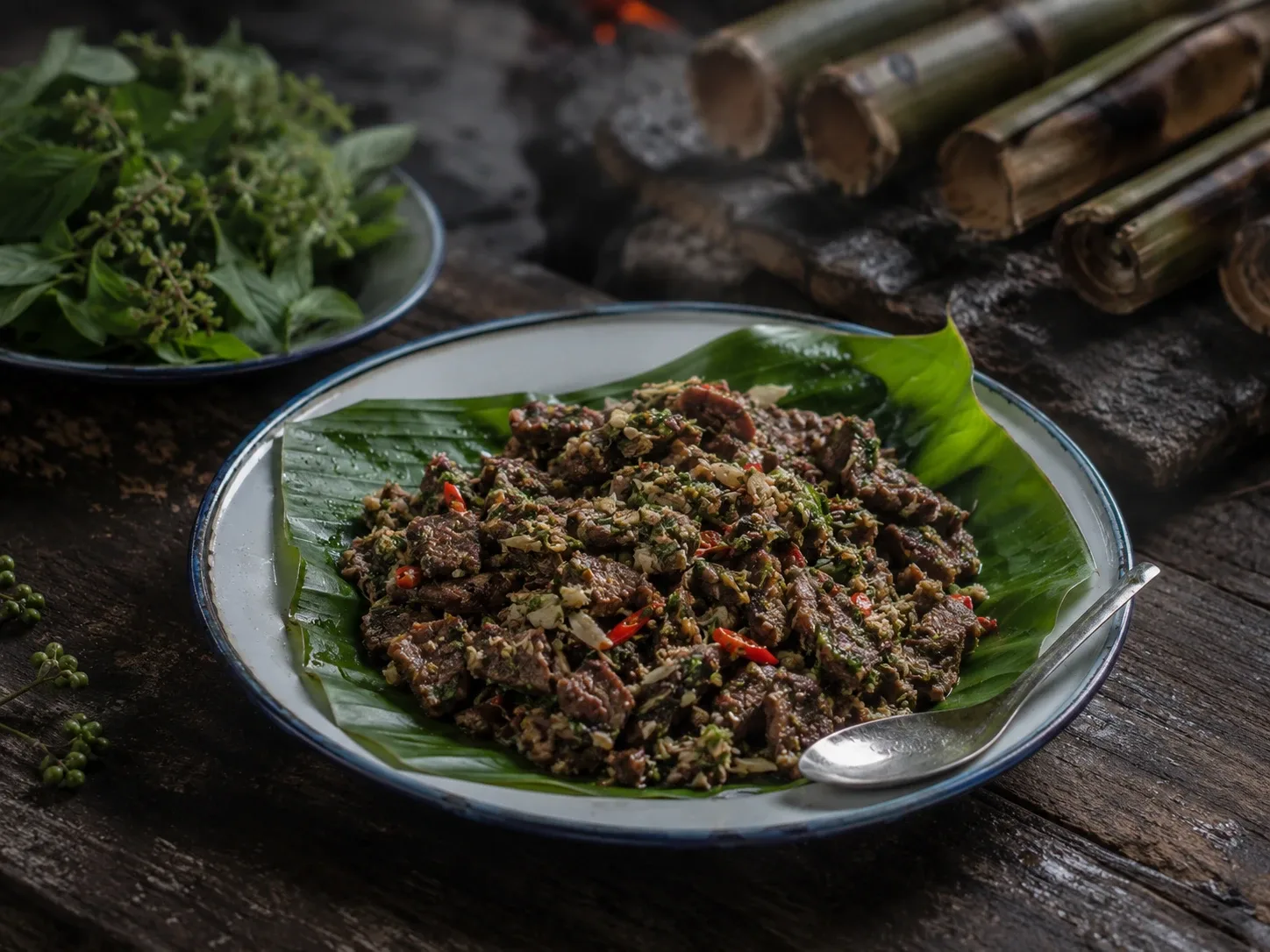
Seared beef pounded in a mortar with ginger, chilies, herbs, and numbing Sichuan pepper — the nearly oil-free Kachin dry curry that made the mortar famous.
By Burmese Cookbook Kitchen · July 9, 2026
ကချင် Kachin StateOpening & Diaspora, 1988–present
 ၃
၃- Prep
- 25 min
- Cook
- 25 min
- Serves
- 4
- Level
- Intermediate
Every Kachin kitchen runs on a mortar the way a lowland kitchen runs on a wok, and no dish states the case like pounded beef. Seared meat goes into the stone with garlic, ginger, chilies, and toasted Sichuan pepper, and is beaten — patiently, in batches — into ragged threads that drink up the aromatics. A brief hot toss to fuse and catch the edges, a shower of raw herbs, and it is done: intensely savory, faintly smoky, lip-tinglingly warm, and made with a single teaspoon of oil. On the menus of Kachin restaurants it appears simply as pounded beef, and it is usually the first thing the table fights over.
Its home form is older and leaner still: beef dried in strips over the hearth fire, then pounded back to tenderness when needed — preservation and seasoning collapsed into one gesture. That hill practice was noted by colonial-era observers, but the dish as the country now knows it entered the national record in the 2000s, when Kachin restaurants in Yangon and Mandalay turned the mortar's output into some of the most ordered food in Myanmar. We date it to that arrival, honestly, and let the older hearth version stand behind it.
Two rules decide the outcome. Sear hard — the char is a stand-in for hearth smoke, and a pale sear makes a polite, forgettable plate. And pound in stages, adding the beef a handful at a time, until the fibers surrender. The mortar is slower than the blade. That is not a flaw; it is the recipe.
Pound with intent — the beef should surrender into ragged threads that drink up the aromatics. If your shreds look sliced, you gave up early.
မီးဖိုချောင်စကား · A word from the kitchen
Ingredientsပါဝင်ပစ္စည်း
Serves 4
Tap to check off as you gather
For the beef
- flank steak — or sirloin — a flat cut with visible grain, left whole
- salt
- peanut oil — only to film the pan; the dish itself wants no pool of fat
For the pound
- garlic
- fresh ginger — sliced across the fibers so it pounds instead of stringing
- dried red chilies — toasted in the dry pan until brittle
- green bird's eye chilies
- Sichuan peppercorns — toasted, ground, husks sifted out
- salt
To finish
- water — or light chicken broth if you have it
- cilantro — roughly chopped, stems included
- sawtooth coriander — sliced into ribbons — optional, but it earns its place
- spring onions — sliced
Methodချက်နည်း
Tap a numeral as you finish each step
Step 1: Salt the beef and rest it
Rub the whole steak with the teaspoon of salt and let it sit at room temperature for 20 minutes. Salting ahead seasons the interior and dries the surface, and a dry surface is what chars — char is doing the work the hearth smoke does in a Kachin village kitchen.
Step 2: Sear it hard
Film a heavy pan or grill with the peanut oil and get it properly hot. Sear the steak 4 to 5 minutes per side, until deeply browned outside and medium within — a little pink is right, because the beef cooks again briefly at the end. A pale sear makes a pale, polite dish.
Step 3: Rest, then slice across the grain
Rest the beef a full 10 minutes so the juices settle, then slice it thinly across the grain. Cutting across the fibers now means the mortar can finish the job of breaking them — with the grain, you will be pounding until nightfall.
Step 4: Toast and grind the dry spices
In the same dry pan over low heat, toast the dried chilies until brittle and the Sichuan peppercorns until fragrant, a minute or two each. Grind the peppercorns and sift out the husks; crumble the chilies. Toasting first is the difference between a buzz that blooms and one that tastes of dust.
Step 5: Pound in stages
In a large mortar, pound the garlic, ginger, both chilies, and salt to a rough paste. Then add the sliced beef a handful at a time, pounding and turning with a spoon between blows, until each batch breaks into coarse, ragged threads laced with the aromatics. This is the dish — the pounding drives the paste into the meat's every torn fiber, which no amount of stirring can do.
Step 6: The hot toss
Return everything to the pan over medium-high heat with the water and toss for 2 to 3 minutes, scraping, until the liquid is gone and the shreds catch a little at the edges. Off the heat, fold in the ground Sichuan pepper, cilantro, sawtooth coriander, and spring onions. Serve hot, with rice or torn pieces of bamboo-tube sticky rice.
ခွက်ယောက် · The tools
Equipment
Carbon-steel wok
ဒယ်အိုးThe dai-oh — for si pyan curries, fritters, and every fried-noodle dish here. Carbon steel, seasoned dark, nothing fancy.
Shop on Amazon →Stone mortar & pestle
ဆုံFor garlic-ginger paste, pounded dried shrimp fluff, and crushed peanuts — the blender lies about texture; the stone doesn’t.
Shop on Amazon →Fine sieve / muslin
စစ်ခွက်For straining tamarind, pressing broth clear, and sifting flours — line it with muslin for the cleanest pour.
Shop on Amazon →
Equipment links are Amazon affiliate links. As an Amazon Associate we earn from qualifying purchases, at no cost to you. Disclosure.
ဟင်းစုံ · Set the table
A Burmese meal is a spread
A curry is the anchor, not the whole meal. Round out the table:
- Steamed riceထမင်းThe centre of the table — everything else is built around it.
- A light soupဟင်းချိုThe clear, sour broth sipped between mouthfuls of rice.
- Toh sa yar & ngapi dipတို့စရာRaw and blanched vegetables with a pungent fish-paste dip — the fresh, bitter counterpoint.
- Balachaungဘလချောင်းThe crispy shrimp relish that lives on every Burmese table.
- Crispy fried shallotsကြက်သွန်ကြော်A spoonful of crunch and sweet shallot oil over anything.
- A hand-tossed thokeအသုပ်A bright, sour salad to lift the whole spread.
Questions from the kitchen
Is it traditionally made with fresh beef?
Often it is made with beef dried in strips over the hearth — chewy, smoky, and pounded back to tenderness in the mortar. Fresh-seared beef is the common restaurant route and the practical one abroad. If you have good unsweetened jerky, steam it soft for 10 minutes and pound it in; you will taste the older version of the dish.
Can a food processor do the pounding?
It can shred beef, and it will cost you the dish. Blades cut cleanly; the pestle crushes fibers open so they absorb the garlic, ginger, and chili. Processor versions taste like seasoned beef; pounded versions taste seasoned all the way through. Fifteen minutes of pounding is the honest price.
How hot is this meant to be?
Warm and buzzing rather than punishing — the Sichuan pepper's numbing tingle is the signature, and the chilies play second. Drop to two dried chilies for a gentle version, but keep the pepper at full strength or choose another recipe.
What do I serve it with?
Plain rice, sticky rice, or bamboo-tube rice, plus something brothy — a clear herbal chicken soup or sour bamboo soup is the classic Kachin table logic: one dry and intense thing, one wet and gentle thing, and rice to referee.
နောက်တစ်ခု · Cook next
Keep the wok hot
 ၃
၃Curries · 125 min · Intermediate
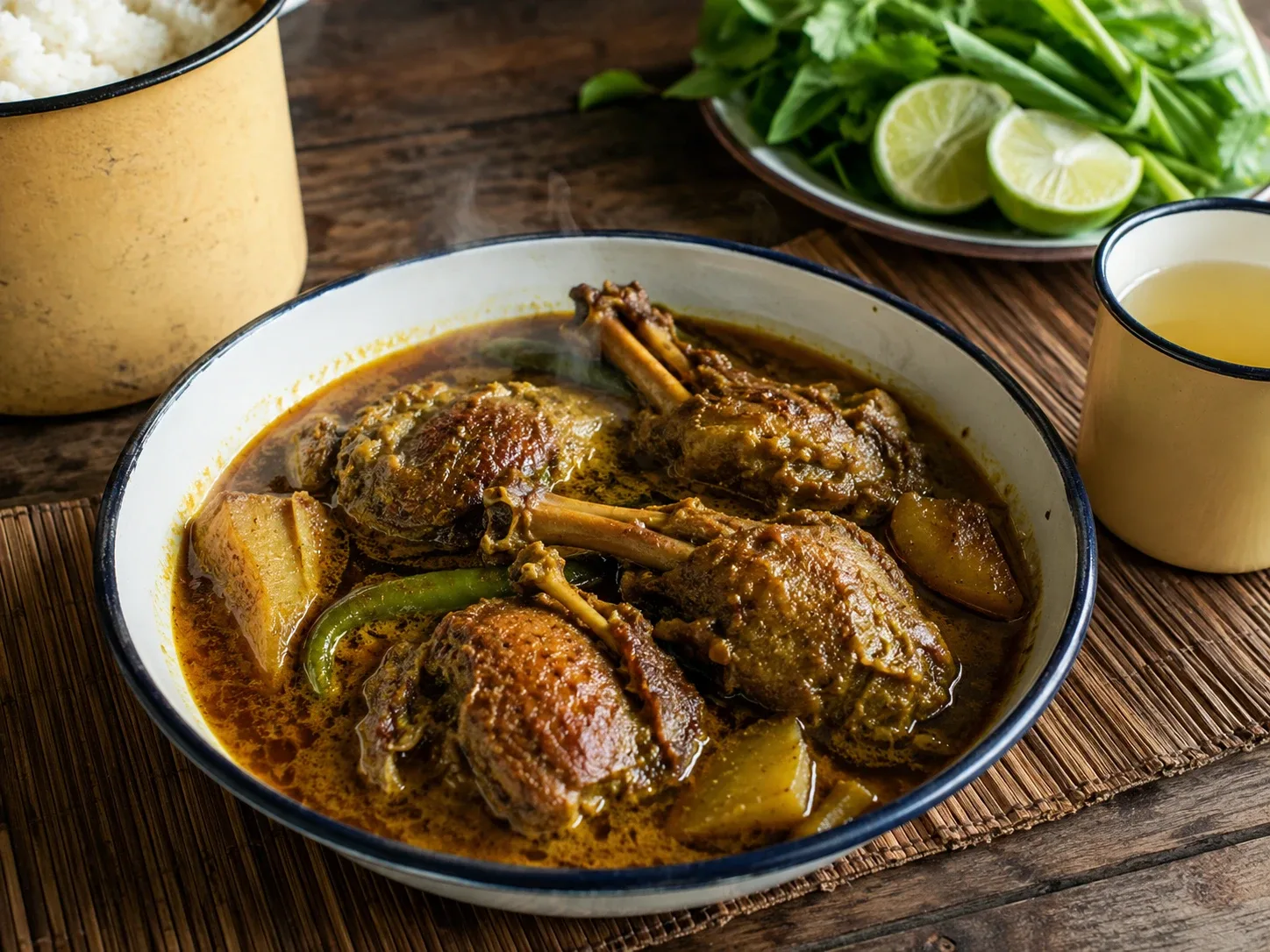
Be Thar Hin, Delta Duck Curryဘဲသားဟင်း
Duck curry from the Ayeyarwady, where ducks glean the rice paddies — browned in its own fat, then braised si pyan style until the amber oil returns.
 ၃
၃Curries · 45 min · Beginner
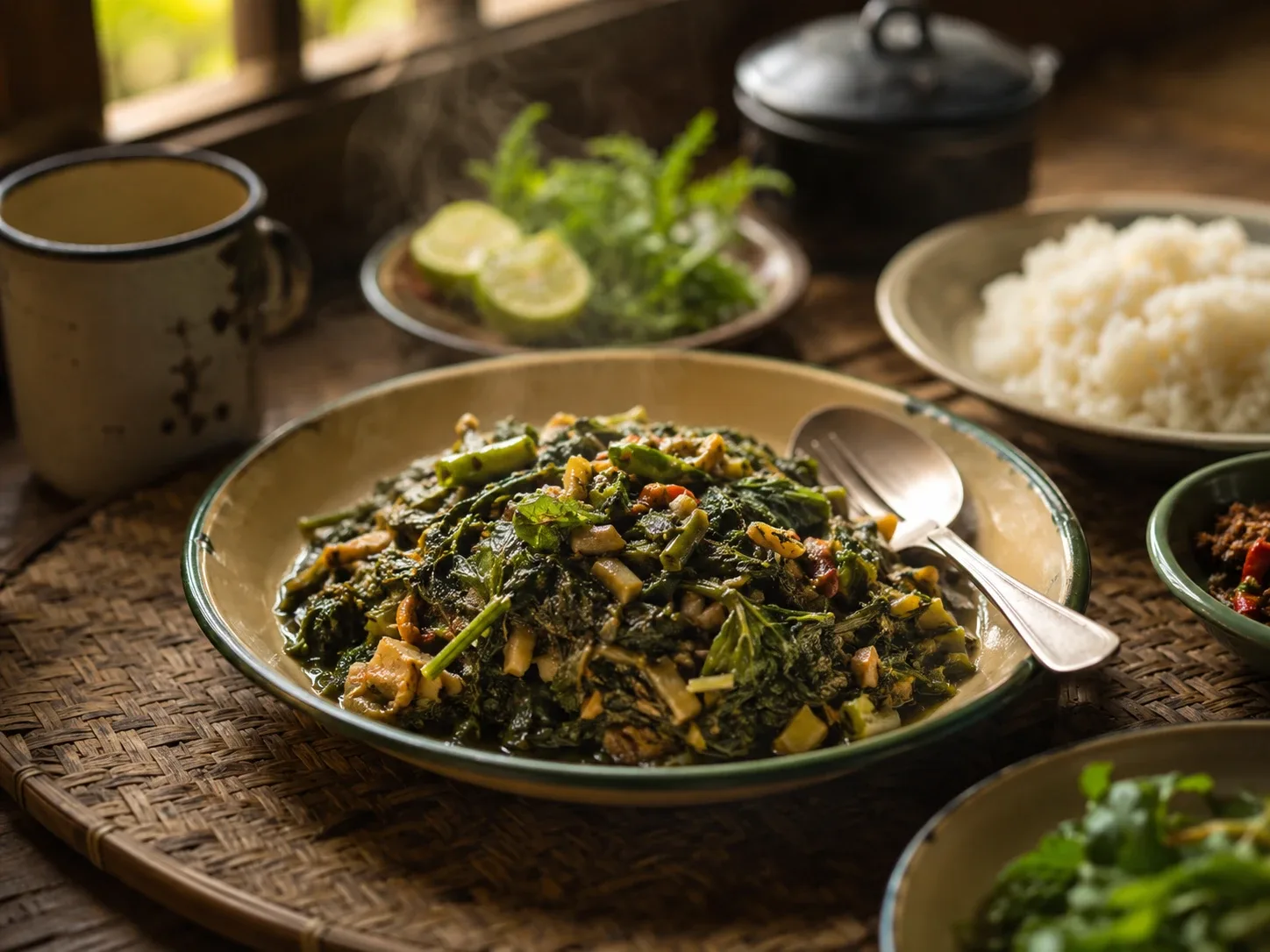
Chin Baung Kyaw, Sour Roselle Leavesချဉ်ပေါင်ကြော်
Lower Burma's beloved sour greens — roselle leaves fried down with bamboo shoots, dried shrimp, and green chili until they collapse into a dark tangy relish.
 ၅
၅Soups & Broths · 165 min · Beginner
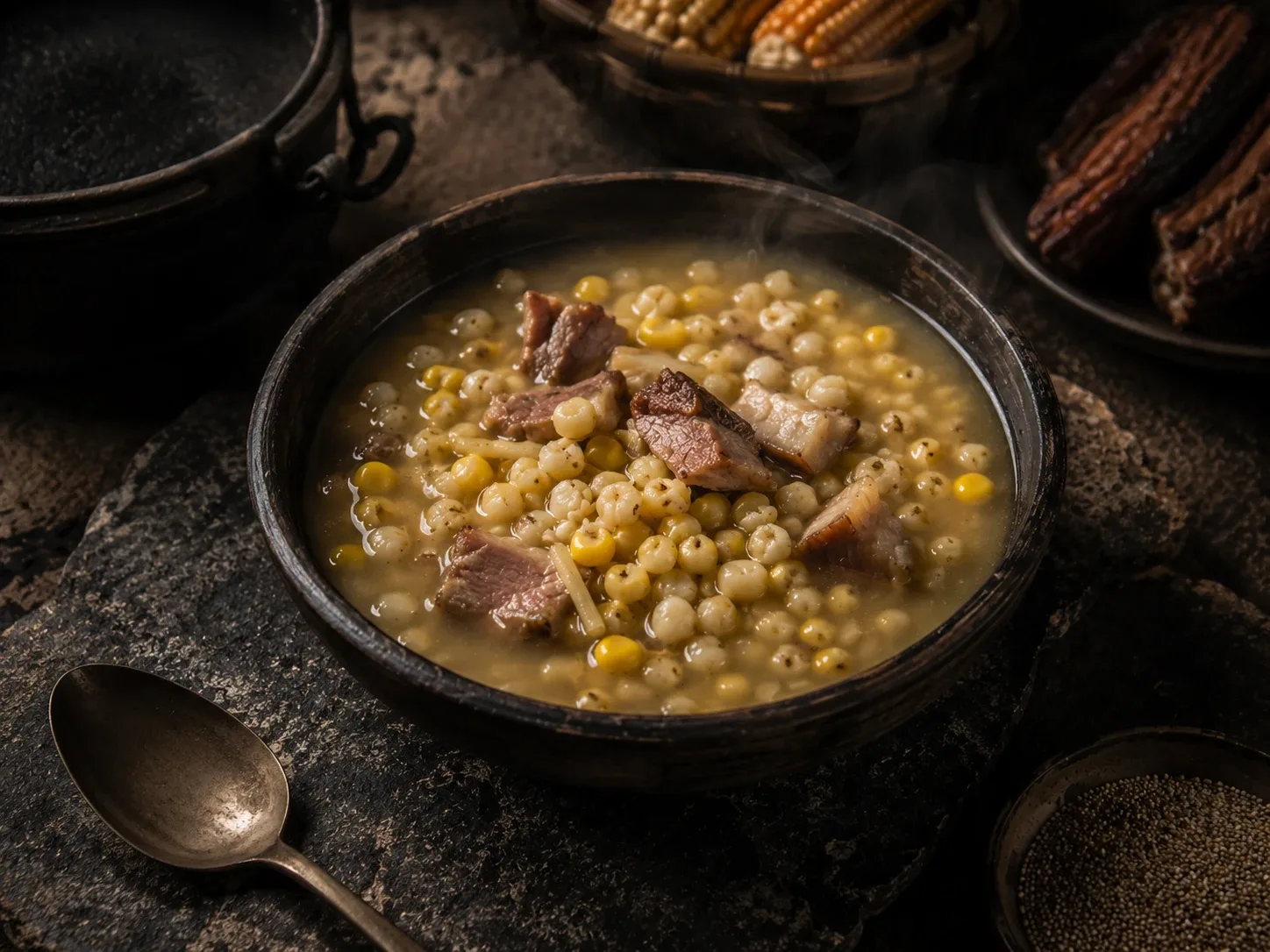
Sabuti, the Chin Corn Soup
The Chin hills' great corn soup — hominy maize simmered slowly with smoked pork and ginger, frugal mountain cooking that somehow eats like plenty.