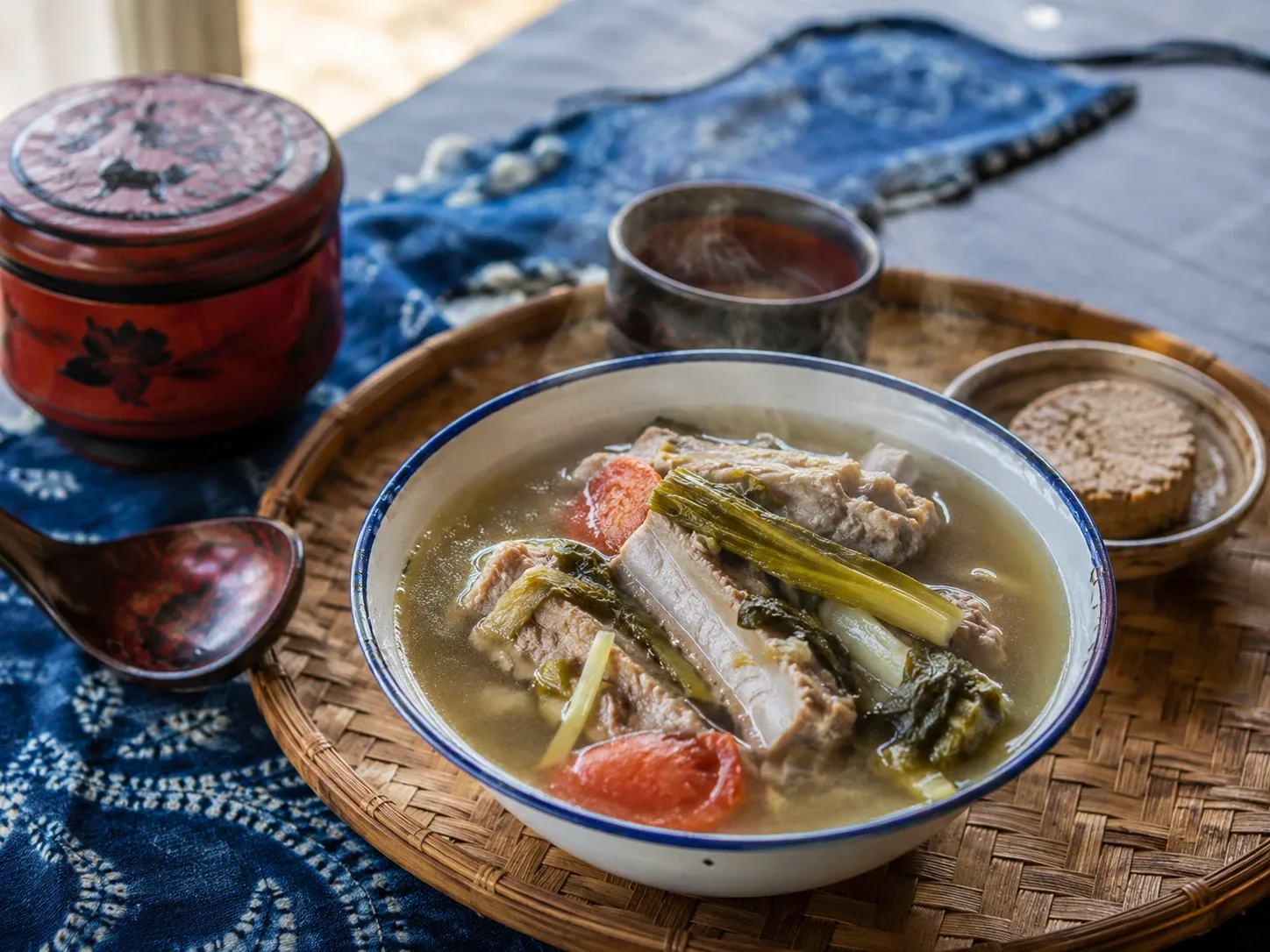
Monnyin Chin Hin Cho, Pickled Mustard and Pork Rib Soup
မုန်ညင်းချဉ်ဟင်းချို
Pork ribs simmered with sour homemade pickled mustard greens, ginger, and tomato — the clean, restoring soup of cool-season tables in the Shan hills.
Also spelled: Mohnyin Jin Hin Gyo · Mon Nyin Chin Hin Cho
By Burmese Cookbook Kitchen · July 9, 2026
ရှမ်း Shan StateBritish Burma, 1826–1948
 ၅
၅- Prep
- 15 min
- Cook
- 80 min
- Serves
- 4
- Level
- Beginner
Every cuisine with a serious pickle habit eventually drops that pickle into a pot with pork bones, because the logic is irresistible: sour cuts fat, fat rounds sour, and the broth in between tastes like both of them agreeing. The Shan hills version is monnyin chin hin cho — pork ribs simmered slowly with the plateau's workhorse pickled mustard greens, a few coins of ginger, and tomato wedges added late enough to stay whole.
Hin cho means simply "sweet soup" — sweet as in mild, the clear broth that balances a Burmese rice table rather than starring on it. But this one has more personality than most of its family: the pickle's lactic sourness runs all the way through, brightened by tomato, warmed by white pepper. It is what Shan households make in the cool season, when the plateau's evenings drop cold enough to see your breath and a jar of monnyin chin is standing in every kitchen. Like the pickle itself, the soup enters the written record with the colonial-era markets of Taunggyi and the hill stations — and, like the pickle, it is obviously older than the paperwork.
The technique asks only restraint. Blanch the ribs so the broth stays clear, and never let the pot boil — a bare simmer keeps it tea-colored and clean. Squeeze the pickle hard, hold some back for the finish, and taste before you salt. Serve it with rice and something rich, and watch it quietly become the thing everyone reaches for.
Add the pickle in two stages — most for the simmer, a fresh handful in the last five minutes. The first gives the broth its soul; the second reminds the soup what a pickle tastes like.
မီးဖိုချောင်စကား · A word from the kitchen
Ingredientsပါဝင်ပစ္စည်း
Serves 4
Tap to check off as you gather
For the broth
- pork ribs — cut into single-rib pieces; ask your butcher
- water
- fresh ginger — sliced into coins and bruised
- garlic — smashed, skins off
- spring onions — whites for the pot, greens sliced for serving
For the soup
- pickled mustard greens — homemade monnyin chin or store-bought, squeezed and cut into ribbons
- tomatoes — cut into wedges
- fish sauce — or light soy sauce — taste first, the pickle brings its own salt
- white pepper — ground
- green chili — slit lengthwise, optional
Methodချက်နည်း
Tap a numeral as you finish each step
Step 1: Blanch the ribs
Cover the ribs with cold water, bring just to a boil, and drain them, rinsing off the grey scum. One extra pot to wash buys you a broth that stays clear through the whole simmer — this soup has nowhere to hide cloudiness.
Step 2: Start the broth
Return the ribs to the pot with the 1.8 L of fresh water, the ginger, garlic, and spring onion whites. Bring to a bare simmer — lazy bubbles, never a boil — and cook, partly covered, for 45 minutes, skimming once or twice. Boiled broth turns muddy; simmered broth stays like tea.
Step 3: Add the pickle
Squeeze the pickled greens firmly, cut them into ribbons, and add two-thirds of them to the pot. Simmer another 20 minutes so the sour brine flavor works into the pork and the pork's richness rounds off the pickle's sharp corners. This exchange is the entire dish.
Step 4: Tomatoes and final seasoning
Add the tomato wedges, the remaining pickle, and the green chili if using, and simmer a final 5 to 8 minutes — the tomato should soften but keep its shape. Season with white pepper, then taste before touching the fish sauce; a well-fermented pickle often carries all the salt the pot needs.
Step 5: Serve hot with rice
Ladle into bowls, meat and greens and broth together, and scatter with the spring onion greens. In Shan homes this sits at the center of a rice meal doing the work a clear hin cho always does — cutting the rich dishes and warming the room. Cool-season evenings on the plateau are genuinely cold; this is the answer.
ခွက်ယောက် · The tools
Equipment
Heavy pot / Dutch oven
အိုးကြီးDeep and heat-retentive — for mohinga broth, long-simmered hin, and deep-frying without temperature crashes.
Shop on Amazon →
Equipment links are Amazon affiliate links. As an Amazon Associate we earn from qualifying purchases, at no cost to you. Disclosure.
ဟင်းစုံ · Set the table
A Burmese meal is a spread
A Burmese soup sits beside the rice, not on its own. Set the table with:
- Steamed riceထမင်းThe centre of the table — everything else is built around it.
- A curryဟင်းSlow-cooked until the oil returns — the richness the sides cut against.
- Toh sa yar & ngapi dipတို့စရာRaw and blanched vegetables with a pungent fish-paste dip — the fresh, bitter counterpoint.
- Balachaungဘလချောင်းThe crispy shrimp relish that lives on every Burmese table.
- Crispy fried shallotsကြက်သွန်ကြော်A spoonful of crunch and sweet shallot oil over anything.
Questions from the kitchen
My soup is too sour. Can I fix it?
Yes — a pinch of sugar and ten more minutes of simmering will round it off, or add a splash of water and let the pork catch up. Next time, rinse the pickle briefly before it goes in; batches vary, and older pickle bites harder.
Can I make it with something other than ribs?
Pork shoulder in chunks works, and so does a meaty pork bone from the freezer. Chicken — bone-in thighs — makes a lighter, entirely respectable version in 30 minutes. What the soup needs is bones and collagen enough to give the sour something to push against.
Is this the same pickle as the salad recipe?
The very same monnyin chin — one jar feeds both. The salad shows the pickle off raw and crunchy; the soup melts it into the broth. Shan cooks would find the idea of choosing between them strange: you make a jar, and the jar finds its ways.
နောက်တစ်ခု · Cook next
Keep the wok hot
 ၅
၅Soups & Broths · 135 min · Beginner
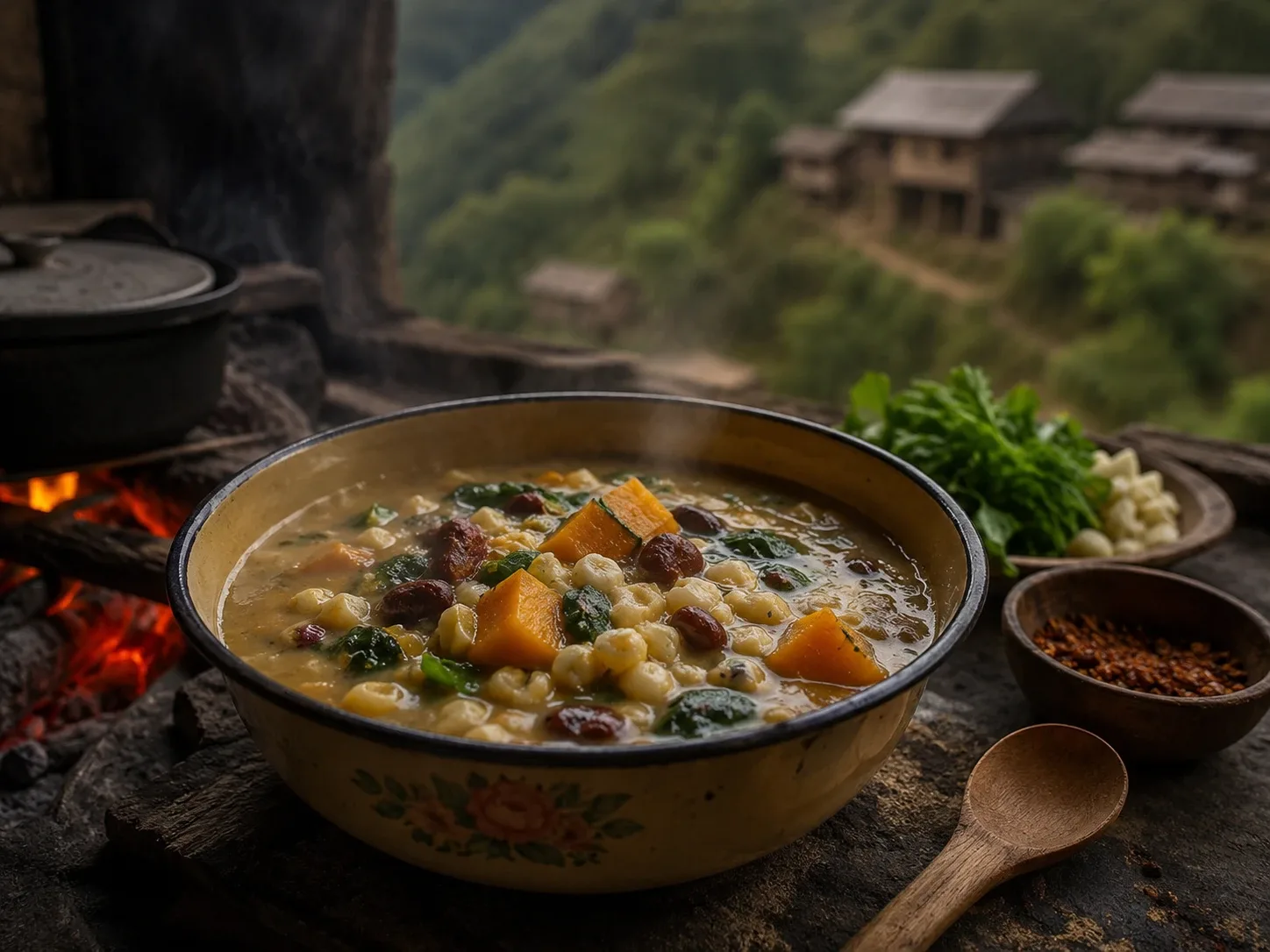
An Buti, the Meatless Corn Soup
Sabuti's meatless sibling from the Chin hills — hominy corn simmered with red beans, pumpkin, and greens until the pot thickens into gentle, vegetable plenty.
 ၅
၅Soups & Broths · 55 min · Intermediate
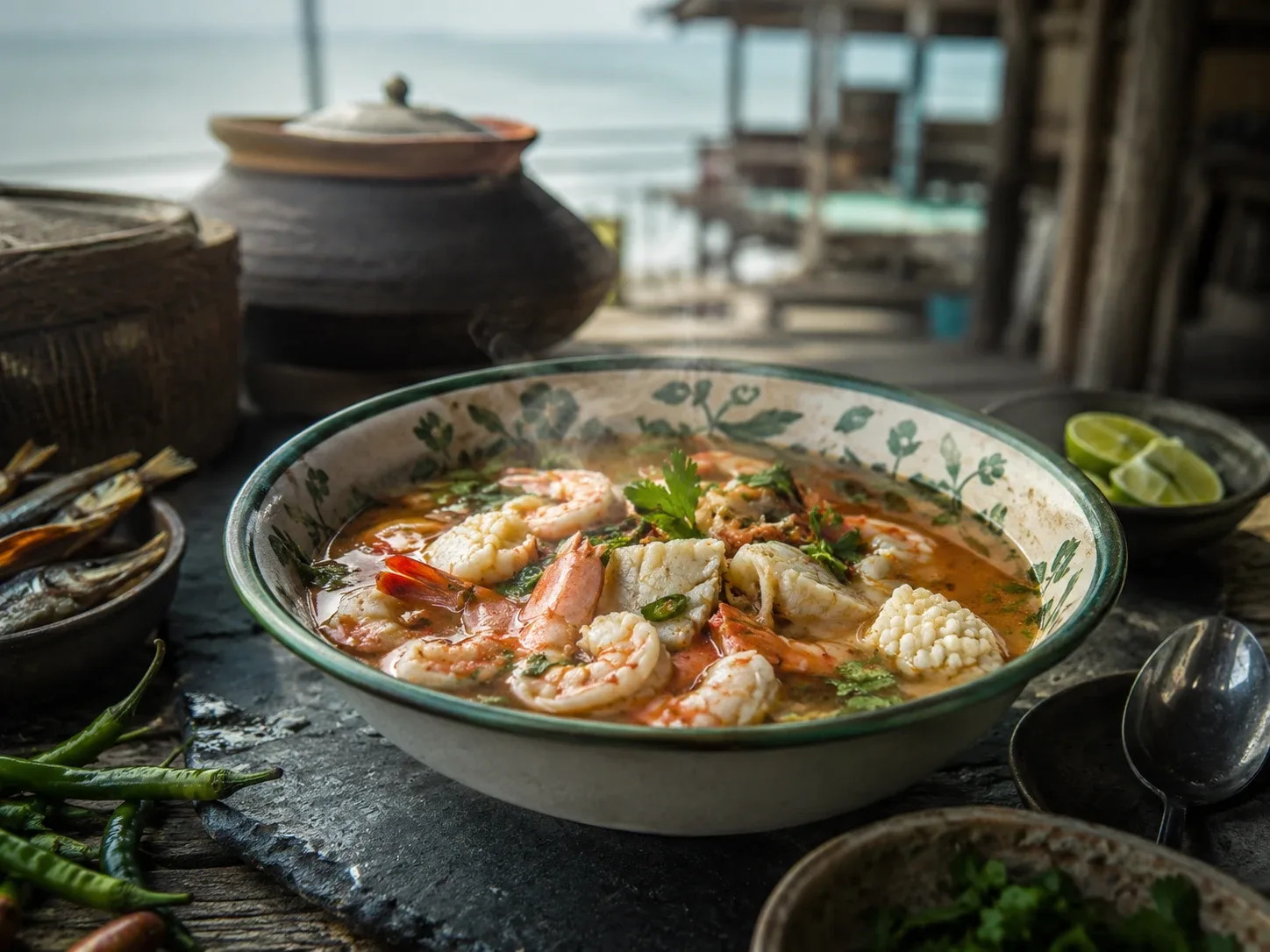
Ar Pu Shar Pu, the Burning-Mouth Bowl
Sittwe's famous hot-and-sour seafood soup — fish, prawns, and squid in a tamarind broth pounded through with green chilies, finished with lime and herbs.
 ၄
၄Salads & Thoke · 25 min · Beginner
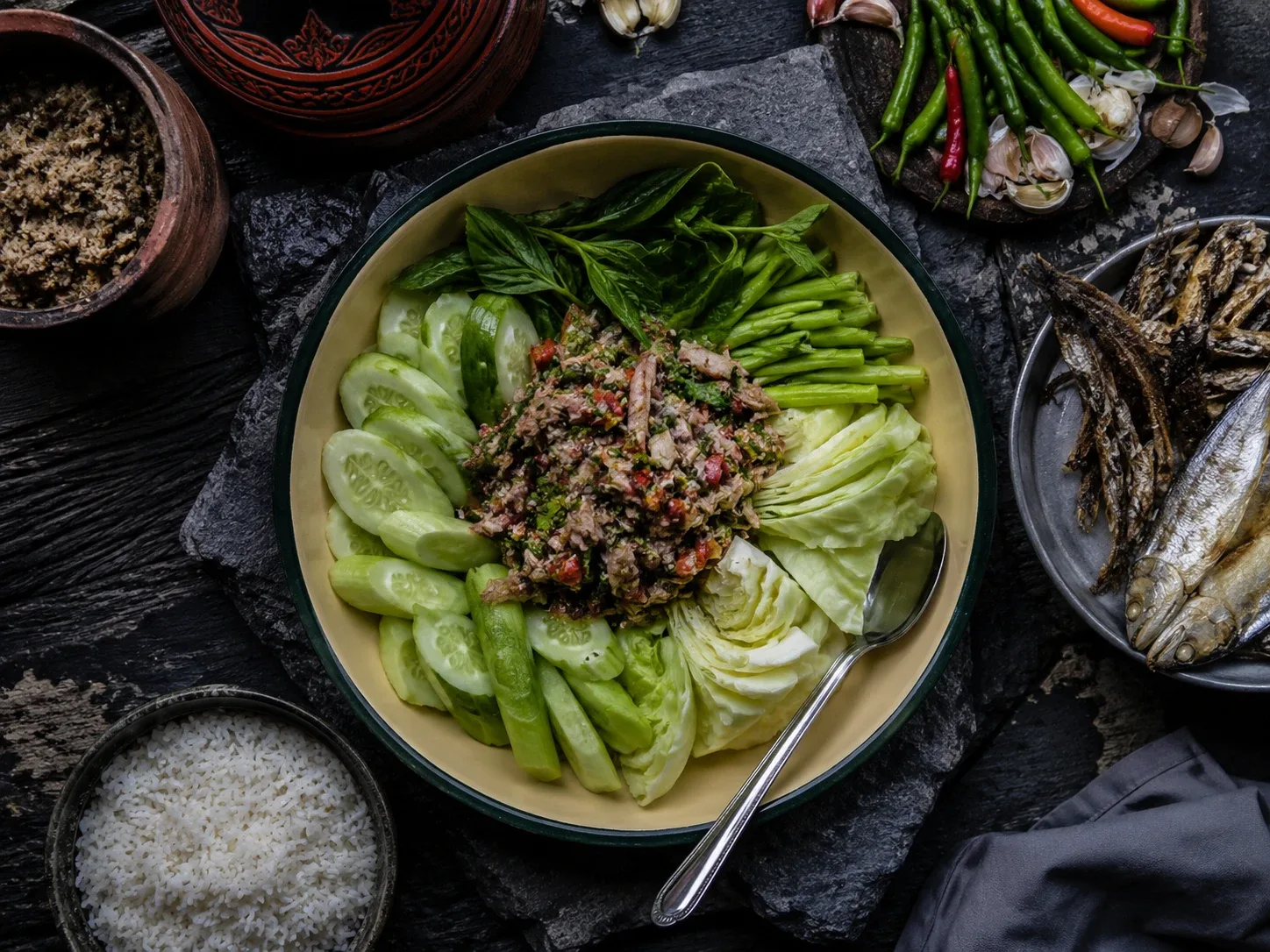
Rakhine Ngapi Thoke, the Pounded Fireငါးပိသုပ်
Rakhine's roasted fish-paste salad — marine ngapi pounded with green chili, garlic, and lime, served the western-coast way with crisp vegetables and rice.