Mont Hpat, Fresh Rice Noodles
မုန့်ဖတ်
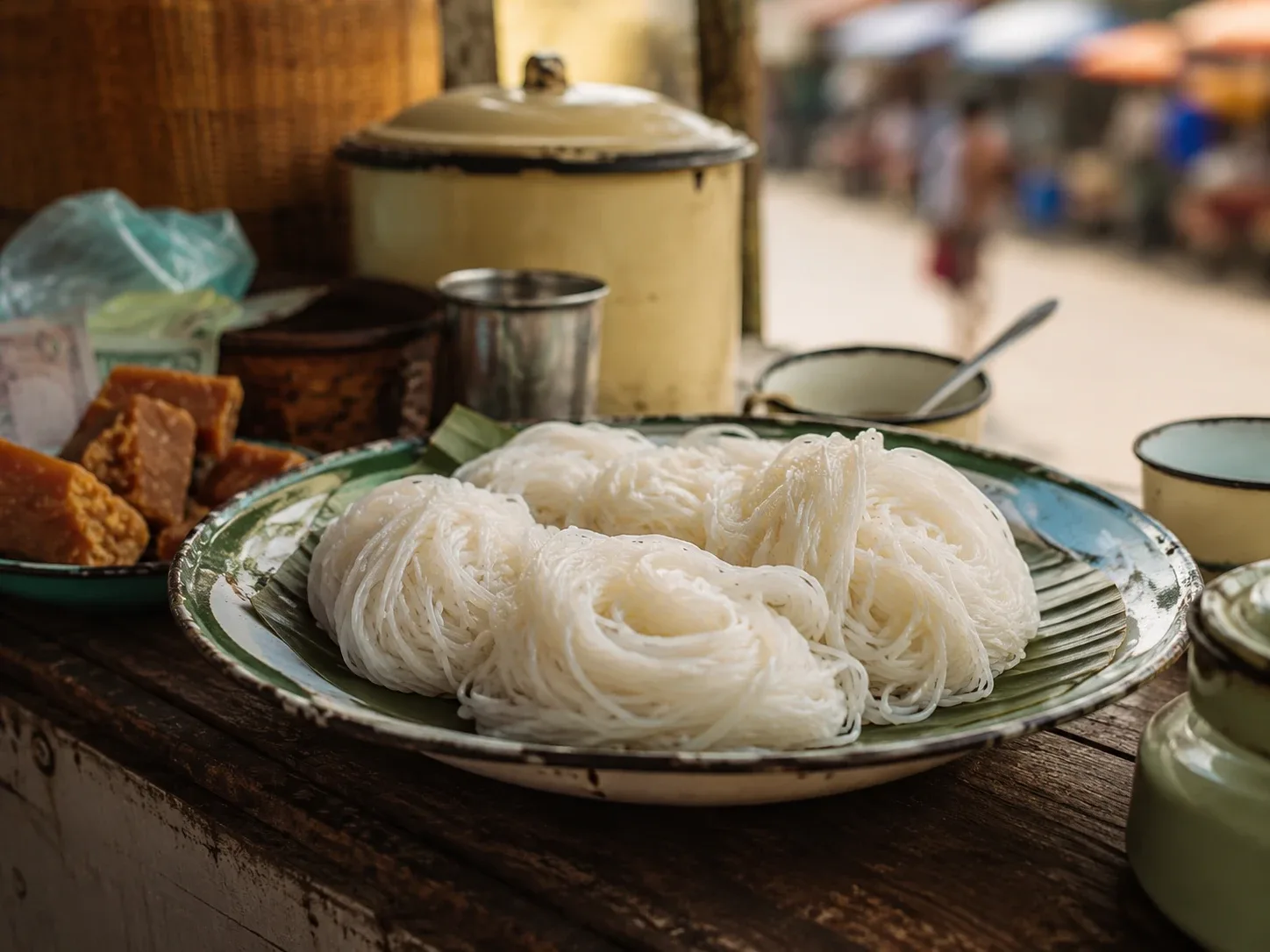
Fresh fermented rice noodles made by hand — the soured, springy vermicelli beneath every bowl of mohinga, a craft the Mon coast can fairly claim.
Also spelled: Mont Phat · Mont Phat Thote
By Burmese Cookbook Kitchen · July 9, 2026
မွန် Mon & Kayin CountryHanthawaddy, 1287–1552
 ၂
၂- Prep
- 60 min
- Cook
- 45 min
- Serves
- 6
- Level
- Advanced
Underneath every bowl of mohinga sits a noodle so taken for granted that most eaters have never asked where it comes from: mont hpat, the soft white rice vermicelli sold in coiled nests in every market before dawn. It is not a dried noodle rehydrated but a fresh one, made from rice fermented until faintly sour, ground, half-cooked into a paste, and pressed in strands straight into simmering water. The craft survives in noodle hamlets that do nothing else, and it rewards the home cook who tries it once with a noodle that drinks broth instead of sitting in it.
The Mon claim this craft, and for once the witnesses are not legends but linguists. Thailand's beloved khanom chin — the same fermented rice noodle, pressed the same way — carries a name generally traced to Mon, a dish so thoroughly borrowed that the neighbors kept the receipt in the word itself. Fermented-noodle making runs wherever Mon communities settled, from the Gulf of Mottama into the Chao Phraya plain. No kitchen document survives from Hanthawaddy, and we say so plainly; but when the same technique wears a Mon name across two countries, filing it under the Mon kingdom's era is the honest reading of the evidence, not a flattery.
The craft turns on one trick: the mother paste. A third of the batter, cooked to a gloss and kneaded back in, is what lets a raw slurry hold together as a strand. Get the ribbon right, keep the water lazy, and press through a sturdy potato ricer — the modern stand-in for the pierced brass presses of the noodle hamlets, and nothing to apologize for.
Judge the batter by the ribbon — it should fall from the spoon in a slow, unbroken band. A ribbon that snaps needs water; a ribbon that floods needs more of the cooked paste kneaded in.
မီးဖိုချောင်စကား · A word from the kitchen
Ingredientsပါဝင်ပစ္စည်း
Serves 6
Tap to check off as you gather
For the noodles
- jasmine rice — old-crop or broken rice is traditional and actually works better than premium new rice
- salt
- water — approximately — for grinding; plus a big pot for cooking and a bowl of cold water for shocking
Methodချက်နည်း
Tap a numeral as you finish each step
Step 1: Ferment the rice
Rinse the rice, cover it generously with water, and leave it at room temperature for 2 to 3 days, changing the water once a day. It is ready when the grains crush easily between two fingers and the water smells faintly sour, like yogurt's country cousin. This ferment is not a quaint extra — it softens the grain for grinding, gives the noodle its gentle tang, and builds the springy chew that plain rice flour cannot.
Step 2: Grind the batter
Drain the rice and blend it with about 400 ml of fresh water until completely smooth — a full 3 to 4 minutes in a good blender, scraping down twice. Rub a little between your fingers: any grit now is grit in the finished noodle. The batter should be the thickness of heavy cream.
Step 3: Cook the mother paste
Pour a third of the batter into a wide pan over low heat and stir constantly until it seizes into a thick, glossy, translucent paste — 4 to 5 minutes, like a rice-flour choux. This partially cooked "mother" is the old noodle-makers' trick: gelatinized starch is what lets the raw batter hold together as a strand instead of dissolving into the pot.
Step 4: Knead the dough together
Beat the hot mother paste back into the raw batter with the salt until perfectly smooth — sturdy spoon, then wet hands as it cools. You are after a thick batter that falls from the spoon in a slow, unbroken ribbon. Too stiff and it will not press; too loose and the strands shred. Adjust with spoonfuls of water or a few minutes more stirring over low heat.
Step 5: Press the noodles
Bring a wide pot of water to a bare simmer — lazy bubbles, never a rolling boil, which tears strands apart. Working in batches, load the dough into a potato ricer or a sturdy piping bag with a small round tip and press strands directly into the water. They will sink, set within a minute, and float when done. Give them 30 seconds afloat, then scoop them out.
Step 6: Shock, rinse, and nest
Drop each batch into cold water, swish gently to rinse off surface starch, then drain and coil into loose palm-sized nests on a tray — the classic market presentation, and also simply the practical way to serve them. Use the noodles the day they are made, at room temperature, under mohinga or any curried sauce that will have them.
ခွက်ယောက် · The tools
Equipment
Noodle basket / colander
ဆန်ခါBlanch and lift rice noodles in seconds — mohinga service moves fast, and soggy noodles wait for no one.
Shop on Amazon →Box grater / microplane
ခြစ်စက်Fine ginger, green papaya shreds, and toddy-palm jaggery shavings.
Shop on Amazon →Heavy kettle
ရေနွေးအိုးTeahouse tea starts with water at a hard rolling boil — and lots of it, all morning.
Shop on Amazon →
Equipment links are Amazon affiliate links. As an Amazon Associate we earn from qualifying purchases, at no cost to you. Disclosure.
ဟင်းစုံ · Set the table
A Burmese meal is a spread
A bowl is complete, but the table is not without its condiments:
- Si chet, chili oilဆီချက်The fragrant red oil every household keeps by the stove.
- Crispy fried shallotsကြက်သွန်ကြော်A spoonful of crunch and sweet shallot oil over anything.
- Balachaungဘလချောင်းThe crispy shrimp relish that lives on every Burmese table.
- Teahouse milk teaလက်ဖက်ရည်How a Burmese meal ends — sweet, strong, and slow.
Questions from the kitchen
Can I skip the fermentation and use rice flour?
You can — 400 g rice flour whisked with 500 ml water, then the same mother-paste method from step three onward. You will get real, working fresh noodles and lose the two things fermentation buys: the faint sour depth and the springy chew. Call it a weeknight print of an original.
My strands dissolved in the pot. What went wrong?
One of two things. Either the batter was too thin — knead in more cooked mother paste, or stir the whole batch over low heat a few minutes to thicken it — or the water was at a rolling boil, which shreds strands before they can set. Lazy bubbles only.
Can I make them ahead?
Only by hours, not days. Fresh rice noodles stale the way bread does — the starch firms and cracks in the fridge and no reheating truly brings it back. Make them the morning of the meal, hold them covered at room temperature, and give leftovers to the frying pan tomorrow, where their firmness becomes a virtue.
Are these the same as the dried vermicelli I buy for mohinga?
Same family, different creature. Dried vermicelli is a fine convenience and this site uses it without shame — but fresh mont hpat is softer, faintly sour, and drinks the broth instead of merely sitting in it. Make them once and you will understand why noodle hamlets still exist.
နောက်တစ်ခု · Cook next
Keep the wok hot
 ၂
၂Noodles & Mohinga · 50 min · Beginner
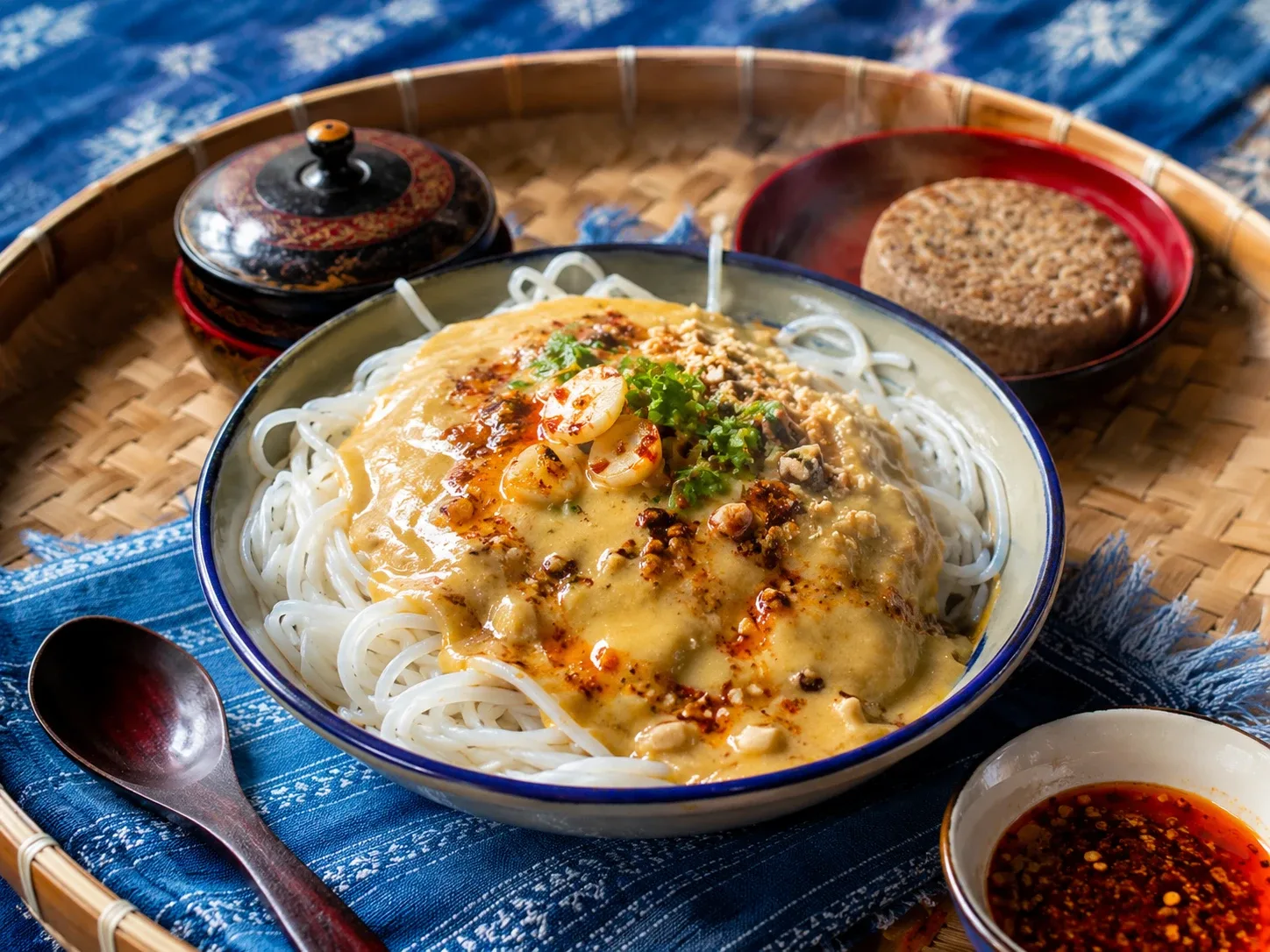
Tofu Nway, Warm Shan Tofu Noodlesတိုဟူးနွေး
Warm chickpea tofu that never sets, ladled like golden custard over rice noodles with garlic oil, chili, and peanuts — Shan State's great breakfast.
 ၂
၂Noodles & Mohinga · 40 min · Intermediate
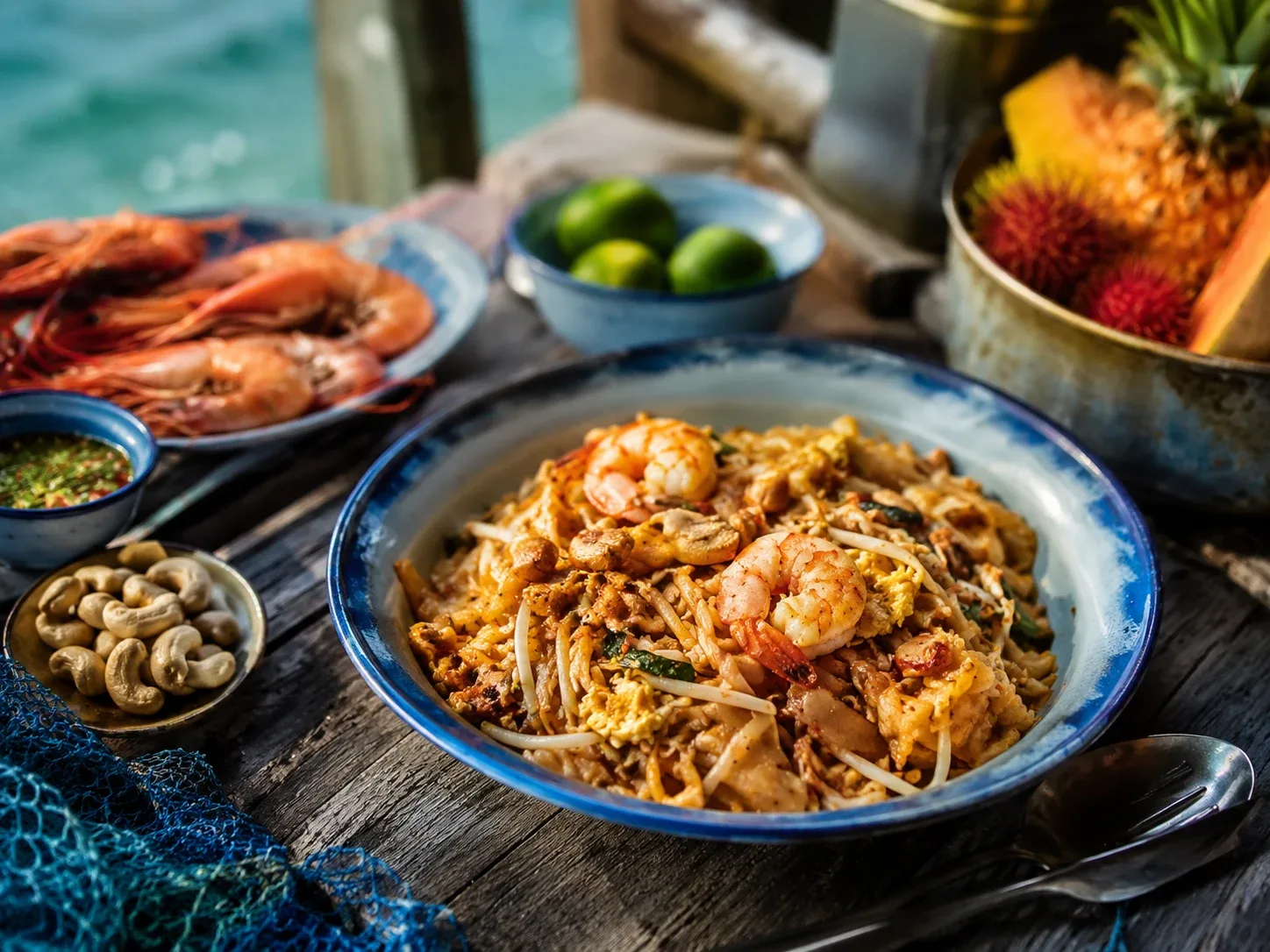
Kat Kyi Kaik, Dawei's Scissor-Cut Noodlesကတ်ကြေးကိုက်
Dawei's famous stir-fried rice noodles, snipped with scissors at the table — sweet-savory, smoky from the wok, piled with prawns, egg, and peanuts.
 ၅
၅Soups & Broths · 165 min · Beginner
Sabuti, the Chin Corn Soup
The Chin hills' great corn soup — hominy maize simmered slowly with smoked pork and ginger, frugal mountain cooking that somehow eats like plenty.