Nga Chauk Thoke, Dried Fish Salad
ငါးခြောက်သုပ်
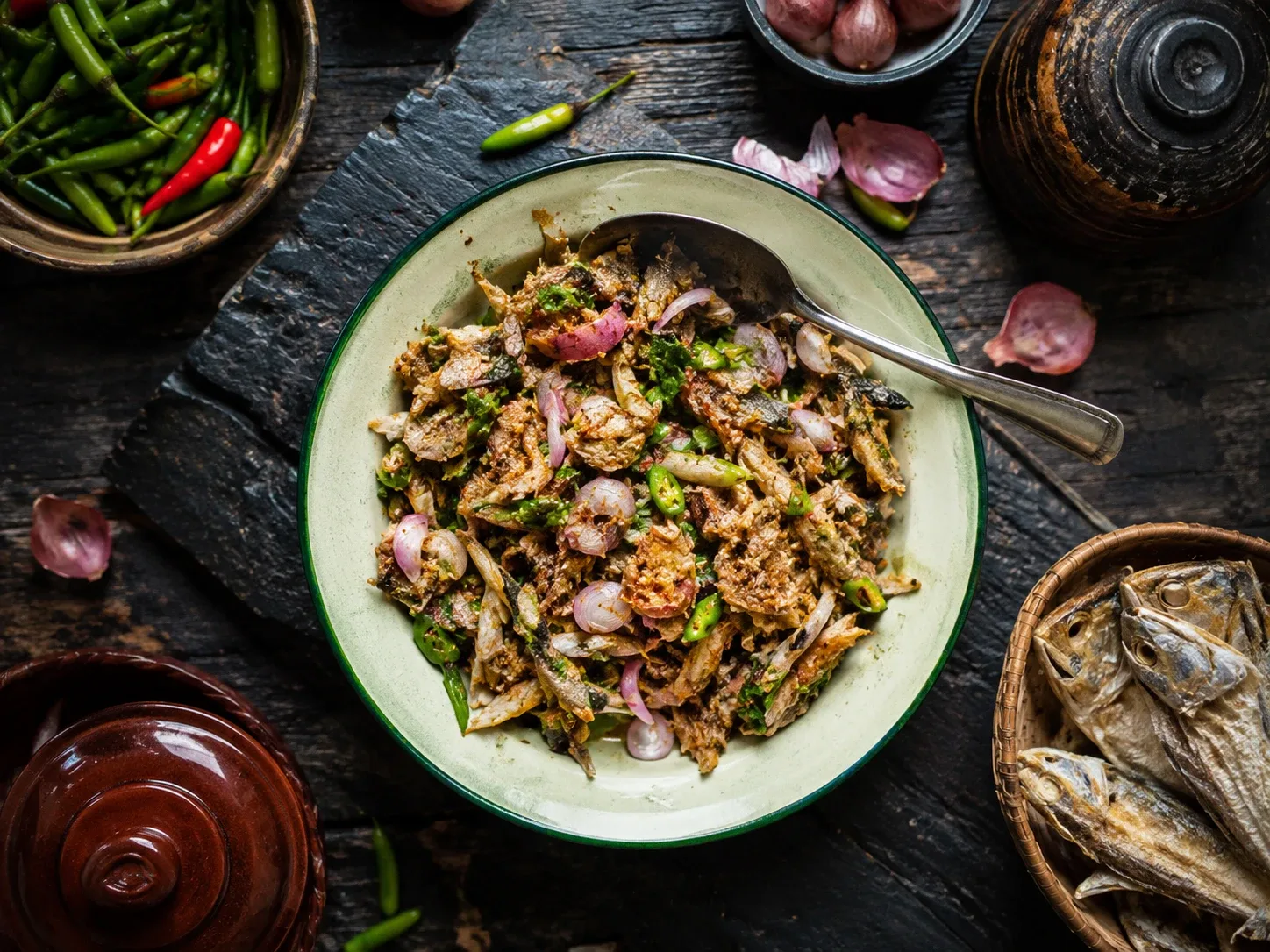
A fiery Rakhine dried-fish salad — nga chauk fried crisp, pounded to flakes, and tossed with shallots, green chili, and lime, with barely any oil at all.
By Burmese Cookbook Kitchen · July 9, 2026
ရခိုင် Rakhine CoastKonbaung, 1752–1885
 ၄
၄- Prep
- 15 min
- Cook
- 10 min
- Serves
- 4
- Level
- Beginner
On the Rakhine coast, drying fish is not a craft project — it is the pantry. When the monsoon closes the sea from roughly June to September, the boats stay on the beach and households eat from racks of nga chauk, fish split and dried hard in the pre-rains sun. Salted and sun-cured fish from Arakan moved through regional trade in Konbaung times and filled colonial commodity ledgers after that; the salad itself is home cooking, the kind that never needed writing down until recently.
Nga chauk thoke is what a Rakhine kitchen does when it wants that preserved fish to taste alive again. The fish is fried until it snaps, pounded back into a rough floss, then hand-mixed — thoke means exactly that — with raw shallot, green chili, and enough lime juice to make you sit up. What it lacks, tellingly, is oil. Rakhine cooks are famous within Myanmar for using less of it than anyone, letting sour and hot do the heavy lifting, and this salad is that philosophy in miniature: two spoons of oil for the frying pan and none in the bowl.
The technique that decides everything happens in the mortar. Pound in short, patient strokes until the fish fluffs into shreds that drink up the lime — stop at powder and you have made fish dust; stop too early and the salad chews like rope. Get it right and a plate of rice disappears with alarming speed, which is, and always was, the entire point.
Fry the dried fish until it snaps, not bends — a flake that shatters in the mortar will fluff into the salad; a chewy one just sulks there.
မီးဖိုချောင်စကား · A word from the kitchen
Ingredientsပါဝင်ပစ္စည်း
Serves 4
Tap to check off as you gather
For the fish
- dried fish — any firm salt-dried fish from an Asian grocer; snapper or threadfin types work beautifully
- peanut oil — for frying — most of it stays in the pan, which is the Rakhine way
For the thoke
- shallots — sliced into fine rings, plus one extra pounded into the base
- green bird's eye chilies — thinly sliced
- dried chili flakes — toasted 30 seconds in the fish-frying pan
- garlic
- limes — juiced — sourness does the work oil would do elsewhere
- fish sauce — taste first; some dried fish needs none
- cilantro — roughly torn
- sawtooth coriander leaves — optional but very Rakhine; sliced into ribbons
Methodချက်နည်း
Tap a numeral as you finish each step
Step 1: Soak briefly, then dry
Rinse the dried fish and soak it in warm water for 10 minutes — just enough to pull off surface salt and dust, not enough to soften it. Pat it thoroughly dry. A wet piece will steam instead of crisp and spit oil at you for your trouble.
Step 2: Fry until it snaps
Heat the peanut oil in a small pan over medium heat and fry the fish pieces 2 to 3 minutes a side, until deeply golden and rigid. Lift them onto paper and let them cool completely — crispness arrives as they cool, and you cannot pound a hot fish. Toast the chili flakes in the pan's residual oil for 30 seconds and set aside.
Step 3: Pound to flakes
Break the cooled fish into the mortar, discarding any large bones, and pound in short strokes until it breaks into rough shreds and floss — not powder. Add the garlic and one shallot and pound a few strokes more. This fluffed texture is the point of the dish: it catches lime juice the way a sponge catches water.
Step 4: Toss and balance
Turn the fish into a bowl with the shallot rings, sliced green chili, toasted chili flakes, and lime juice. Massage briefly with your fingers — thoke means mixed by hand, and hands judge better than spoons. Taste: it should be salty from the fish, then hot, then bracingly sour. Add fish sauce only if it needs depth.
Step 5: Finish and serve
Fold in the cilantro and sawtooth coriander and serve at once, with hot rice and something cool — cucumber, or a simple clear soup. The salad is loudest in its first ten minutes, which is exactly when it should be eaten.
ခွက်ယောက် · The tools
Equipment
Stone mortar & pestle
ဆုံFor garlic-ginger paste, pounded dried shrimp fluff, and crushed peanuts — the blender lies about texture; the stone doesn’t.
Shop on Amazon →Mandoline slicer
အလွှာစက်Paper-thin shallots for even frying and cabbage fine enough for thoke — seconds, not knife-years.
Shop on Amazon →
Equipment links are Amazon affiliate links. As an Amazon Associate we earn from qualifying purchases, at no cost to you. Disclosure.
ဟင်းစုံ · Set the table
A Burmese meal is a spread
A thoke is part of a spread as often as it is a light meal on its own:
- Steamed riceထမင်းThe centre of the table — everything else is built around it.
- A curryဟင်းSlow-cooked until the oil returns — the richness the sides cut against.
- Balachaungဘလချောင်းThe crispy shrimp relish that lives on every Burmese table.
- Crispy fried shallotsကြက်သွန်ကြော်A spoonful of crunch and sweet shallot oil over anything.
- Toh sa yar & ngapi dipတို့စရာRaw and blanched vegetables with a pungent fish-paste dip — the fresh, bitter counterpoint.
Questions from the kitchen
What dried fish should I buy?
Look for flat, salt-dried fish sold whole or in fillets at Southeast Asian grocers — the firmer and drier, the better. Avoid the soft, semi-dried "one sun" styles meant for steaming; they will not crisp. Dried snakehead, snapper, or threadfin all pound beautifully.
Can I make it less salty?
The 10-minute soak already takes the edge off; extend it to 20 minutes for very salty fish. Beyond that, balance rather than remove — more lime, more shallots, more rice alongside. The dish is a condiment-salad, meant to be eaten in small dragged-through-rice doses.
No mortar and pestle — what then?
Pulse the fried fish briefly in a food processor, or bash it in a zip bag with a rolling pin, then shred with your fingers. You lose a little of the fluff a mortar gives, but the salad forgives you. Do not skip the hand-mixing at the end.
နောက်တစ်ခု · Cook next
Keep the wok hot
 ၄
၄Salads & Thoke · 30 min · Beginner
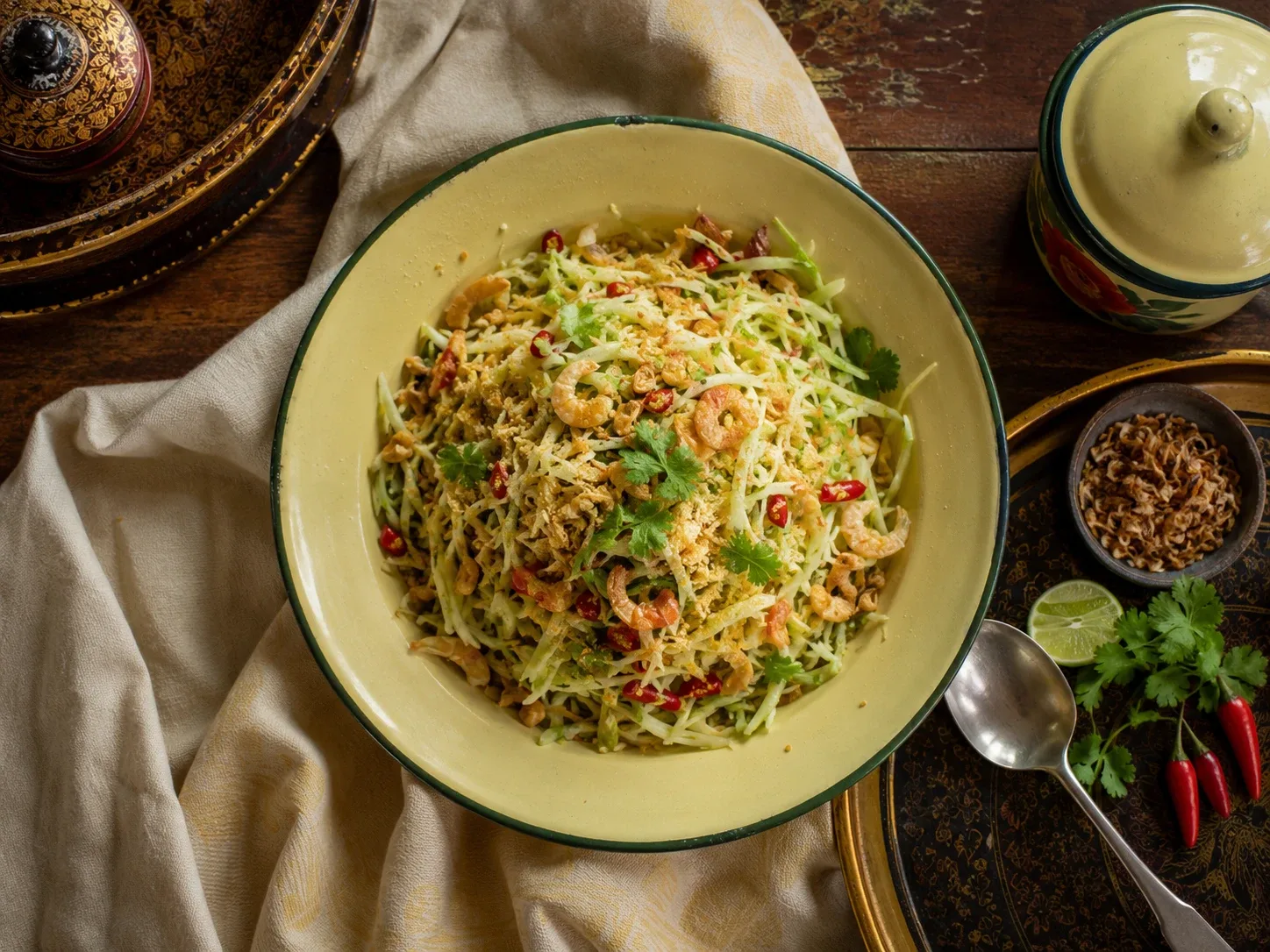
Thayet Thi Thanat, Green Mango Pickle-Saladသရက်သီးသနပ်
Tart, crunchy green-mango shreds dressed with fried garlic oil, chili, dried shrimp, and toasted chickpea flour — the sour thanat that cuts a heavy Burmese meal.
 ၄
၄Salads & Thoke · 20 min · Beginner
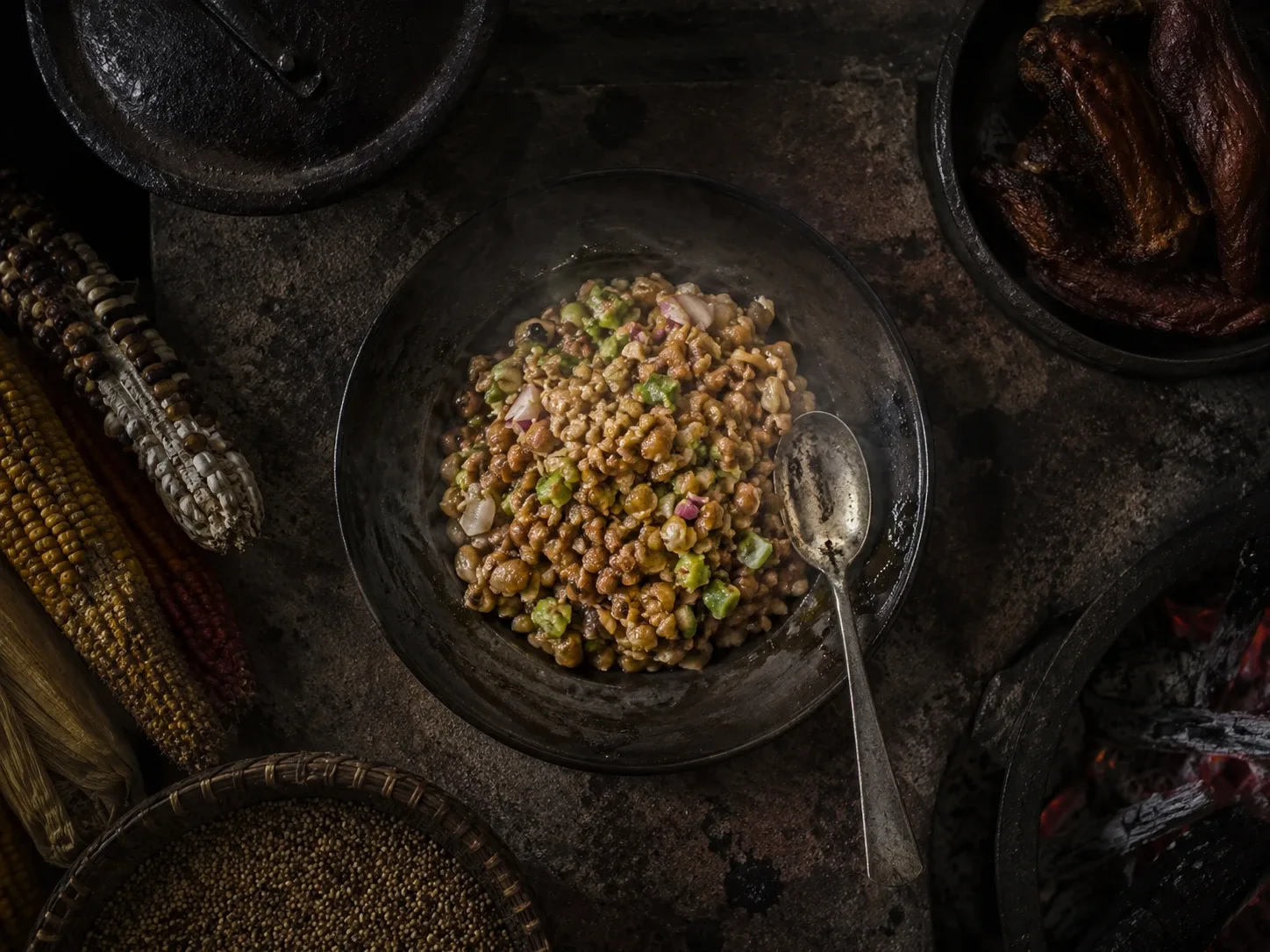
Bekang Rawt, Fermented Soybean Salad
Fermented soybeans pounded with shallots, green chili, and salt — the Chin hills' pungent everyday salad, a mountain cousin of natto, eaten with hot rice.
 ၄
၄Salads & Thoke · 25 min · Beginner
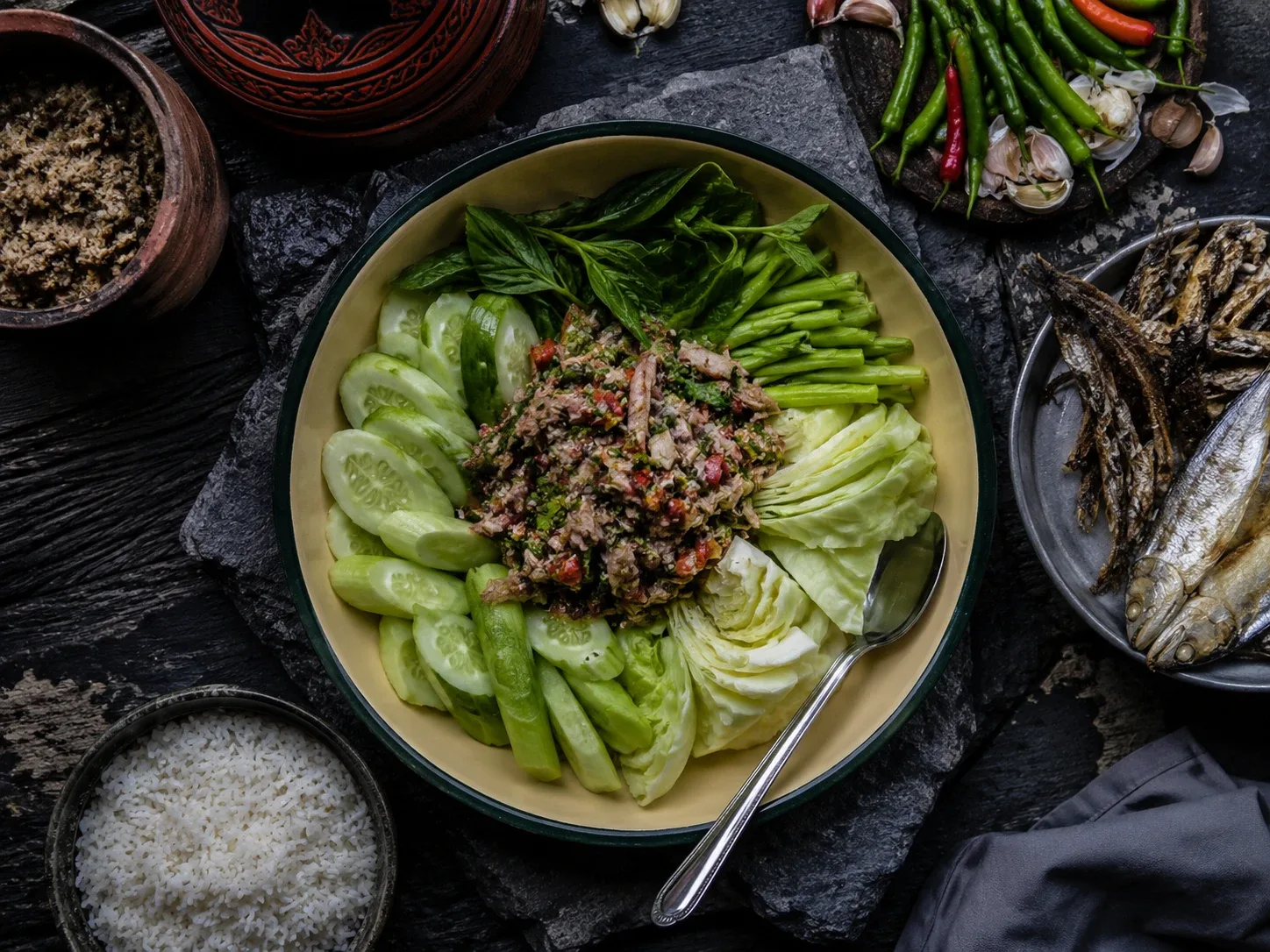
Rakhine Ngapi Thoke, the Pounded Fireငါးပိသုပ်
Rakhine's roasted fish-paste salad — marine ngapi pounded with green chili, garlic, and lime, served the western-coast way with crisp vegetables and rice.