Rakhine Ganan Hin, the Lean Crab Curry
ရခိုင်ဂဏန်းဟင်း
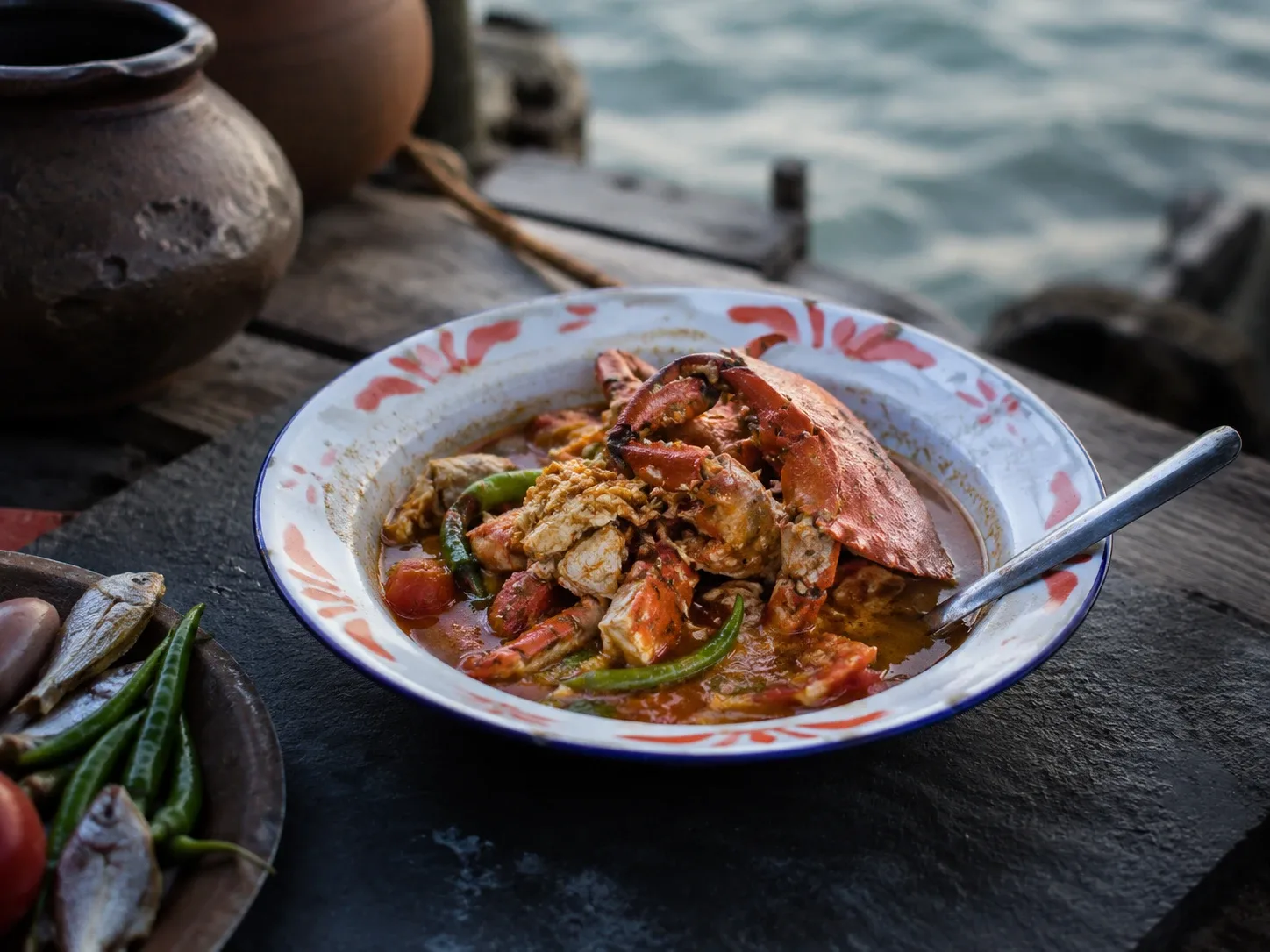
Rakhine crab curry the lean western way — cracked mud crab simmered in a thin, fiery broth of green chili, tomato, and tamarind, with two spoons of oil.
By Burmese Cookbook Kitchen · July 9, 2026
ရခိုင် Rakhine CoastBritish Burma, 1826–1948
 ၃
၃- Prep
- 30 min
- Cook
- 30 min
- Serves
- 4
- Level
- Intermediate
The mangrove creeks that stitch the Rakhine coastline are mud-crab country, and crabs from Arakan's estuaries were being weighed and shipped out of Akyab — today's Sittwe — by the time colonial ledgers were keeping score of everything this coast produced. The curry itself never made the ledgers. It is what crab has always become in the kitchens a few streets back from the harbor: home cooking, documented mostly by the people who grew up cracking claws over rice.
Crab curry is cooked on every Burmese coast, so let the claim be precise: what makes this pot Rakhine is everything it refuses. Two tablespoons of oil is the entire allowance. The paste is barely touched to the heat. There is no coconut milk in sight, and no si pyan — where the Myeik version down south fries its shallot base until the oil returns amber, the western coast surrounds the crab with a thin, fierce broth of green chili, tomato, and tamarind and lets the animal's own sweetness be the only luxury in the room. It is the same doctrine as the region's fish curry, applied to a nobler creature.
Two techniques carry the dish. Crack the claws before cooking, so the broth can get in and the sweetness can get out. And once the crab is in the pot, shake, don't stir — a spoon knocks the meat loose from the shell, and this curry's whole pleasure is pulling it out yourself, with tamarind-stained fingers.
Crack the claws before they go in the pot, not after they come out — the broth must get inside the shell, or you are steaming a crab next to a curry instead of cooking them together.
မီးဖိုချောင်စကား · A word from the kitchen
Ingredientsပါဝင်ပစ္စည်း
Serves 4
Tap to check off as you gather
For the crab
- mud crab — two crabs, live or very fresh; blue crabs work — use six and shorten the simmer
- turmeric
- salt
For the pot
- green chilies — three pounded, two left whole — a Sittwe hand would use more
- garlic
- fresh ginger
- onion — half pounded, half in thin wedges
- paprika — for color — the green chilies carry the heat
- peanut oil — the whole allowance; do not round up
- tomatoes — roughly chopped
- tamarind — soaked in 100 ml hot water and squeezed
- fish sauce
- water
- cilantro — roughly torn, to finish
Methodချက်နည်း
Tap a numeral as you finish each step
Step 1: Clean and crack the crab
Chill live crabs in the freezer for 20 minutes to still them, then dispatch quickly, lift the top shell, and clear away the feathery gills. Quarter the bodies, legs attached, and crack each claw with the back of a heavy knife. Rub everything with the turmeric and salt. The cracks are not optional — they are the doors the broth walks through.
Step 2: Pound the paste
Pound three green chilies, the garlic, ginger, and half the onion to a rough, wet paste. Keep it coarse: this paste is going to dissolve into broth, not fry into a base, and a fine purée would only cloud the pot.
Step 3: Start gently — and stop early
Warm the oil in a wide pot over medium heat and stir the paste and paprika for just two to three minutes, until it smells sharp and green. Resist the pull toward golden — down the coast in Myeik they would fry on until the oil returns, but the Rakhine pot refuses that entire project. Sharp and green is the destination.
Step 4: Build the broth
Add the tomatoes, onion wedges, fish sauce, and water and simmer briskly for eight to ten minutes, until the tomatoes slump and the broth takes color. It should already taste hot at the back of the throat before the crab enters — the crab will sweeten this broth, not rescue it.
Step 5: Simmer the crab
Add the crab pieces and the two whole chilies, turning each piece once to coat, and simmer covered for 12 to 15 minutes, shaking the pot by its handles halfway rather than stirring. The shells will turn full cinnabar and the cracked claws will drink in the broth. Blue crabs need only 8 to 10 minutes.
Step 6: Sour, scatter, and serve
Stir in the tamarind water for the last three minutes and taste — sour just ahead of salt, chili unmistakable, the crab's sweetness underneath it all. Scatter the cilantro off the heat. Serve in the middle of the table with rice, finger bowls, and no dignity whatsoever; this is a dish eaten with both hands or not at all.
ခွက်ယောက် · The tools
Equipment
Carbon-steel wok
ဒယ်အိုးThe dai-oh — for si pyan curries, fritters, and every fried-noodle dish here. Carbon steel, seasoned dark, nothing fancy.
Shop on Amazon →Stone mortar & pestle
ဆုံFor garlic-ginger paste, pounded dried shrimp fluff, and crushed peanuts — the blender lies about texture; the stone doesn’t.
Shop on Amazon →
Equipment links are Amazon affiliate links. As an Amazon Associate we earn from qualifying purchases, at no cost to you. Disclosure.
ဟင်းစုံ · Set the table
A Burmese meal is a spread
A curry is the anchor, not the whole meal. Round out the table:
- Steamed riceထမင်းThe centre of the table — everything else is built around it.
- A light soupဟင်းချိုThe clear, sour broth sipped between mouthfuls of rice.
- Toh sa yar & ngapi dipတို့စရာRaw and blanched vegetables with a pungent fish-paste dip — the fresh, bitter counterpoint.
- Balachaungဘလချောင်းThe crispy shrimp relish that lives on every Burmese table.
- Crispy fried shallotsကြက်သွန်ကြော်A spoonful of crunch and sweet shallot oil over anything.
- A hand-tossed thokeအသုပ်A bright, sour salad to lift the whole spread.
Questions from the kitchen
How is this different from the Myeik crab curry?
Doctrine, not crab. The southern pot fries a shallot paste in generous oil until the oil returns — si pyan — and wears that amber slick proudly. The Rakhine pot uses a quarter of the oil, barely touches the paste to heat, and finishes thin, sour, and hotter. Cook both and you will hold Myanmar's oldest kitchen argument in your own two hands.
Can I use pre-cooked or picked crab meat?
You can fold picked meat into the finished broth for the last two minutes and eat well, but you will have made a crab soup, not ganan hin. The shells and cracked claws are where half the flavor travels, in both directions — broth into crab, crab into broth.
How hot is this meant to be?
Hot enough to notice in every bite, not hot enough to stop conversation. Three pounded chilies is a moderate hand by Rakhine standards; the whole ones perfume more than they burn. Scale the pounded chilies to your table and keep the tamarind constant — the sourness is not negotiable.
နောက်တစ်ခု · Cook next
Keep the wok hot
 ၃
၃Curries · 125 min · Intermediate
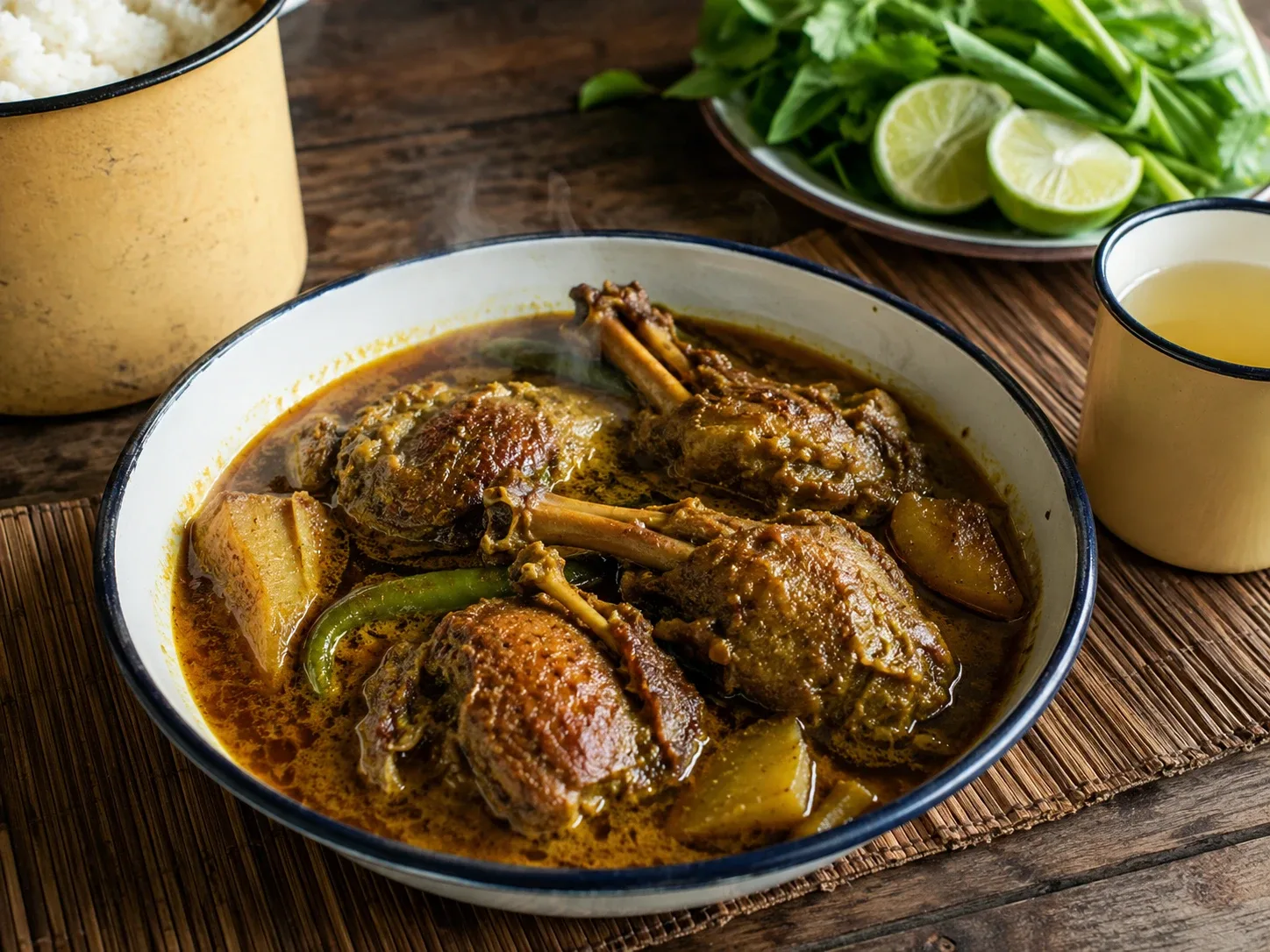
Be Thar Hin, Delta Duck Curryဘဲသားဟင်း
Duck curry from the Ayeyarwady, where ducks glean the rice paddies — browned in its own fat, then braised si pyan style until the amber oil returns.
 ၃
၃Curries · 45 min · Beginner
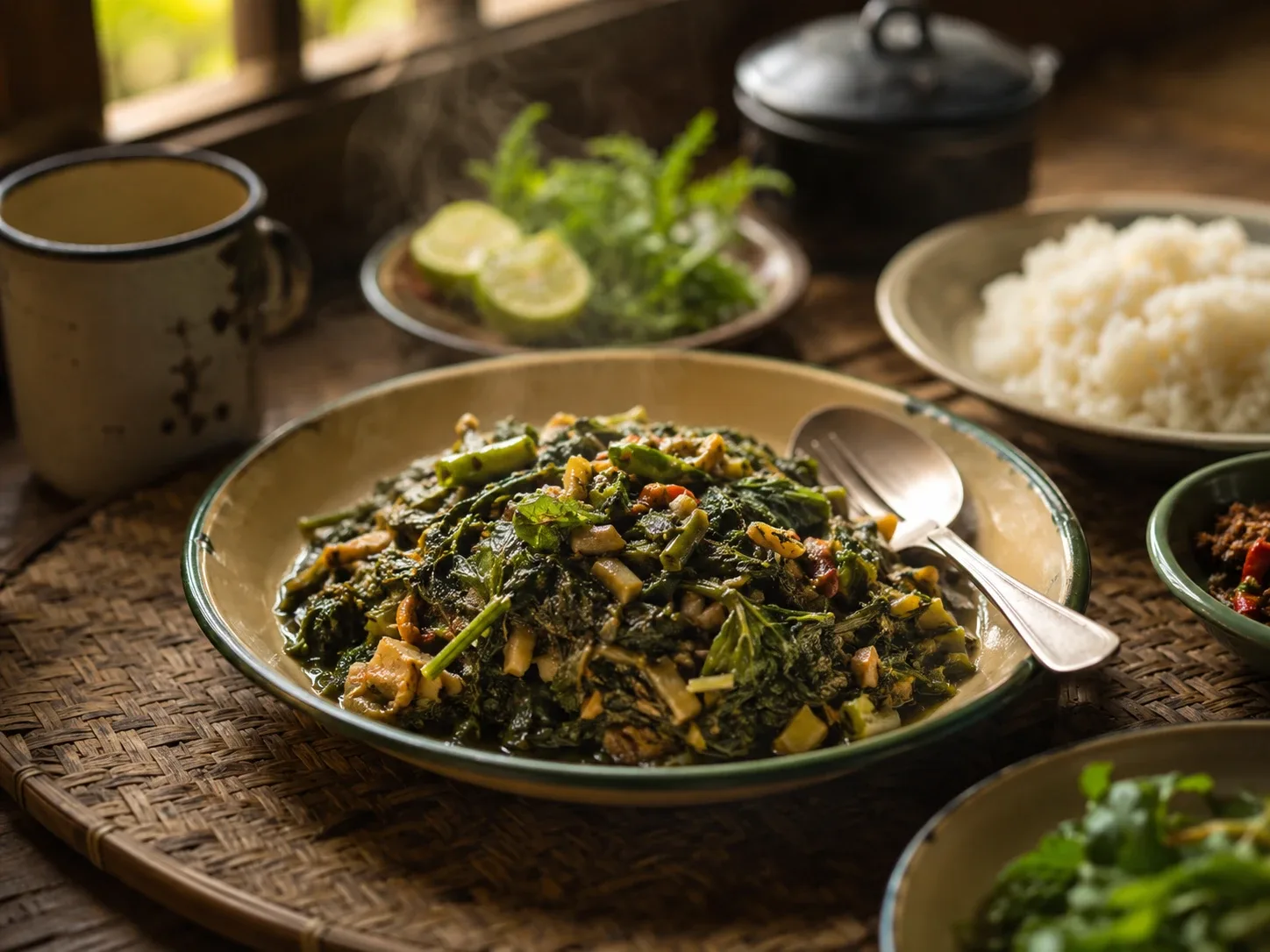
Chin Baung Kyaw, Sour Roselle Leavesချဉ်ပေါင်ကြော်
Lower Burma's beloved sour greens — roselle leaves fried down with bamboo shoots, dried shrimp, and green chili until they collapse into a dark tangy relish.
 ၁
၁Rice & Foundations · 210 min · Intermediate
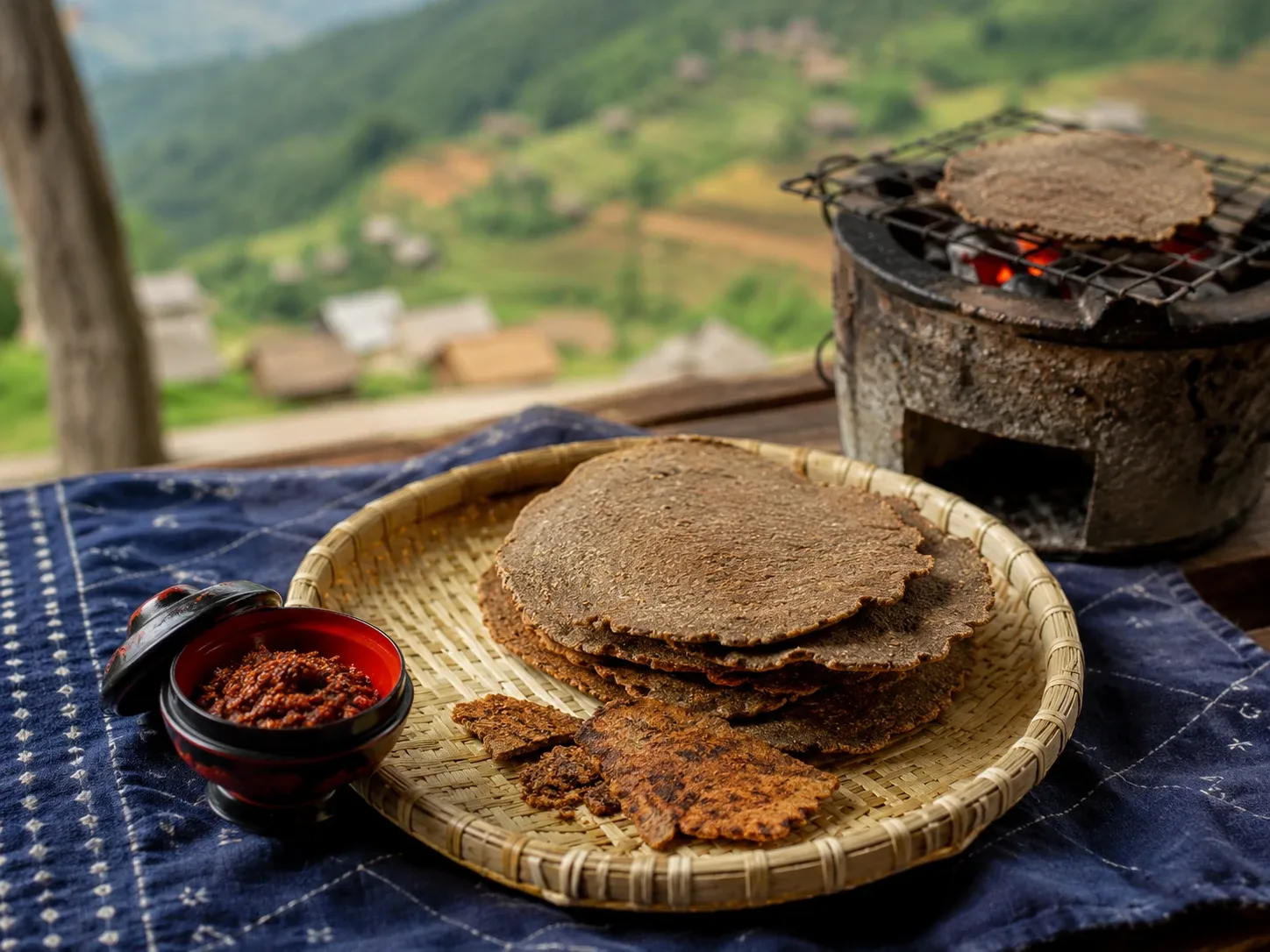
Tua Nao, Shan Fermented Soybean Discsပဲပုပ်
Shan State's seasoning backbone — soybeans boiled, fermented, pounded, and sun-dried into discs you toast over flame and crumble into everything.