Sawhchiar, Rice & Chicken Porridge
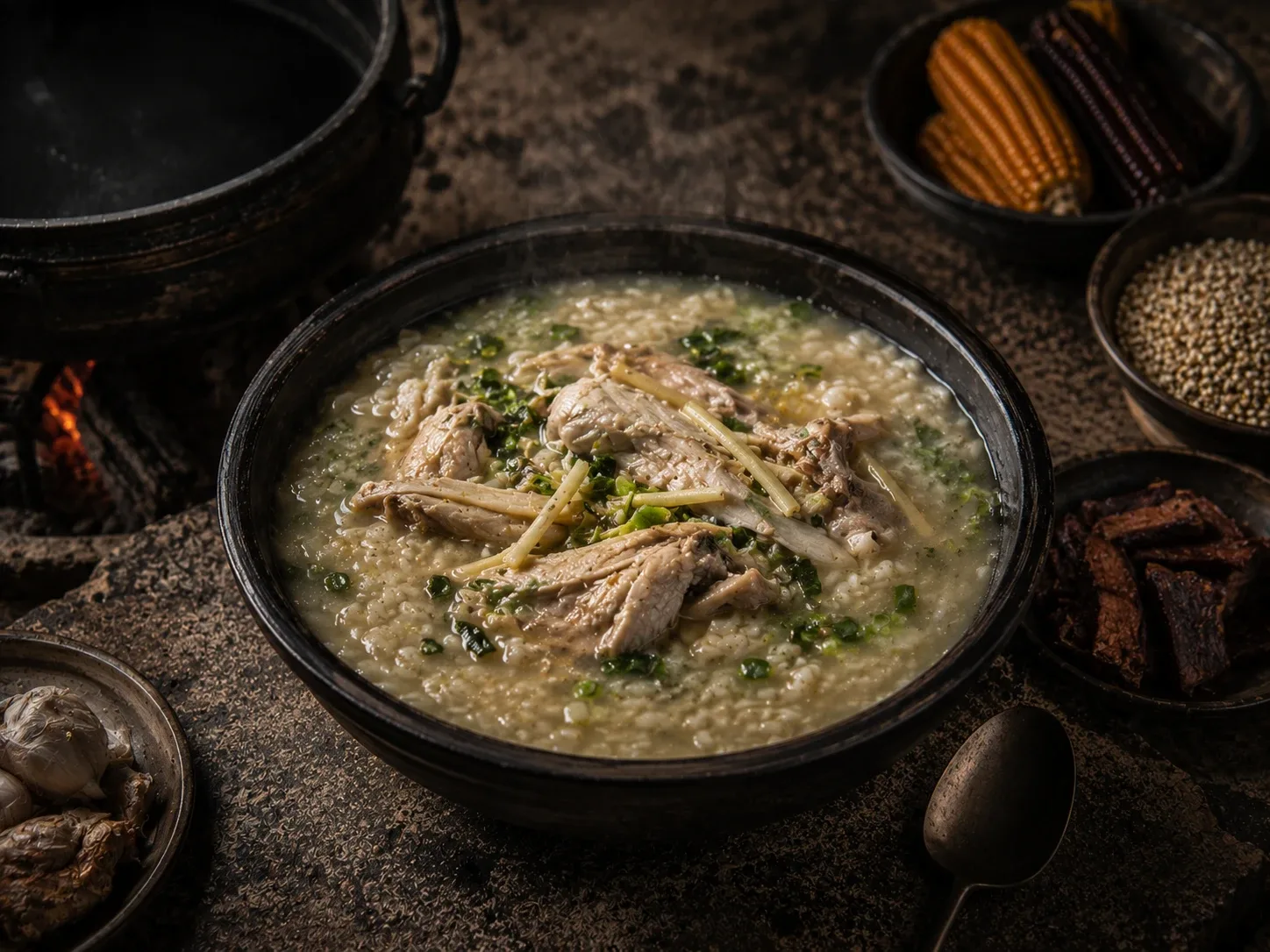
The Chin-Mizo comfort pot — chicken and rice collapsed into a ginger-scented porridge, cooked for guests, new mothers, and cold mornings in the hills.
By Burmese Cookbook Kitchen · July 9, 2026
ချင်း Chin HillsOpening & Diaspora, 1988–present
 ၅
၅- Prep
- 15 min
- Cook
- 75 min
- Serves
- 4
- Level
- Beginner
Every cuisine keeps one dish for the days when eating is an act of care — the pot carried to new mothers, set before travelers, and simmered when someone in the house is unwell. In the Chin and Mizo hills that dish is sawhchiar: rice and chicken collapsed together into a ginger-scented porridge, made in one pot because the point is the making, not the performance. Across the border in Mizoram it is practically the national comfort food, cooked in vast batches at community feasts; on the Myanmar side of the Zo hills the same pot goes by the same name, because the border is newer than the recipe.
The record, honestly: like most Chin cooking, sawhchiar lives in kitchens and community memory rather than books, surfacing in print only through recent food writing about Mizo and Chin tables. We date it by that paper trail and let common sense testify that hill families have been stretching one chicken across many bowls for far longer.
What separates a proper sawhchiar from chicken rice soup is commitment. The rice is not cooked until done; it is cooked until defeated — burst, frayed, and dissolved into a porridge with real body. The broth is built patiently from bones started in cold water, the seasoning stops at ginger and salt, and the fire arrives at the table instead, by way of a spoonful of pounded chili relish stirred in to taste. Gentleness in the pot, heat in the hand — the standing arrangement of the Chin table.
The rice should surrender completely — if you can still count the grains, give the pot twenty more minutes. Sawhchiar is judged by how little it resembles rice.
မီးဖိုချောင်စကား · A word from the kitchen
Ingredientsပါဝင်ပစ္စည်း
Serves 4
Tap to check off as you gather
For the pot
- chicken — bone-in pieces — thighs and drumsticks; a whole jointed bird for a feast pot
- jasmine rice — any everyday long-grain works; broken rice collapses fastest of all
- water
- fresh ginger — half sliced into coins, half cut into fine threads for serving
- garlic — smashed
- small onion — halved through the root
- salt
To finish
- spring onions — sliced
- cilantro — roughly chopped
- black pepper — coarsely ground, at the table
Methodချက်နည်း
Tap a numeral as you finish each step
Step 1: Start the chicken in cold water
Put the chicken and water into a heavy pot together, cold, and bring them up to a boil slowly, skimming the grey foam as it rises. Starting cold pulls a clearer, deeper broth from the bones than dropping meat into boiling water — the porridge has no other source of flavor, so this broth is the whole argument.
Step 2: Add aromatics and simmer
Add the ginger coins, garlic, and onion, drop to a lazy simmer, and cook, partly lidded, for 30 minutes, until the chicken is fully tender. Chin cooking keeps the aromatics few and quiet on purpose — ginger leads, everything else hums.
Step 3: Pull and shred the chicken
Lift the chicken out and set it aside until cool enough to handle, then pull the meat from the bones in large shreds, discarding skin if you like and returning the bones to the pot while the rice cooks — they still have broth to give.
Step 4: Collapse the rice
Rinse the rice once, rain it into the simmering broth, and cook, stirring along the bottom every few minutes, for 35 to 45 minutes. You are cooking the rice far past doneness on purpose — the grains should burst, fray, and thicken the pot into a loose porridge that falls lazily off the spoon. Add hot water if it tightens before the rice has fully given up.
Step 5: Return the meat and season
Fish out the bones, onion, and ginger coins, stir the shredded chicken back in, and season with the salt — taste as you go. The finished pot should taste of chicken, rice, and ginger in that order, gentle enough that a spoonful asks for another.
Step 6: Serve hot with sharp things
Ladle into deep bowls and top with ginger threads, spring onions, cilantro, and a grind of pepper. In the hills a fierce chili relish — hmarcha rawt — sits beside it, and each eater stirs in their own heat. The porridge is the comfort; the table provides the argument.
ခွက်ယောက် · The tools
Equipment
Heavy pot / Dutch oven
အိုးကြီးDeep and heat-retentive — for mohinga broth, long-simmered hin, and deep-frying without temperature crashes.
Shop on Amazon →Box grater / microplane
ခြစ်စက်Fine ginger, green papaya shreds, and toddy-palm jaggery shavings.
Shop on Amazon →
Equipment links are Amazon affiliate links. As an Amazon Associate we earn from qualifying purchases, at no cost to you. Disclosure.
ဟင်းစုံ · Set the table
A Burmese meal is a spread
A Burmese soup sits beside the rice, not on its own. Set the table with:
- Steamed riceထမင်းThe centre of the table — everything else is built around it.
- A curryဟင်းSlow-cooked until the oil returns — the richness the sides cut against.
- Toh sa yar & ngapi dipတို့စရာRaw and blanched vegetables with a pungent fish-paste dip — the fresh, bitter counterpoint.
- Balachaungဘလချောင်းThe crispy shrimp relish that lives on every Burmese table.
- Crispy fried shallotsကြက်သွန်ကြော်A spoonful of crunch and sweet shallot oil over anything.
Questions from the kitchen
How is this different from Burmese hsan byoke?
Same family, different accent. Lowland hsan byoke is a teahouse congee, often gilded with fried garlic, fish sauce, and condiments; sawhchiar is the hill version — meat and rice collapsed together in one pot, seasoned with ginger and salt alone, with the heat arriving separately as a chili relish. It eats less like a garnished congee and more like a whole chicken dinner that melted.
Can I make it with pork?
Yes — pork sawhchiar is just as traditional, made with bony cuts like ribs or hock, and at festivals the pot is scaled up to feed whoever arrives. Give pork 60 minutes of simmering before the rice goes in, and skim a little more generously.
It thickened into a solid overnight. Normal?
Completely. Burst rice keeps drinking broth as it cools, and a refrigerated pot sets like polenta. Reheat gently with a cup or two of hot water, stirring from the bottom, and it loosens back into itself — many would say improved.
နောက်တစ်ခု · Cook next
Keep the wok hot
 ၅
၅Soups & Broths · 135 min · Beginner
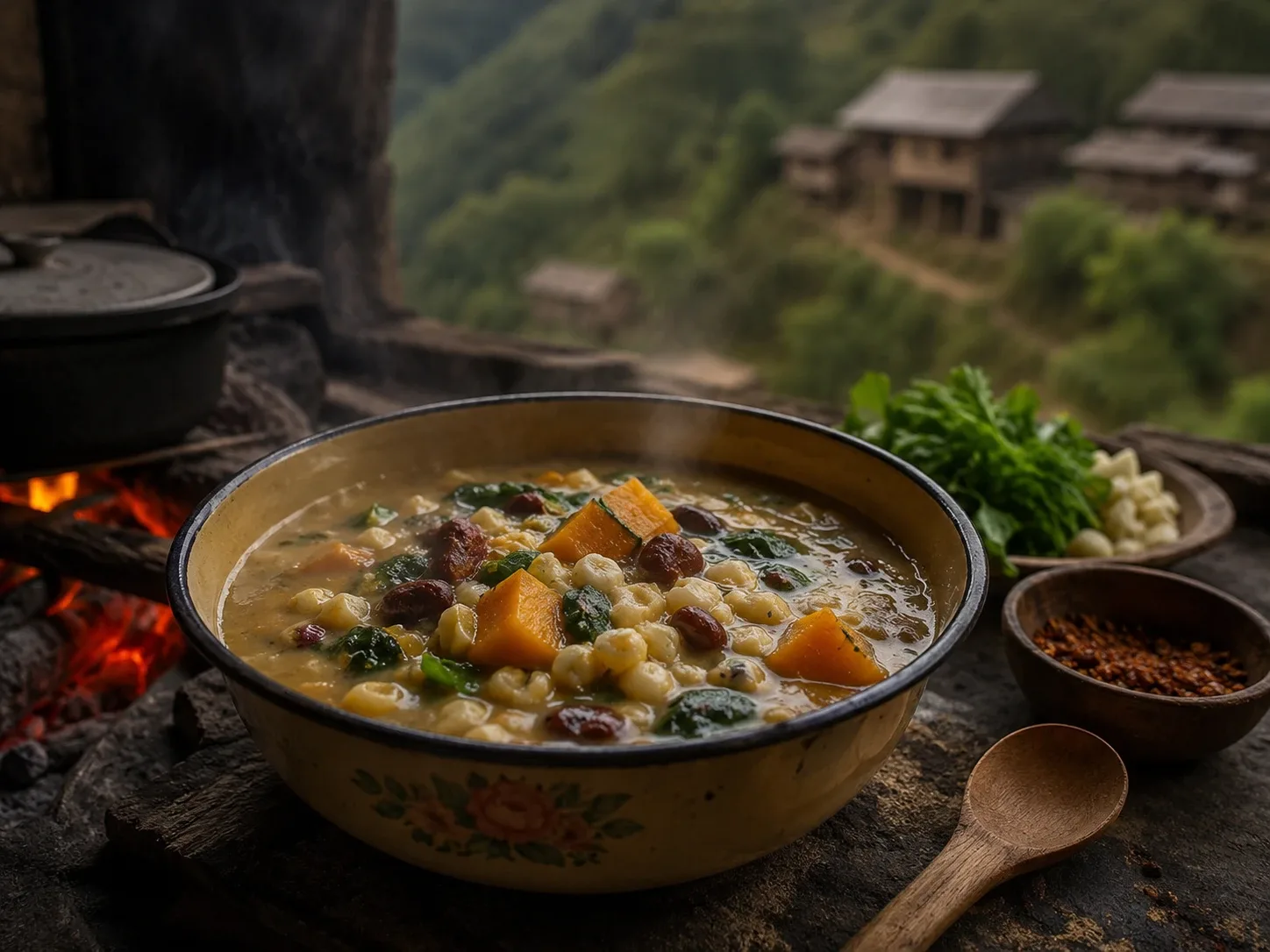
An Buti, the Meatless Corn Soup
Sabuti's meatless sibling from the Chin hills — hominy corn simmered with red beans, pumpkin, and greens until the pot thickens into gentle, vegetable plenty.
 ၅
၅Soups & Broths · 55 min · Intermediate
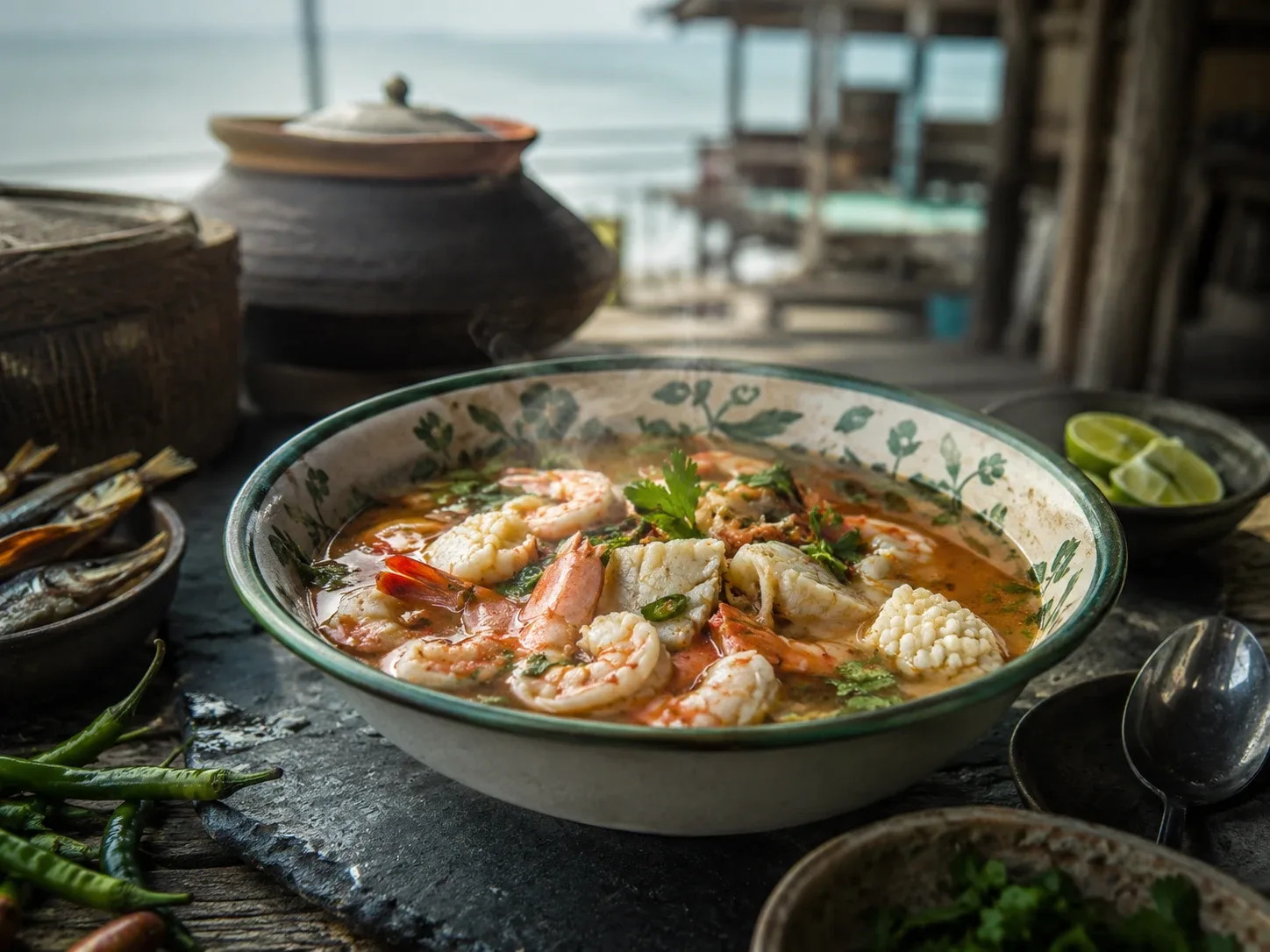
Ar Pu Shar Pu, the Burning-Mouth Bowl
Sittwe's famous hot-and-sour seafood soup — fish, prawns, and squid in a tamarind broth pounded through with green chilies, finished with lime and herbs.
 ၃
၃Curries · 100 min · Intermediate
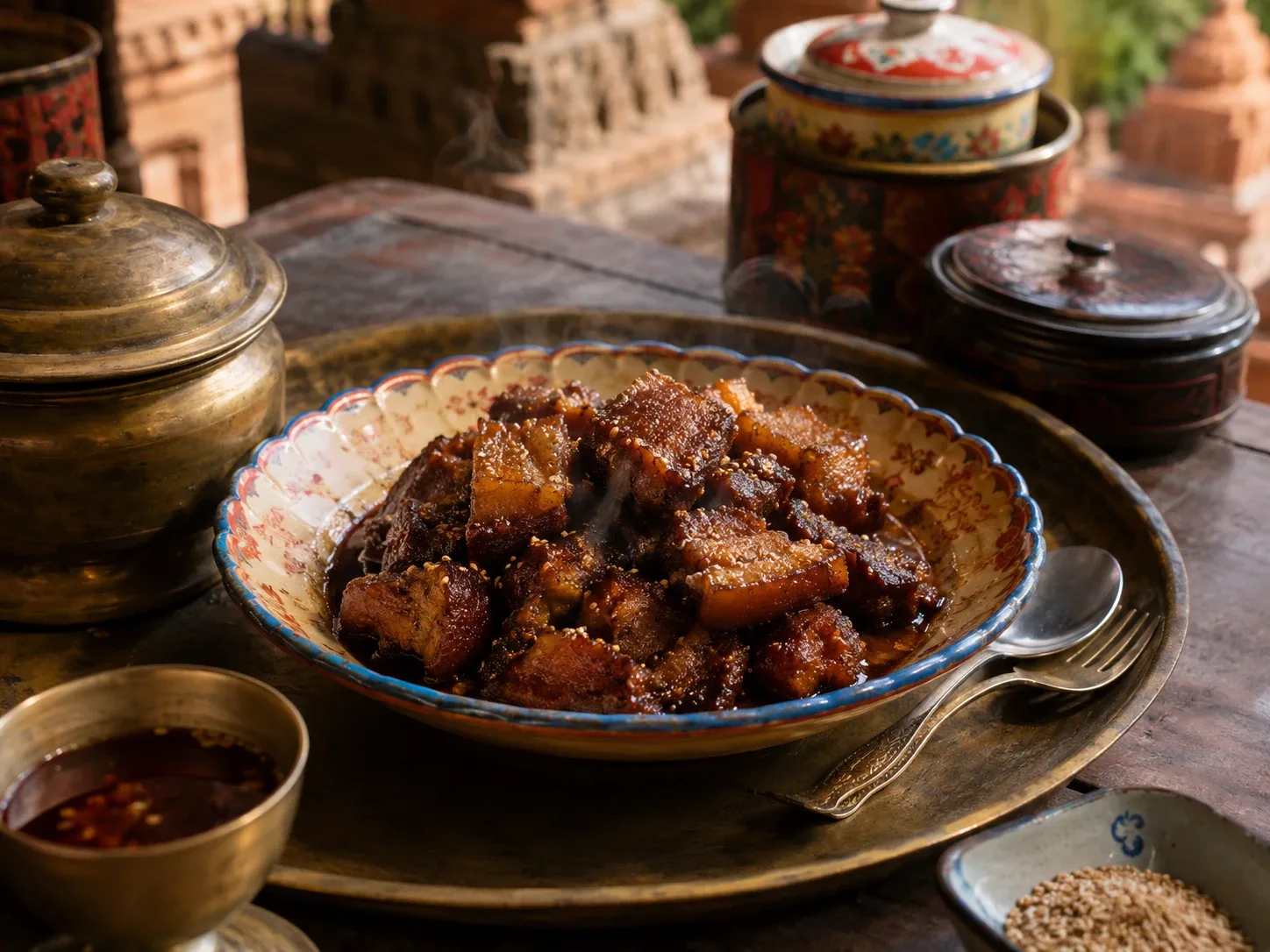
Wet Thar Pone Yay Gyi, Bagan Pork Curryပုန်းရည်ကြီးဝက်သား
Bagan's signature pork curry — pone yay gyi braised si pyan style until the oil returns, the sauce dark and sour with fermented horse-gram bean paste.