Hsan Byoke, Teahouse Rice Porridge
ဆန်ပြုတ်
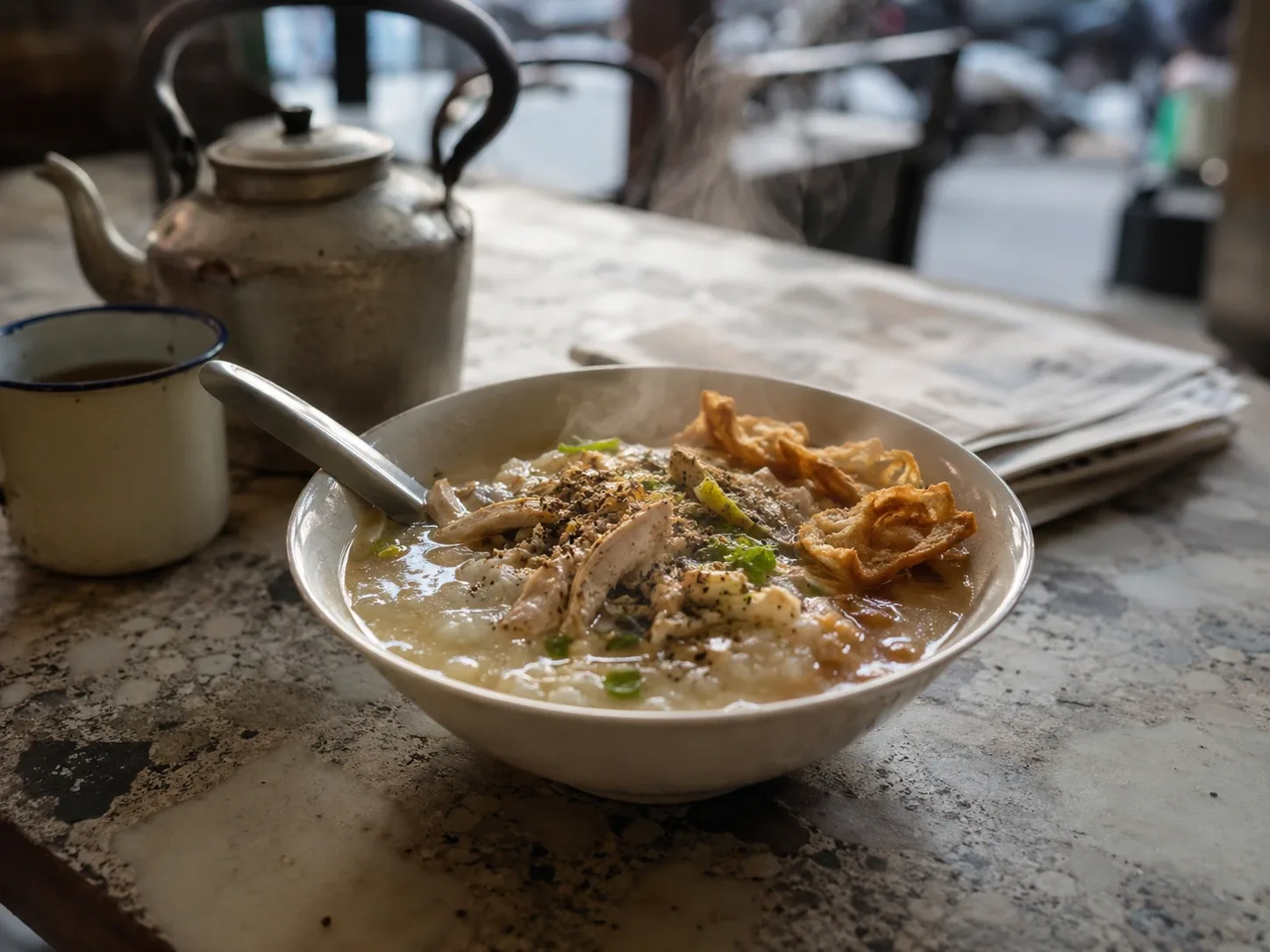
Burmese teahouse rice porridge — chicken simmered in a ginger broth with rice cooked until it collapses, finished with garlic oil, pepper, and crisp dough.
Also spelled: San Byoke · Hsan Pyoke
By Burmese Cookbook Kitchen · July 9, 2026
ရန်ကုန် Yangon & Lower BurmaBritish Burma, 1826–1948
 ၅
၅- Prep
- 15 min
- Cook
- 75 min
- Serves
- 4
- Level
- Beginner
Hsan byoke — literally boiled rice — is what a Burmese teahouse serves the early riser, the night-shift worker, the child home sick, and anyone whose stomach has filed a complaint. It is rice porridge in the great Asian family of congees, and Yangon makes no secret of where the technique came from: the city's Chinese cooks and its colonial-era port, which stirred Cantonese breakfast habits into Burmese mornings until nobody could say where one ended and the other began. What makes it Burmese is the finish — fish sauce instead of soy, garlic oil with its crisp sediment, a hard dusting of white pepper, and rounds of e kya kway, the fried dough stick, scattered on top like croutons that grew up in a teahouse.
Rice gruel itself is as old as rice, but this bowl — teahouse fare, dough stick and all — belongs to the world colonial Rangoon built, so that is the era we honestly file it under.
The technique asks one thing of you: patience with the rice. The grains must burst and collapse completely, which takes a lazy 40 minutes and an occasional scrape along the bottom of the pot. Rush it and you have soup with rice floating in it; see it through and the porridge takes on a body that needs no cream, no butter, nothing but its own dissolved starch. It is the gentlest recipe in this book, and one of the most quietly loved.
Porridge thickens as it stands. Keep a kettle of hot water beside the pot and loosen every serving — hsan byoke should slide off the spoon, not sit on it.
မီးဖိုချောင်စကား · A word from the kitchen
Ingredientsပါဝင်ပစ္စည်း
Serves 4
Tap to check off as you gather
For the broth and chicken
- chicken thighs — bone-in, skin-on — the bones make the broth
- water
- fresh ginger — half sliced for the pot, half cut into fine needles for serving
- garlic — smashed
- salt
- fish sauce
For the porridge
- jasmine rice — rinsed once only — the surface starch is doing the work
- glutinous rice — optional, for extra body; many Yangon cooks swear by it
To serve
- peanut oil
- garlic — minced, for the garlic oil
- scallions — thinly sliced
- cilantro
- white pepper — ground — be generous
- fried dough sticks — e kya kway, sliced into rounds; store-bought youtiao works
- lime — optional, in wedges
Methodချက်နည်း
Tap a numeral as you finish each step
Step 1: Make the broth
Put the chicken, sliced ginger, smashed garlic, and salt in a pot with the water. Bring to a simmer, skim once, and cook gently for 30 minutes, until the thighs are tender. Lift the chicken out to cool; keep every drop of broth. Gentle heat matters here — a boiled thigh is a stringy thigh.
Step 2: Cook the rice to collapse
Rain the jasmine rice — and glutinous rice, if using — into the simmering broth. Cook uncovered at a lazy bubble for 35 to 45 minutes, stirring along the bottom every 5 minutes or so. You are not cooking rice; you are destroying it. The grains must burst and slump into the liquid, because that released starch is the entire body of the porridge.
Step 3: Make the garlic oil
While the porridge cooks, warm the peanut oil in a small pan over low heat and fry the minced garlic to the palest gold, 3 to 4 minutes. Off the heat it will deepen a shade more. Bitter brown garlic will haunt every bowl, so err pale.
Step 4: Return the chicken
Pull the cooled chicken off the bones and shred it with your fingers — not a knife; ragged edges hold the porridge better than neat cubes. Stir it back into the pot with the fish sauce and let it warm through. Taste: it should be gently savory, a background hum, because the toppings bring the volume.
Step 5: Serve and finish loudly
Ladle into deep bowls and let everyone finish their own: a spoonful of garlic oil with its crisp bits, scallions, cilantro, ginger needles, a real dusting of white pepper, and a handful of e kya kway rounds dropped on at the last second so they stay crisp. Lime for those who like an edge.
ခွက်ယောက် · The tools
Equipment
Heavy pot / Dutch oven
အိုးကြီးDeep and heat-retentive — for mohinga broth, long-simmered hin, and deep-frying without temperature crashes.
Shop on Amazon →Mandoline slicer
အလွှာစက်Paper-thin shallots for even frying and cabbage fine enough for thoke — seconds, not knife-years.
Shop on Amazon →Box grater / microplane
ခြစ်စက်Fine ginger, green papaya shreds, and toddy-palm jaggery shavings.
Shop on Amazon →Heavy kettle
ရေနွေးအိုးTeahouse tea starts with water at a hard rolling boil — and lots of it, all morning.
Shop on Amazon →
Equipment links are Amazon affiliate links. As an Amazon Associate we earn from qualifying purchases, at no cost to you. Disclosure.
ဟင်းစုံ · Set the table
A Burmese meal is a spread
A Burmese soup sits beside the rice, not on its own. Set the table with:
- Steamed riceထမင်းThe centre of the table — everything else is built around it.
- A curryဟင်းSlow-cooked until the oil returns — the richness the sides cut against.
- Toh sa yar & ngapi dipတို့စရာRaw and blanched vegetables with a pungent fish-paste dip — the fresh, bitter counterpoint.
- Balachaungဘလချောင်းThe crispy shrimp relish that lives on every Burmese table.
- Crispy fried shallotsကြက်သွန်ကြော်A spoonful of crunch and sweet shallot oil over anything.
Questions from the kitchen
Is this just congee?
It is congee's Burmese life. The technique arrived with Chinese cooks and Yangon's port, but the seasoning — fish sauce, garlic oil, white pepper, fried dough on top — is how the city made it its own. Order hsan byoke in a teahouse and nobody is thinking about origins.
Can I use leftover cooked rice?
Yes, and many households do exactly that. Simmer about 400 g cooked rice in the broth for 20 minutes, mashing a little against the pot. The texture is slightly less silky than porridge built from raw grains, but it is the honest weeknight version.
What else can go on top?
A soft-boiled egg, a spoon of preserved mustard greens, or fried shallots are all seen in Yangon. Some shops offer offal or fish versions. The non-negotiables are garlic oil, pepper, and something crisp.
နောက်တစ်ခု · Cook next
Keep the wok hot
 ၅
၅Soups & Broths · 135 min · Beginner
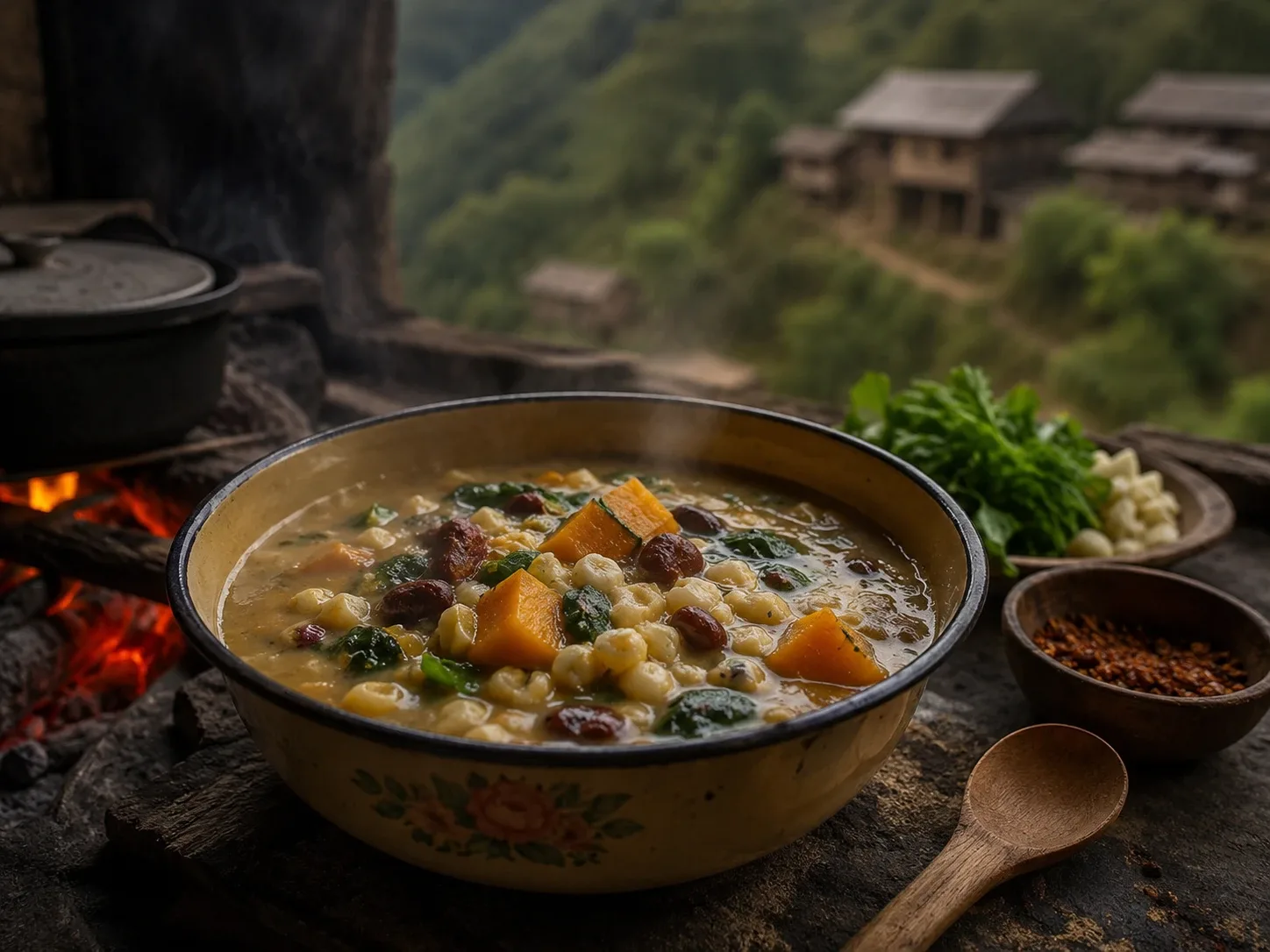
An Buti, the Meatless Corn Soup
Sabuti's meatless sibling from the Chin hills — hominy corn simmered with red beans, pumpkin, and greens until the pot thickens into gentle, vegetable plenty.
 ၅
၅Soups & Broths · 55 min · Intermediate
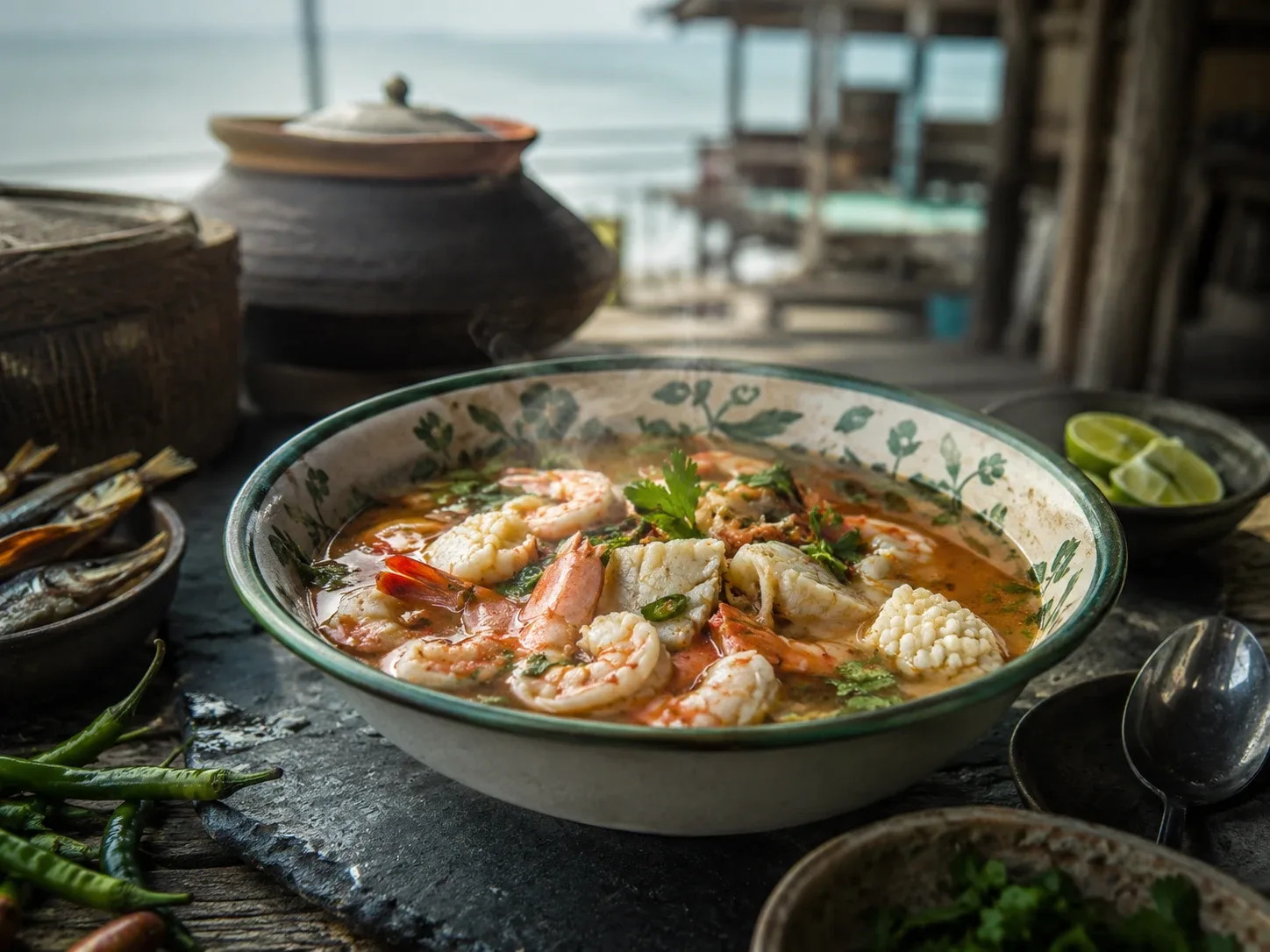
Ar Pu Shar Pu, the Burning-Mouth Bowl
Sittwe's famous hot-and-sour seafood soup — fish, prawns, and squid in a tamarind broth pounded through with green chilies, finished with lime and herbs.
 ၇
၇Sweets & Mont · 105 min · Intermediate
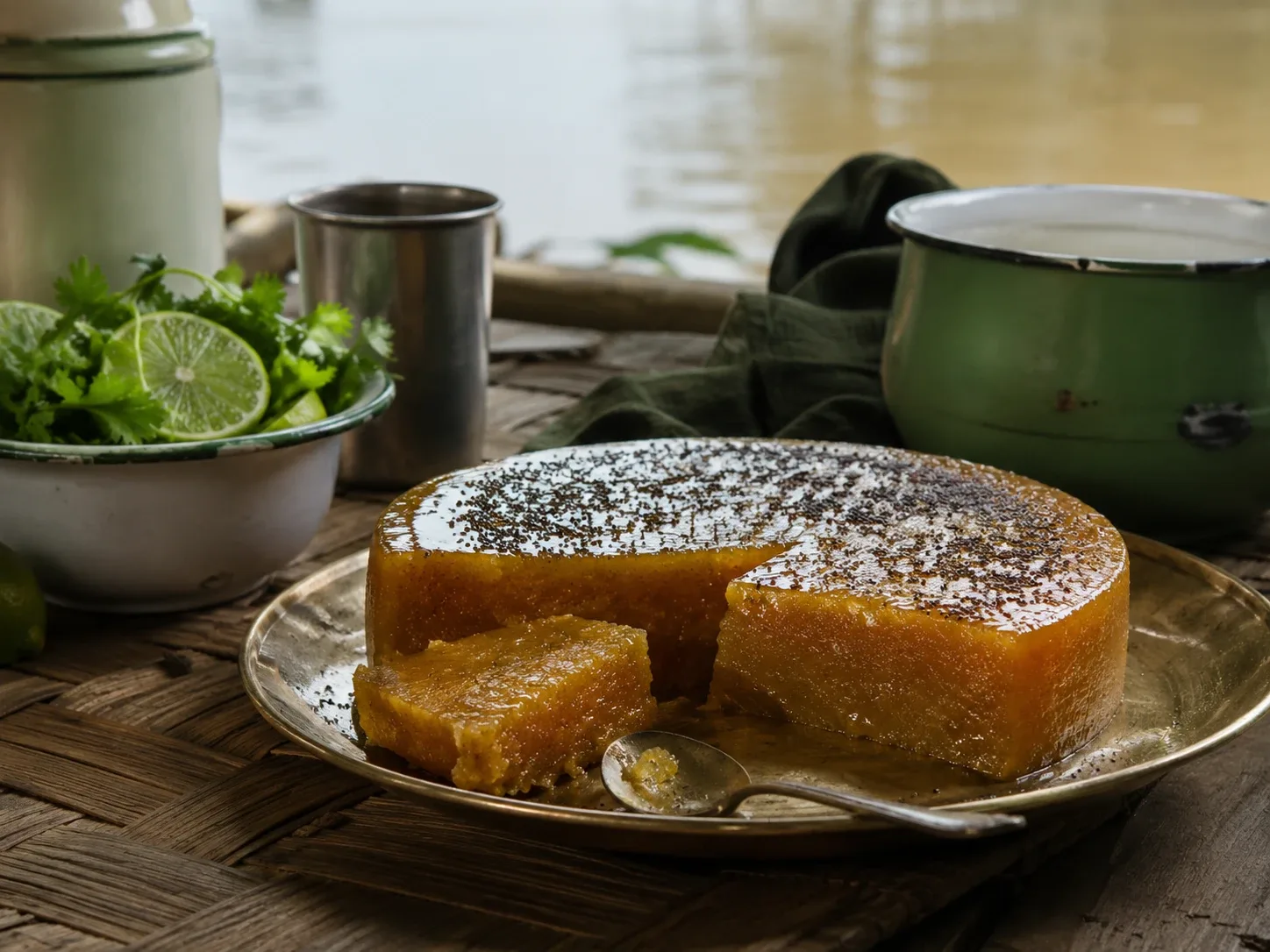
Pathein Halawa, the Delta's Gilded Sweetပုသိမ်ဟလဝါ
Pathein's famous glutinous-rice halawa — coconut milk, sugar, and ghee stirred patiently down to a dense, gleaming amber slab crowned with toasted poppy seeds.