Kachin Si Htu
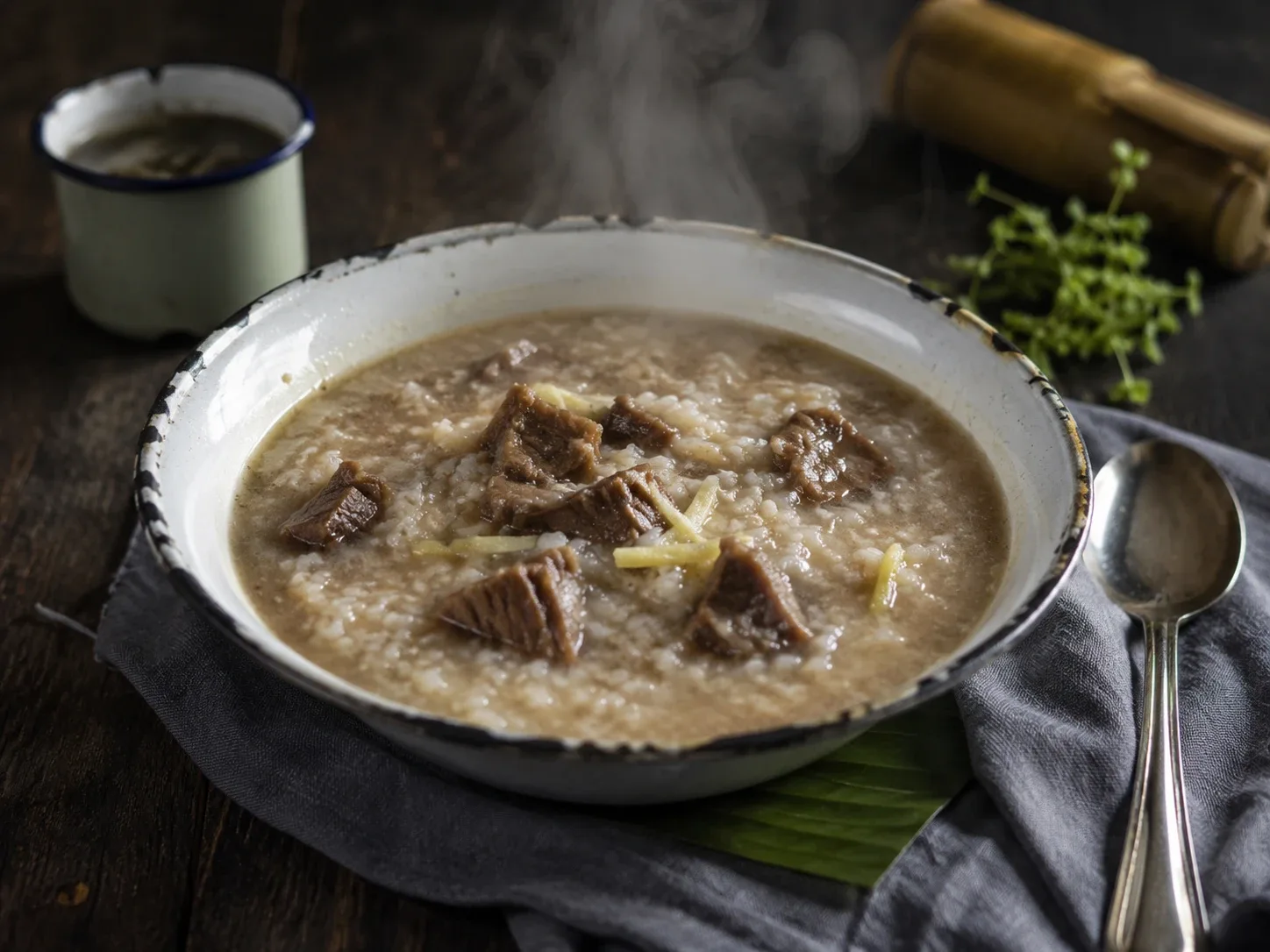
Kachin si htu — beef simmered tender with ginger and garlic, then thickened with toasted pounded sticky rice into a warming, feast-day porridge-stew.
By Burmese Cookbook Kitchen · July 9, 2026
ကချင် Kachin StateOpening & Diaspora, 1988–present
 ၅
၅- Prep
- 20 min
- Cook
- 100 min
- Serves
- 6
- Level
- Beginner
Every cuisine that loves rice eventually asks it to do more than sit beside the meal, and si htu is the Kachin answer: sticky rice toasted until it smells of popcorn, pounded to a rough powder, and stirred into a pot of slow-simmered beef until the broth turns to velvet. The name is Jinghpaw, not Burmese, which tells you where you are — this is feast food of the Kachin hills, ladled out at manau gatherings and family occasions, a dish built to feed many people generously from one cow and one sack of rice.
It behaves like a cousin of congee but thinks like a stew. The beef is simmered with ginger, garlic, and salt — no frying, no si pyan, barely a gleam of fat — and the toasted rice does the work that oil and onions do in a lowland curry, giving the pot body, a faint roasted sweetness, and the kind of warmth that matters in a place where winter is real. Crushed Sichuan pepper goes in at the end, a hum rather than a shout, with raw herbs folded through off the heat.
Like most Kachin home cooking, si htu lived in kitchens and feast grounds long before it lived on paper; it reached the wider Burmese table with the Kachin restaurant wave of the 2000s, so we date it modern and say so. The one technique that decides everything is the toasting — raw rice powder makes paste, toasted makes velvet. Stir along the bottom, add the pepper late, and serve it hot enough to fog your glasses.
Toast the rice until it smells like popcorn before you grind it — raw rice powder thickens to wallpaper paste, toasted rice thickens to velvet.
မီးဖိုချောင်စကား · A word from the kitchen
Ingredientsပါဝင်ပစ္စည်း
Serves 6
Tap to check off as you gather
For the beef
- beef chuck — or brisket, cut into 3 cm chunks — a cut with some connective work to do
- fresh ginger — sliced thick and bruised
- garlic — bruised, skins off
- salt
- water
For the body
- glutinous rice — toasted and ground — this is the thickener; jasmine rice works at a small cost in silkiness
- Sichuan peppercorns — lightly crushed, added late
- dried red chilies — left whole
To finish
- spring onions — sliced
- cilantro — roughly torn
- sawtooth coriander — sliced into ribbons, if you can get it
Methodချက်နည်း
Tap a numeral as you finish each step
Step 1: Toast and grind the rice
In a dry pan over medium-low heat, toast the glutinous rice, shaking often, until the grains turn deep gold and smell like popcorn — 6 to 8 minutes. Cool, then grind to a coarse powder in a mortar or spice grinder. Toasting first is everything: raw rice powder makes a pasty, chalky pot; toasted rice makes a silky one with a faint roasted sweetness.
Step 2: Simmer the beef
Put the beef, ginger, garlic, salt, and water into a pot together, cold, and bring slowly to a bare simmer. Skim the foam in the first ten minutes, then partly cover and cook at the laziest possible bubble for 70 to 80 minutes, until the beef yields to a spoon. No frying, no oil — the Kachin pot builds its depth from beef and patience.
Step 3: Thicken with the rice
Whisk the ground toasted rice into a cup of cool water until smooth, then stir it back into the pot with the whole dried chilies. Simmer gently, stirring along the bottom, for 15 minutes, until the broth turns from thin to clinging — a loose porridge that coats the beef. Rice powder settles and catches, so the stirring is not optional.
Step 4: Add the pepper late
Crush the Sichuan peppercorns and stir them in for the final 10 minutes only. Steeped from the start they turn bitter; added late they land as the citrusy hum behind the ginger that marks this as a northern pot.
Step 5: Rest and finish
Taste and correct with salt — salt alone, in the hill manner. Off the heat, fold in the spring onions, cilantro, and sawtooth coriander and let the pot stand 10 minutes; si htu thickens a shade more as it settles. Serve in deep bowls, on its own or over plain rice, with something sour alongside.
ခွက်ယောက် · The tools
Equipment
Heavy pot / Dutch oven
အိုးကြီးDeep and heat-retentive — for mohinga broth, long-simmered hin, and deep-frying without temperature crashes.
Shop on Amazon →Stone mortar & pestle
ဆုံFor garlic-ginger paste, pounded dried shrimp fluff, and crushed peanuts — the blender lies about texture; the stone doesn’t.
Shop on Amazon →
Equipment links are Amazon affiliate links. As an Amazon Associate we earn from qualifying purchases, at no cost to you. Disclosure.
ဟင်းစုံ · Set the table
A Burmese meal is a spread
A Burmese soup sits beside the rice, not on its own. Set the table with:
- Steamed riceထမင်းThe centre of the table — everything else is built around it.
- A curryဟင်းSlow-cooked until the oil returns — the richness the sides cut against.
- Toh sa yar & ngapi dipတို့စရာRaw and blanched vegetables with a pungent fish-paste dip — the fresh, bitter counterpoint.
- Balachaungဘလချောင်းThe crispy shrimp relish that lives on every Burmese table.
- Crispy fried shallotsကြက်သွန်ကြော်A spoonful of crunch and sweet shallot oil over anything.
Questions from the kitchen
How thick should si htu be?
A loose porridge — thicker than soup, looser than congee, just enough body that a spoonful holds its shape for a breath before leveling. If it sets up stiff as it rests, loosen it with hot water; the flavor takes dilution far better than the texture takes neglect.
Can I make it with chicken or offal?
Both are traditional directions. A jointed chicken needs only 45 minutes of simmering before the rice goes in, and at Kachin feasts the pot often carries tripe and offal cooked much longer — richer, deeper, and worth trying if your butcher cooperates.
Is glutinous rice essential?
It is the authentic thickener and gives the silkiest body. Jasmine rice, toasted and ground the same way, thickens honestly but with a slightly grainier finish. Do not reach for cornstarch — it gives gloss without the roasted flavor, and the roasted flavor is half the dish.
Can I make it ahead?
Yes, and it reheats kindly — but it will have set to a near-solid in the fridge. Warm it gently with a splash of water, stirring from the bottom, and add a fresh round of herbs at serving. Two days is the honest ceiling.
နောက်တစ်ခု · Cook next
Keep the wok hot
 ၅
၅Soups & Broths · 135 min · Beginner
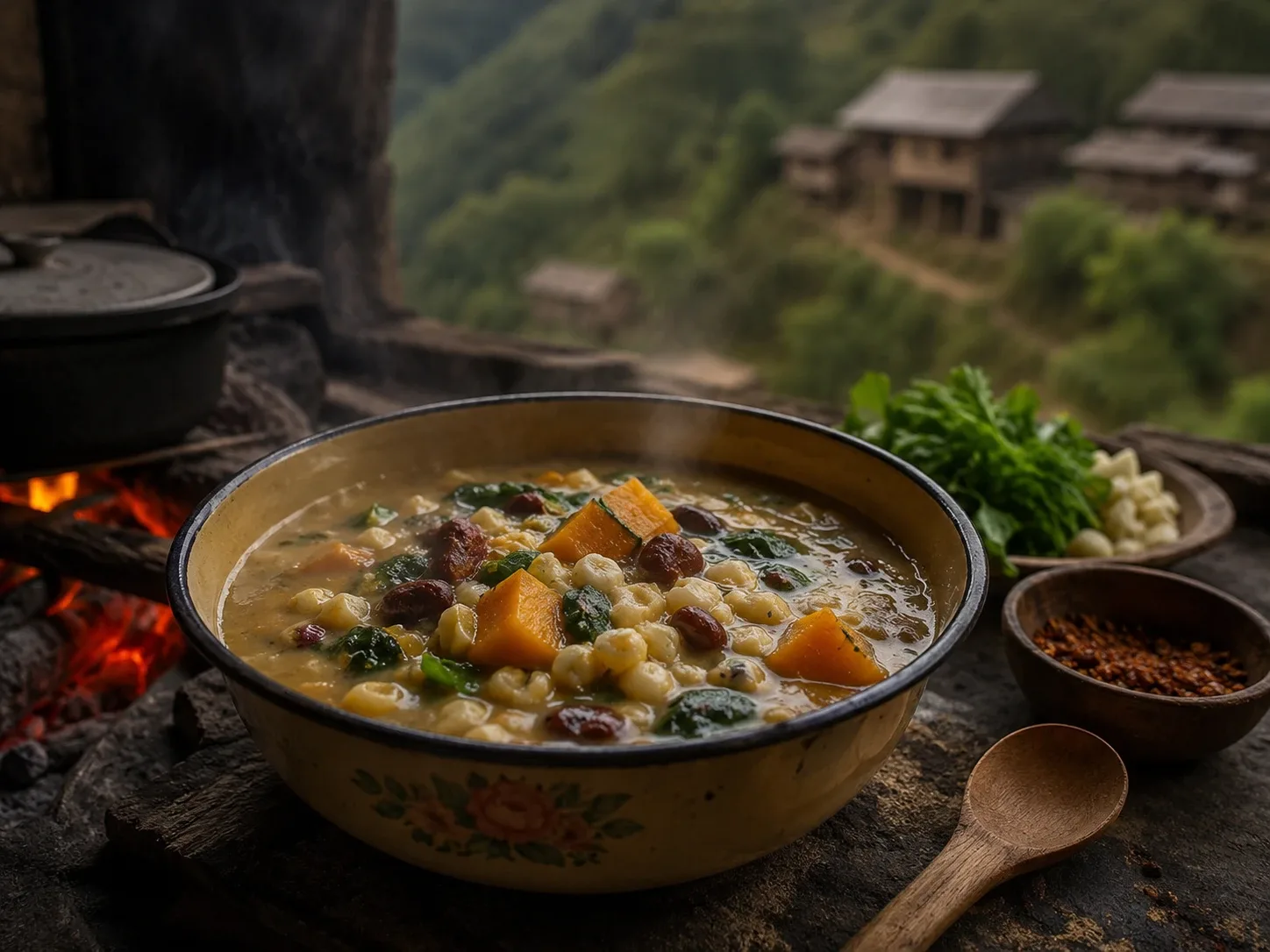
An Buti, the Meatless Corn Soup
Sabuti's meatless sibling from the Chin hills — hominy corn simmered with red beans, pumpkin, and greens until the pot thickens into gentle, vegetable plenty.
 ၅
၅Soups & Broths · 55 min · Intermediate
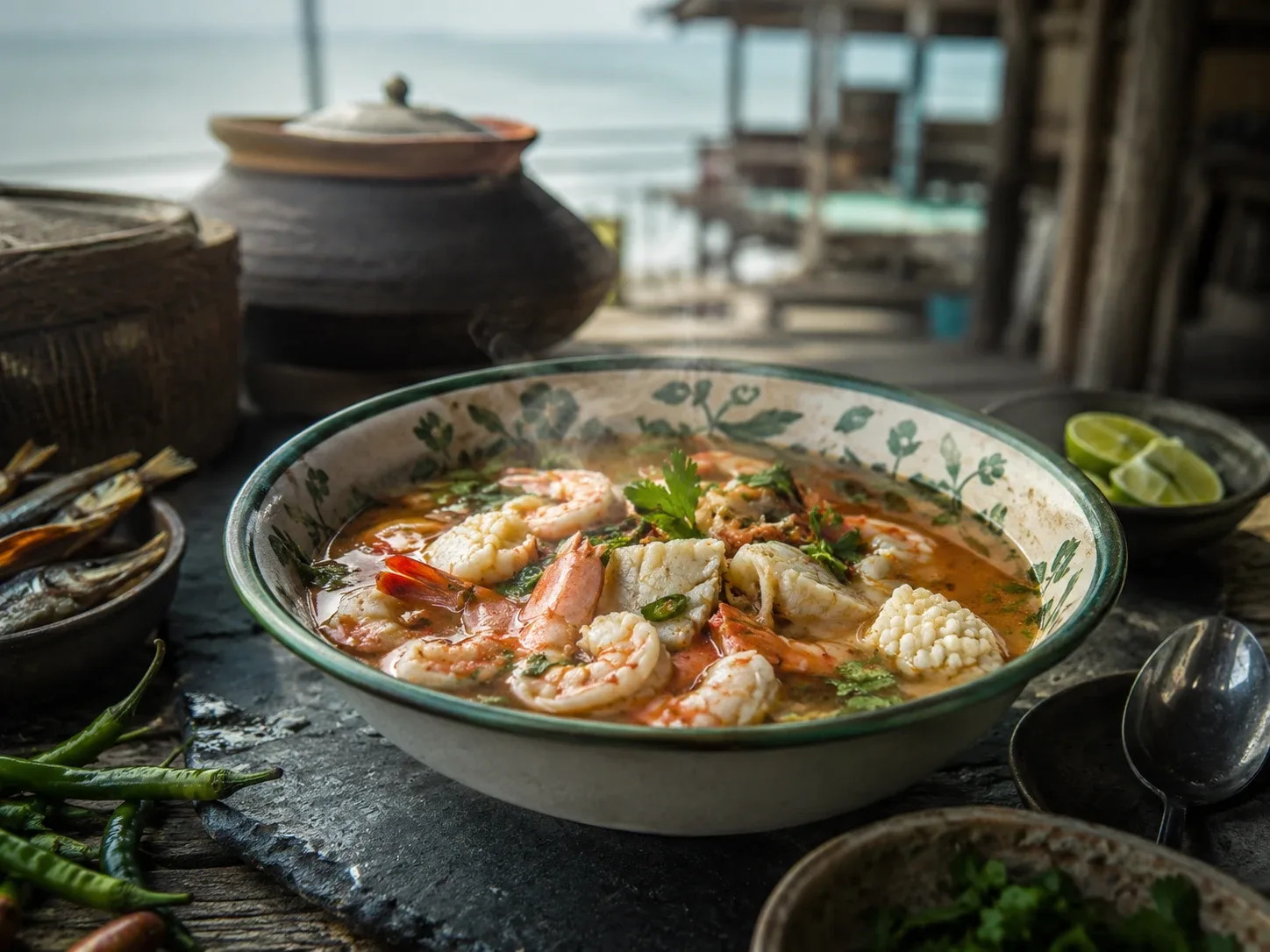
Ar Pu Shar Pu, the Burning-Mouth Bowl
Sittwe's famous hot-and-sour seafood soup — fish, prawns, and squid in a tamarind broth pounded through with green chilies, finished with lime and herbs.
 ၄
၄Salads & Thoke · 25 min · Beginner
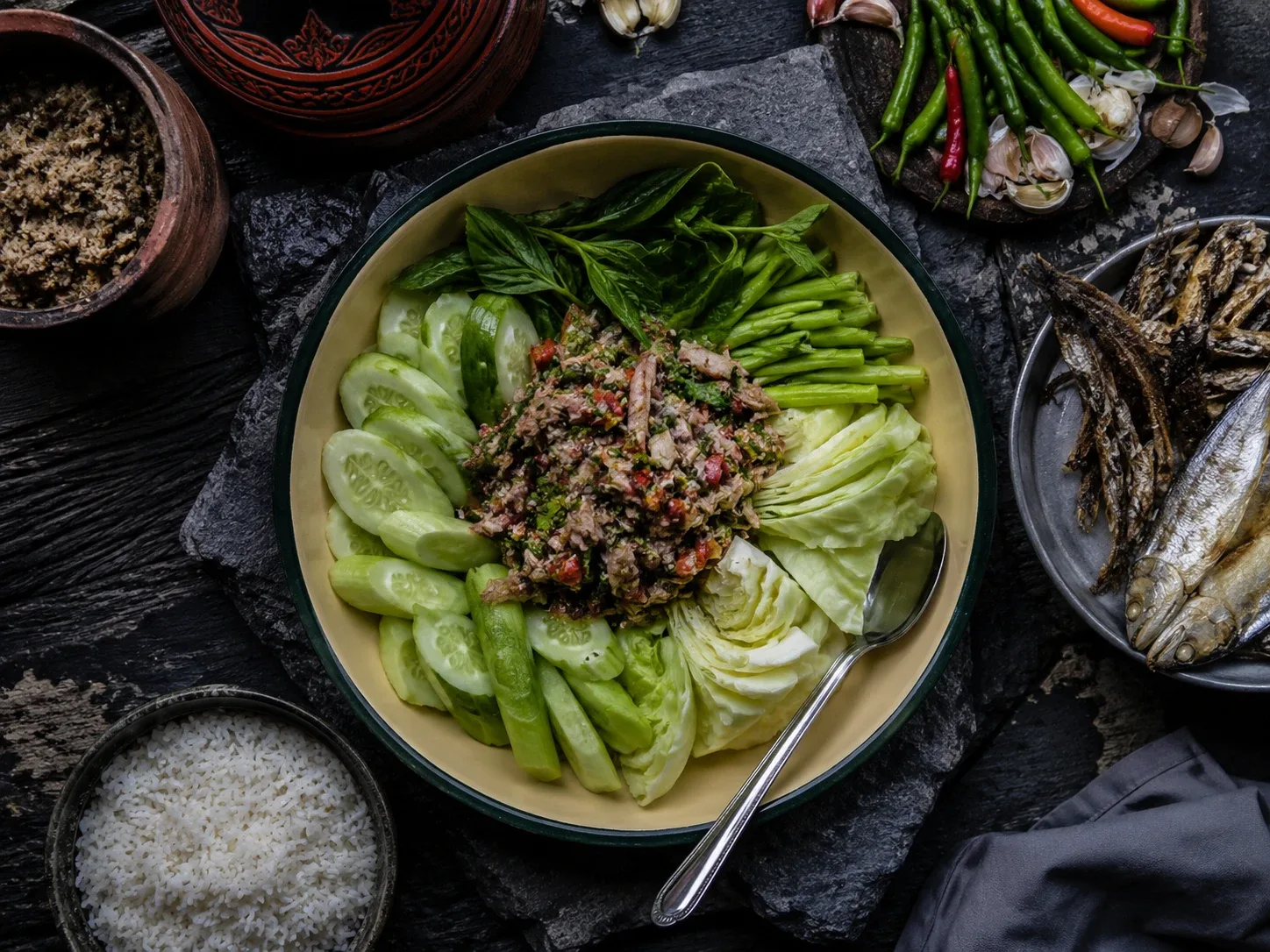
Rakhine Ngapi Thoke, the Pounded Fireငါးပိသုပ်
Rakhine's roasted fish-paste salad — marine ngapi pounded with green chili, garlic, and lime, served the western-coast way with crisp vegetables and rice.