Kyay Oh, the Copper-Pot Soup
ကြေးအိုး
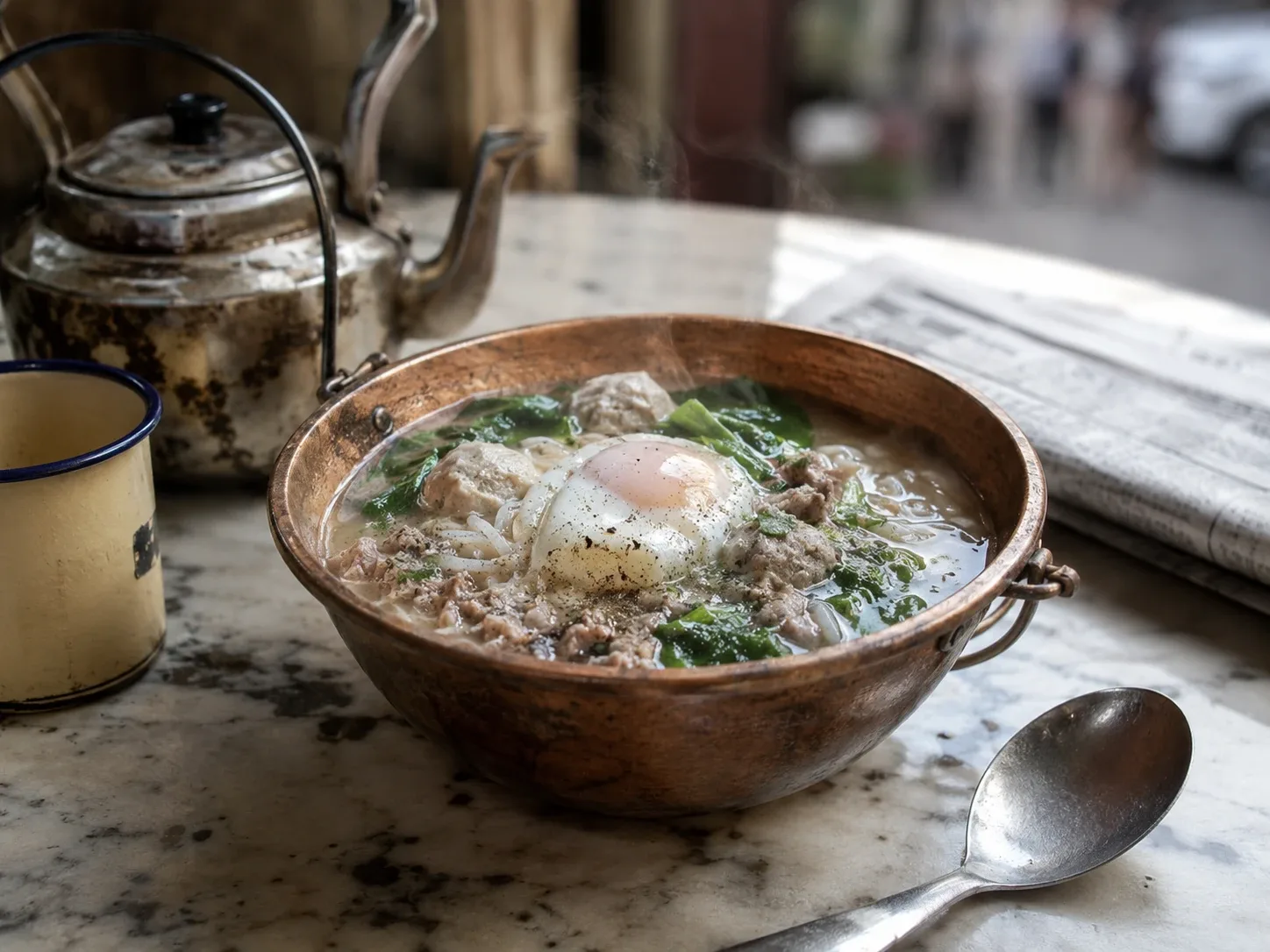
Yangon's copper-pot noodle soup from Chinatown — a peppery pork-bone broth with rice noodles, meatballs, wilted greens, and a barely set egg on top.
By Burmese Cookbook Kitchen · July 9, 2026
ရန်ကုန် Yangon & Lower BurmaOpening & Diaspora, 1988–present
 ၅
၅- Prep
- 30 min
- Cook
- 110 min
- Serves
- 4
- Level
- Intermediate
Kyay oh means, simply, copper pot — the vessel the soup once bubbled in at Chinese-run shops in downtown Yangon, and eventually the name of the dish itself. It belongs to the city's Chinatown, the blocks around Maha Bandula Road where Cantonese and Hokkien families have cooked for generations, and it is one of the clearest cases of a Chinese dish that Burma simply absorbed: nobody in Yangon thinks of kyay oh as foreign food. It is what you eat after work, after school, after a late night — a pork-bone broth white with pepper, noodles, meatballs, greens, and an egg poached directly in the soup.
The dish as Yangon knows it is a twentieth-century creature, and its modern fame is more recent still — the copper-pot restaurant chains that spread it to every township date from the late 1980s onward. We file it honestly under the modern era; its ancestors are older, but this exact bowl is city food of living memory.
Two things decide a good kyay oh. First, the broth must be clean — bones blanched, pot never boiling — because there is no chili or lemongrass to hide behind; white pepper does all the warming. Second, the egg goes into the pot at the end, so the white sets in the broth and the yolk stays soft enough to break over your noodles. Get those right, add good garlic oil, and you have Yangon in a bowl: Chinese bones, Burmese appetite, no apology either way.
The egg goes in at the very end and comes out barely set — if your yolk is hard, your broth was boiling when it should have been smiling.
မီးဖိုချောင်စကား · A word from the kitchen
Ingredientsပါဝင်ပစ္စည်း
Serves 4
Tap to check off as you gather
For the broth
- pork bones — neck or leg bones — ask the butcher to crack them
- water — plus more for blanching the bones
- garlic — smashed, skins on
- fresh ginger — sliced
- onion — halved, unpeeled
- white pepper — whole peppercorns, lightly cracked — white, not black, is the kyay oh signature
- soy sauce
- salt
For the pork
- ground pork
- pork loin — sliced as thinly as you can manage — freeze it 20 minutes first
- pork liver — optional but traditional; thinly sliced
- soy sauce — divided between the meatball mix and the sliced loin
- cornstarch
- white pepper — ground
To assemble
- rice vermicelli — the medium round kind; egg noodles are the other classic choice
- eggs
- mustard greens — or water spinach, cut into finger lengths
- peanut oil
- garlic — minced, for the garlic oil
- scallions — thinly sliced
- fish sauce — at the table, with chili flakes for those who want them
Methodချက်နည်း
Tap a numeral as you finish each step
Step 1: Make the garlic oil
Warm the peanut oil in a small pan over low heat and fry the minced garlic, stirring, until it turns the palest gold — 3 to 4 minutes. Pull it off the heat immediately; the garlic keeps cooking in the hot oil, and brown garlic turns bitter. This oil is the perfume of the finished bowl, so guard it.
Step 2: Blanch the bones
Cover the pork bones with cold water, bring to a rolling boil for three minutes, then drain and rinse each bone under the tap. It feels fussy and it is the whole difference between a clean, pale broth and a murky one — the scum comes off now or it stays in your soup.
Step 3: Simmer the broth
Return the bones to the pot with 2.5 L fresh water, the smashed garlic, ginger, onion, and cracked white peppercorns. Bring to the barest simmer — a bubble every second or two, never a boil — and hold it there for 90 minutes, skimming once or twice. Strain, then season with the soy sauce and salt.
Step 4: Season the pork
While the broth simmers, mix the ground pork with half the soy sauce, the cornstarch, and the ground white pepper, and roll it into small meatballs the size of a large marble. Toss the sliced loin with the remaining soy. The cornstarch keeps the meatballs tender; unseasoned pork in a delicate broth tastes like an afterthought.
Step 5: Poach in order
Bring the strained broth back to a gentle simmer. Drop in the meatballs and cook 4 minutes, then the sliced loin for 2, then the liver — if using — for barely 1. Each cut has its own clock; the order matters because overcooked liver turns grainy and sliced loin toughens in moments.
Step 6: Poach the eggs in the pot
Lower the heat until the surface barely moves and crack the eggs straight into the broth, spaced apart. Cover and poach about 3 minutes, until the whites are set and the yolks still tremble. This is the kyay oh signature — the egg cooks in the soup, not beside it, and the yolk enriches the last few spoonfuls of every bowl.
Step 7: Assemble
Blanch the rice vermicelli until just tender and divide among four deep bowls. Wilt the greens in the broth for 30 seconds. Ladle broth, pork, greens, and one egg into each bowl, then finish with garlic oil, scallions, and a dusting of white pepper. Fish sauce and chili flakes wait at the table.
ခွက်ယောက် · The tools
Equipment
Heavy pot / Dutch oven
အိုးကြီးDeep and heat-retentive — for mohinga broth, long-simmered hin, and deep-frying without temperature crashes.
Shop on Amazon →Mandoline slicer
အလွှာစက်Paper-thin shallots for even frying and cabbage fine enough for thoke — seconds, not knife-years.
Shop on Amazon →Fine sieve / muslin
စစ်ခွက်For straining tamarind, pressing broth clear, and sifting flours — line it with muslin for the cleanest pour.
Shop on Amazon →Heavy kettle
ရေနွေးအိုးTeahouse tea starts with water at a hard rolling boil — and lots of it, all morning.
Shop on Amazon →
Equipment links are Amazon affiliate links. As an Amazon Associate we earn from qualifying purchases, at no cost to you. Disclosure.
ဟင်းစုံ · Set the table
A Burmese meal is a spread
A Burmese soup sits beside the rice, not on its own. Set the table with:
- Steamed riceထမင်းThe centre of the table — everything else is built around it.
- A curryဟင်းSlow-cooked until the oil returns — the richness the sides cut against.
- Toh sa yar & ngapi dipတို့စရာRaw and blanched vegetables with a pungent fish-paste dip — the fresh, bitter counterpoint.
- Balachaungဘလချောင်းThe crispy shrimp relish that lives on every Burmese table.
- Crispy fried shallotsကြက်သွန်ကြော်A spoonful of crunch and sweet shallot oil over anything.
Questions from the kitchen
Can I make it with chicken instead of pork?
Yes — chicken kyay oh is on every menu in Yangon for exactly this reason. Use chicken carcasses or wings for the broth and thigh meat in place of the loin and meatballs. It will be lighter and a little less sweet; compensate with a touch more white pepper.
Do I have to include the liver?
No. Offal is traditional — a proper Chinatown bowl might carry liver, kidney, and intestine — but plenty of Yangon eaters order without. The recipe stands perfectly well on meatballs and sliced loin alone.
What noodles are correct?
Both medium rice vermicelli and thin egg noodles are authentic; shops ask which you want. There is also kyay oh si chet, a dry version tossed in seasoned oil with the broth served alongside — same components, different mood.
Why is my broth cloudy?
Either the bones went in unblanched or the pot boiled instead of simmered. A hard boil emulsifies fat and scum into the liquid and no amount of skimming brings it back. Cloudy broth still tastes good — call it rustic and simmer gentler next time.
နောက်တစ်ခု · Cook next
Keep the wok hot
 ၅
၅Soups & Broths · 135 min · Beginner
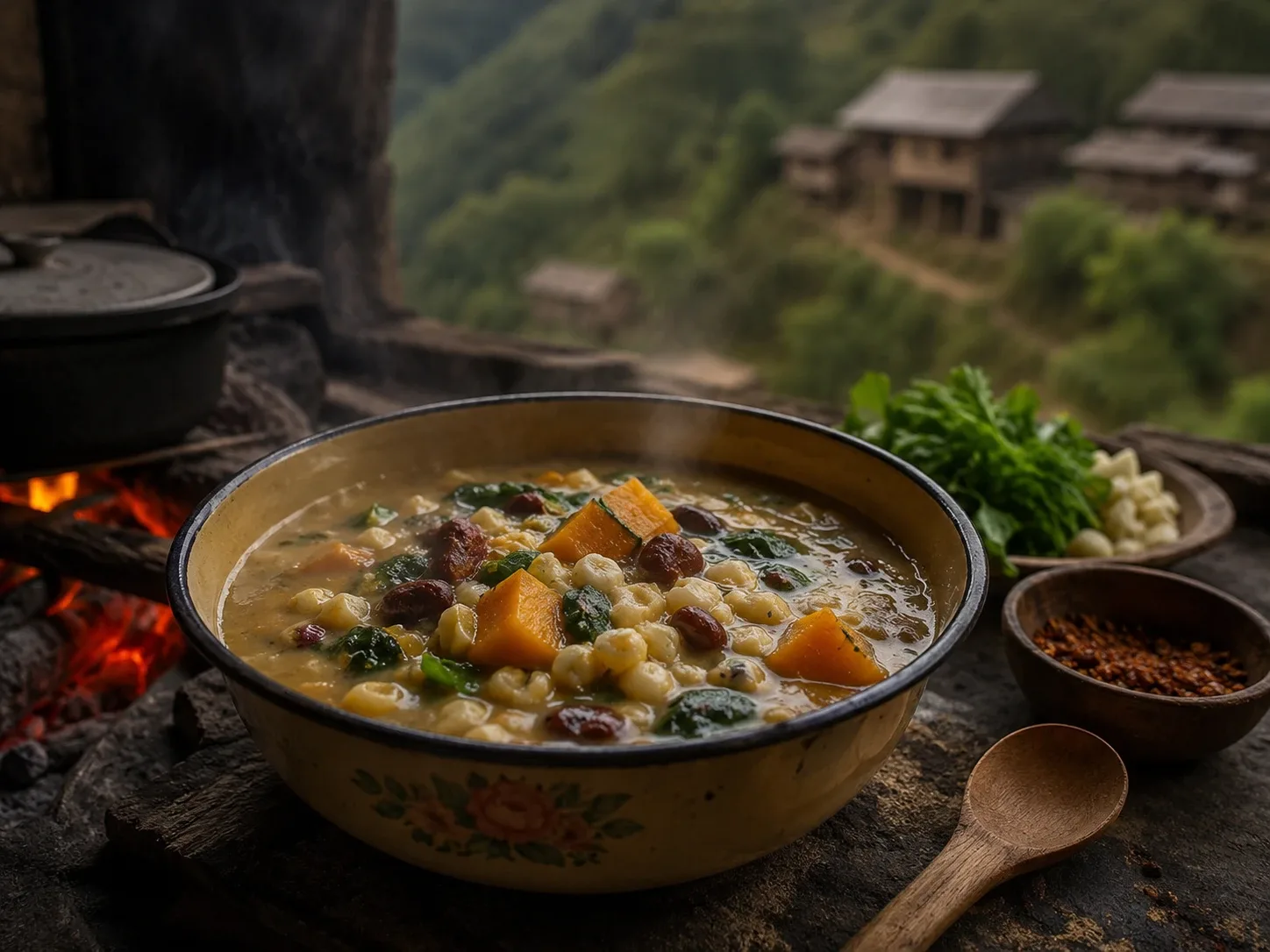
An Buti, the Meatless Corn Soup
Sabuti's meatless sibling from the Chin hills — hominy corn simmered with red beans, pumpkin, and greens until the pot thickens into gentle, vegetable plenty.
 ၅
၅Soups & Broths · 55 min · Intermediate
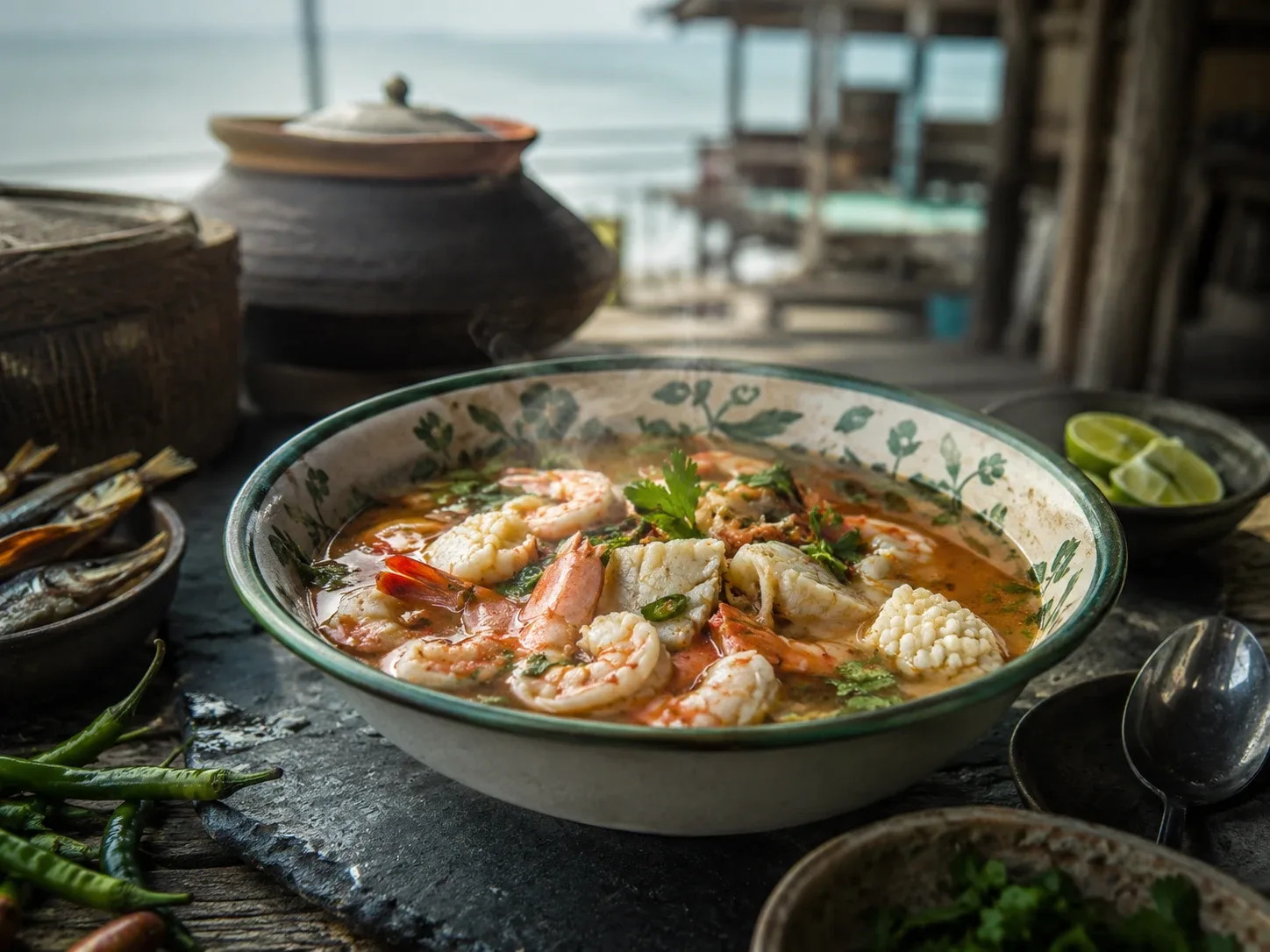
Ar Pu Shar Pu, the Burning-Mouth Bowl
Sittwe's famous hot-and-sour seafood soup — fish, prawns, and squid in a tamarind broth pounded through with green chilies, finished with lime and herbs.
 ၄
၄Salads & Thoke · 25 min · Beginner
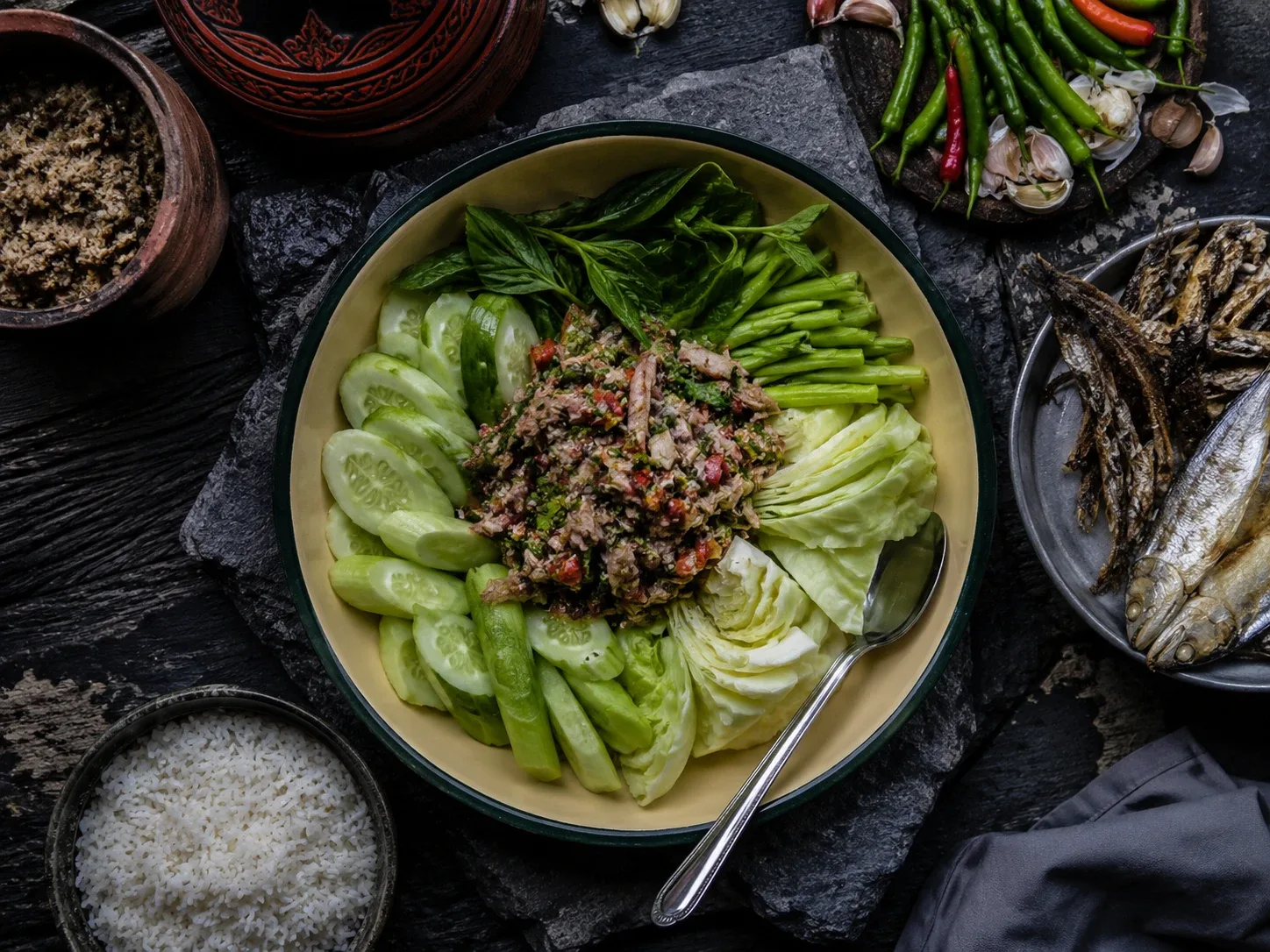
Rakhine Ngapi Thoke, the Pounded Fireငါးပိသုပ်
Rakhine's roasted fish-paste salad — marine ngapi pounded with green chili, garlic, and lime, served the western-coast way with crisp vegetables and rice.