Nga Tha Lauk Paung, Slow-Steamed Hilsa
ငါးသလောက်ပေါင်း
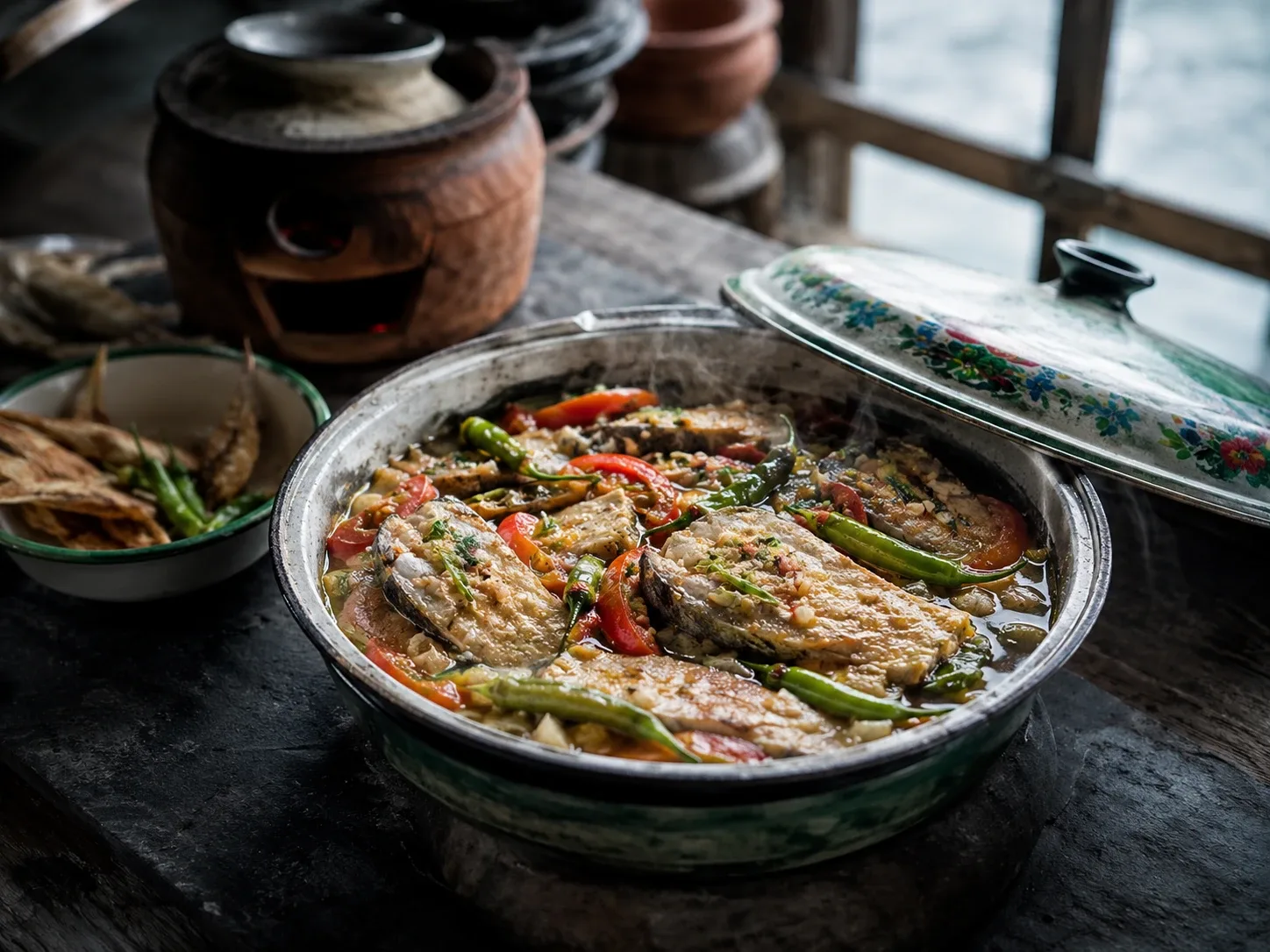
Hilsa steamed low and slow the Rakhine way — with tamarind, tomato, and green chili in a sealed pot until even the fish's thousand bones melt to softness.
By Burmese Cookbook Kitchen · July 9, 2026
ရခိုင် Rakhine CoastBritish Burma, 1826–1948
 ၃
၃- Prep
- 25 min
- Cook
- 240 min
- Serves
- 4
- Level
- Intermediate
Nga tha lauk — the hilsa — is the most argued-over fish in the Bay of Bengal, and Myanmar's share of the argument swims up the Kaladan and the rivers of the western coast every year. Sittwe's markets weigh it like treasure, and honesty requires saying the neighbors do too: this is the same silver fish Bengal calls ilish and reveres to the point of poetry. The slow-steamed pot is cooked across lower Myanmar — the delta claims it as warmly as the coast does — and the method almost certainly settled into its modern form in the colonial era, when Akyab's rice-port world faced Bengal across the water and their kitchens traded habits along with cargo.
What earns the dish its place in the Rakhine chapter is the accent. The pot is soured hard with tamarind, sharpened with slit green chilies, and run on two tablespoons of oil — hilsa is so rich a fish that the coast's lean doctrine costs nothing here; the fish brings its own.
Paung means steamed, and the word is doing precise work: a sealed pot, liquid only partway up the fish, the lowest possible fire, and hours of patience. The reward is the famous miracle of this preparation — hilsa carries a forest of fine forked bones that defeats novices, and the long acidic steam dissolves every one of them into the flesh, the way a can does for sardines but gentler and infinitely better. A fish you fought last time, eaten with a spoon.
The dish is done when a spoon passes through the backbone as if it were cooked carrot. If you meet resistance, the fish is not overdue — you are early. Seal it back up and walk away.
မီးဖိုချောင်စကား · A word from the kitchen
Ingredientsပါဝင်ပစ္စည်း
Serves 4
Tap to check off as you gather
For the fish
- hilsa — one whole fish, scaled and cut into 3 cm steaks; shad is the honest stand-in where hilsa is scarce
- turmeric
- salt
For the pot
- peanut oil — the whole allowance, as ever on this coast
- onions — one sliced into thick rings for the pot's floor, one in wedges
- garlic — lightly crushed, left whole
- fresh ginger — cut into fine matchsticks
- green chilies — slit lengthwise, left whole
- tomatoes — cut into thick wedges
- tamarind — pulp, soaked in 200 ml hot water and strained — the acid is also what softens the bones
- fish sauce
- paprika
- lemongrass — bruised and bent to fit the pot
- water
- cilantro — to finish
Methodချက်နည်း
Tap a numeral as you finish each step
Step 1: Salt the steaks
Rub the hilsa steaks with the turmeric and salt and rest them 15 minutes. Handle them gently and do not rinse again — hilsa is a soft, oily fish, and every wash costs flavor it was born with.
Step 2: Floor the pot
Choose a heavy pot with a tight lid. Lay the onion rings and lemongrass across the bottom in a rough raft, and scatter over the garlic and half the ginger. This raft is not seasoning first and insurance second — it is the other way around. It keeps the fish off the metal through four hours of heat.
Step 3: Layer, then pour
Arrange the fish steaks on the raft in a single snug layer. Tuck the tomato wedges, onion wedges, slit chilies, and remaining ginger into the gaps. Whisk the tamarind water with the fish sauce, paprika, oil, and water, and pour it over — the liquid should come about two-thirds of the way up the fish, no higher. This pot steams; it does not boil.
Step 4: Seal honestly
Fit the lid, and if it rattles even slightly, seal the gap with a rope of flour-and-water dough or a double layer of foil crimped tight. The pot must keep its steam for hours — every escape is flavor leaving and softness postponed. This seal is the entire meaning of paung.
Step 5: Cook low, long, and without curiosity
Set the pot over the lowest flame your stove can hold — a heat diffuser helps — and leave it for 4 hours without opening it. In a pressure cooker, the same pot takes 50 to 60 minutes at high pressure with a natural release. The acid and the long, wet heat together dissolve the hilsa's infamous forest of hairpin bones into the flesh.
Step 6: Rest, then open at the table
Let the pot stand 15 minutes off the heat, then open it where people can see. Test the backbone with a spoon — it should yield completely. Scatter with cilantro and serve straight from the pot with rice, spooning the amber, tamarind-stained liquor over everything. Eat without picking through bones, which is the entire miracle on offer.
ခွက်ယောက် · The tools
Equipment
Carbon-steel wok
ဒယ်အိုးThe dai-oh — for si pyan curries, fritters, and every fried-noodle dish here. Carbon steel, seasoned dark, nothing fancy.
Shop on Amazon →Heavy pot / Dutch oven
အိုးကြီးDeep and heat-retentive — for mohinga broth, long-simmered hin, and deep-frying without temperature crashes.
Shop on Amazon →
Equipment links are Amazon affiliate links. As an Amazon Associate we earn from qualifying purchases, at no cost to you. Disclosure.
ဟင်းစုံ · Set the table
A Burmese meal is a spread
A curry is the anchor, not the whole meal. Round out the table:
- Steamed riceထမင်းThe centre of the table — everything else is built around it.
- A light soupဟင်းချိုThe clear, sour broth sipped between mouthfuls of rice.
- Toh sa yar & ngapi dipတို့စရာRaw and blanched vegetables with a pungent fish-paste dip — the fresh, bitter counterpoint.
- Balachaungဘလချောင်းThe crispy shrimp relish that lives on every Burmese table.
- Crispy fried shallotsကြက်သွန်ကြော်A spoonful of crunch and sweet shallot oil over anything.
- A hand-tossed thokeအသုပ်A bright, sour salad to lift the whole spread.
Questions from the kitchen
I cannot find hilsa. What actually works?
Shad is hilsa's close Atlantic cousin — same family, same silken oily flesh, same absurd bones — and behaves identically here. Large sardines or a whole small mackerel also take the treatment well, needing only 3 hours. Frozen hilsa from a Bengali or Burmese grocer is better than fresh anything else.
Do the bones really become edible?
Really. Long, low, moist heat with tamarind's acid softens them completely, the same chemistry that makes canned sardine bones disappear. If you meet a firm bone at the table, the pot needed another hour — next time, trust the seal and stop peeking.
Can I make it ahead?
It is better ahead. Cool the sealed pot, refrigerate overnight, and rewarm gently the next day — the fish firms slightly, the liquor deepens, and the flavors settle into each other. It keeps three days and freezes surprisingly well for a fish dish.
နောက်တစ်ခု · Cook next
Keep the wok hot
 ၃
၃Curries · 125 min · Intermediate
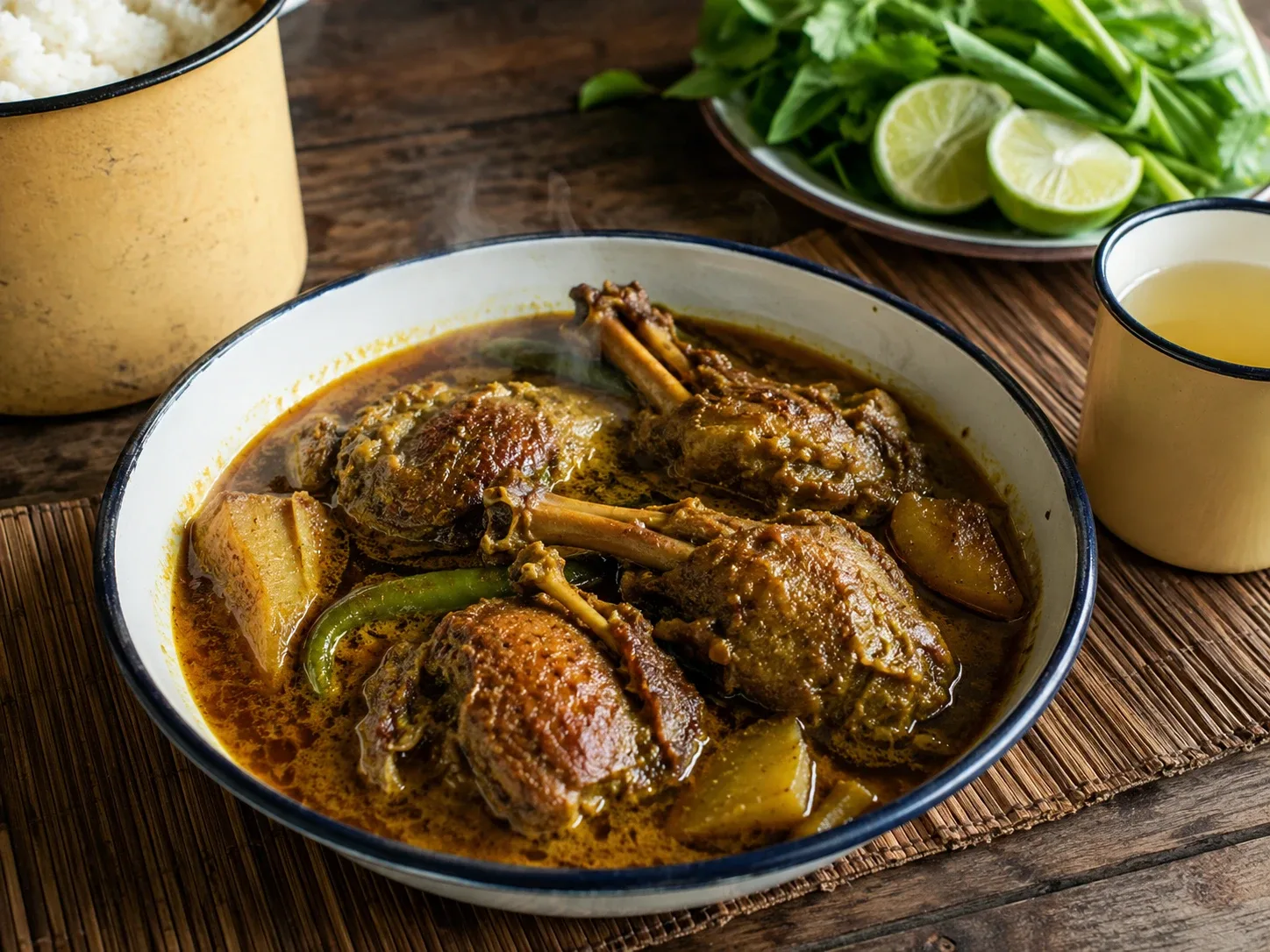
Be Thar Hin, Delta Duck Curryဘဲသားဟင်း
Duck curry from the Ayeyarwady, where ducks glean the rice paddies — browned in its own fat, then braised si pyan style until the amber oil returns.
 ၃
၃Curries · 45 min · Beginner
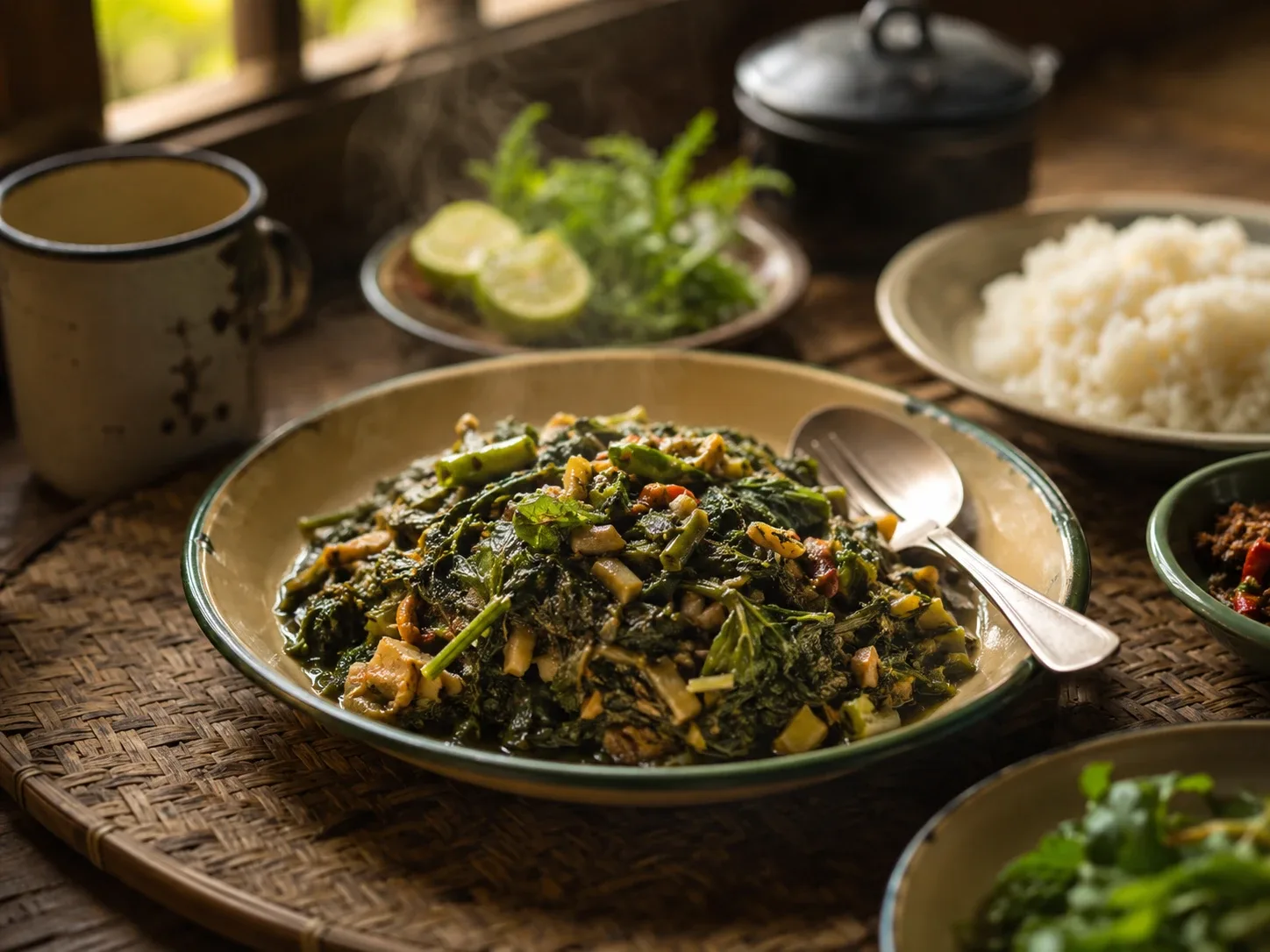
Chin Baung Kyaw, Sour Roselle Leavesချဉ်ပေါင်ကြော်
Lower Burma's beloved sour greens — roselle leaves fried down with bamboo shoots, dried shrimp, and green chili until they collapse into a dark tangy relish.
 ၂
၂Noodles & Mohinga · 50 min · Beginner
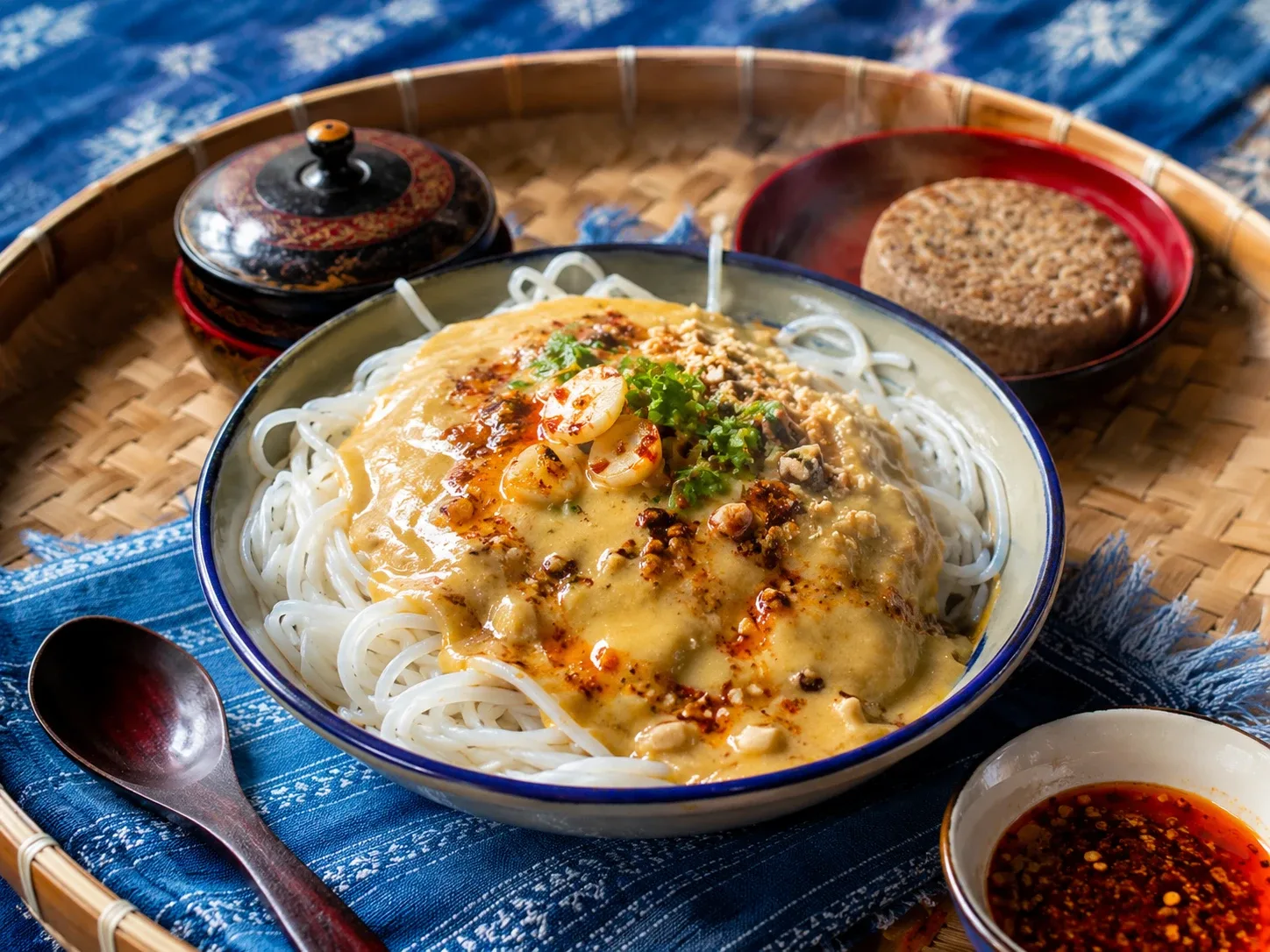
Tofu Nway, Warm Shan Tofu Noodlesတိုဟူးနွေး
Warm chickpea tofu that never sets, ladled like golden custard over rice noodles with garlic oil, chili, and peanuts — Shan State's great breakfast.