Kawthaung Sour Prawn Soup
ပုစွန်ချဉ်စပ်ဟင်းချို
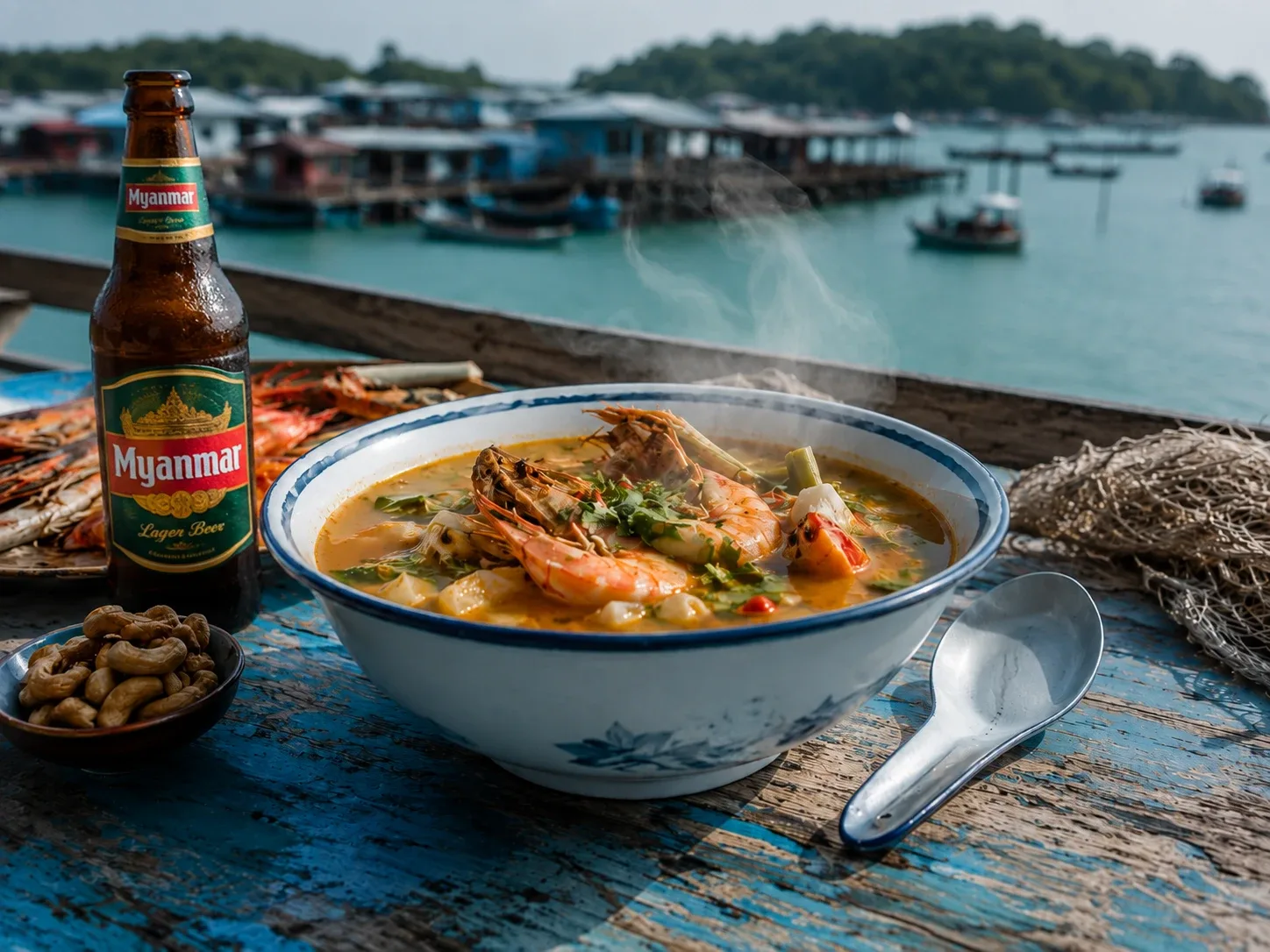
Kawthaung's hot-and-sour prawn soup — a border-town bowl built on roasted prawn-head stock, lemongrass, fresh turmeric, and lime added off the heat.
By Burmese Cookbook Kitchen · July 9, 2026
တနင်္သာရီ TanintharyiOpening & Diaspora, 1988–present
 ၅
၅- Prep
- 20 min
- Cook
- 30 min
- Serves
- 4
- Level
- Intermediate
Kawthaung is where Myanmar runs out — the country's southernmost town, looking across a khaki-green estuary at Ranong, Thailand, close enough that the longtail boats commute. The food commutes too, and the honest thing is to say so. This hot-and-sour prawn soup is the town's everyday bowl, and anyone who has eaten in Thailand will recognize the silhouette of tom yum in it. What makes it Burmese is the accent: fresh turmeric in the stock, no chili-paste slick, palm sugar in a supporting role, and a bowl that arrives beside a plate of rice rather than as a course of its own.
We file it, honestly, under the modern era. Border towns have always cooked across their borders, but Kawthaung's kitchen as we know it — wired into Thai markets by ferry and cash — is a creature of the last few decades, and this soup entered the wider Burmese record with it.
The technique that separates a great bowl from a thin one happens before the water goes in: the prawn heads are fried hard and crushed, releasing the orange fat that turns the stock gold and makes it taste of prawn all the way down. After that, the rules are about restraint — prawns poached for two minutes, lime added only off the heat so it stays bright. Sour first, then salt, then heat, then sweetness underneath: the border in a spoonful.
Lime juice goes in off the heat, always. Boiled lime turns flat and bitter; raw lime rings like a bell. The pot comes off, then the sour goes in.
မီးဖိုချောင်စကား · A word from the kitchen
Ingredientsပါဝင်ပစ္စည်း
Serves 4
Tap to check off as you gather
For the stock
- whole prawns — with heads and shells on — the heads are the entire point
- peanut oil
- water
- lemongrass — bruised hard and knotted
- fresh turmeric — sliced, or 3/4 tsp ground
- galangal — sliced — or ginger, with a small honest loss
- makrut lime leaves — torn — optional, but Kawthaung markets stock them for a reason
For the bowl
- tomatoes — cut into wedges
- bird's eye chilies — bruised whole — more or fewer to taste
- fish sauce
- palm sugar (jaggery)
- limes — juiced, about 4 tbsp
- cilantro — roughly torn
- spring onions — thinly sliced
Methodချက်နည်း
Tap a numeral as you finish each step
Step 1: Peel, and keep everything
Peel the prawns and devein them, keeping every head and shell. Chill the peeled prawns. The meat is the garnish of this soup; the heads — full of the orange fat that makes prawn taste like prawn — are the soup itself.
Step 2: Roast the heads
Heat the oil in your soup pot over medium-high and fry the heads and shells, pressing down on the heads with the spoon to burst them, until everything is deep orange and the pot smells like a grill on the beach — 4 to 5 minutes. This browning is where the broth's depth comes from; skip it and you get prawn-scented water.
Step 3: Simmer the stock
Add the water, lemongrass, turmeric, galangal, and lime leaves. Bring to a boil, then simmer uncovered for 20 minutes. Strain, pressing the solids hard to wring out the last of the head fat, and return the orange-gold stock to the pot. It should taste distinctly of prawn already, before a single prawn goes in.
Step 4: Season the broth
Add the tomatoes, bruised chilies, fish sauce, and palm sugar and simmer for 5 minutes, until the tomato wedges just slump. The sugar is not there to sweeten — it rounds the fish sauce so the lime can land on something soft.
Step 5: Poach the prawns
Drop in the peeled prawns and poach for 2 minutes, until they curl and turn opaque. Kill the heat the moment they do — they keep cooking in the hot broth on the way to the table.
Step 6: Sour it off the heat
With the pot off the flame, stir in the lime juice, then taste. The broth should hit sour first, then salt, then a rising chili heat, with the prawn sweetness underneath it all. Adjust with fish sauce or lime — at the stove, not the table — then shower with cilantro and spring onions and serve steaming, over rice or beside it.
ခွက်ယောက် · The tools
Equipment
Heavy pot / Dutch oven
အိုးကြီးDeep and heat-retentive — for mohinga broth, long-simmered hin, and deep-frying without temperature crashes.
Shop on Amazon →Mandoline slicer
အလွှာစက်Paper-thin shallots for even frying and cabbage fine enough for thoke — seconds, not knife-years.
Shop on Amazon →Fine sieve / muslin
စစ်ခွက်For straining tamarind, pressing broth clear, and sifting flours — line it with muslin for the cleanest pour.
Shop on Amazon →
Equipment links are Amazon affiliate links. As an Amazon Associate we earn from qualifying purchases, at no cost to you. Disclosure.
ဟင်းစုံ · Set the table
A Burmese meal is a spread
A Burmese soup sits beside the rice, not on its own. Set the table with:
- Steamed riceထမင်းThe centre of the table — everything else is built around it.
- A curryဟင်းSlow-cooked until the oil returns — the richness the sides cut against.
- Toh sa yar & ngapi dipတို့စရာRaw and blanched vegetables with a pungent fish-paste dip — the fresh, bitter counterpoint.
- Balachaungဘလချောင်းThe crispy shrimp relish that lives on every Burmese table.
- Crispy fried shallotsကြက်သွန်ကြော်A spoonful of crunch and sweet shallot oil over anything.
Questions from the kitchen
Isn't this just tom yum?
It is tom yum's first cousin, and pretending otherwise would insult everyone's intelligence. Kawthaung faces the Thai town of Ranong across the estuary, and its cooking crosses on the ferry both ways. The Burmese bowl leans on fresh turmeric, skips the chili paste and evaporated milk of the restaurant version, and eats with rice. Cousins, not twins.
Can I make it with headless prawns?
You can, but you will be making a different, paler soup. The heads carry the fat that gives the broth its color and depth. If headless is all you can get, buy shell-on, roast the shells hard, and add a spoonful of dried shrimp to the simmer to make up some of the loss.
How hot should it be?
Bruised whole chilies give a rising warmth that stops short of punishment — the broth stays drinkable by the spoonful. For real border-town heat, split two of the chilies; for a gentler table, use two, unbruised, and fish them out before serving.
နောက်တစ်ခု · Cook next
Keep the wok hot
 ၅
၅Soups & Broths · 135 min · Beginner
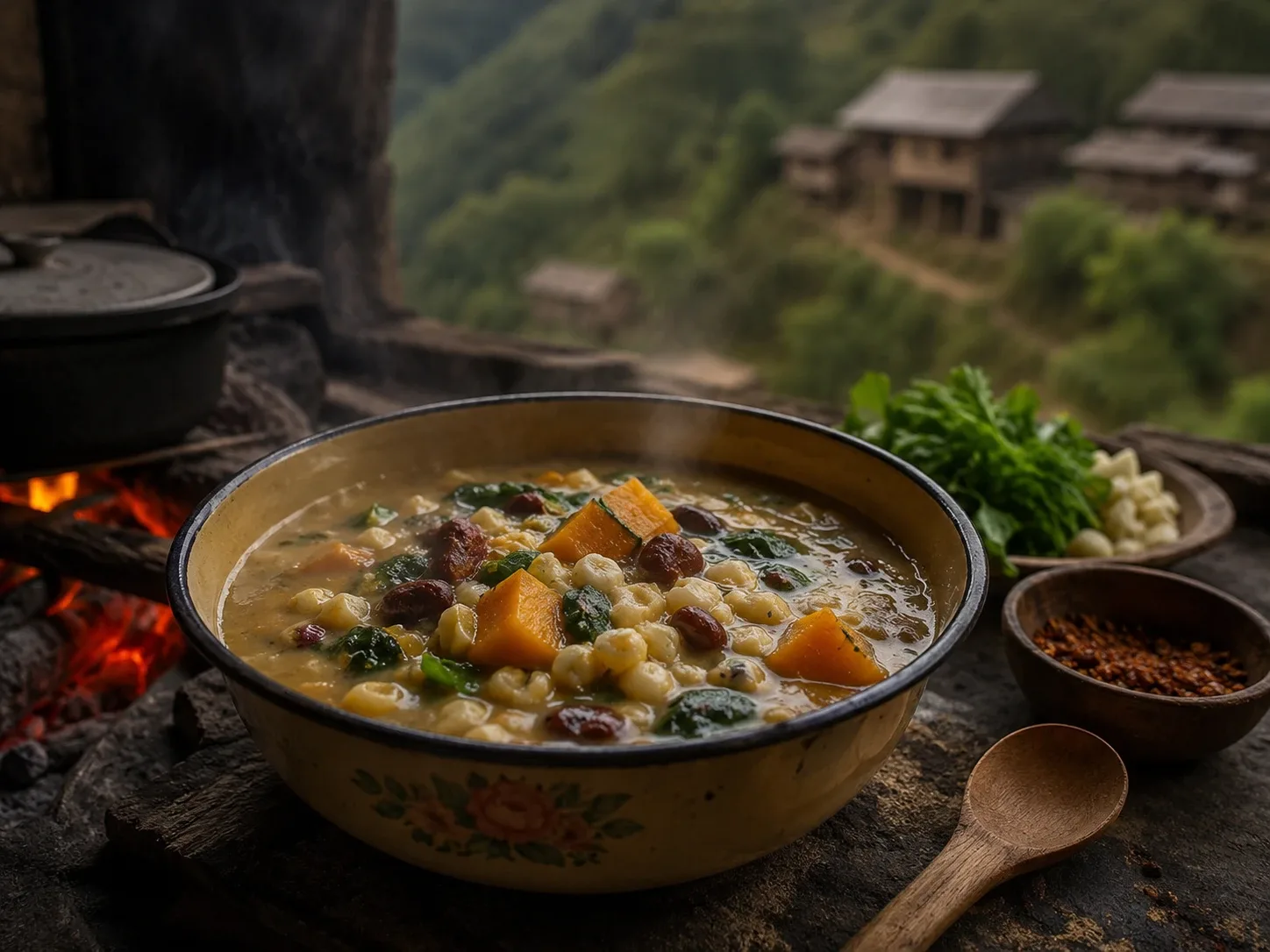
An Buti, the Meatless Corn Soup
Sabuti's meatless sibling from the Chin hills — hominy corn simmered with red beans, pumpkin, and greens until the pot thickens into gentle, vegetable plenty.
 ၅
၅Soups & Broths · 55 min · Intermediate
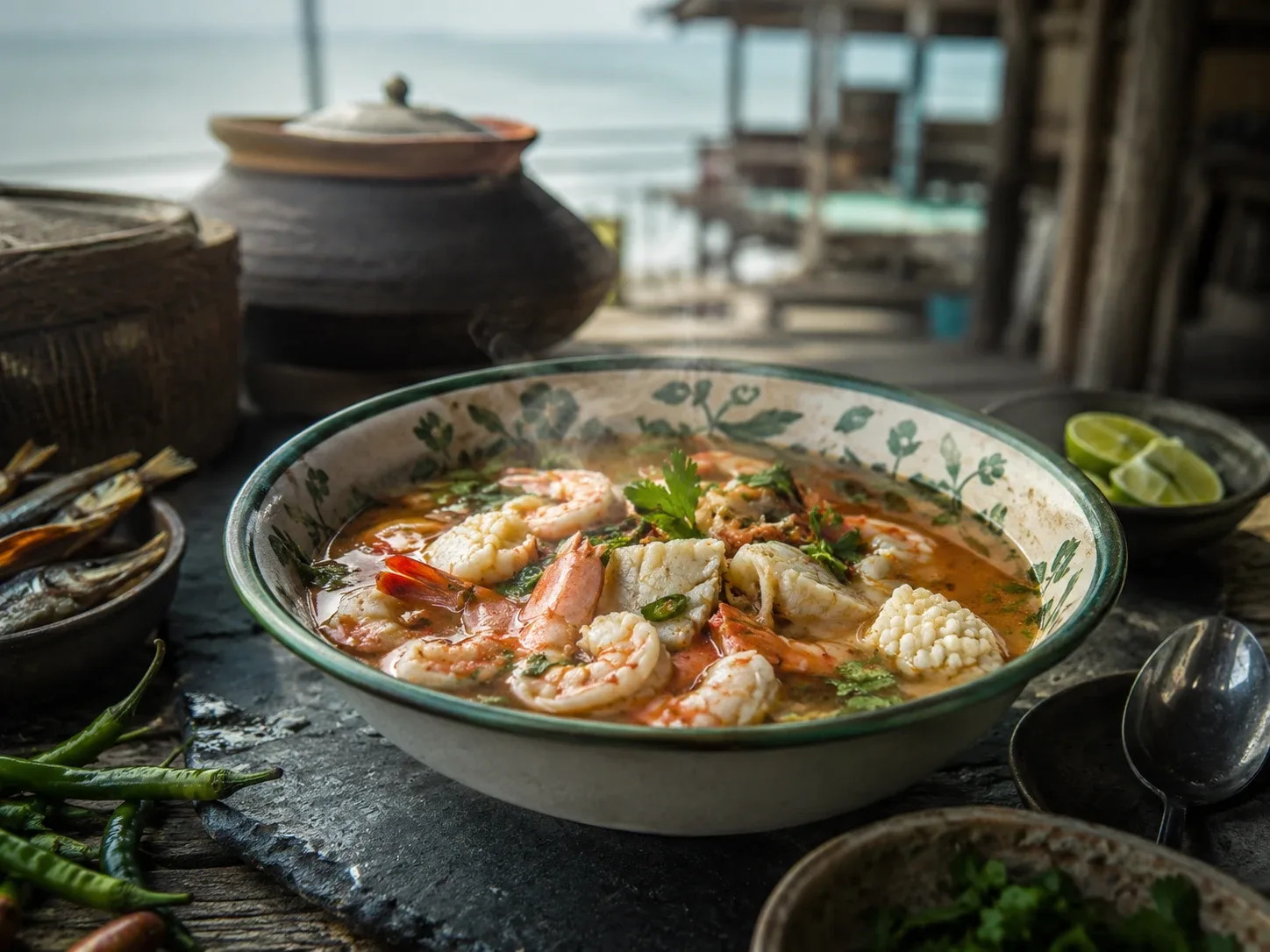
Ar Pu Shar Pu, the Burning-Mouth Bowl
Sittwe's famous hot-and-sour seafood soup — fish, prawns, and squid in a tamarind broth pounded through with green chilies, finished with lime and herbs.
 ၇
၇Sweets & Mont · 25 min · Beginner
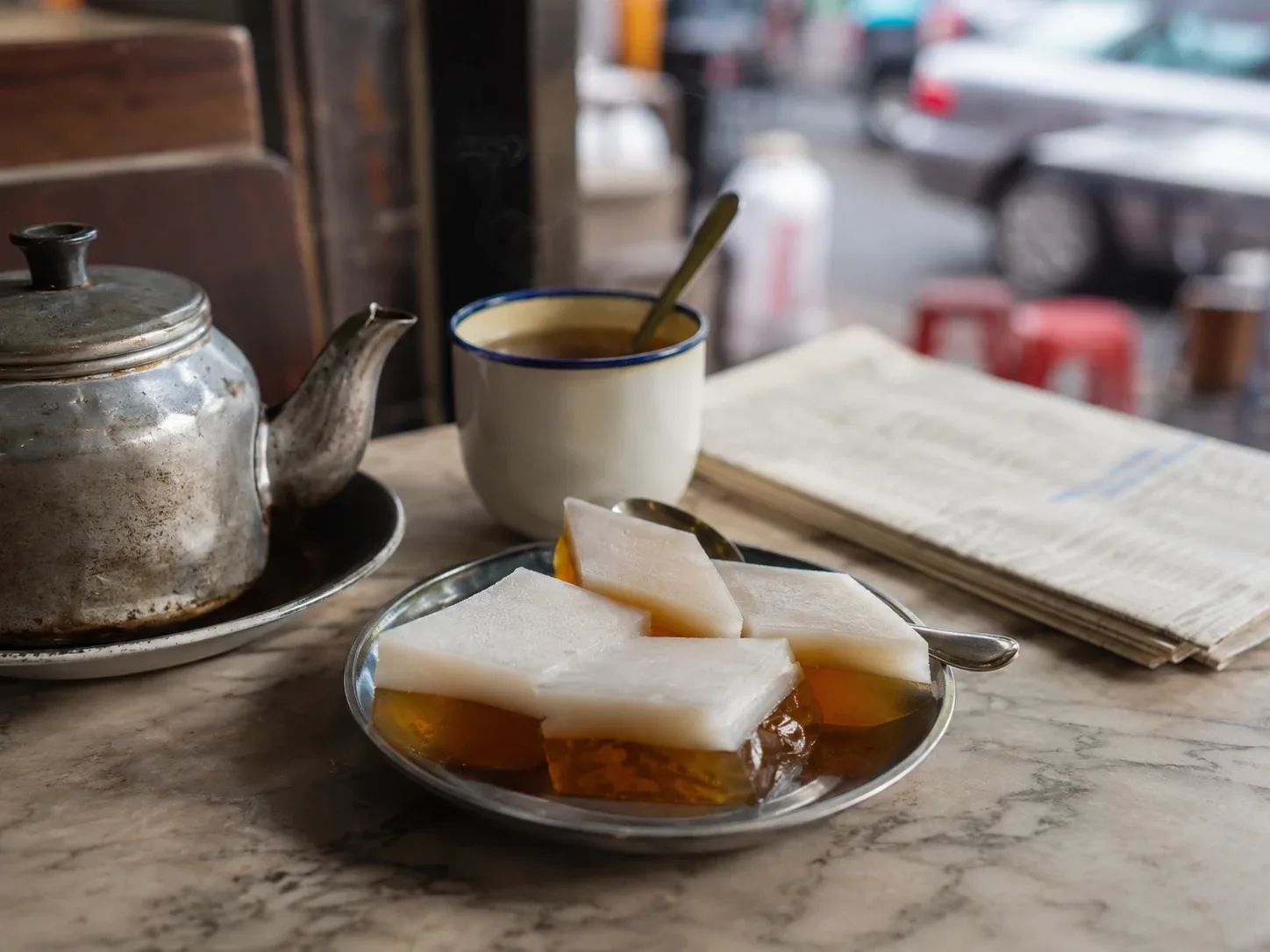
Kyauk Kyaw, Two-Layer Coconut Jellyကျောက်ကျော
Myanmar's two-layer agar jelly, done the Yangon way — coconut cream rises as it sets over a clear amber base, then the slab is cut into cool diamonds.