Pazun Ohn No Hin, Coconut Prawn Curry
ပုစွန်အုန်းနို့ဟင်း
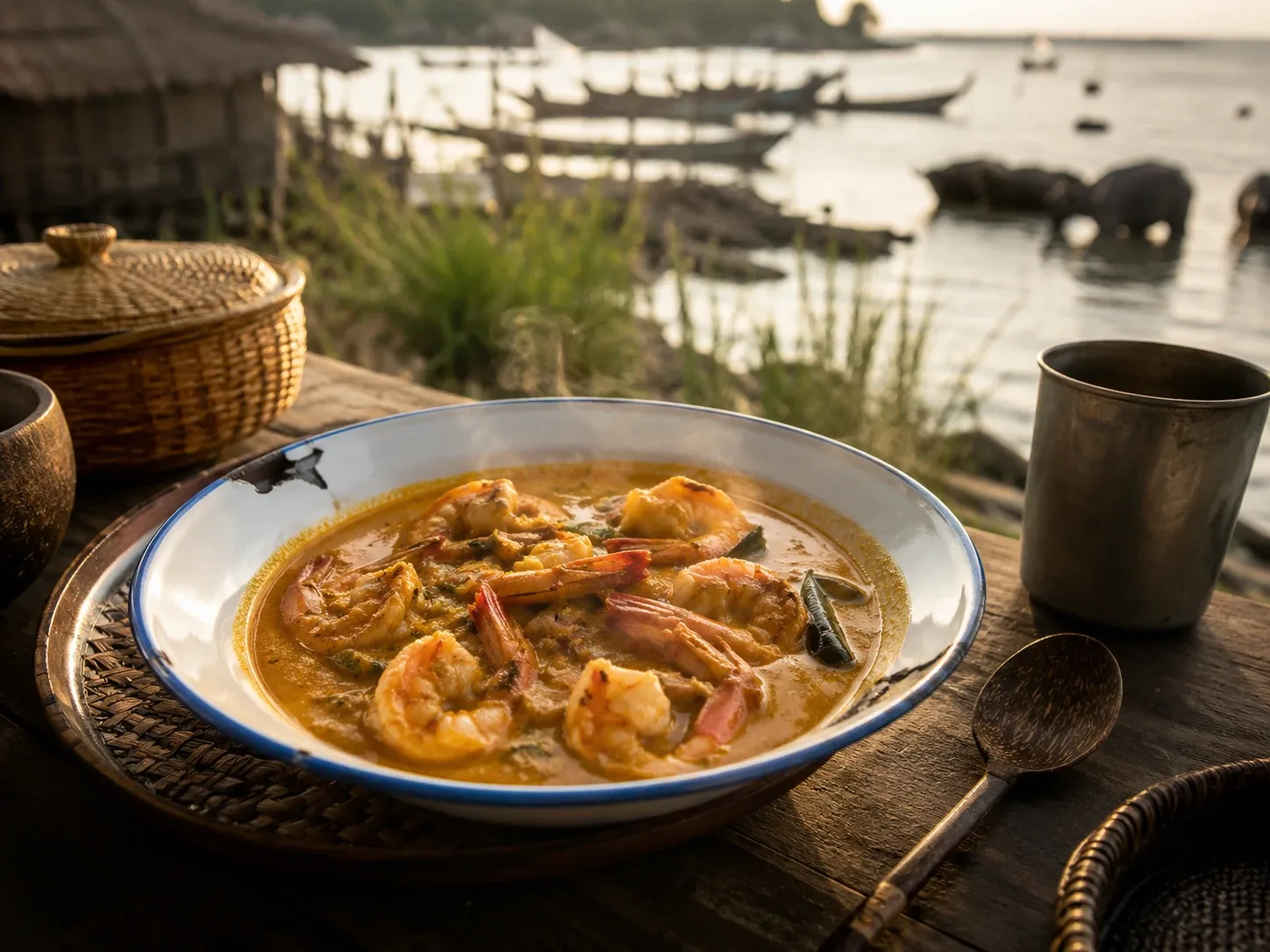
Gulf of Mottama prawns simmered in coconut milk over a proper si pyan base — the coastal Mon curry that answers upcountry oil with coconut cream.
By Burmese Cookbook Kitchen · July 9, 2026
မွန် Mon & Kayin CountryBritish Burma, 1826–1948
 ၃
၃- Prep
- 25 min
- Cook
- 30 min
- Serves
- 4
- Level
- Intermediate
Mawlamyine — Moulmein, when Kipling misspelled his pagoda — was the first capital of British Burma, a teak port where the Thanlwin river spreads into the Gulf of Mottama across some of the largest tidal flats on earth. Those tides move whole square miles of brown water twice a day, and they move prawns with it; the town has never lacked for them. What its Mon kitchens do with those prawns is the curry here: a full si pyan base of shallots, ngapi, and paprika, the prawn heads pressed in until the oil goes coral, and then — the southern signature — coconut milk, simmered until the cream breaks and the oil returns a second time, through it.
That doubled return is the whole argument of Mon curry-making. Upcountry, a curry is finished when the oil separates from the paste; on the coconut coast, that is merely the halfway mark. The habit is old — the Mon country was trading coconuts off this shore when Hanthawaddy was a kingdom, and Mon cooks will tell you the coconut curry pot is part of that inheritance. We note honestly that no one wrote the recipe down until colonial-era Moulmein, a town British memsahibs and Mon grandmothers described with equal enthusiasm; the era on this page records the paper, not the pot.
Two rules keep you honest. Fry the paste until the oil truly returns before any coconut goes in, and take the prawns out while the cream does its slow breaking. Everything else is patience and rice.
The curry is done when the coconut cream breaks and beads of amber oil rise back through it — si pyan by another route. Stop while it is smoothly white and you stopped early.
မီးဖိုချောင်စကား · A word from the kitchen
Ingredientsပါဝင်ပစ္စည်း
Serves 4
Tap to check off as you gather
For the prawns
- large prawns — shell-on, heads-on if you can get them — the heads pay for the whole dish
- turmeric
- fish sauce
For the curry base
- shallots
- garlic
- fresh ginger
- lemongrass — tender core only, minced
- ngapi (shrimp paste)
- paprika
- dried chili flakes
- peanut oil
- tomatoes — small and ripe, roughly chopped
To finish
- coconut milk — full-fat, unshaken — you want the thick cream at the top
- fish sauce
- palm sugar (jaggery)
- green chilies — split lengthwise
- cilantro
Methodချက်နည်း
Tap a numeral as you finish each step
Step 1: Dress the prawns
Toss the prawns with the turmeric and fish sauce and set them aside while you build the base. Leave the shells on — shell and head fat are where a prawn keeps its flavor, and this curry means to collect all of it.
Step 2: Pound the paste
Pound the shallots, garlic, ginger, lemongrass, and ngapi to a rough paste in a mortar. Coarse is right; a blender purée holds water and steams instead of frying, and this base must fry.
Step 3: Fry until the oil returns
Heat the peanut oil in a heavy pot over medium heat and fry the paste with the paprika and chili flakes, stirring, until it smells sweet and the oil separates amber at the edges — 6 to 8 minutes. This is si pyan, the returning of the oil, and it is not negotiable just because coconut milk is coming later.
Step 4: Melt the tomatoes
Add the tomatoes and cook them down until they collapse completely into the paste, 5 minutes or so. They bring a quiet sweet-sour backbone that keeps the coconut from turning the curry flat and rich with nowhere to go.
Step 5: Stain the oil with the prawns
Raise the heat and add the prawns, pressing the heads gently into the base as you turn them. Two minutes, no more — just until the shells blush and the head fat stains the oil a deeper coral. Lift the prawns out; they will finish later. Prawns cooked start-to-finish in a curry arrive at the table as erasers.
Step 6: Break the cream
Pour in the coconut milk, stir once, and simmer briskly, uncovered, for 8 to 10 minutes, until the cream thickens, splits, and lets small beads of amber oil rise back through the surface. Upcountry cooks wait for the oil to return through the paste; the coast waits for it to return through the coconut. Same doctrine, richer road.
Step 7: Return the prawns and finish
Slide the prawns and their juices back in with the split green chilies and simmer 3 to 4 minutes, until just cooked through. Season with the fish sauce and jaggery, rest the pot five minutes off the heat, and serve scattered with cilantro, with plenty of rice and something sour alongside.
ခွက်ယောက် · The tools
Equipment
Carbon-steel wok
ဒယ်အိုးThe dai-oh — for si pyan curries, fritters, and every fried-noodle dish here. Carbon steel, seasoned dark, nothing fancy.
Shop on Amazon →Heavy pot / Dutch oven
အိုးကြီးDeep and heat-retentive — for mohinga broth, long-simmered hin, and deep-frying without temperature crashes.
Shop on Amazon →Stone mortar & pestle
ဆုံFor garlic-ginger paste, pounded dried shrimp fluff, and crushed peanuts — the blender lies about texture; the stone doesn’t.
Shop on Amazon →
Equipment links are Amazon affiliate links. As an Amazon Associate we earn from qualifying purchases, at no cost to you. Disclosure.
ဟင်းစုံ · Set the table
A Burmese meal is a spread
A curry is the anchor, not the whole meal. Round out the table:
- Steamed riceထမင်းThe centre of the table — everything else is built around it.
- A light soupဟင်းချိုThe clear, sour broth sipped between mouthfuls of rice.
- Toh sa yar & ngapi dipတို့စရာRaw and blanched vegetables with a pungent fish-paste dip — the fresh, bitter counterpoint.
- Balachaungဘလချောင်းThe crispy shrimp relish that lives on every Burmese table.
- Crispy fried shallotsကြက်သွန်ကြော်A spoonful of crunch and sweet shallot oil over anything.
- A hand-tossed thokeအသုပ်A bright, sour salad to lift the whole spread.
Questions from the kitchen
My coconut milk split. Did I ruin it?
You finished it. The split is the point — the curry is judged done when the cream cracks and the seasoned oil beads back through the surface. A smoothly white coconut curry is, by Burmese lights, an undercooked one. Only a split that turns grainy and dry means the heat ran too high for too long; loosen it with a splash of water.
Can I use peeled prawns?
You can, and the dish will be politely diminished. The shells and heads are the flavor bank — if you must peel, buy shell-on prawns, peel them yourself, and simmer the shells in the coconut milk for ten minutes before straining it into the pot. Frozen shell-on prawns, thawed slowly, beat fresh peeled ones every time.
How is this different from the Myeik prawn curry?
Same animal, different doctrine. Pazun hin from Myeik is a tomato-and-oil si pyan — the prawn head fat stains the returning oil and that oil is the sauce. The Mon version does everything the same until the end, then pays coconut milk into the pot and waits for the oil to come back through the cream. One is sharp and coral; this one is round and gold.
Can I make it with fish instead?
Yes — 600 g of firm white fish in thick pieces, added only for the last five minutes and never stirred hard. You lose the head-fat coral of the prawns, so be a little braver with the ngapi. Catfish and basa hold up best; flaky sea fish dissolve into the cream.
နောက်တစ်ခု · Cook next
Keep the wok hot
 ၃
၃Curries · 125 min · Intermediate
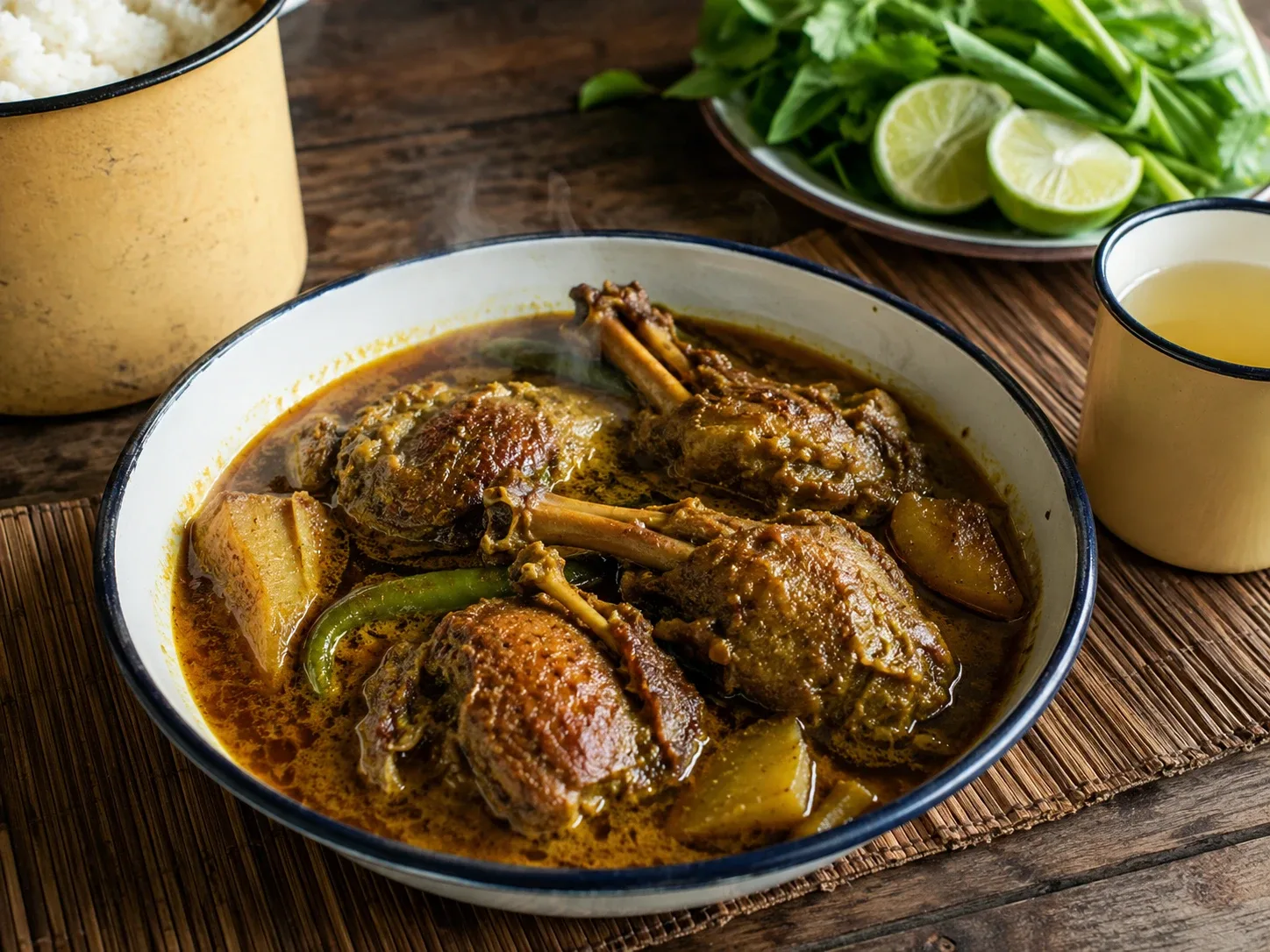
Be Thar Hin, Delta Duck Curryဘဲသားဟင်း
Duck curry from the Ayeyarwady, where ducks glean the rice paddies — browned in its own fat, then braised si pyan style until the amber oil returns.
 ၃
၃Curries · 45 min · Beginner
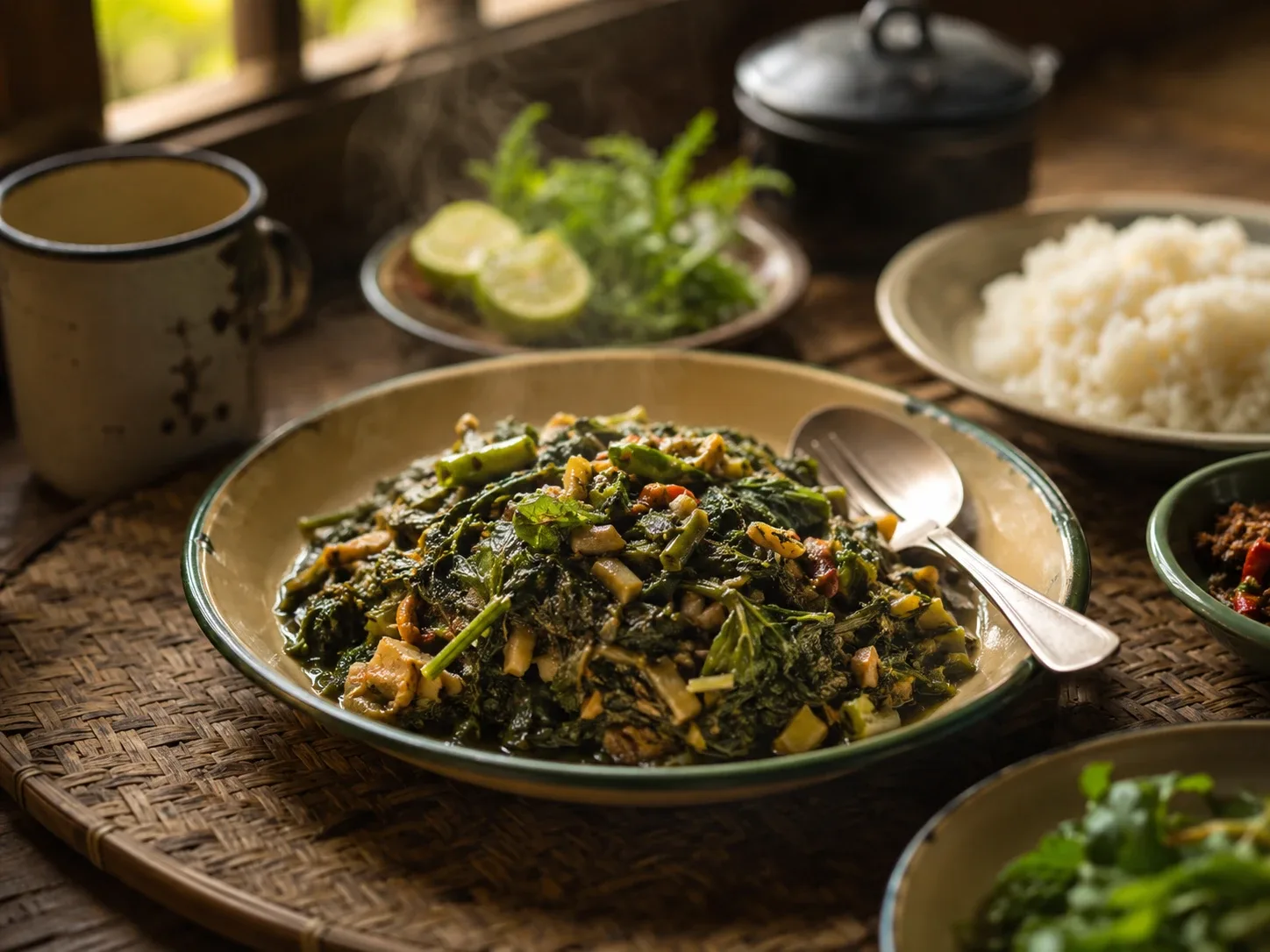
Chin Baung Kyaw, Sour Roselle Leavesချဉ်ပေါင်ကြော်
Lower Burma's beloved sour greens — roselle leaves fried down with bamboo shoots, dried shrimp, and green chili until they collapse into a dark tangy relish.
 ၇
၇Sweets & Mont · 105 min · Intermediate
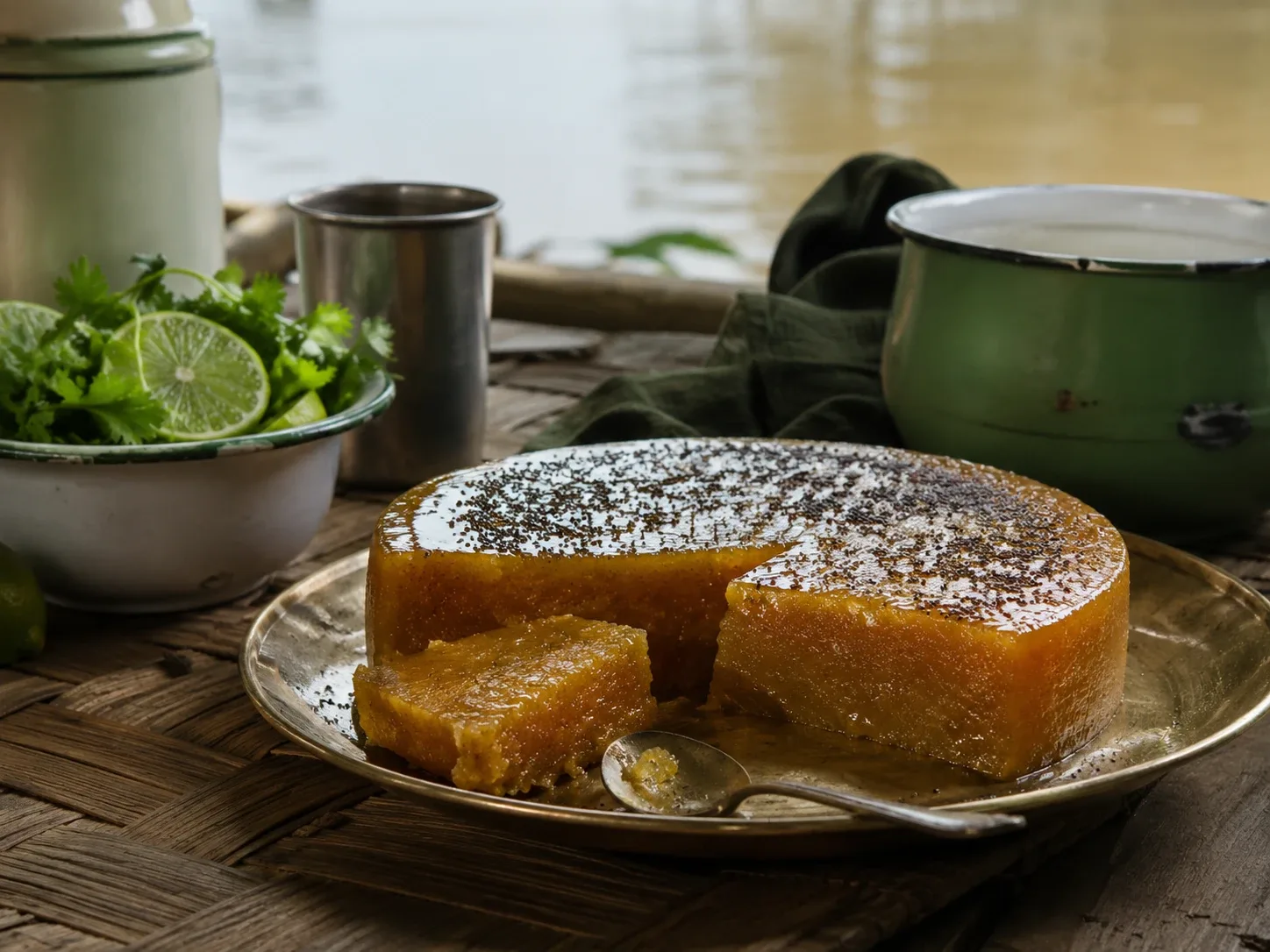
Pathein Halawa, the Delta's Gilded Sweetပုသိမ်ဟလဝါ
Pathein's famous glutinous-rice halawa — coconut milk, sugar, and ghee stirred patiently down to a dense, gleaming amber slab crowned with toasted poppy seeds.