Nam Ngiao, Shan Tomato Noodle Soup
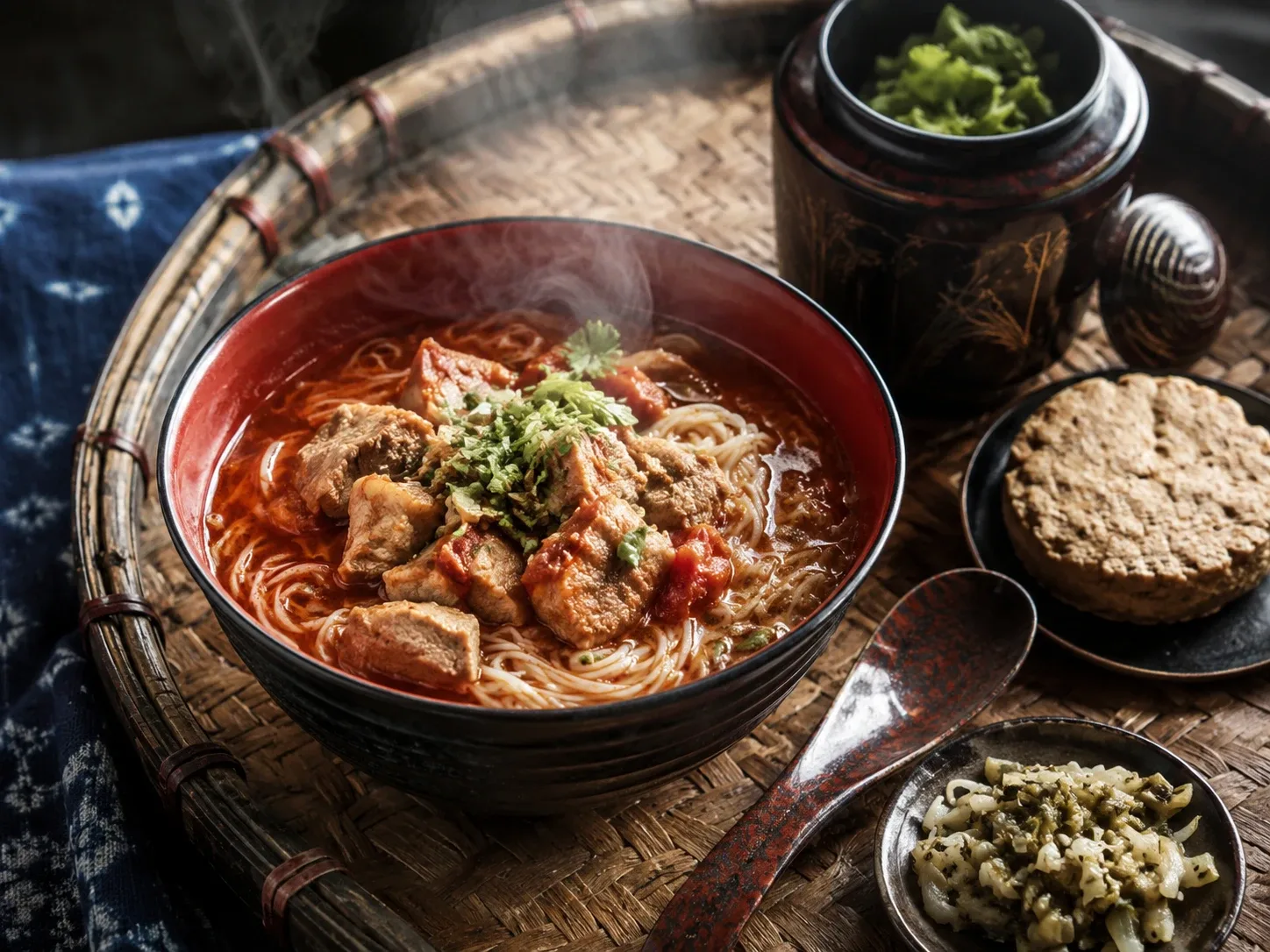
The Shan tomato noodle soup — a pork-rib broth deepened with tua nao and cooked-down tomatoes, ladled over rice noodles with all the market crunch.
By Burmese Cookbook Kitchen · July 9, 2026
ရှမ်း Shan StateBritish Burma, 1826–1948
 ၂
၂- Prep
- 30 min
- Cook
- 75 min
- Serves
- 4
- Level
- Intermediate
Nam ngiao is the noodle soup of the Tai Yai — the Shan — and it announces itself from across the room: a broth the color of rust and brick, stained with tomato and paprika, deepened with toasted tua nao until it hums with smoky umami, ladled over slippery rice noodles and crowned with pork rinds, pickled mustard, and lime. It is named, charmingly, for its quietest ingredient — the dried kapok flower, ngiao, that lends the soup a gentle squeaking crunch and almost nothing else.
The dish's heartland runs from Kengtung in eastern Shan State down the old caravan and migration routes into Mae Hong Son, Chiang Rai, and Chiang Mai, where Shan communities carried it in the late nineteenth and early twentieth centuries — which is why northern Thailand now claims it as khao soi nam ngiao and why we date it, honestly, to the colonial era when those movements put it in the record. Its parentage is not in doubt: the tua nao backbone is the signature of Shan cooking, the thing no lowland kitchen would reach for first.
Two moments matter. Fry the tua nao into the shallot base until it smells smoky — raw, it stays sullen. And cook the tomatoes past sauce into jam before they meet the broth, so the finished soup tastes concentrated rather than watery. Get both right and you have one of Southeast Asia's great noodle soups, still oddly unknown outside the hills that made it.
Nam ngiao broth should look almost too red and taste almost too deep — it is about to be diluted by a fistful of pale noodles, and it knows.
မီးဖိုချောင်စကား · A word from the kitchen
Ingredientsပါဝင်ပစ္စည်း
Serves 4
Tap to check off as you gather
For the broth
- pork ribs — cut into single-rib pieces
- pork shoulder — cut into small chunks
- water
- ripe tomatoes — chopped — or halved cherry tomatoes, which Shan cooks prize for sweetness
- shallots — finely chopped
- garlic — minced
- dried chili flakes
- turmeric
- paprika
- fermented soybean discs (tua nao) — toasted and pounded — from our foundations chapter; or 2 tbsp yellow miso plus a pinch of smoked paprika
- peanut oil
- fish sauce
- dried kapok flowers — the soup's namesake, from Thai groceries — honestly optional; see the FAQ
For the bowls
- rice vermicelli — the thin round kind, blanched and drained
- bean sprouts — rinsed, left raw
- pickled mustard greens — chopped
- pork rinds (chicharrón) — the market topping — crumbled
- crispy fried shallots
- cilantro
- limes — in wedges
Methodချက်နည်း
Tap a numeral as you finish each step
Step 1: Start the pork
Blanch the ribs and shoulder briefly in boiling water, drain, and rinse. Return them to the pot with the 1.8 L of fresh water and simmer gently, partly covered, for 40 minutes. This quiet start gives you a clean-tasting broth for the loud things coming.
Step 2: Soak the kapok flowers
If using, soak the dried kapok flowers in warm water for 20 minutes until pliable, then squeeze and trim off any hard stems. They carry no strong flavor of their own — their gift is a gentle crunch-squeak texture the soup is literally named for.
Step 3: Fry the red base
In a separate pan, heat the oil and fry the shallots and garlic with the turmeric, paprika, and chili flakes until soft and fragrant. Add the pounded tua nao and fry 1 minute more — it should smell smoky and deep, the hills' answer to a lowland ngapi base. Then add the tomatoes and cook them down hard, 12 to 15 minutes, until jammy and brick-red with the oil beginning to separate.
Step 4: Marry base and broth
Scrape the tomato base into the pork pot with the kapok flowers and the fish sauce and simmer, uncovered, for 20 minutes more, until the broth is a rusty red and the pork is fully tender. Taste — it should be deep, tangy, faintly smoky, and a shade too intense on its own; the noodles are counting on it.
Step 5: Build the bowls
Divide the blanched rice vermicelli among four bowls with a small handful of raw bean sprouts. Ladle the broth over generously, making sure every bowl gets ribs, pork, and tomato.
Step 6: Top and serve
Finish each bowl with pickled mustard greens, crumbled pork rinds, crispy shallots, and cilantro, with lime wedges at the side. The toppings are not decoration — the sour pickle, the fatty crunch, and the lime are each doing structural work against the rich red broth. Squeeze, stir, and eat while it steams.
ခွက်ယောက် · The tools
Equipment
Noodle basket / colander
ဆန်ခါBlanch and lift rice noodles in seconds — mohinga service moves fast, and soggy noodles wait for no one.
Shop on Amazon →Stone mortar & pestle
ဆုံFor garlic-ginger paste, pounded dried shrimp fluff, and crushed peanuts — the blender lies about texture; the stone doesn’t.
Shop on Amazon →
Equipment links are Amazon affiliate links. As an Amazon Associate we earn from qualifying purchases, at no cost to you. Disclosure.
ဟင်းစုံ · Set the table
A Burmese meal is a spread
A bowl is complete, but the table is not without its condiments:
- Si chet, chili oilဆီချက်The fragrant red oil every household keeps by the stove.
- Crispy fried shallotsကြက်သွန်ကြော်A spoonful of crunch and sweet shallot oil over anything.
- Balachaungဘလချောင်းThe crispy shrimp relish that lives on every Burmese table.
- Teahouse milk teaလက်ဖက်ရည်How a Burmese meal ends — sweet, strong, and slow.
Questions from the kitchen
What are kapok flowers and can I skip them?
The dried flowers of the red kapok tree — "ngiao" in Shan — which give the soup its name and a pleasant squeaky bite. Thai groceries sell them as dok ngiew. Skip them without guilt if the hunt fails; the broth is the soul of the dish. Some cooks fake the texture with a few soaked dried shiitake stems, which is heresy that works.
How is this different from Shan khao swè?
They are cousins from the same hills, but distinct bowls. Shan khao swè is gentler — a light broth or dry-tossed noodles with minced chicken or pork and tomato in a supporting role. Nam ngiao is the louder relative: a deep red tomato broth built on tua nao, richer, tangier, and unashamedly funky, with the pork rind and pickle toppings of a market stall.
The traditional version has pork blood, doesn't it?
Often, yes — cubes of steamed pork blood are classic in Kengtung and across the border in Mae Hong Son and Chiang Rai. They add an iron richness and silky texture. If you have access to a Southeast Asian butcher, add 200 g of steamed blood cubes in the final ten minutes; this recipe leaves them optional because sourcing is genuinely hard.
နောက်တစ်ခု · Cook next
Keep the wok hot
 ၂
၂Noodles & Mohinga · 50 min · Beginner
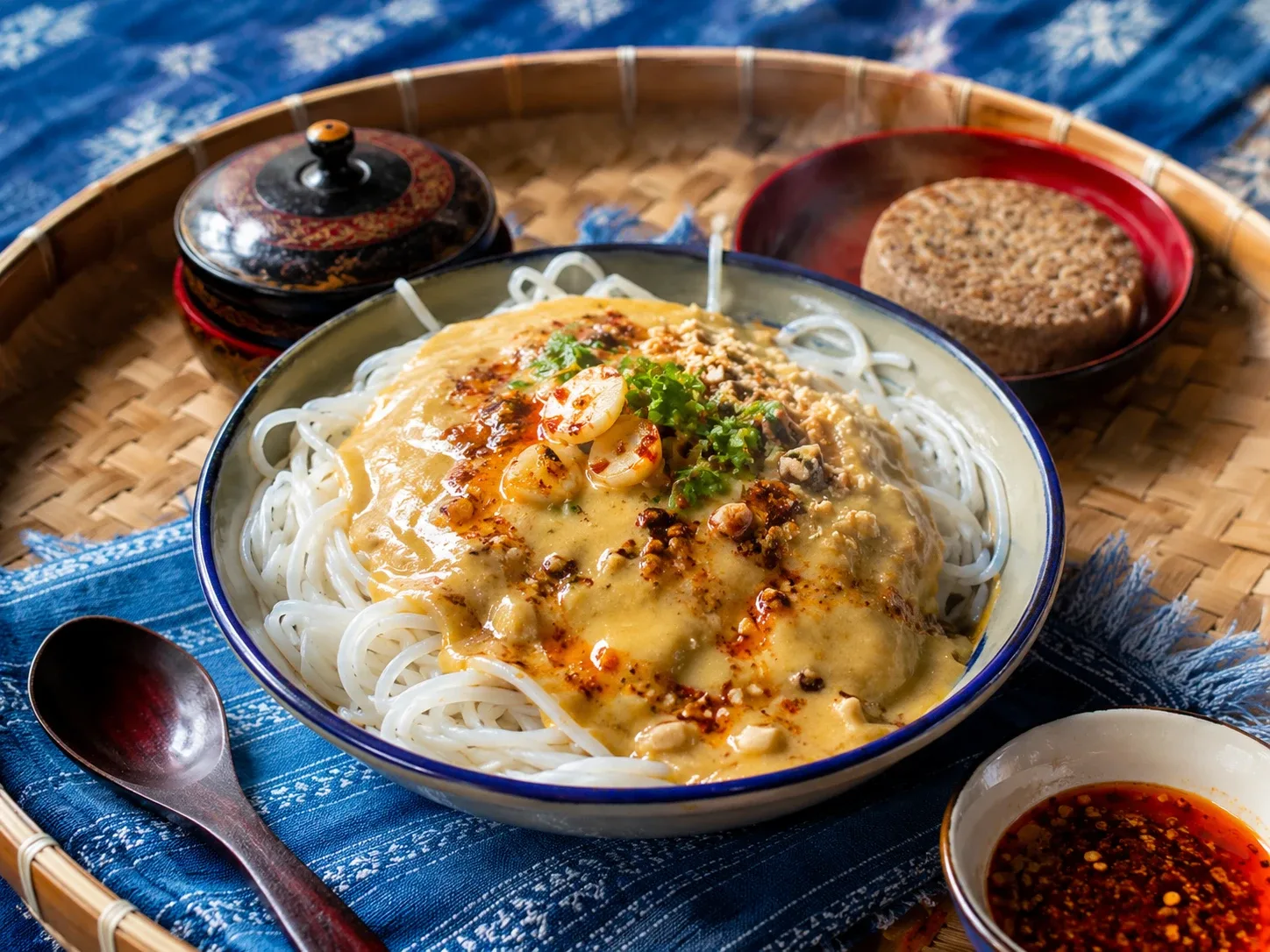
Tofu Nway, Warm Shan Tofu Noodlesတိုဟူးနွေး
Warm chickpea tofu that never sets, ladled like golden custard over rice noodles with garlic oil, chili, and peanuts — Shan State's great breakfast.
 ၂
၂Noodles & Mohinga · 40 min · Intermediate
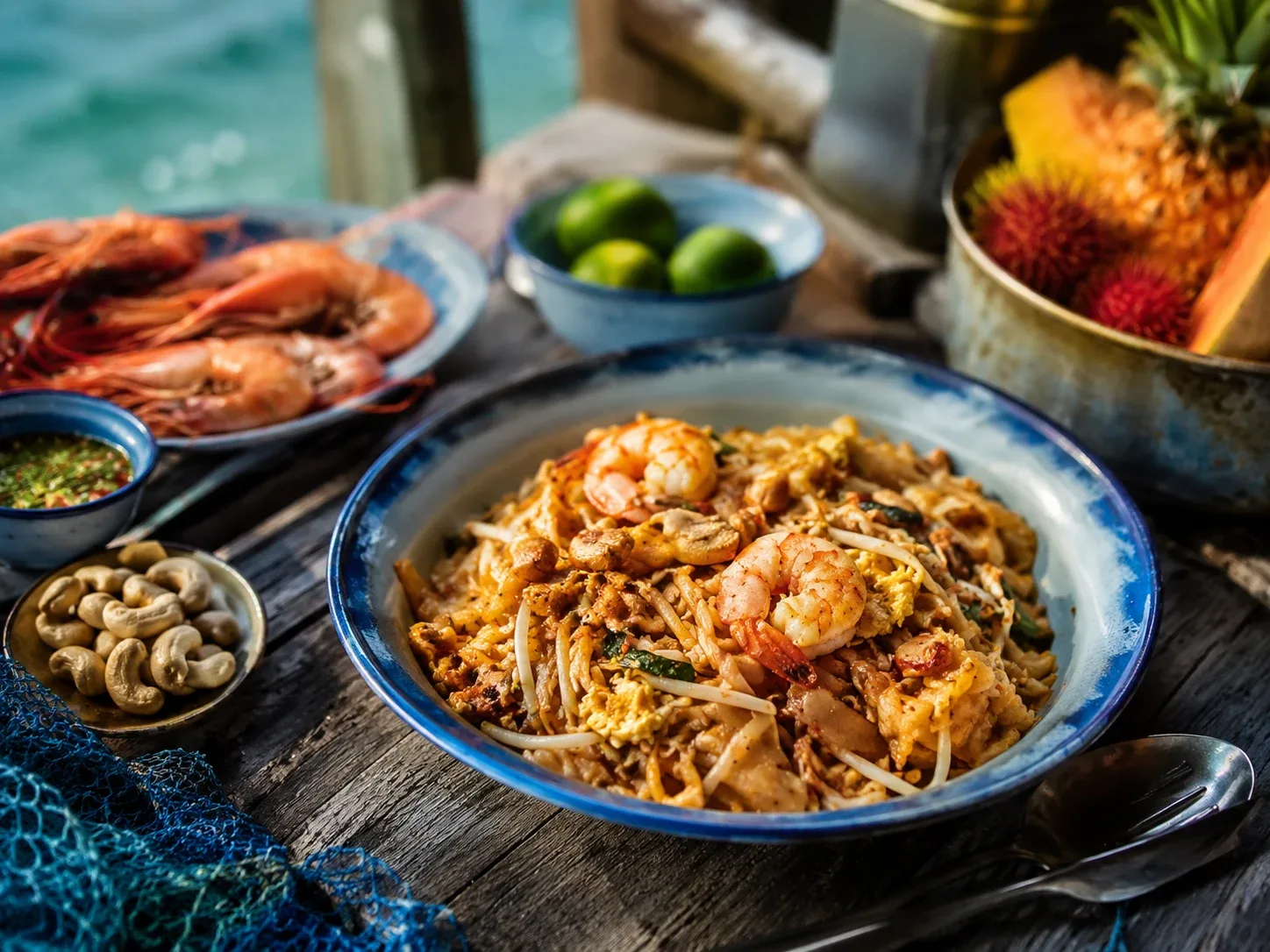
Kat Kyi Kaik, Dawei's Scissor-Cut Noodlesကတ်ကြေးကိုက်
Dawei's famous stir-fried rice noodles, snipped with scissors at the table — sweet-savory, smoky from the wok, piled with prawns, egg, and peanuts.
 ၄
၄Salads & Thoke · 25 min · Beginner
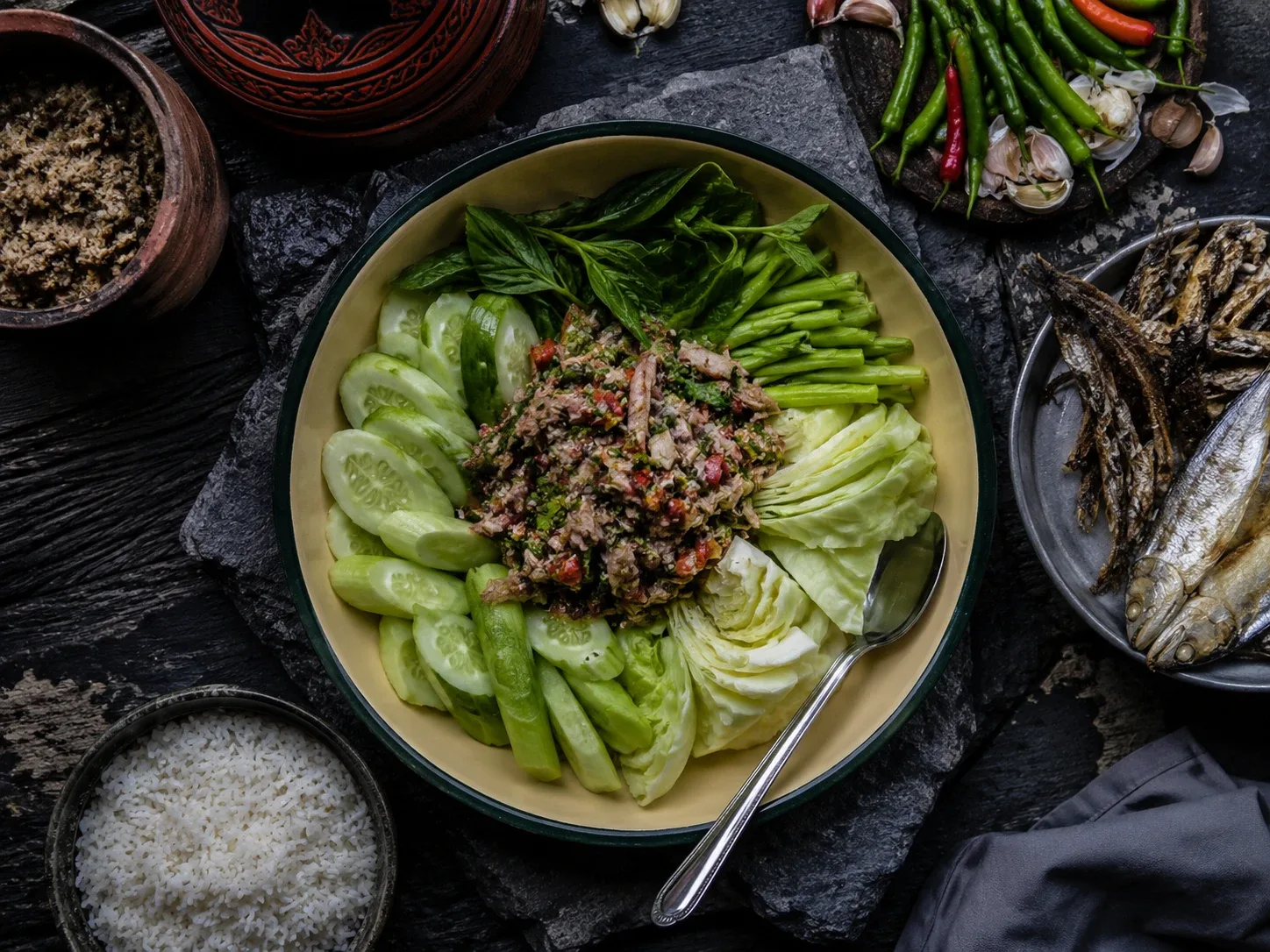
Rakhine Ngapi Thoke, the Pounded Fireငါးပိသုပ်
Rakhine's roasted fish-paste salad — marine ngapi pounded with green chili, garlic, and lime, served the western-coast way with crisp vegetables and rice.