Seik Thar Hin, Dry-Zone Goat Curry
ဆိတ်သားဟင်း
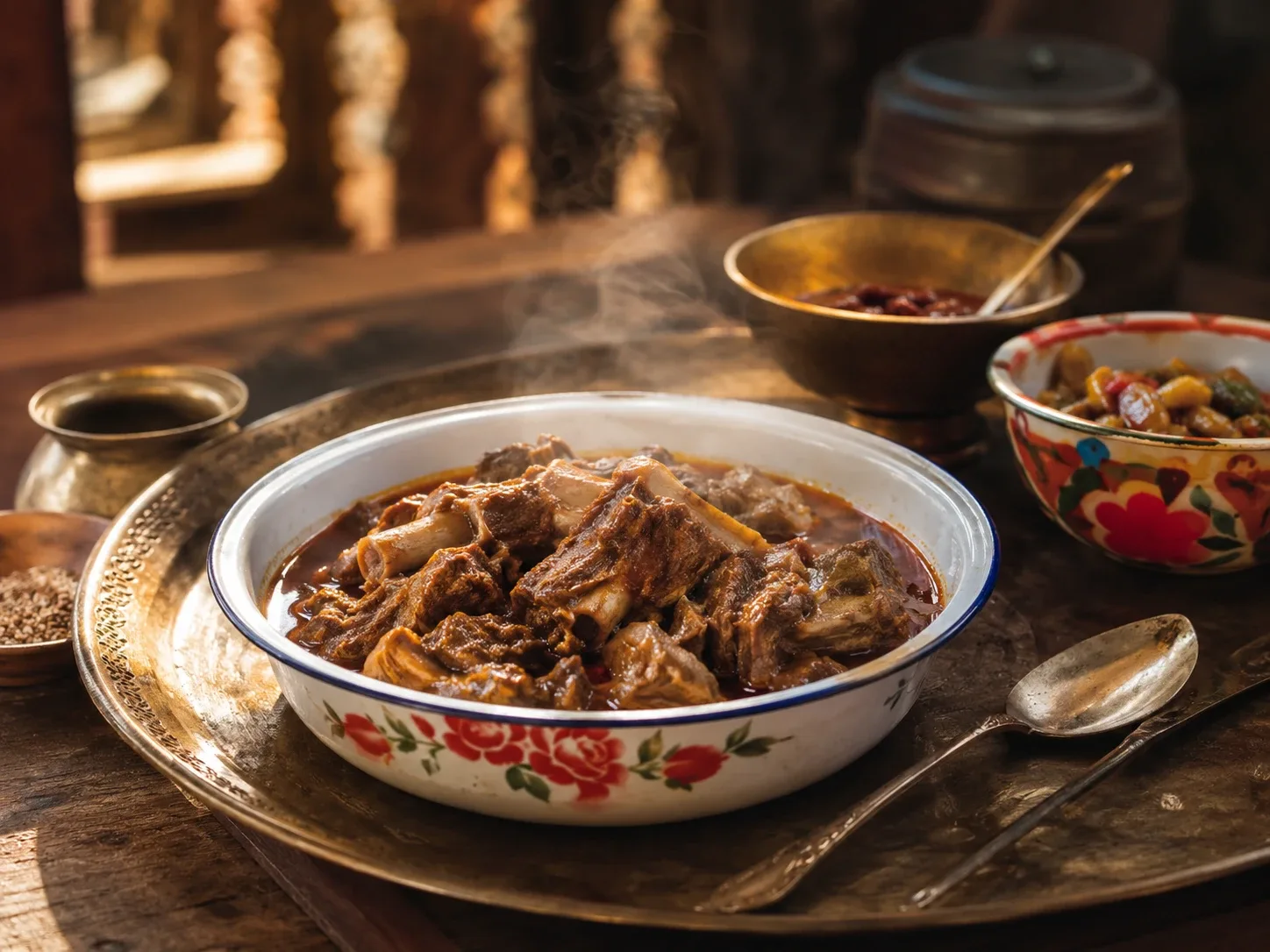
Upper Burma's slow goat curry — bone-in meat braised si pyan style with shallots, ginger, and turmeric until the gravy darkens and the amber oil returns.
By Burmese Cookbook Kitchen · July 9, 2026
အညာ Upper Burma & MandalayKonbaung, 1752–1885
 ၃
၃- Prep
- 25 min
- Cook
- 110 min
- Serves
- 4
- Level
- Intermediate
Rice is the delta's luxury; the dry zone raises what the scrub will carry, and the scrub carries goats. Drive the dusty roads between Mandalay, Sagaing, and Shwebo and you will pass them in ambling herds, cropping thorn bushes under toddy palms — which is why goat curry, seik thar hin, sits on Upper Burma's table where the coast would put fish.
Mandalay gave the dish its polish. The last royal capital drew traders and cooks from every direction — the Panthay quarter granted to Chinese Muslim merchants under King Mindon, South Asian butchers and spice sellers in the bazaars — and goat became the meat those communities and their Buddhist neighbors could share an appetite for. The Konbaung-era city is the honest setting for the dish as Burma knows it; today its descendants run from home pots like this one to the danbauk houses where goat crowns festival rice.
The cooking is the national curry grammar applied with patience. A rough pounded paste fried until the oil turns amber; meat sealed until it "eats the paste"; then a long, low braise — goat is not lamb, and it surrenders on its own schedule, usually a while after you first check. The finish is the si pyan, the return of the oil, when the gravy darkens and a shining ring climbs the rim. Mint, slit green chilies, and a mountain of rice do the rest. In the dry zone this is Sunday, guests, and every cool-season celebration worth the name.
Goat forgives everything except hurry. If the meat fights the fork at ninety minutes, the answer is another twenty minutes, never a higher flame.
မီးဖိုချောင်စကား · A word from the kitchen
Ingredientsပါဝင်ပစ္စည်း
Serves 4
Tap to check off as you gather
For the marinade
- bone-in goat shoulder — cut into 4 cm pieces; bone-in lamb shoulder is the honest stand-in
- turmeric
- fish sauce
- fresh ginger — finely grated — half the ginger below, put to work early
For the curry
- shallots
- garlic
- fresh ginger — the remaining half, roughly chopped
- lemongrass — bruised and knotted
- paprika — for color more than fire, in the Burmese way
- dried chili flakes — or more — dry-zone tables run hotter than the delta
- cinnamon — optional but very Mandalay — a nod to the city's Indian and Panthay kitchens
- peanut oil
- water — hot, plus more if the pot runs dry before the meat gives in
- fish sauce — to adjust at the end — taste first
To serve
- hot cooked jasmine rice
- green chilies — slit lengthwise
- mint leaves — the classic cooling counterpoint to goat
Methodချက်နည်း
Tap a numeral as you finish each step
Step 1: Marinate the goat
Toss the goat with the turmeric, fish sauce, and grated ginger and let it sit at least 30 minutes, or overnight in the fridge. Turmeric and ginger are doing real work here — they soften goat's gamey edge the way they tame river fish in mohinga, and meat that skips this step tastes of the field all the way through.
Step 2: Pound the aromatic base
Pound the shallots, garlic, and chopped ginger to a rough paste in a mortar. Rough, not smooth — a blender puree steams instead of frying, and the caught, catching edges of a pounded paste are where this curry's color comes from.
Step 3: Fry the base — si pyan begins here
Heat the peanut oil in a heavy pot over medium heat and fry the paste with the paprika, chili flakes, and cinnamon if using, stirring, for 6 to 8 minutes, until it smells sweet and the oil glows amber at the edges. This is the down payment on the si pyan to come; a pale base can never be braised into a dark curry.
Step 4: Seal the meat
Add the goat and all its marinade and turn it through the base over confident heat for 5 to 6 minutes, until every piece has lost its rawness and taken on the paste's color. Burmese cooks want the meat to eat the paste before any water arrives — meat that boils first stays pale and apart from its sauce forever.
Step 5: Braise low and slow
Add the hot water and the knotted lemongrass, bring to a bare simmer, and cook partly covered over low heat for 90 minutes, stirring occasionally. Goat gives up slowly and all at once — it will seem stubborn at an hour and spoon-tender twenty minutes later. Top up with a splash of hot water only if the pot threatens to catch.
Step 6: Let the oil return
Uncover for the last 15 minutes and let the gravy reduce until it darkens, clings to the meat, and the amber oil rises and pools at the edges — the si pyan that says a Burmese curry is finished. Fish out the lemongrass, taste, and adjust with fish sauce. Rest 10 minutes, then serve with rice, slit chilies, and mint.
ခွက်ယောက် · The tools
Equipment
Carbon-steel wok
ဒယ်အိုးThe dai-oh — for si pyan curries, fritters, and every fried-noodle dish here. Carbon steel, seasoned dark, nothing fancy.
Shop on Amazon →Heavy pot / Dutch oven
အိုးကြီးDeep and heat-retentive — for mohinga broth, long-simmered hin, and deep-frying without temperature crashes.
Shop on Amazon →Stone mortar & pestle
ဆုံFor garlic-ginger paste, pounded dried shrimp fluff, and crushed peanuts — the blender lies about texture; the stone doesn’t.
Shop on Amazon →Box grater / microplane
ခြစ်စက်Fine ginger, green papaya shreds, and toddy-palm jaggery shavings.
Shop on Amazon →
Equipment links are Amazon affiliate links. As an Amazon Associate we earn from qualifying purchases, at no cost to you. Disclosure.
ဟင်းစုံ · Set the table
A Burmese meal is a spread
A curry is the anchor, not the whole meal. Round out the table:
- Steamed riceထမင်းThe centre of the table — everything else is built around it.
- A light soupဟင်းချိုThe clear, sour broth sipped between mouthfuls of rice.
- Toh sa yar & ngapi dipတို့စရာRaw and blanched vegetables with a pungent fish-paste dip — the fresh, bitter counterpoint.
- Balachaungဘလချောင်းThe crispy shrimp relish that lives on every Burmese table.
- Crispy fried shallotsကြက်သွန်ကြော်A spoonful of crunch and sweet shallot oil over anything.
- A hand-tossed thokeအသုပ်A bright, sour salad to lift the whole spread.
Questions from the kitchen
Can I use lamb or beef instead of goat?
Lamb shoulder on the bone is the honest substitute — slightly sweeter and fattier, done a little sooner, but the same dish. Beef chuck works and makes a good curry that no longer tastes of the dry zone; goat's lean, faintly wild depth is the point of this one.
Why bone-in? Boneless would be easier to eat.
The bones are half the recipe. They feed collagen and marrow into the gravy during the long braise, giving it a body that boneless meat cannot — and the meat nearest the bone is the piece everyone at a Burmese table quietly maneuvers for. Ask your butcher to cut the shoulder through the bone for you.
Can I speed this up in a pressure cooker?
Yes, with one adjustment: pressure-cook after sealing the meat, 25 minutes at high pressure with only 300 ml of water, then finish uncovered on the stove until the gravy reduces and the oil returns. The si pyan cannot happen under pressure — that last open-pot stretch is not optional.
နောက်တစ်ခု · Cook next
Keep the wok hot
 ၃
၃Curries · 125 min · Intermediate
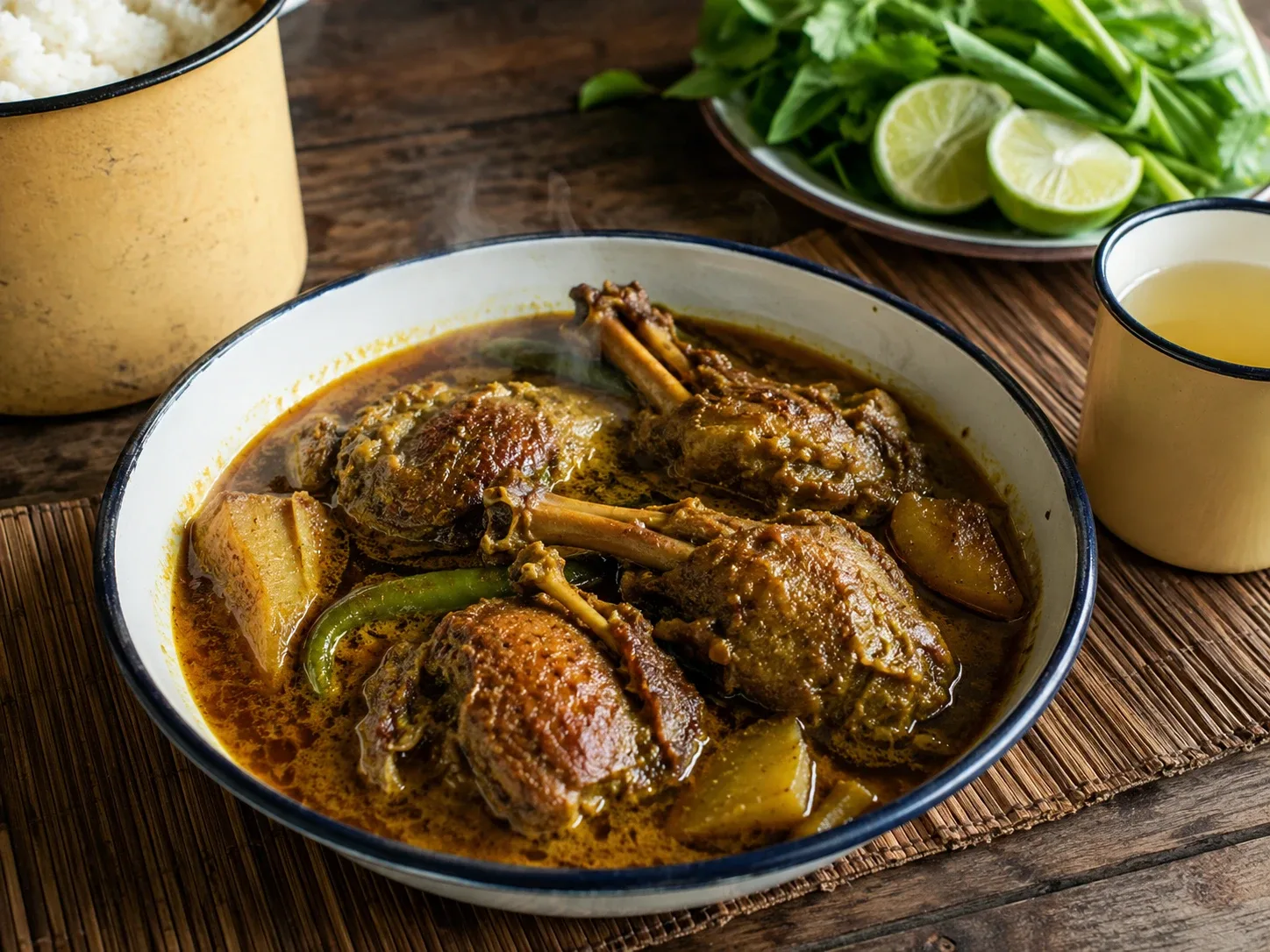
Be Thar Hin, Delta Duck Curryဘဲသားဟင်း
Duck curry from the Ayeyarwady, where ducks glean the rice paddies — browned in its own fat, then braised si pyan style until the amber oil returns.
 ၃
၃Curries · 45 min · Beginner
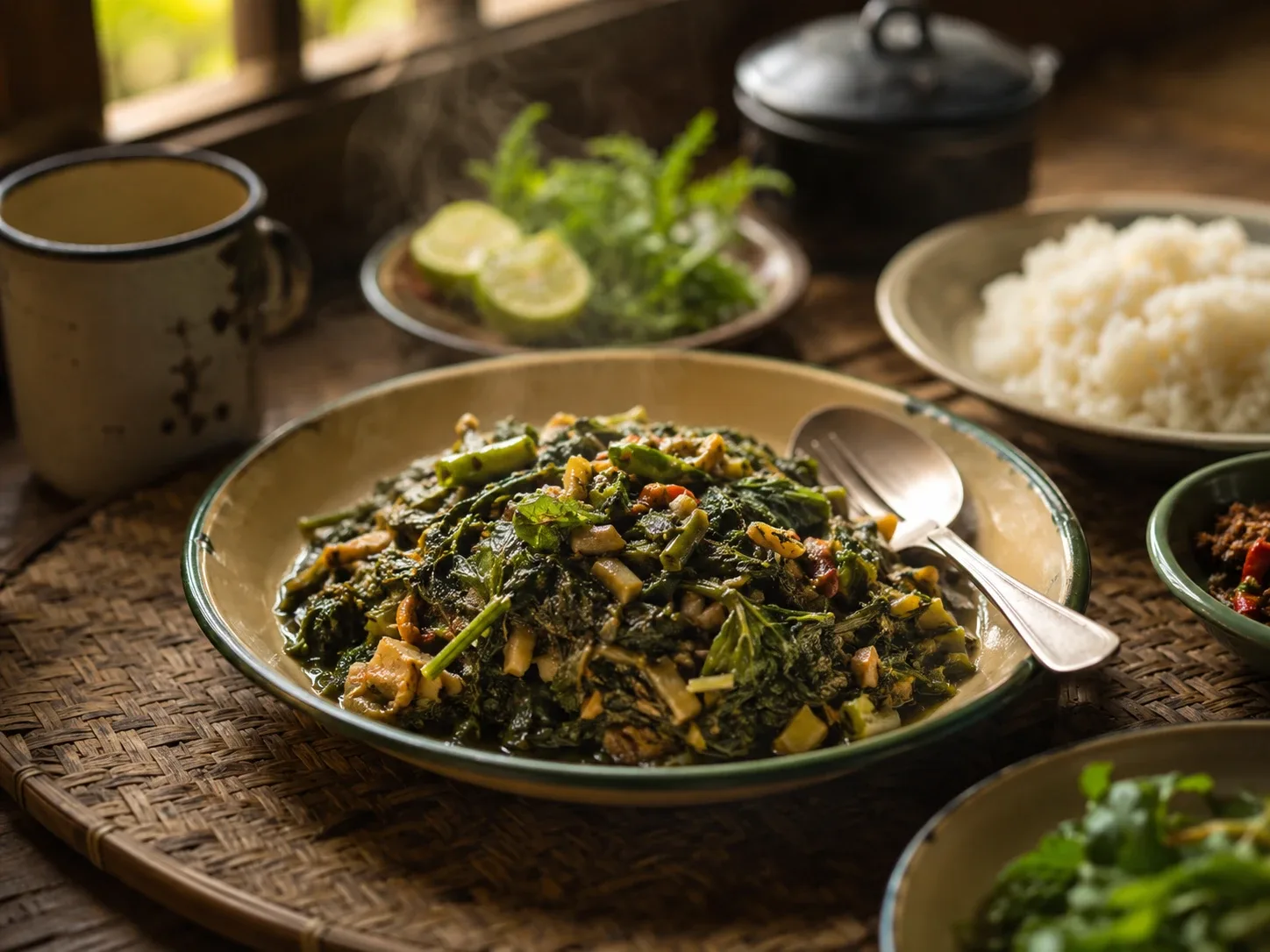
Chin Baung Kyaw, Sour Roselle Leavesချဉ်ပေါင်ကြော်
Lower Burma's beloved sour greens — roselle leaves fried down with bamboo shoots, dried shrimp, and green chili until they collapse into a dark tangy relish.
 ၇
၇Sweets & Mont · 105 min · Intermediate
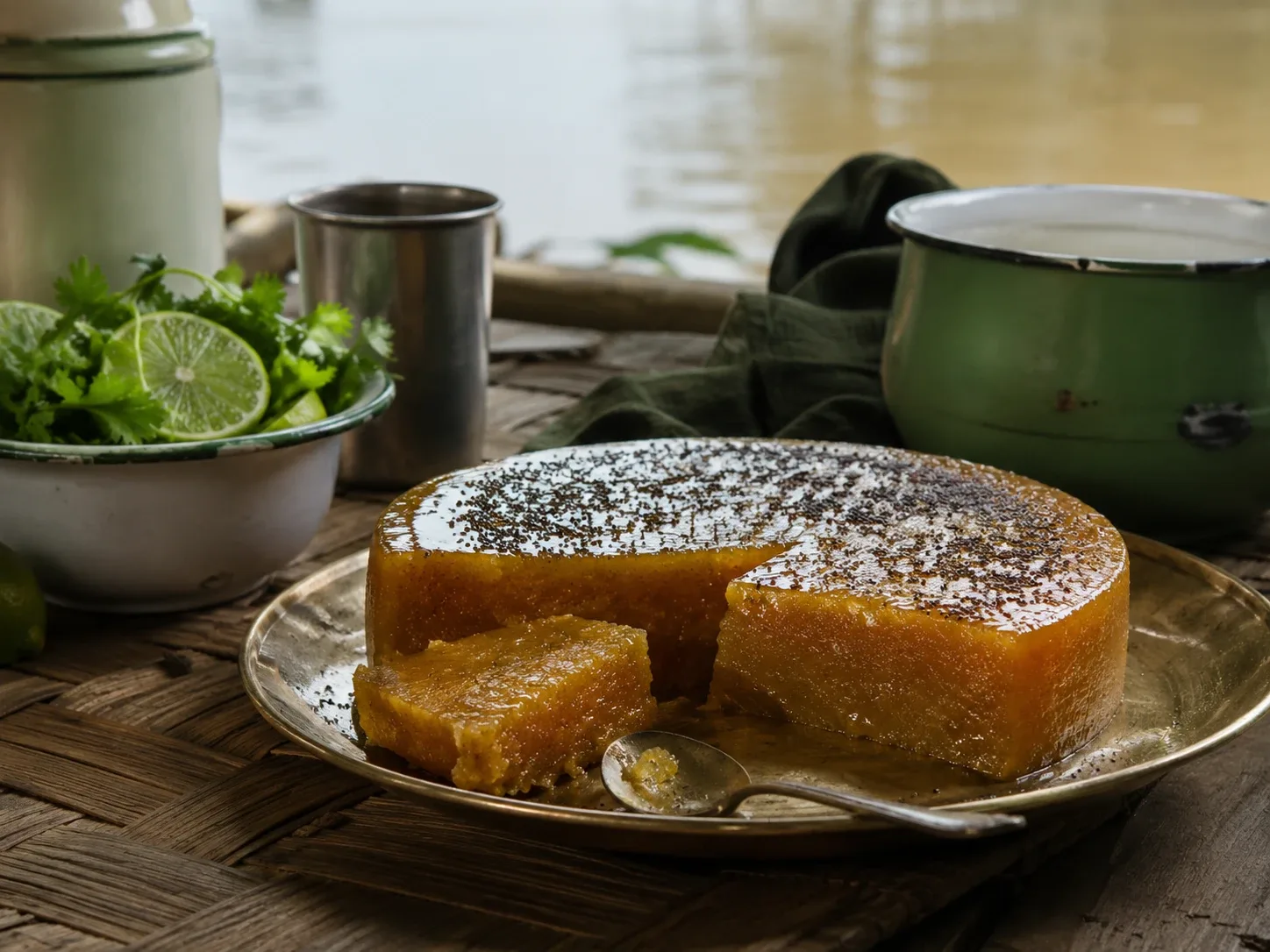
Pathein Halawa, the Delta's Gilded Sweetပုသိမ်ဟလဝါ
Pathein's famous glutinous-rice halawa — coconut milk, sugar, and ghee stirred patiently down to a dense, gleaming amber slab crowned with toasted poppy seeds.