Talapaw, the Kayin Rice-Powder Soup
တာလပေါ့
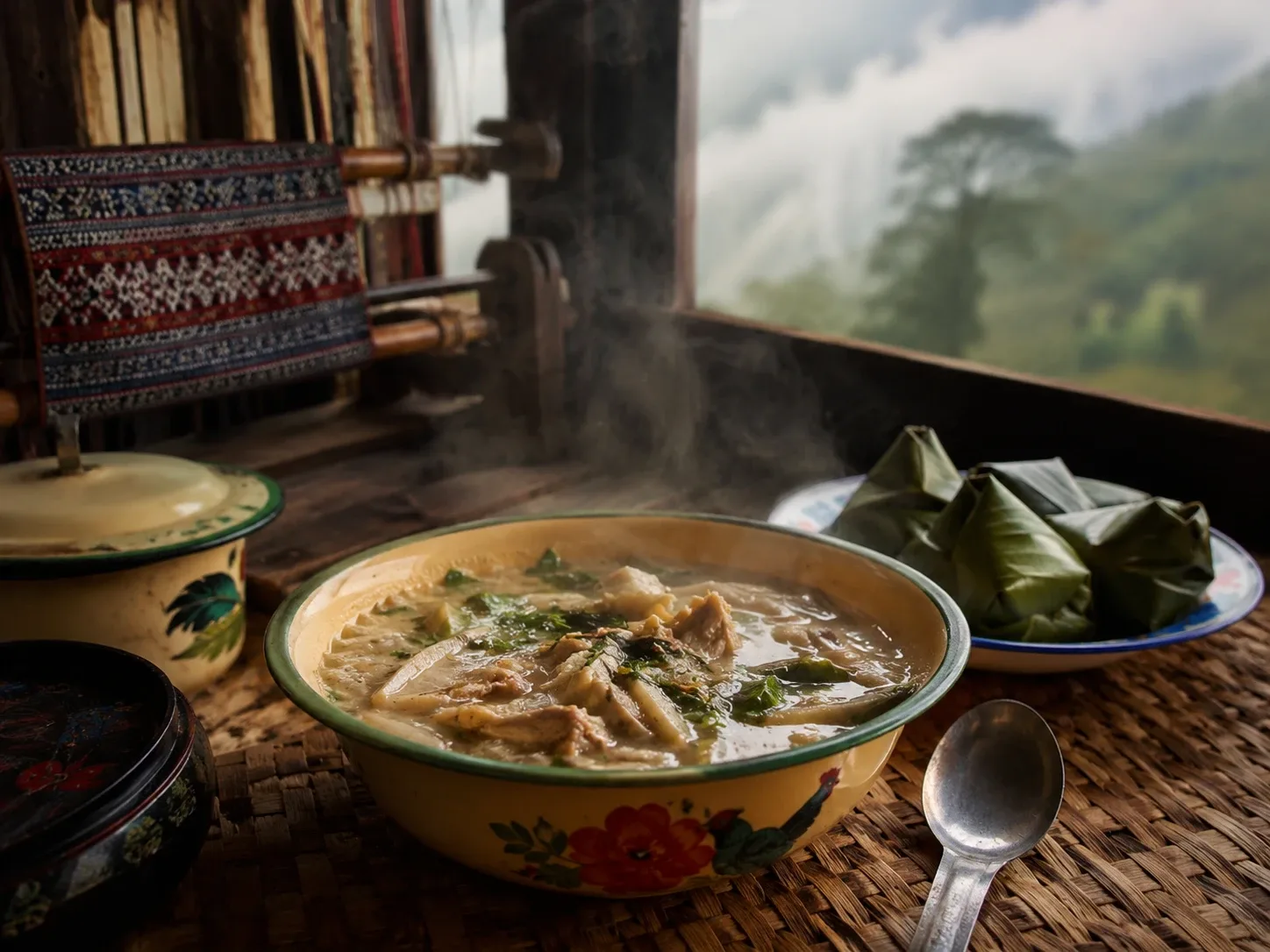
The Karen signature soup — toasted rice powder thickening a broth of chicken, bamboo shoots, and greens, ladled from one pot at every Kayin gathering.
Also spelled: Talabaw
By Burmese Cookbook Kitchen · July 9, 2026
မွန် Mon & Kayin CountryOpening & Diaspora, 1988–present
 ၅
၅- Prep
- 20 min
- Cook
- 40 min
- Serves
- 6
- Level
- Beginner
Talapaw is the dish Karen people name when you ask what their food is — a thick, gentle, oil-free soup of toasted rice powder, bamboo shoots, and whatever greens the day provided, made in one pot and eaten from it. In the hills of Kayin State and the villages threaded behind Mawlamyine, it is daily food; at Kayin New Year it becomes civic infrastructure, stirred in cauldrons and ladled out to whole villages at once. A soup that stretches to feed everyone who shows up is not a metaphor by accident.
The technique will look familiar to anyone who has made mohinga: a humble powder, toasted first, thickening a broth into something with real body. Where the delta reaches for chickpea flour, the Kayin reach for rice itself — toasted deep gold, pounded coarse, and rained into the pot. That toasting is the whole flavor argument of the dish, since nothing here is fried and no oil ever enters the pot; pale powder makes paste, golden powder makes a soup that tastes quietly of popcorn and rain.
We file talapaw under the modern era with a clear conscience and full disclosure: that is when cookbooks and diaspora kitchens finally wrote it down, not when it was born. In Karen villages the dish is plainly far older — but its history lives in memory and practice, not in any chronicle, and this book labels memory as memory. What is documented is the present: put one pot in the middle of the table, and watch it do what it has always done.
Toast the rice a shade darker than feels safe. Pale powder thickens like wallpaper paste; golden powder thickens like perfume.
မီးဖိုချောင်စကား · A word from the kitchen
Ingredientsပါဝင်ပစ္စည်း
Serves 6
Tap to check off as you gather
For the rice powder
- glutinous rice — plain jasmine works, but sticky rice grinds into a silkier soup
For the broth
- boneless chicken thighs — cut small; the village version uses 3 tbsp pounded dried fish instead
- water
- shallots — thinly sliced
- garlic — smashed flat
- lemongrass — bruised and knotted
- dried chili flakes
- fish sauce
- salt
For the pot
- bamboo shoots — fresh-boiled or a well-rinsed vacuum pack, sliced into thin wedges
- tender greens — pumpkin shoots if you can get them; watercress or spinach otherwise
- green chilies — split lengthwise
- cilantro — roughly torn, to finish
Methodချက်နည်း
Tap a numeral as you finish each step
Step 1: Toast and pound the rice
In a dry pan over medium-low heat, toast the rice, shaking often, until the grains turn deep gold and smell like popcorn — 6 to 8 minutes. Cool, then grind in a spice grinder or mortar to a coarse powder, somewhere between sand and flour. This powder is the soup's entire body, so its toastiness is the soup's entire depth.
Step 2: Start the broth
Bring the water to a simmer with the chicken, shallots, garlic, lemongrass, and chili flakes. Skim once, then let it burble gently for 15 minutes. Nothing is fried here — talapaw is one of the rare Burmese pots with no oil in it at all, which is exactly why the toasted powder matters so much.
Step 3: Cook the bamboo
Add the bamboo shoots and simmer 10 minutes. Bamboo goes in ahead of everything green because it wants real cooking; it should end up tender but still speaking up against the soft soup around it.
Step 4: Rain in the rice powder
Whisk the rice powder into a cup of cool water until smooth, then pour it into the pot in a thin stream, stirring the whole time. Simmer, stirring often along the bottom, for 8 to 10 minutes, until the soup thickens to a silky, pourable gravy — thinner than porridge, thicker than broth. Dumping the powder in dry buys you dumplings you did not order.
Step 5: Wilt the greens
Add the greens and split chilies and cook just 2 to 3 minutes, until the leaves collapse but keep their color. Talapaw takes whatever is young and green on the day; the soup is a frame, not a fixed list.
Step 6: Season and serve from the pot
Season with the fish sauce and salt, taste — it should be gentle, toasty, and warm, with the chilies humming underneath — and carry the pot to the table whole. Scatter with cilantro and ladle into bowls over rice or beside it. Talapaw is served from one pot into many bowls; that is not logistics, it is the meaning.
ခွက်ယောက် · The tools
Equipment
Heavy pot / Dutch oven
အိုးကြီးDeep and heat-retentive — for mohinga broth, long-simmered hin, and deep-frying without temperature crashes.
Shop on Amazon →Stone mortar & pestle
ဆုံFor garlic-ginger paste, pounded dried shrimp fluff, and crushed peanuts — the blender lies about texture; the stone doesn’t.
Shop on Amazon →Mandoline slicer
အလွှာစက်Paper-thin shallots for even frying and cabbage fine enough for thoke — seconds, not knife-years.
Shop on Amazon →
Equipment links are Amazon affiliate links. As an Amazon Associate we earn from qualifying purchases, at no cost to you. Disclosure.
ဟင်းစုံ · Set the table
A Burmese meal is a spread
A Burmese soup sits beside the rice, not on its own. Set the table with:
- Steamed riceထမင်းThe centre of the table — everything else is built around it.
- A curryဟင်းSlow-cooked until the oil returns — the richness the sides cut against.
- Toh sa yar & ngapi dipတို့စရာRaw and blanched vegetables with a pungent fish-paste dip — the fresh, bitter counterpoint.
- Balachaungဘလချောင်းThe crispy shrimp relish that lives on every Burmese table.
- Crispy fried shallotsကြက်သွန်ကြော်A spoonful of crunch and sweet shallot oil over anything.
Questions from the kitchen
How thick should talapaw actually be?
A slow-pouring gravy — it should slide off the ladle in a sheet, not a stream and not a plop. If it sets up like porridge, loosen it with hot water; the toasted flavor survives thinning better than the soup survives standing overnight, when the rice keeps drinking.
Can I make it vegetarian?
Honestly, yes — this is one Burmese soup that converts gracefully. Swap the chicken for a handful of dried mushrooms and extra bamboo, and season with salt instead of fish sauce. The toasted rice, not the meat, is doing the structural work.
Do I need glutinous rice for the powder?
No — any rice toasts and grinds. Sticky rice gives a silkier, slightly clingier body that Kayin cooks tend to prefer; jasmine gives a cleaner, lighter soup. What you cannot skip is the toasting, which is the difference between soup and paste.
What greens are traditional?
Whatever the garden or forest gave that morning — pumpkin shoots, chayote tips, roselle for sourness, banana bud, young mustard. The honest rule is young, tender, and today's. Watercress and spinach are the friendliest market stand-ins.
နောက်တစ်ခု · Cook next
Keep the wok hot
 ၅
၅Soups & Broths · 135 min · Beginner
An Buti, the Meatless Corn Soup
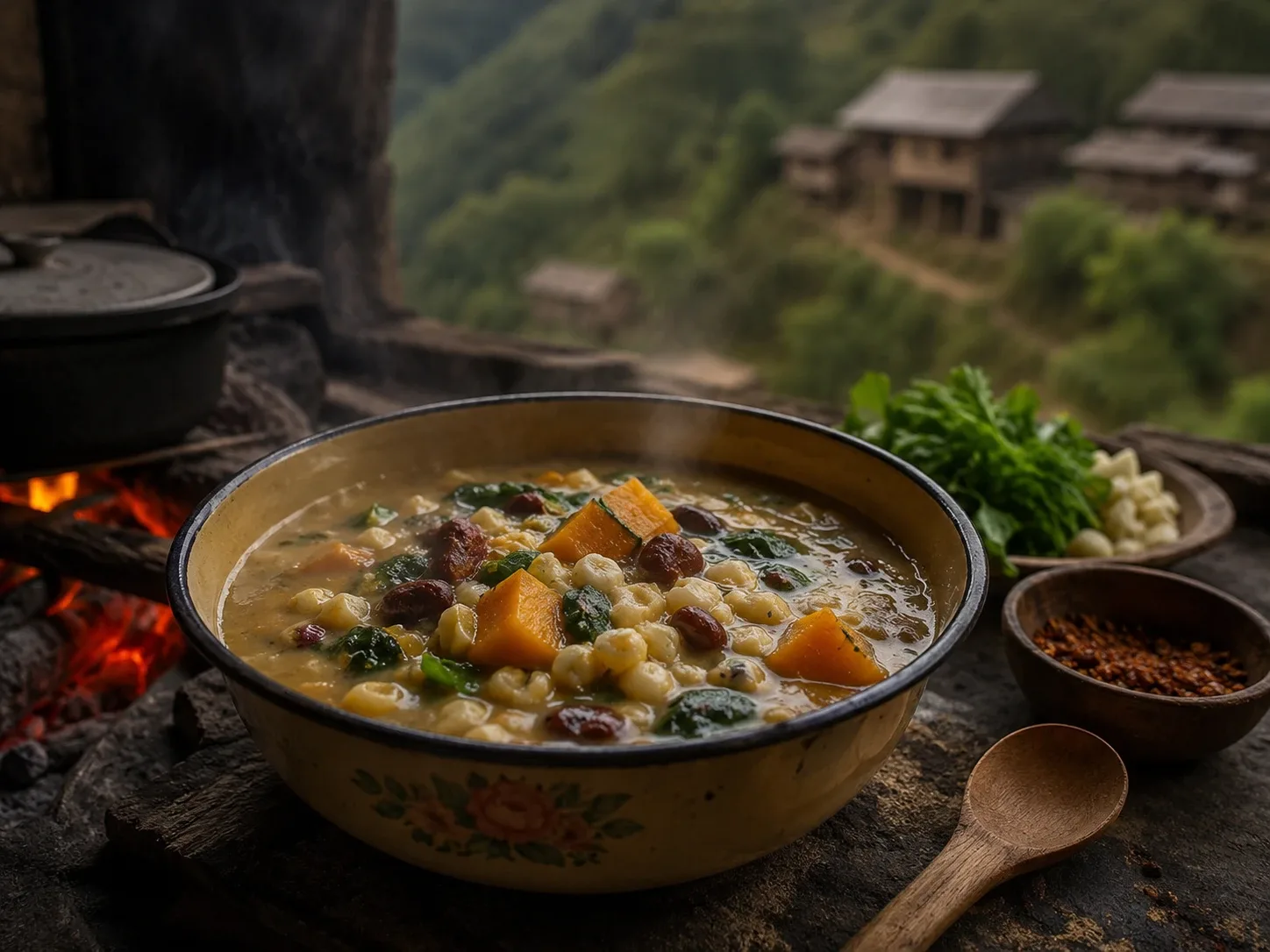
Sabuti's meatless sibling from the Chin hills — hominy corn simmered with red beans, pumpkin, and greens until the pot thickens into gentle, vegetable plenty.
 ၅
၅Soups & Broths · 55 min · Intermediate
Ar Pu Shar Pu, the Burning-Mouth Bowl
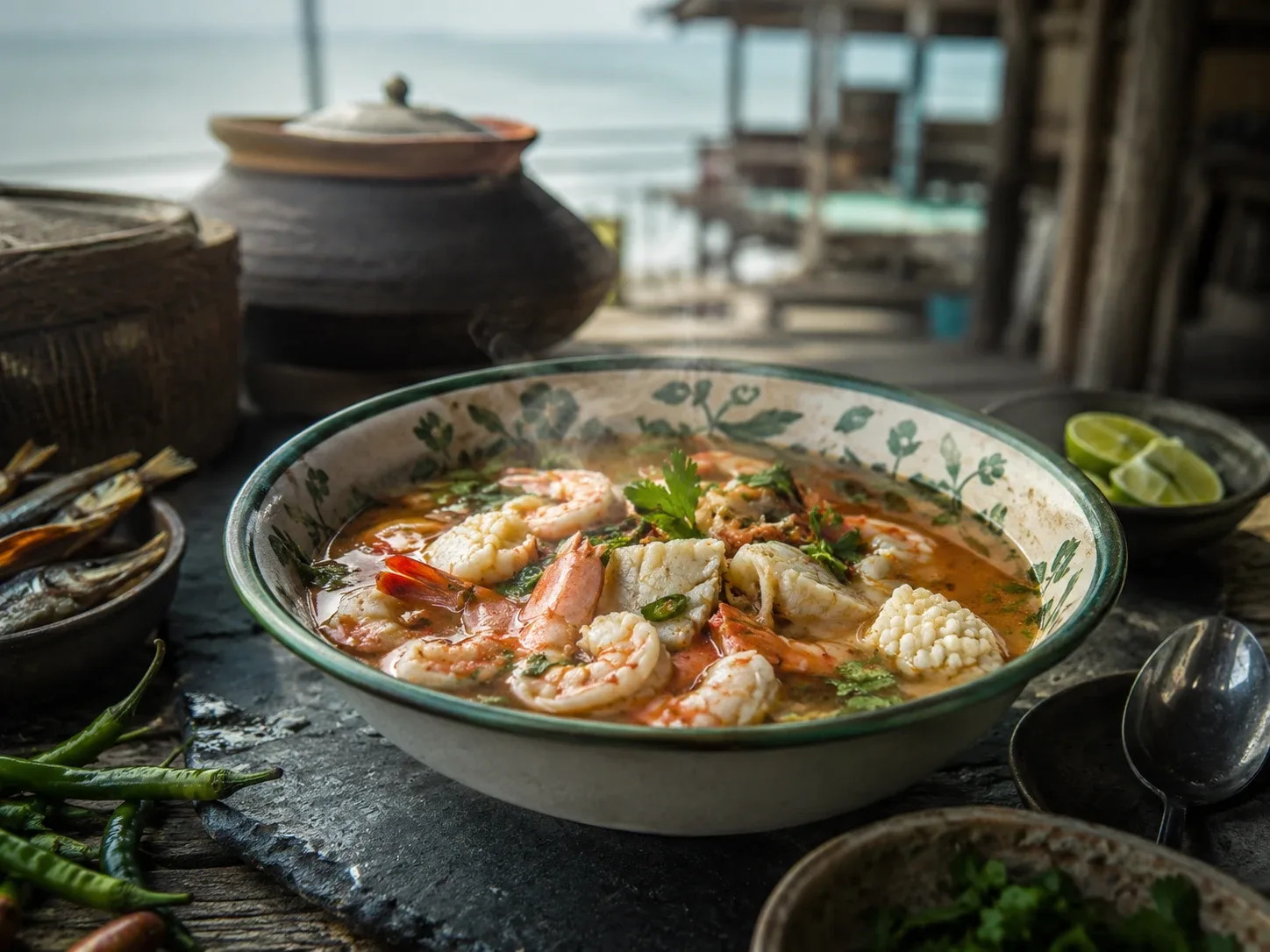
Sittwe's famous hot-and-sour seafood soup — fish, prawns, and squid in a tamarind broth pounded through with green chilies, finished with lime and herbs.
 ၄
၄Salads & Thoke · 25 min · Beginner
Rakhine Ngapi Thoke, the Pounded Fireငါးပိသုပ်
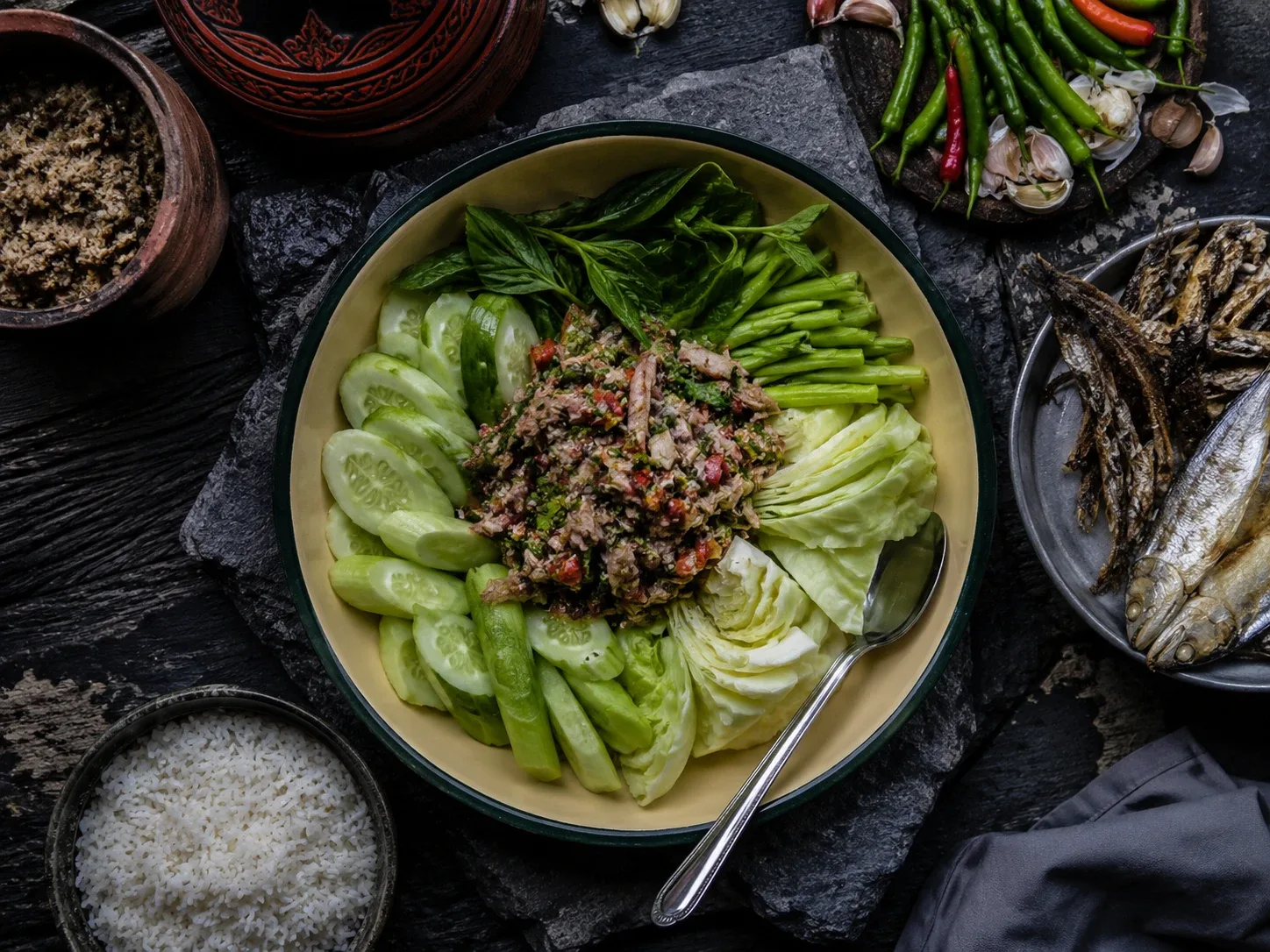
Rakhine's roasted fish-paste salad — marine ngapi pounded with green chili, garlic, and lime, served the western-coast way with crisp vegetables and rice.